
Since the beginning of Russia’s aggression against Ukraine in February 2022, the German perception of this conflict has undergone a significant transformation. From skepticism and expecting Ukraine’s defeat to today’s optimism. Germany has become one of the more important suppliers of armaments and has easily overtaken Poland, which itself, without a fight, gave up its position as one of the key players in this war. At first glance, the scale of direct financial outlays may seem cautious relative to the potential of one of the world’s largest economies; a closer analysis reveals a well-thought-out strategy of cooperation in the areas of military technologies and robotics.


Scale and specifics of German engagement
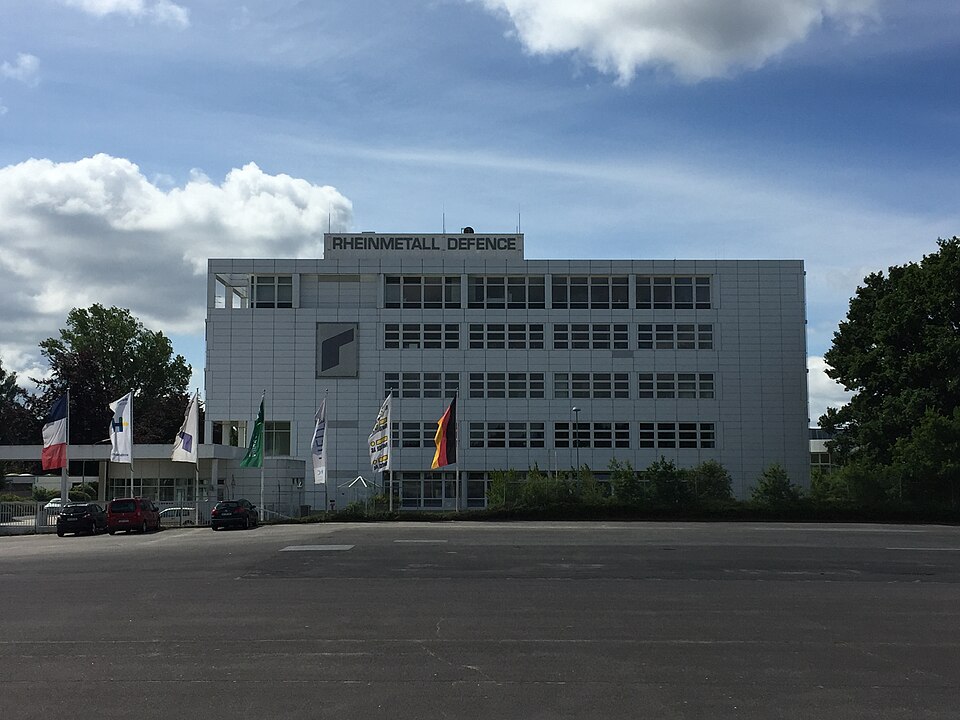
Rheinmetall plant in Kiel. Source: Wikimedia Commons
German direct investments and industrial projects carried out in Ukraine since 2022 are estimated at up to EUR 500 million in the industrial, agricultural, and construction sectors. The foundation of this activity is a system of state guarantees for foreign investments. The federal government in Berlin has provided protection against war risk for many projects by German companies with a total value exceeding EUR 380 million. In addition, export credit insurance has enabled a steady inflow of German technologies and machinery to the Ukrainian market.
Among the most important German investors from the civilian sector are:
• Bayer: Expanded the already existing corn seed processing plant in Poczujki (Zhytomyr Oblast) for EUR 60 million.
• Fixit Group / Kreisel: Launched a new plant for construction materials and insulation systems in Lviv Oblast.
• Knauf and Kronospan: Modernized and relocated part of their production capacity from Germany (wood-based panels, construction materials) to the safer western oblasts of Ukraine. Knauf obtained a 20-year permit to extract gypsum from the deposit in Skowotynskyi.
However, it is not these investments that demonstrate a well-thought-out, high-margin strategy for gaining an advantage in the Ukrainian market.
Are these investments comparable to Polish or Czech ones?
A comparison of Berlin’s actions with the initiatives of Warsaw and Prague shows different models of entering the market under wartime conditions:
• Poland (about USD 780 million in cumulative investments): Of the three, Poland has so far been the most active in Ukraine. After 2022, Polish companies less often built factories from scratch, focusing instead on scaling existing businesses and capturing market share. Examples include the expansion of the clothing holding LPP (Sinsay brand), additional investment in Kredobank (PKO BP Group) and PZU Ukraine, the expansion of Cersanit, Fakro and Barlinek plants, as well as the acquisition by Maspex Group, which took over the company Carpathian Mineral Waters.
However, Polish investments are clearly slowing due to a lack of support from the government and the President of Poland. Large Polish defense companies are not investing in Ukraine mainly because they are dominated by state ownership. This means deep politicization of every such decision—hence my earlier remark about the need for support from the government and the president. The Czechs and Germans have such support, even though these are private companies.
• Czech Republic: Czech involvement is characterized by a focus on a military-industrial niche. Groups such as CSG (Czechoslovak Group) and Colt CZ Group were among the first to set up joint-venture companies in Ukraine, transferring technologies and licenses for the local production of weapons and artillery ammunition. This constitutes direct competition with German companies, which is not quite the case with Polish firms.
Reasons for the small scale of German investments.
Poland and the Czech Republic benefited from geographical proximity, the lack of cultural and language barriers, previously existing dense trade networks, as well as the presence of a large number of Ukrainian migrants. They are an excellent source of knowledge and—probably of much greater importance—the skills to navigate the complex Ukrainian market. Polish and Czech business acted instinctively and flexibly, in line with the resources they had. Many Ukrainians became representatives of our companies, building their strength there. Thanks to such a solution, in some sectors we gained an advantage despite the smaller backing behind our companies. How important it is to employ immigrants to work in their home market was shown by Germany when, in the 1990s, it began investing in Poland. At that time, representatives of German firms became Poles who had moved to Germany in the 1980s. A similar system, similar effectiveness. In Germany, until 2022, Ukrainian migration was small compared to Poland, hence our advantage in this respect.
German business is based on large, capital-intensive corporations that, before making decisions, require legal frameworks and state safeguards (war guarantees). These procedures took longer, but they created a lasting foundation for investments with a much higher entry threshold. The potential of German capital is enormous—once government guarantee mechanisms fully took effect, the scale of projects began to grow. Politics also matters. Germany does not have Poland’s historical baggage with Ukraine and operates without that burden.
The defense and drone sector: A breakthrough in German-Ukrainian relations
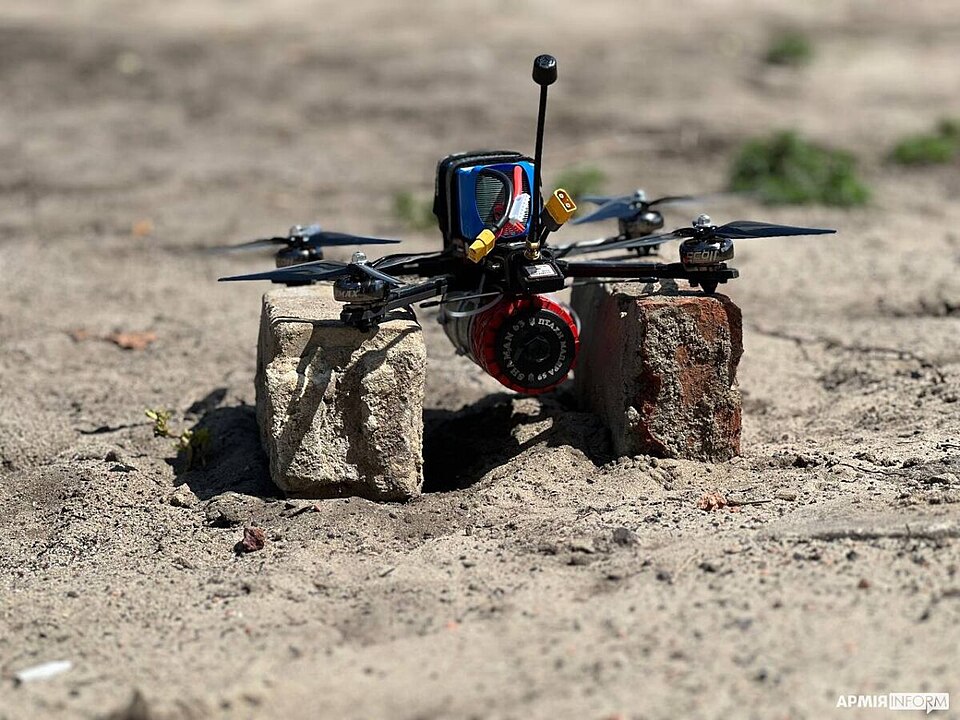
Ukrainian loitering ammunition. Source Wikimedia Commons , author АрміяInform
The most dynamic area of German investment has become the defense industry, and in particular the sector of unmanned systems (drones) and artificial intelligence.
- Investments in production and production infrastructure
• Rheinmetall: The group established a joint venture with Ukraine’s Ukroboronprom. In addition to the already operating service and repair center for armored vehicles (Marder, Leopard), Rheinmetall is implementing a plan to build plants for 155 mm ammunition, propellant, and air defense systems in Ukraine.
• Quantum-Systems: The German drone manufacturer has established an R&D center and production lines in Ukraine. Under the Quantum Frontline Industries joint-venture initiative (and in cooperation with Ukrainian companies, including WIY Drones), reconnaissance and interceptor drones (such as Vector and Strila) are being assembled and developed.
• Helsing: This German defense startup valued at billions of euros is supplying Ukraine with thousands of autonomous drones (including the HX-2 series) equipped with artificial intelligence, enabling operation under conditions of heavy electronic radio jamming. - Berlin’s financing of Ukrainian technologies
The German government has shifted from transferring equipment to financing Ukrainian defense production:
• Berlin financed a contract worth approx. EUR 90 million for the purchase of 50,000 Shrike FPV strike drones produced by the Ukrainian company SkyFall, integrated with terminal autonomy software.
• The Ukrainian-German intergovernmental agreement includes, among other things, the delivery of 15,000 Strila interceptor drones and the joint development of advanced missile and unmanned systems.
• The German-American-Ukrainian partnership (Auterion and Airlogix) led to the launch of production of more than 5,000 long-range strike drones with artificial intelligence modules.
Impact on the German defense industry
The entry of German arms companies into the Ukrainian market is a major leap forward in modernising the Bundeswehr and the German defence sector:
1. Testing technology in the realities of a high-intensity conflict: German companies (Rheinmetall, Quantum-Systems, Helsing) gained access to the results of technologies used on the battlefield, where the feedback loop from user to engineer takes days, not years. Ukrainians enabled a rapid response to necessary changes, and under the influence of their organisation Germans are learning speed of action. This allows for lightning-fast improvement of AI algorithms and resilience to electronic warfare (EW).
2. Breaking through bureaucratic barriers: The German defence industry was known for slow, multi-year procurement cycles. As I mentioned in the context of battlefield testing, investments in Ukraine forced decision-making and implementation processes to be shortened, creating a modernised model of technology management.
3. A new cooperation model: Combining German engineering thought, AI software and capital with Ukrainian production flexibility and low manufacturing costs allows Germany to create inexpensive, mass-produced precision weapons — something that previously, in the economic realities of Western Europe, was impossible.
4. A leading position in European strategic autonomy: Thanks to its involvement in Ukraine, the German arms industry is emerging as a technological leader in the field of battlefield robotics across the entire European Union, building market dominance for decades after the conflict ends.
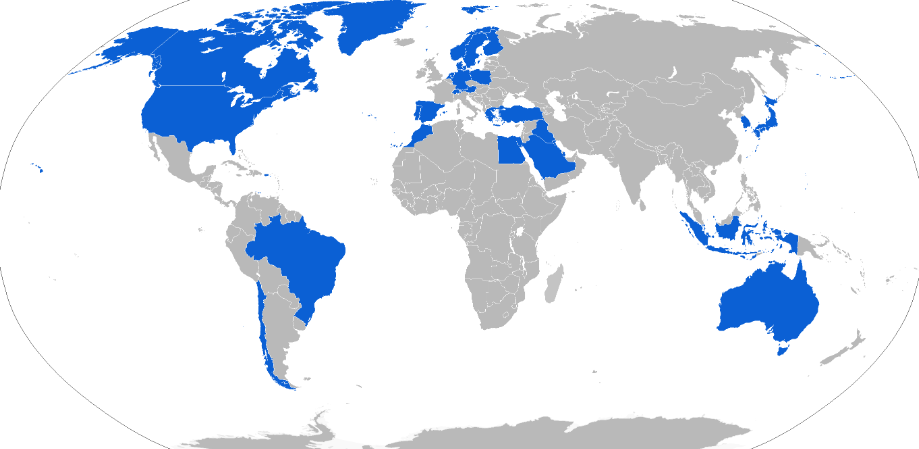
Map of countries using 120 mm systems and technology developed by the Rheinmetall group. Source Wikimedia Commons author: Jurryaany
Looking at it as a whole, I can’t shake the impression that the Germans have managed to reach where their industry can generate enormous margins, and also become the owner of a huge order book. Today’s world is rearming and, as always, wants to arm itself cheaply and effectively. The Ukrainians can do that. Thanks to their sacrifice and ingenuity, they are holding back Russia’s army, which is fighting in a bandit-like manner. They are learning in the process all the time, every day. On their battlefield, many designs have either proven themselves or undergone deep modernization. Ukraine’s daily race for effectiveness with Russia gives Germany—by financing Ukrainian armaments—access to the most modern solutions, which have passed the toughest test of survival under the conditions of a real war. The German industry will grow and profit as a result. The Czechs are acting similarly. Poles, however, as a result of policies that have nothing to do with Poland’s interest, will be left with cheap production of windows and cement. Our defense companies, apart from a few exceptions, without a political impulse are not able to do anything sensible in terms of acquiring battlefield know-how.
Poland is losing out, and some politicians are behaving irresponsibly, as if they didn’t know what is at stake. And the stakes are very high. As you can see, we prefer to deal with Volhynia rather than make real money. Having at our disposal such assets as our location and a strong army of people who know the local conditions, it is surprising that politicians don’t want to use it. And every zloty earned means a bigger budget, higher wages and pensions.
Source: dev.ua / dronelife.com / defenceukraine.com



