
Source: family archive / ed. Nowiny Wschodnie
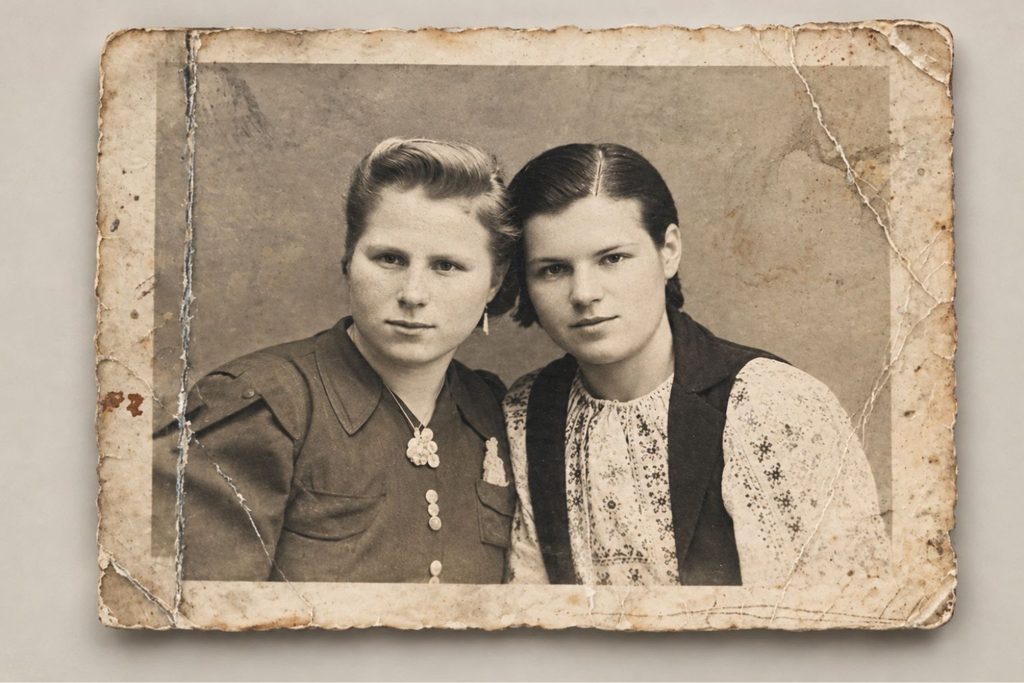
On 1 September 1939 Germany attacked Poland. On 17 September the Soviet Union entered the country from the other side. These dates are recalled every year in textbooks — fronts, diplomacy, signatures under pacts. Rarely — what happened to specific people whom these dates caught completely off guard. This story is about two girls. One was Ukrainian. The other — Polish.


Both were born in the 1920s within the borders of the Second Polish Republic, but hundreds of kilometers apart. Anastazja — from the village of Stratyn near Lviv, a Greek Catholic. Anela — from near Gdynia, a Catholic. They had a chance never to meet. War brought them together.
When we open a history textbook, we see dates, maps, front lines, and the names of commanders. This is how we most often perceive history — as a set of facts.
Yet behind every date there are people — those who decided nothing, only lived, dreamed, started families. Until one day great history knocked on their door.
In 1941 German troops occupied western Ukraine, and the area of today’s Ivano-Frankivsk Oblast was incorporated into the Galicia District in the General Government. For the Third Reich, Ukrainians and Poles were above all cheap labor — hundreds of thousands of young people were deported for forced labor. A year later, sixteen-year-old Anastazja was taken in a freight car to forced labor not far from Gdynia. It was then that for the first time and, as it turned out, the last time in her life she saw the Baltic Sea. She had with her only what she managed to take in the rush.
Ukrainian girls lived in a building where livestock had previously been kept—there was only straw on the floor. Their everyday reality became cold, hunger, lice, and hard physical labor. When, years later, the people who survived that time returned to those memories, they most often spoke not about politics or military actions—but about hunger, lice, and the neighbor who brought bread.
Textbooks remember battles. People remember those who reached out a hand to them.
source: family archive / ed. Nowiny Wschodnie
Why is there no place in a textbook for the neighbor who shares bread?
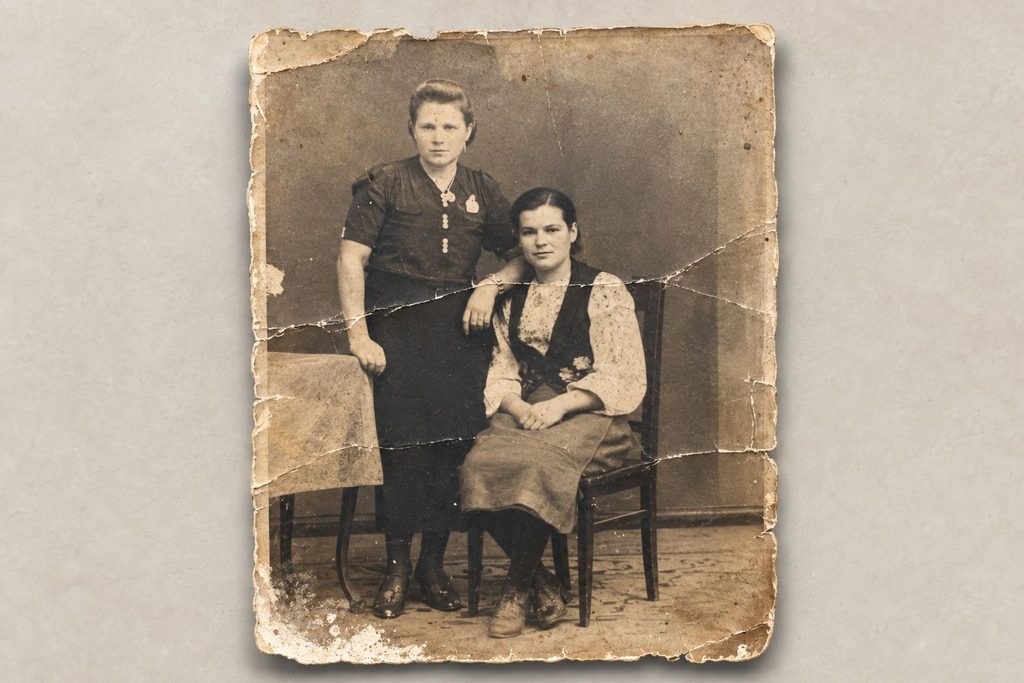
Anela, a young Polish woman from a neighboring town, also lived under occupation and worked on the same farm. In the evening she returned to her home, and the next day she would bring Anastazja a piece of bread or some clothing. For Anela these may have been small gestures. For Anastazja—a chance to survive another day. They didn’t know each other before, and yet Anela shared what she had.
It wasn’t nationality or religion that brought them together. It was humanity. They were not enemies to each other—they were two girls trying to survive in a world plunged into war.
source: family archive / ed. Nowiny Wschodnie
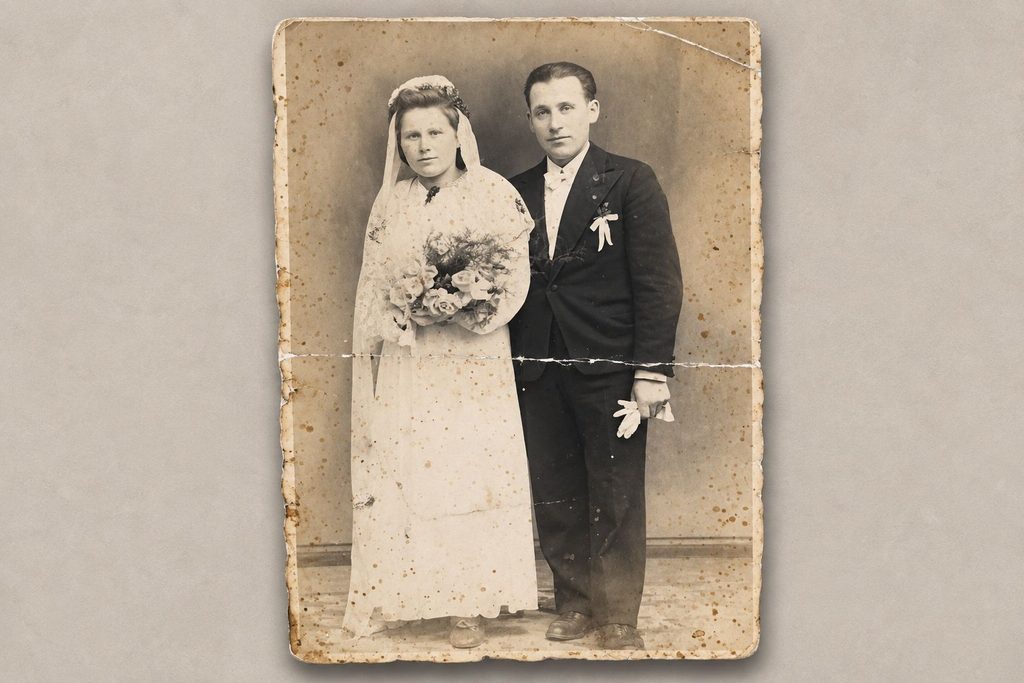
After the war they corresponded for a time. Anela even sent her wedding photograph, which to this day remains in the family archive. Then the contact was cut off—in the USSR, writing abroad was becoming dangerous, and the letters were most likely destroyed to protect the family. Only photographs and memory remained.
From history, you can choose any facts and use them both for reconciliation and for stoking hatred. The facts themselves do not change—only our approach to them changes. This story is not about politics or about who was right. It is a story about people who always pay the price of major decisions made without them.
Sometimes one old photo says more about Polish-Ukrainian relations than many a political debate.
Source: Nowiny Wschodnie / family archive
