
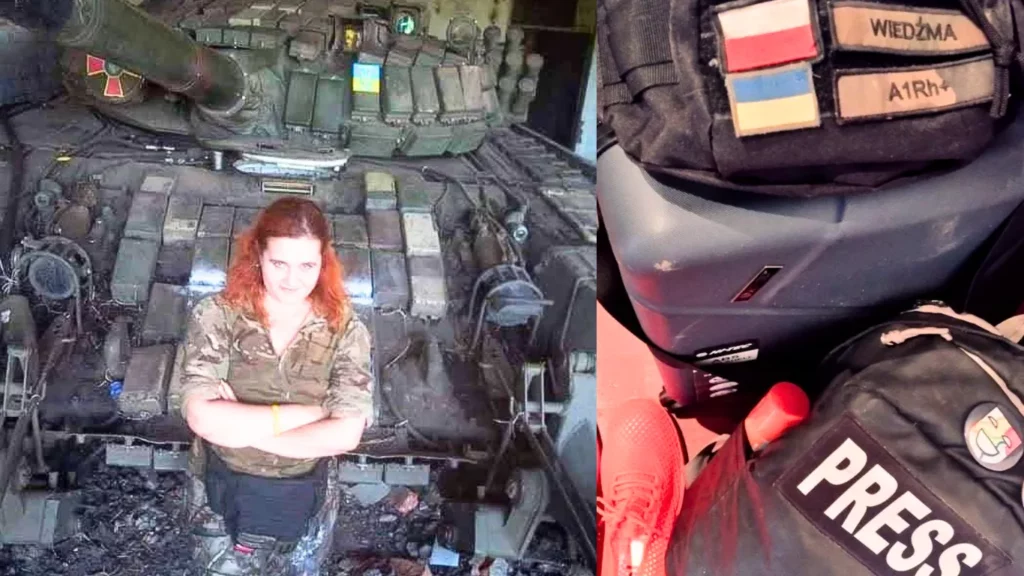
While preparing this article, I thought about the people we know even though we have never actually had the chance to sit down together over coffee and talk. We know them through social media, their posts, photographs and messages. My acquaintance with Karolina is primarily virtual. We know each other through online contacts, exchanges of messages and joint efforts to support Ukraine. We have both spent time in Odesa, a city that is special to me and one I keep returning to, but we have never managed to meet there. What I do remember is a small online argument about the Polish name for the city.


From time to time, I send Karolina various items that are later auctioned off, with the proceeds helping her organise fundraising campaigns. It may not seem like much, but I am always glad to make a small contribution. I also know that my help is going to the right person.
Karolina is one of those people who did not stop at declaring solidarity with Ukraine. When Russia launched its full-scale invasion, she packed her bags and travelled to a country she had long written about, whose history she knew and whose people she had kept in touch with. She stayed for much longer. To this day, Ukraine remains at the centre of her professional and community work.
A journalist who could not stand on the sidelines

Karolina Kuzema comes from Jaworzno. She has worked in journalism since a very young age, specialising in mining and energy. Together with Michał Potocki, she wrote the book ‘Black Gold: The Wars over Donbas Coal’, which examines, among other things, the illegal trade in Ukrainian anthracite and its export by separatists to Poland and other European Union countries. The book earned its authors recognition in the journalism community, including a Grand Press award.
This is an important part of her story because Ukraine did not suddenly enter Karolina’s life on 24 February 2022. She already knew the country, had friends and contacts there, and had reporting experience. She was planning further trips and stories. She even had a ticket to Kyiv for 28 February 2022. Her intention was to spend a month travelling through Ukrainian regions and gathering material for another book. Russia’s invasion changed the nature of that journey. Instead, she wrote a very different book about the war, scheduled for publication in 2027.
She arrived in Ukraine on 10 March 2022. Not for a few days or a brief reporting assignment. She stayed, covering Russia’s aggression, visiting war-affected towns and meeting people whose daily lives had become a struggle for survival. Over time, her activities expanded far beyond journalism. Alongside her reporting came humanitarian aid, the organisation of deliveries, searches for essential equipment, fundraising and direct support for Ukrainian soldiers.
Love shaped by war as well
There is another very important Ukrainian connection in Karolina’s life. Her husband, Ruslan, is Ukrainian and serves in the 116th Separate Mechanized Brigade of the Armed Forces of Ukraine. He has been fighting since the first day of the full-scale invasion. He has served in Donbas and the Kupiansk area, among other places, and took part in the Kursk operation.
For Karolina, this means the war is not merely a professional subject or even a cause to which she has devoted several years. It is part of her immediate reality. When she talks about the needs of Ukrainian units, she does not rely solely on second-hand information. She knows the military community, keeps in touch with soldiers and can verify the needs of her husband’s unit directly. That does not mean, of course, that her work is limited to one brigade. Quite the opposite: she works with numerous Ukrainian units, and her assistance reaches different sectors of the front.
It is worth remembering that behind military names, brigade numbers and successive deliveries are real people. For Karolina, they are not anonymous soldiers seen on television. They are people she knows, speaks with and helps, people whose fate matters to her.
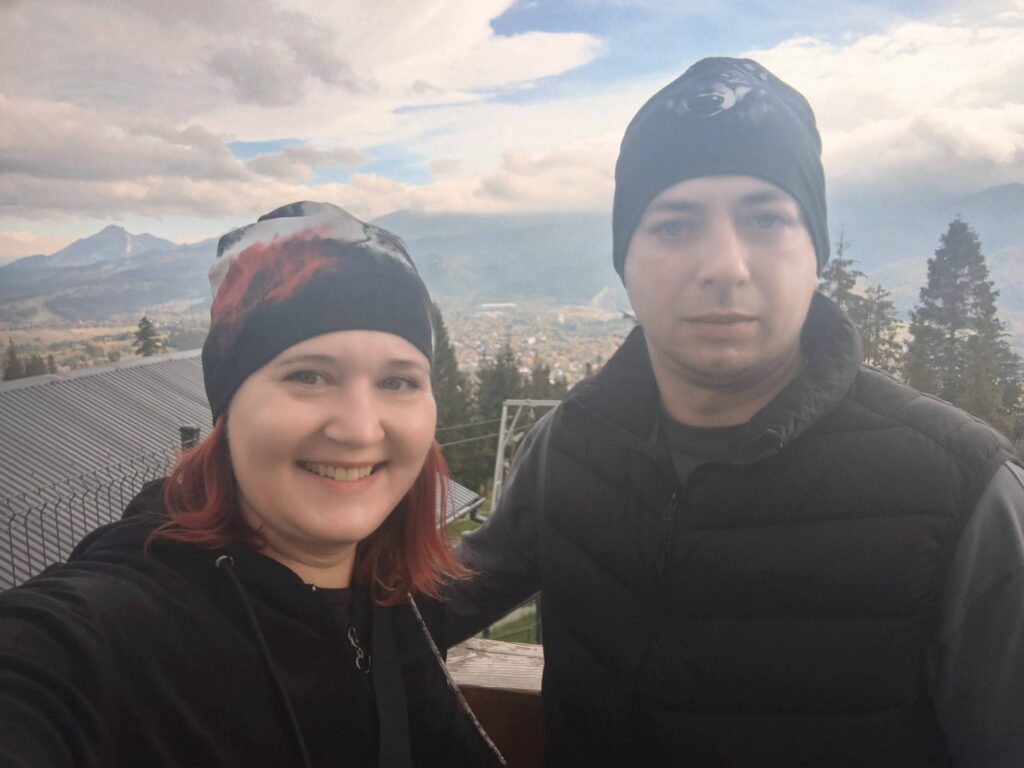
A fundraiser that initially aimed to raise PLN 50,000
One of Karolina’s most important initiatives is the ‘Donbas Battalion Needs Support’ fundraiser, launched in May 2022 on Zrzutka.pl. The original target seemed relatively modest: PLN 50,000 to help soldiers of the Donbas Battalion, whom Karolina had met while working on ‘Black Gold: The Wars over Donbas Coal’.
The first donations came in remarkably quickly. The target was reached within two days. Then the initiative began to grow. More units reported their needs, additional deliveries were arranged and the shopping list grew longer and longer. What began as one fundraiser for one battalion became a major initiative supporting Ukraine’s military across many sectors of the front. By early November 2026, the total raised had exceeded PLN 6 million!
What has that money achieved? The list is impressive: more than 120 vehicles, hundreds of drones, generators, Starlink terminals, charging stations, medical equipment and supplies needed by soldiers at their positions. Purchases also included ambulances, which were prepared for service in eastern Ukraine. But the assistance does not stop with the military. Civilians, medical facilities, local humanitarian initiatives and even animals receive support too.
Not just donations, but auctions too
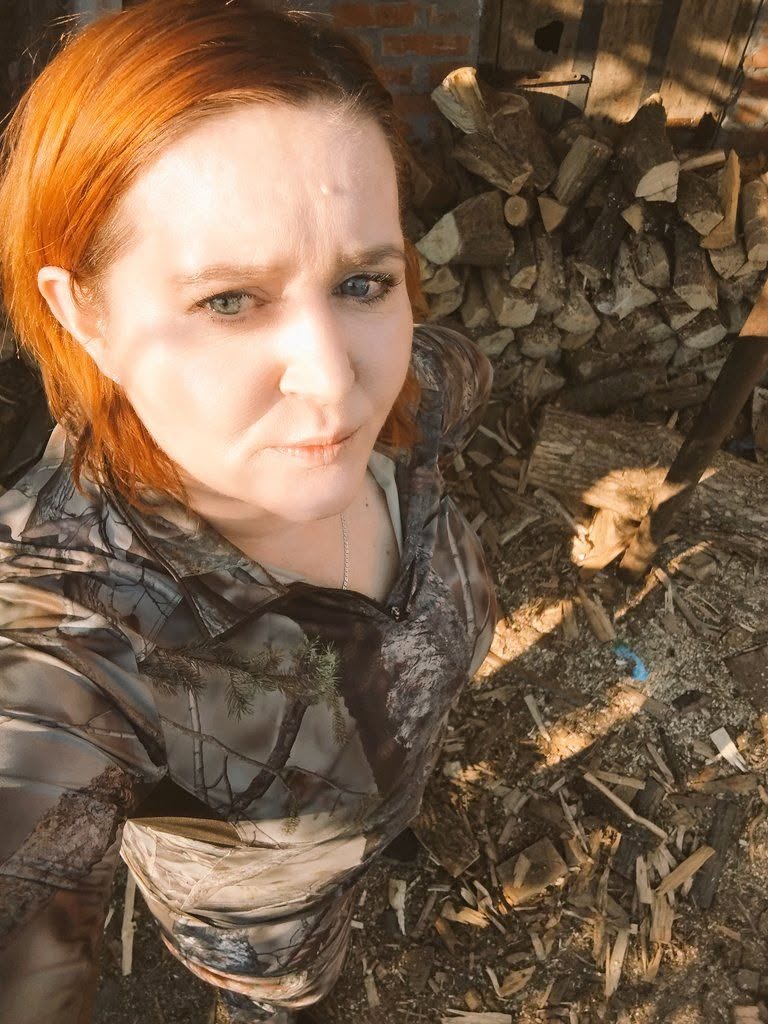
Online auctions play a special role in Karolina’s work. They feature genuine rarities: patches from Ukrainian military units, flags, signed objects, keepsakes donated by soldiers and various other items.
That is also how our paths began to cross. From time to time, I send Karolina items that might interest people supporting Ukraine. They are then auctioned off, and the proceeds go towards the fundraiser.
Stories like these show that helping Ukraine does not always mean making spectacular purchases. Nor does contributing require personally organising deliveries to the front or having large sums of money. Sometimes it is enough to donate something that one person sees as an interesting souvenir and another considers worth bidding for. Ultimately, what matters most is how the proceeds are used.
Karolina herself shows just how much logistical work such efforts require. Some people search for equipment; others negotiate prices, buy supplies, organise transport, handle paperwork or help hand over vehicles. This is not a one-person operation, although without her commitment and determination it probably would never have reached this scale.
We know each other online, but Ukraine connects us
I return to where I began: our acquaintance. I will not pretend that I know Karolina well enough in person to describe her everyday life or private thoughts. Our contact is mainly online. There is something characteristic about that among people brought together by Ukraine. Sometimes we know each other through social media, sometimes through someone else’s accounts, and sometimes through messages exchanged about another aid campaign. Then we discover we have been in the same city, walked the same streets and perhaps even passed each other at one of the markets.
I am well aware, of course, that Karolina’s work is shaped by a deeply personal dimension of this war. Her husband is fighting in the Ukrainian army. When she organises another delivery, raises money for equipment or collects items for auctions, this is not an abstract charitable activity for her. She knows exactly whom she is doing it for and how important the arrival of a particular piece of equipment at a military position can be.
But I would not want to reduce her story to being the wife of a Ukrainian soldier. Karolina has her own professional path, journalistic achievements and an enormous record of work for Ukraine. Her involvement began with a long-standing fascination with the country, reporting and friendships with Ukrainians, and later became part of her family life as well.
I think these are precisely the stories worth telling. Not only those about major foundations, famous names and spectacular campaigns, but also those about people who, for more than four years, have refused to let Ukraine disappear from their everyday lives.
Karolina Kuzema is one of them: a journalist, volunteer, aid organiser and wife of a Ukrainian soldier. Rather than confining herself to reporting on the war, she decided to do everything in her power to help those who face its harshest consequences every day.
And I still hope that we will finally meet in Odesa. I hope we can revisit our little argument about the city’s Polish name. We will sit down, talk and perhaps I will bring Karolina some more items for an auction. Sadly, as long as Russia’s war against Ukraine continues, we will still need auctions like these and people like Karolina.
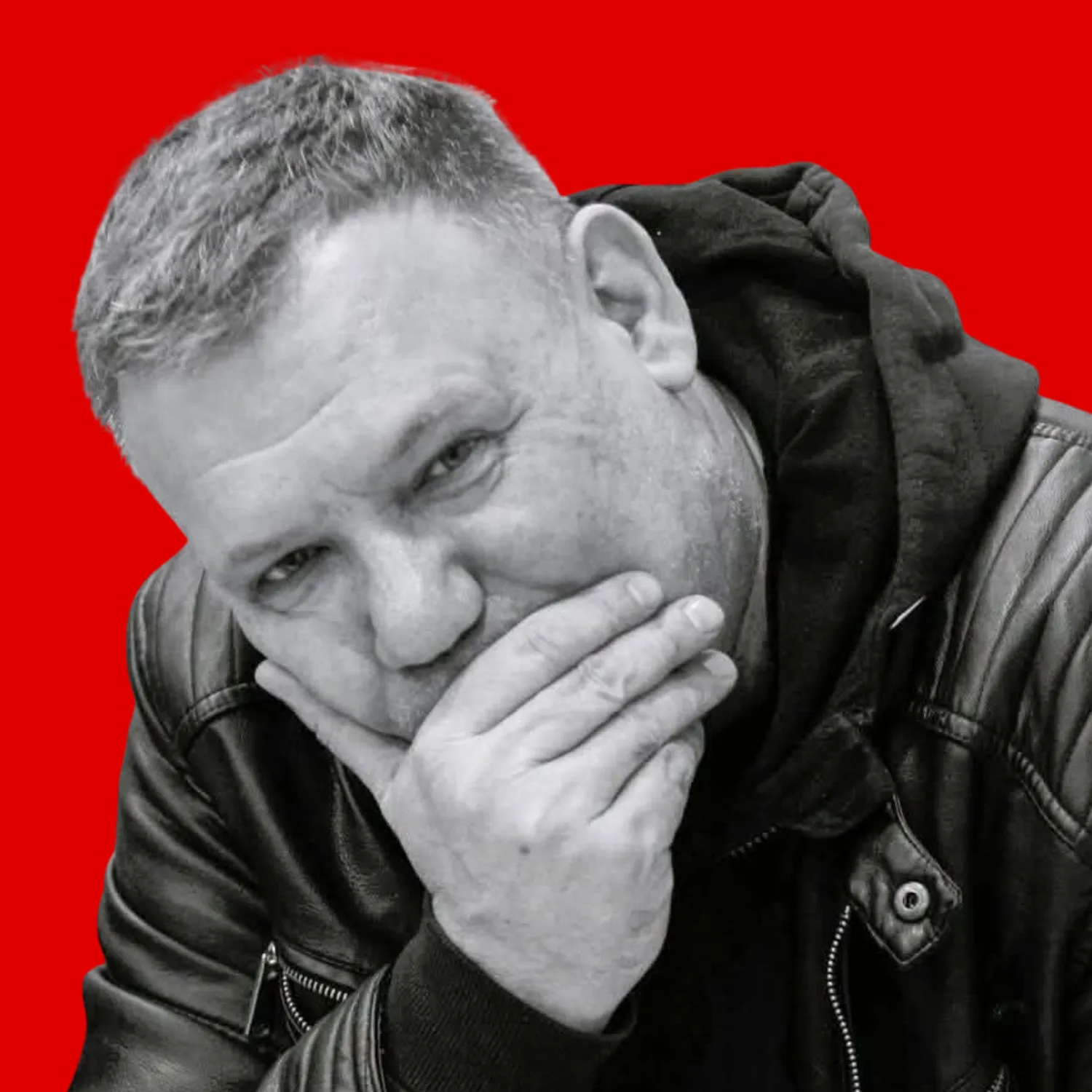
Journalist, columnist, author of books about Ukraine, tour guide, and commentator on developments in Ukraine and Polish-Ukrainian relations.
A certified guide to Odesa, the Odesa catacombs, Ukrainian Bessarabia, and Kyiv. He is the author of numerous publications on Ukraine’s history, culture, and contemporary affairs, some of which have been translated into Ukrainian and published in Ukraine. In 2020, he received the honorary title of Ambassador of Odesa in Poland from the Mayor of Odesa.
On 24 February 2022, the day Russia launched its full-scale invasion of Ukraine, he was in Odesa. He remained there for several months, helping coordinate humanitarian aid and reporting on the war for Polish media outlets. He described his experiences during this period in his book Odessa 4.5.0.
At Nowiny Wschodnie, he publishes articles and commentary on the Russo-Ukrainian war, Russian propaganda and disinformation, Ukrainian history, particularly that of Odesa, as well as Polish-Ukrainian relations and changing public attitudes.
He collaborates with Ukrainian newsrooms and online news outlets and appears in Polish media as a commentator on Ukrainian affairs.
What do you think about this story?
Join the conversation. Please keep comments relevant to the article.
Write a comment