

He has lived in Poland for nearly 15 years, runs a business, has a wife and is raising children. He applied for Polish citizenship twice. Only the second time did he receive a positive decision from the President of the Republic of Poland. Maksym’s story shows that the road to a Polish passport can be long even without additional restrictions. Meanwhile, the government is preparing new requirements: Polish language at B2 level, a citizenship test, a longer period of residence and a more detailed review of one’s financial situation. Will Polish citizenship become a privilege available to an ever smaller number of foreigners?
Polish citizenship 2026
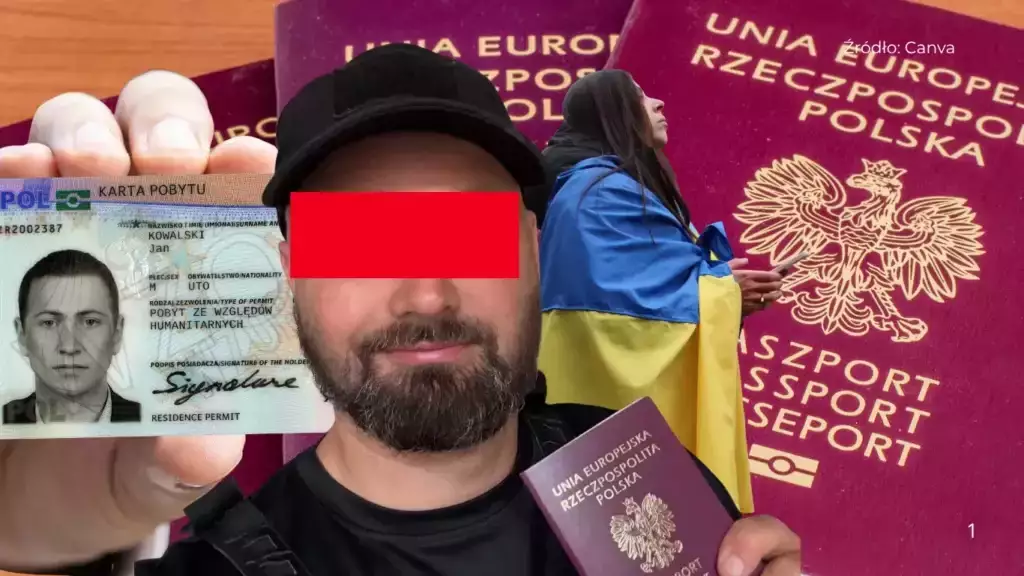
“I am a Pole!”. What does Polishness actually mean?


In my journalistic and social work, I regularly meet migrants, refugees and foreigners from different parts of the world. One recent situation particularly stuck in my memory.
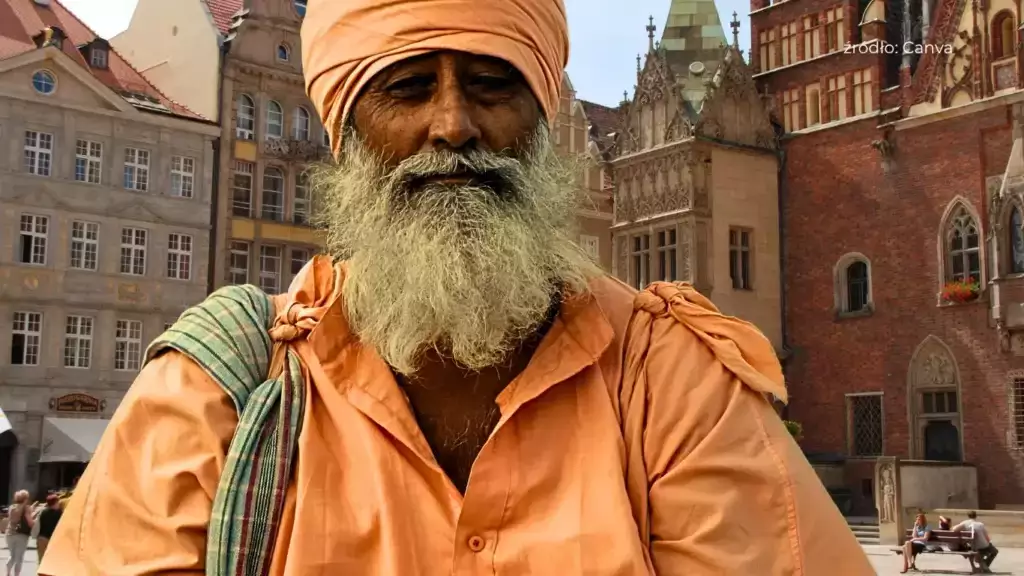
A man from India entered the room. He spoke Polish, with a noticeable accent. At one point he proudly announced:
“I am a Pole!”.
What surprised me was not so much the declaration itself as the way he said it — with conviction and a sense of belonging.
I then also recalled the story of a man from Africa who introduces himself on social media as “AfroPole”. In the comments under his statements, you can find opinions that he is a greater patriot than many a person born in Poland.
I do not intend to decide who is the greater patriot. It is worth asking, however: what makes a person start to regard Poland as their homeland?
Is knowledge of the language enough? Many years of work? Paying taxes? Raising children in a Polish school? Or maybe a sense of connection to a country that cannot be measured by any exam?
These are questions that are especially relevant in the context of the planned changes to the regulations on Polish citizenship.
Maksym’s story. Almost 15 years in Poland and two citizenship applications
My interlocutor is Maksym. For the purposes of this article, I changed his name, while keeping the most important elements of the story he told.
He has lived in Poland for almost 15 years. He runs a business, has a wife and children. As he emphasizes, an important part of his identity is an awareness of Polish roots and a connection to Polish culture.
He received Polish citizenship almost a year ago, through a grant by the President of the Republic of Poland. However, it didn’t work out the first time.
His story began similarly to the stories of many foreigners: with a temporary residence permit. First he obtained a document for a year, then subsequent permits, including for three-year periods.
He worked, developed his business, and gradually built a stable life in Poland.
After a few years he applied for an EU long-term resident permit. In the meantime, he tried to obtain citizenship through a grant by the president, but the first application was not successful.
Maks suspects that his residence and life situation at that time was not convincing enough. However, it should be noted that this is not a confirmed reason for the refusal. The President of the Republic of Poland has no obligation to justify a refusal to grant citizenship.
After obtaining EU long-term resident status, my interlocutor’s situation already looked different. He could present a many-year history of legal residence, work, running a company, and family and social life.
He filed another application for the granting of citizenship. This time the answer was positive.
In his case, more than ten years passed from the start of living in Poland to obtaining Polish citizenship.
This story shows that the path to citizenship can be long even when the regulations do not impose a single, rigid waiting period on the applicant.
It is worth emphasizing one important thing: Maksym chose the procedure of being granted citizenship by the President. This does not mean that he was legally required to wait ten years. It was time resulting from the course of his individual story.
Two paths to Polish citizenship. The difference matters greatly
In public debate, people often speak generally about “obtaining Polish citizenship.” Meanwhile, there are different grounds for acquiring it.
For many foreigners, two procedures are the most important.
The first is being granted citizenship by the President of the Republic of Poland.
The President may grant Polish citizenship to a foreigner on the basis of Article 137 of the Constitution of the Republic of Poland and the provisions of the Act on Polish Citizenship. This is his prerogative.
In this procedure, there is no single statutory minimum period of residence in Poland nor a general obligation to have a B1 language certificate. The President makes the decision individually, and a refusal does not require justification.
The second route is recognition as a Polish citizen by the voivode.
In this case, the Act sets out specific conditions that a foreigner must meet. Depending on the legal basis, factors that matter include, among others, the length and type of stay, family situation, income, housing, and knowledge of the Polish language.
It is precisely this second procedure that the key assumptions of the new government proposal concern.
Confusing the two paths leads to the mistaken belief that every foreigner must pass the B1 exam or live in Poland for a specified number of years for the President to be able to grant them citizenship.
That is not the case.
Applications to the President are no longer free of charge. The fee is PLN 1669
Maksym’s story has one more important financial dimension.
When he submitted his applications for citizenship, he did not have to pay the current stamp duty for the voivode’s acceptance of the application.
The situation changed on 1 August 2025.
From that date, the fee for the voivode’s acceptance of an application for granting citizenship by the President of the Republic of Poland is PLN 1,669.
For many foreigners this is a significant expense, especially when administrative costs are joined by sworn translations, document certifications, and other expenses related to preparing the application.
Importantly, paying the fee does not mean there is a guarantee of obtaining citizenship.
It is also worth remembering that the fee for a decision on recognition as a Polish citizen currently amounts to PLN 1,000, with statutory exemptions provided for.
This means that even before the planned amendment, obtaining citizenship has become more expensive for some foreigners.
The government is preparing to tighten the regulations
On 27 October 2026, the assumptions for a draft act amending the Polish Citizenship Act and certain other acts were published in the register of legislative work of the Council of Ministers.
The draft was assigned the number UD491. The Ministry of the Interior and Administration is responsible for it.
The ministry indicates that the 2009 act was created under different migration realities. In recent years, Poland has become a country of residence for a significant number of foreigners, including citizens of Ukraine.
According to the ministry, solutions are needed to enable a more thorough assessment of a foreigner’s real ties to Poland, their integration, and their compliance with the legal order.
Among the announced changes are extending the required period of residence, raising the required level of Polish-language proficiency, a citizenship test, a declaration of loyalty, and new criteria regarding income and place of residence.
As of 30 October 2026, these are legislative assumptions, not binding regulations.
Polish at the B2 level. For many working migrants, this is a serious challenge
One of the most noticeable proposals is to raise the required level of Polish language proficiency from B1 to B2.
This would apply to the procedure for being recognized as a Polish citizen.
It is worth explaining that even now, language proficiency at the B1 level must be properly documented. One way is a state certificate of Polish as a foreign language. The act also provides for other acceptable documents, including certain school leaving certificates.
Not every foreigner therefore has to take a state language exam, but a mere declaration of Polish proficiency is generally not enough.
Raising the required level to B2 may mean a significant change.
In my professional work, besides journalism, I also deal with activities related to teaching Polish to foreigners.
I see that the problem often is not a lack of willingness to learn.
Many participants really want to speak Polish better. They know that language opens the way to better work, independence, and integration.
The biggest obstacle, however, turns out to be the organization of everyday life.
People employed in factories, warehouses, and production plants often work in shifts. Their schedule changes every week or every few weeks.
Meanwhile, a language course usually takes place at fixed hours.
An employee who cannot attend classes for several weeks starts to fall behind with the material. After further absences, it is hard for them to return to the group. As a result, they give up learning.
Group classes sometimes have a dozen or so participants. The teacher cannot always adjust the pace of teaching to the needs of one person who has missed a significant part of the program.
An alternative is individual lessons, but their cost is sometimes too high.
For some employees, one private lesson (45 min) may mean an expense comparable to the pay for 3–4 hours of work. Plus there are textbooks, materials, and any exam fees.
In practice, some migrants therefore stop at a level of language sufficient for work and everyday shopping, but insufficient for more advanced communication.
Requiring a B2 level may increase motivation to learn. At the same time, without broader access to flexible and affordable courses, it may become another barrier for people who have already been working and living in Poland for many years.
Civic test. A new exam on knowledge about Poland
The Ministry of the Interior and Administration (MSWiA) also proposes introducing a civic test.
It would test foreigners’ knowledge about Poland. The detailed scope of questions and the way the exam will be conducted have not yet been specified in the published assumptions.
Currently, in the procedure for being recognized as a Polish citizen, there is no universal, separate exam on knowledge about Poland.
The new test would therefore be an additional requirement, independent of documenting knowledge of the Polish language.
The draft also provides for a declaration of loyalty to the Republic of Poland.
The question remains whether the new requirements will actually make it possible to better assess foreigners’ integration, or whether they will primarily increase the number of formalities.
Three years or ten? Not all drafts say the same thing
Currently, one of the bases for recognizing a foreigner as a Polish citizen is at least three years of uninterrupted residence on the basis of a permanent residence permit, an EU long-term resident permit, or the right of permanent residence, provided additional conditions are met.
Important: this is not about any three years of stay in Poland, but about a period calculated on a specific legal basis.
There are also other paths to being recognized as a Polish citizen, providing for different residence periods and additional prerequisites.
The new government proposal assumes extending the required period of residence, but the assumptions for UD491 do not yet give a specific number of years.
So where does the information about ten years come from?
Such a change is provided for by a separate presidential draft, submitted to the Sejm in 2025 as print no. 1759.
This draft bill assumes extending from three to ten years the required period of stay under one of the grounds for recognition as a Polish citizen.
This does not mean, however, that every person would have to live in Poland for ten years from their first arrival. The draft refers to a specific residence ground and a specific provision of the act.
The government draft UD491 and the presidential bill print no. 1759 are separate initiatives.
Therefore, one cannot present the ten-year requirement as a solution already adopted by the government.
Maks waited more than ten years. Will the new regulations change anything in similar stories?
Let’s go back to my interlocutor.
Maks did not receive Polish citizenship after three years. He also did not receive it after his first application to the President.
Over the following years he worked, ran a business, supported his family, and obtained a more stable residence status.
Ultimately, he obtained citizenship by way of conferment by the President of the Republic of Poland.
In his case, more than ten years passed, but this was the result of an individual path, not a ten-year requirement applicable in the presidential procedure.
Moreover, after obtaining EU long-term resident status, he could also have had the option of using the procedure of recognition by the voivode, provided he met all the required conditions.
That is precisely why it is so important to distinguish between the two procedures.
If the legislator tightens the rules for recognition as a Polish citizen, some foreigners may more often consider applying to the President.
However, this will not be an automatic alternative guaranteeing a positive decision.
Income, housing, and taxes. The state wants to scrutinize foreigners more closely
The government draft also provides for more detailed financial requirements.
The ministry proposes setting a minimum income, verifying sources of livelihood, and determining whether the foreigner’s center of life is indeed located in Poland.
Tax residence also matters.
The planned solutions also include extending the requirement to prove legal title to a residential premises.
Today, income and legal title to a dwelling are required in certain cases specified by law. Not all grounds for being recognized as a Polish citizen provide for identical conditions.
The amendment would make these rules stricter and standardize them more broadly.
For now, however, it is not known what the minimum income level would be, nor how the situation of people working irregularly, running a business, or being supported by their family would be assessed.
Fines, convictions, and false documents. More grounds for refusal
The Ministry of the Interior and Administration (MSWiA) wants to expand the list of circumstances that may lead to a refusal to recognize someone as a Polish citizen.
Among the announced solutions are certain final convictions, fines and penalties, as well as the use of forged documents or providing false information.
This does not mean, however, that every speeding ticket will automatically close the path to citizenship.
The exact wording of the future provisions will be decisive.
The draft also provides for additional mechanisms for responding to situations in which a decision recognizing someone as a Polish citizen was obtained through fraud or by concealing important information.
What do the changes mean for Ukrainians and Belarusians living in Poland?
For many Ukrainian citizens, Poland has long since ceased to be just a place of temporary stay.
Here they work, run businesses, buy apartments, raise children, and plan their future.
Some of them have lived in Poland for ten, fifteen, or even more than twenty years.
However, the length of stay does not always translate directly into the possibility of obtaining citizenship.
Its legal basis also matters.
A person who has spent many years in Poland on the basis of successive temporary permits does not necessarily meet the requirement of three years’ residence on the basis of permanent residence or EU long-term resident status.
Similarly, people covered by temporary protection do not automatically receive citizenship after a certain number of years has passed.
For those who are only planning naturalisation, additional language and financial requirements may mean further years of preparation.
At the same time, one should not assume that all proposed changes will cover every citizenship-acquisition procedure to the same extent.
Will the new rules apply to people who have already submitted an application?
This question may be particularly important for foreigners whose proceedings are already under way.
In the case of the government draft UD491, detailed transitional provisions have not yet been published.
It is therefore not known how the final amendment will treat applications submitted before it enters into force.
There are no grounds at present to claim that all ongoing cases will automatically be covered by the new requirements.
It would be equally unjustified to assure that every application submitted before the change in regulations will certainly be considered under the existing rules.
This will be determined only by the final wording of the act.
Should Polish citizenship be harder to obtain?
My thoughts return to the man from India who proudly said: “I am a Pole.”
To the Afro-Pole whose patriotism internet users appreciate.
And to Maksym, who built his life in Poland for more than a dozen years before he received Polish citizenship.
Each of these stories is different. Yet all of them show that a bond with the country can form long before receiving a document confirming citizenship.
The state has the right to set the conditions for naturalisation and to check whether candidates meet them. At the same time, it is worth considering whether the new requirements will be a real test of integration or an additional barrier for people already rooted in Polish society.
In my work I see people who, after a night shift, try to find time for a Polish lesson. I also see those who give up learning because they have to choose between the course and work.
Not everyone who speaks Polish less well is less connected to Poland. And not everyone who knows the language perfectly automatically feels part of this society.
Perhaps this is precisely where the greatest challenge of the planned changes lies: how to create a demanding but fair system that will take into account not only documents and exams, but also people’s real lives.
The final shape of the new regulations is not yet known. One thing is certain: for many foreigners, the discussion about Polish citizenship is not solely about a passport. It is about the future of their families and the place they have called home for years.
Sources: Nowiny Wschodnie / Chancellery of the Prime Minister — “Draft act amending the Act on Polish citizenship and certain other acts”, number UD491, published on 27 October 2026 / Ministry of the Interior and Administration / Sejm of the Republic of Poland — presidential draft act amending the Act on Polish citizenship, print no. 1759 / Act of 2 April 2009 on Polish citizenship — Article 30 et seq., text made available in the legal acts system. / Lower Silesian Voivodeship Office “Recognition as a Polish citizen”, service card of 28 May 2026.
Information status: 30 October 2026. Informational material; it does not constitute individual legal advice

Journalist and Editor-in-Chief of Nowiny Wschodnie, a news platform followed by more than 140,000 people on social media. A graduate in Journalism and Social Communication, he has been co-creating and developing Nowiny Wschodnie since 2017. He gained professional experience working with local and international media.
He specializes in fact-checking, countering disinformation and propaganda, and information security. His work focuses on Poland, Ukraine, Eastern Europe, and Polish-Ukrainian relations. He is also the founder of a non-profit organization working in the fields of integration and intercultural dialogue.
What do you think about this story?
Join the conversation. Please keep comments relevant to the article.
Write a comment