

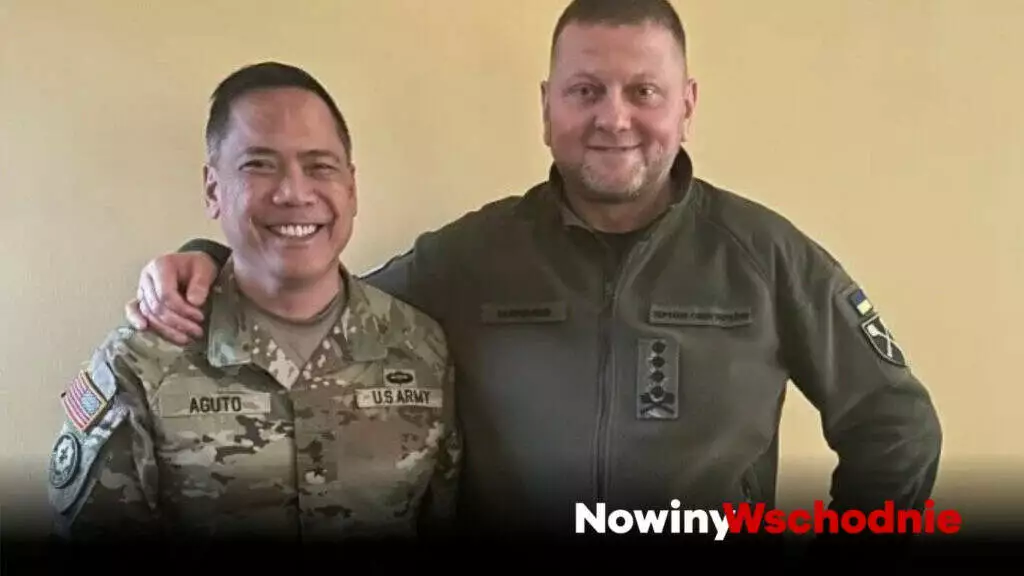
A high-ranking U.S. Army general responsible for coordinating military support for Ukraine left classified documents on a train in Europe. The materials were unchecked for more than 24 hours, according to a report released by the Pentagon’s inspector general. The case raises serious questions about security standards during the ongoing war.
Secret maps left on the train


The incident occurred April 4, 2024 year while returning from Ukraine to Germany. General Antonio Aguto It carried a set of maps marked “secret.” Due to their size, the documents were contained in a special tube.
The investigation determined that the maps were brought aboard the train, but no one could confirm that they were removed after the journey. The general learned of the missing tube only after returning to his headquarters in Wiesbaden.
The documents were recovered the next day and returned via U.S. Embassy personnel in Ukraine. According to available information, they were not tampered with. However, the report indicates that, contrary to applicable procedures, special courier transportation for classified materials was not provided.
General Aguto admitted that as commander he took responsibility for the incident, although he was not the person directly responsible for the physical transfer of the documents.
Alcohol, Falls, and Concussions in Kyiv
The report also reveals other disturbing circumstances related to the general’s visit to Ukraine.
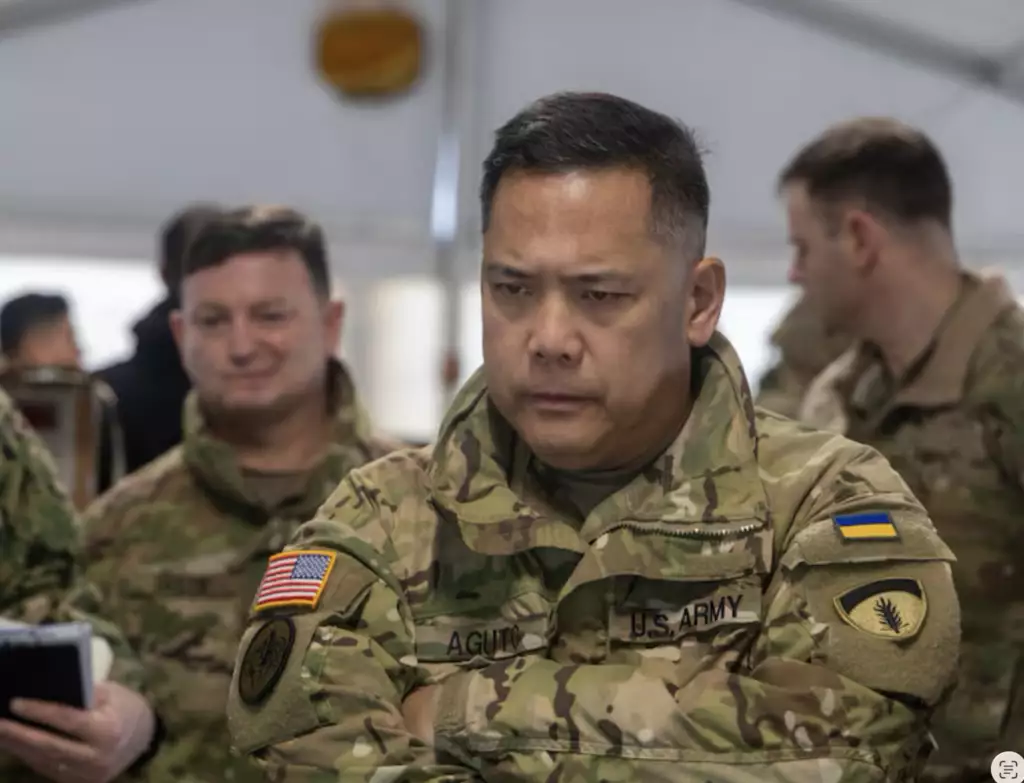
On May 13, 2024, during an official dinner in Kyiv, Aguto consumed a significant amount of alcohol. According to witnesses, it was about a liter of chacha—a strong drink with an alcohol content of 40–50 percent.
That same evening, the general collapsed in his hotel room, hitting his head against the wall. In the following hours, he suffered further falls, including one on the way to the US Embassy. Witnesses described his condition as distinctly abnormal—he was disoriented, sluggish, and had difficulty communicating.
Despite suggestions from his colleagues to cancel the scheduled meeting, Aguto attended the meeting with then-US Secretary of State Antony Blinken. He was eventually hospitalized and diagnosed with a concussion. Investigators determined the injuries were caused by excessive alcohol consumption.
Problems in the unit and a drop in morale
During the investigation, there were also indications of difficult conditions in the Security Assistance Group–Ukraine (SAG-U) unit commanded by Aguto.
Soldiers reported excessive workload, long working hours, and poor living conditions. Surveys indicated that conditions were worse than during previous deployments to Iraq and Afghanistan.
However, allegations that the general himself was directly responsible for the toxic atmosphere in the unit have not been confirmed, although the report indicates that the command style and operational pressures had an impact on the team’s morale.
Consequences and the Pentagon’s reaction
The Pentagon Inspector General recommended that the matter be referred to the appropriate security structures at U.S. European Command.
General Antonio Aguto retired from active duty in August 2024. The SAG-U unit remains operational and is responsible for coordinating support for Ukraine.
What does this mean?
In the context of the ongoing war and the massive scale of support for Ukraine, this incident raises questions about standards of accountability and control over classified information.
Source: Military Times / Pentagon Inspector General Report

Journalist and Editor-in-Chief of Nowiny Wschodnie, a news platform followed by more than 140,000 people on social media. A graduate in Journalism and Social Communication, he has been co-creating and developing Nowiny Wschodnie since 2017. He gained professional experience working with local and international media.
He specializes in fact-checking, countering disinformation and propaganda, and information security. His work focuses on Poland, Ukraine, Eastern Europe, and Polish-Ukrainian relations. He is also the founder of a non-profit organization working in the fields of integration and intercultural dialogue.
What do you think about this story?
Join the conversation. Please keep comments relevant to the article.
Write a comment