

More and more foreigners in Poland are being brought to court because they have made their bank accounts available to third parties. Most often, this occurred under the guise of “remote work” or “transfer processing.” In practice, these accounts were used for fraud and money laundering, and account owners—despite their ignorance—faced criminal charges and often faced the risk of deportation.
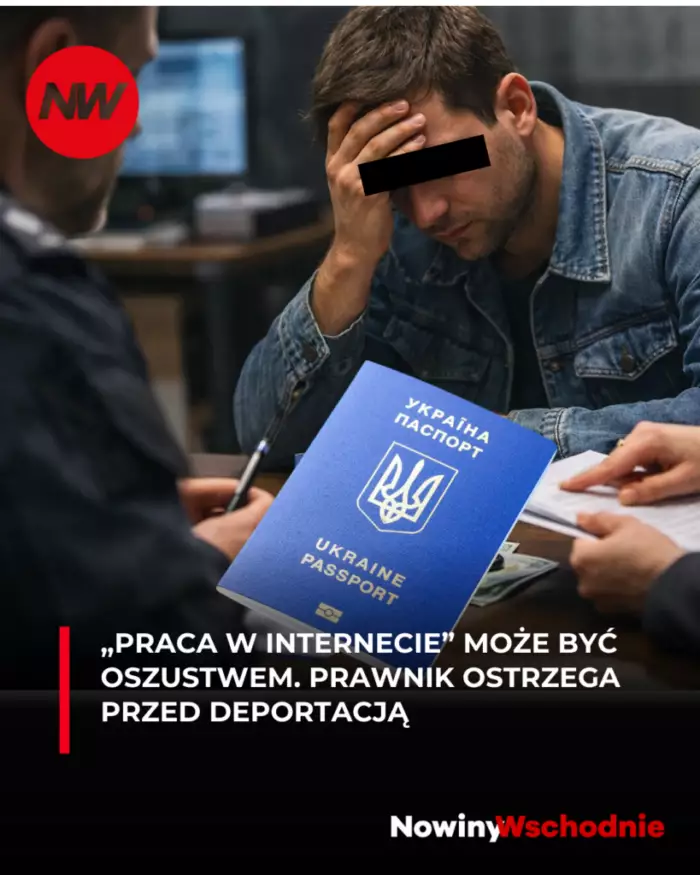
“It’s just an account,” “it’s just a transfer,” “it was supposed to be a job”—I hear these phrases at my law firm at least once a week. A growing number of foreigners, especially Ukrainian citizens, are seeking legal assistance in criminal cases involving the sharing of bank accounts with third parties. In the vast majority of cases, these individuals were unaware that their accounts would become part of a criminal enterprise. Unfortunately, Polish criminal law does not always treat this lack of awareness as a circumstance excluding liability.


The practice almost always begins innocently. Someone stumbles upon a job posting in one of the numerous Facebook groups or Telegram channels. The offer appears legitimate: “remote work”, “additional income”, “payment processing”, “cryptocurrency withdrawals”, “settlement of online games” or “technical transfers”. Sometimes it is directly mentioned about the gambling industry, sometimes on the contrary it is emphasized that it is “ordinary office work”, only with the need to use your own bank account.
Mechanism of recruitment and use of bank account
Fraudsters claim it’s just a matter of formality. They explain that the company can’t use its own accounts, that the funds must go through an “employee” account, or that the money is from foreign platforms and can’t be withdrawn without an intermediary. Assurances of legality are offered, and often the argument is that “everyone does it.”
Then, the meeting takes place. It usually takes place in a public place—a café, a shopping mall, or a train station. The person who responded to the ad expects an interview. Instead of just one interviewee, however, several people show up. The atmosphere is deliberately dynamic and stressful. There’s no time to think.
At some point, a request for a mobile phone appears. This is explained by the need to “increase limits,” “configure banking app,” or “check settings.” Then comes a request for a bank account number.
In reality, no salary or legitimate funds are deposited into the account. Instead, money from frauds begins to flow in—internet scams, fake investments, phishing. Fraudsters stand nearby and almost immediately withdraw funds from an ATM, using BLIK codes or the payment card associated with the account. The entire operation takes a few minutes.
In the end, the “employee” receives 100 or 200 złoty as payment for the “assignment.” Contact ceases. The ad disappears from the internet. The Telegram group is closed or renamed. After a few weeks—sometimes months—a summons arrives from the police or prosecutor’s office. The account holder then learns that their account was involved in a crime.
Criminal liability: from aiding and abetting to money laundering
From the perspective of law enforcement, bank accounts are now one of the primary tools used in financial crimes—from classic frauds, through online scams, to money laundering. It’s the account holder who is at the bottom of the financial trail and is often the first to face charges, even if they weren’t the actual beneficiary of the crime.
Court case law demonstrates the broad spectrum of possible legal classifications. In many cases, providing access to a bank account has been classified as aiding and abetting fraud under Article 18 § 3 of the Penal Code in conjunction with Article 286 of the Penal Code. Courts emphasize that simply allowing anonymous use of an account by strangers can constitute at least a contingent intent. One ruling explicitly stated that it is difficult to find credible the claim that the person providing access to the account “did not anticipate and did not consent” to the account being used for property crimes (judgment of the Court of Appeal in Wrocław of October 24, 2018, II AKa 286/18).
In other cases, courts have assumed even broader liability, considering such conduct to constitute complicity in fraud. This occurred when providing access to the account was part of an agreed-upon division of roles, and the formally “passive” person in fact participated in the entire criminal scheme, for example by withdrawing funds or transferring them (judgment of the District Court in Krosno of 15 March 2017, II K 75/15; judgment of the Court of Appeal in Gdańsk of 8 December 2015, II AKa 332/15).
At the same time, case law recognizes cases in which courts were unable to attribute to the perpetrators the intent to aid in fraud, but found them guilty of receiving stolen goods, including unintentional receiving. In such cases, the key finding was that the accused, while unaware that the money originated from a specific crime, “based on the surrounding circumstances, should and could have assumed” that it had an illegal source (judgment of the District Court in Legnica of 1 October 2013, VIII K 446/13). This reasoning is particularly dangerous for individuals who were drawn into the scheme under the guise of employment.
The most serious consequences, however, arise when courts classify such behavior as money laundering under Article 299 of the Penal Code. In this respect, the case law is exceptionally strict. Courts have repeatedly emphasized that this crime is formal in nature – merely accepting funds derived from crime into a bank account is sufficient to commit it, even without the intention of achieving any financial benefit (judgment of the Court of Appeal in Warsaw of July 10, 2019, II AKa 22/19; judgment of the Court of Appeal in Katowice of July 19, 2019, II AKa 253/19).
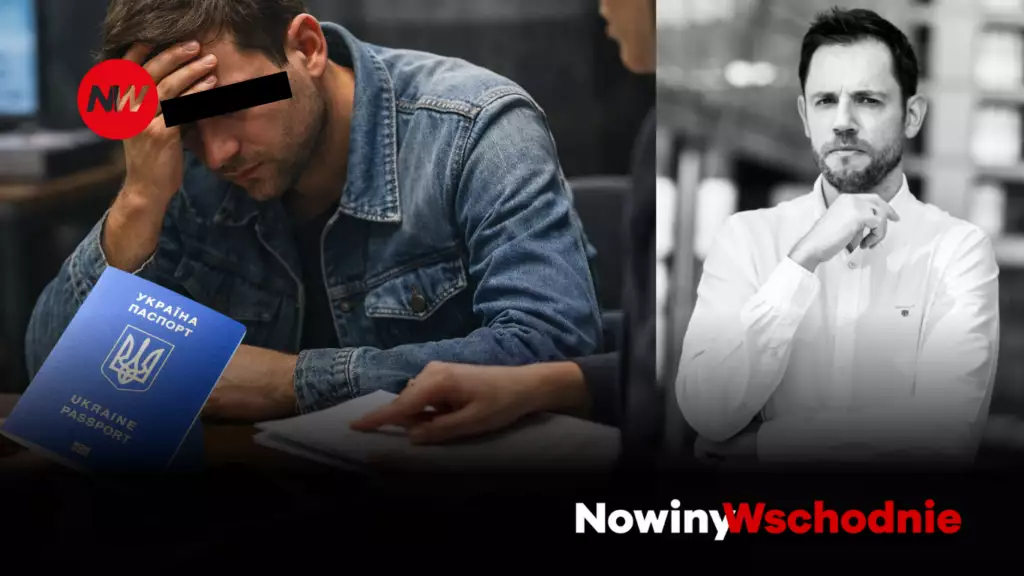
Foreigners, Deportation, and the Question That Decides Fate
In my experience, Ukrainians are particularly vulnerable to this practice. Recruitment ads appear in Facebook groups and Telegram channels, offering “remote work,” “transfer assistance,” and “technical accounts.” Given the realities of migration, financial pressures, and language barriers, many people fail to recognize the threat. Only a call from the police or prosecutor’s office awakens them to the scale of the problem.
Importantly, criminal liability is often just the beginning. A conviction—and sometimes even a conditional discontinuation of proceedings—can lead to serious administrative consequences, including the revocation of a residence permit or a return order. In practice, this means the risk of deportation, even in cases where the individual did not instigate the crime.
The scale of the phenomenon is so large that I decided to conduct a legal provocation aimed at exposing the mechanism by which foreigners are recruited to provide bank accounts. The evidence collected led to the dismantling of one such group, and the perpetrators were arrested. This demonstrates that these are not isolated incidents, but an organized operation based on exploiting ignorance.
If we unfortunately get caught up in such a criminal activity, time is of the essence. We should contact a lawyer, the bank, and the police. The order is not random, as the information we include in our statements or explanations is crucial.
Criminal law can be ruthless. In many of the cases I handle, one question is crucial: whether a person could and should have foreseen how their account would be used. The answer to this question often determines the verdict—and the person’s future fate.

What do you think about this story?
Join the conversation. Please keep comments relevant to the article.
Write a comment