

September 1939 and the beginning of a brotherhood-in-arms
The war in Ukraine and Poland’s unprecedented solidarity with its eastern neighbor still astonish many outside observers to this day. They wonder how it is possible that two nations with such a difficult history full of painful wounds were able almost overnight to set aside old resentments. Yet this simple phenomenon of former rivals uniting in the face of a mortal threat is nothing new in world history. In Poland’s case, it is enough to go back to 1939. Polish–Czechoslovak relations then resembled political ruins—destroyed by Czechoslovak and Polish folly, the greatest of which was the forcible seizure of Zaolzie, first by Czechoslovakia and then by Poland. I wrote about this recently; for those interested, here is the link. And yet, when World War II became a fact, the former adversaries—through a mechanism strikingly similar to today’s Polish–Ukrainian alliance—were forced to give rise to an extraordinary brotherhood in arms. Today, hundreds of Poles are fighting in Ukraine, and thousands are involved in providing aid. Shifting the border of the Russian threat to the southeast and the possible fall of Kyiv would place Poland in an analogous, deadly strategic trap—one against which our own history, with Czechoslovakia in the background, warns us. Where does Poland’s ability to take the right side, even in spite of a difficult history, come from? The answer may be provided by the history of Polish–Czech relations.


After the Polish and Hungarian action to carve up the Czechoslovak state, calm finally returned between our nations. On the horizon there was already a much bigger problem for everyone. Bohemia fell under German pressure, and Slovakia became a satellite state of the Third Reich. Now Poland became the next victim of the Germans. After discovering this (in fact expected) fact, Czechoslovak soldiers and young people who wanted to fight fled from the occupied Czech lands to Poland, seeking assignment to the Polish Army. It was not that easy; just in case, these volunteers were grouped in several centers. Pilots and other specialists in various equipment were particularly valuable. Josef František was already almost on a ship sailing to our Western allies when Polish officers presented him and other Czechs with the possibility of fighting against the Germans in Poland. Some of the Czechs saw it as a good opportunity and stayed, after which they were quietly incorporated into Polish units. Thus began the famous path of Josef František – a “Czechoslovak,” as he called himself – who to this day connects Poles and Czechs.
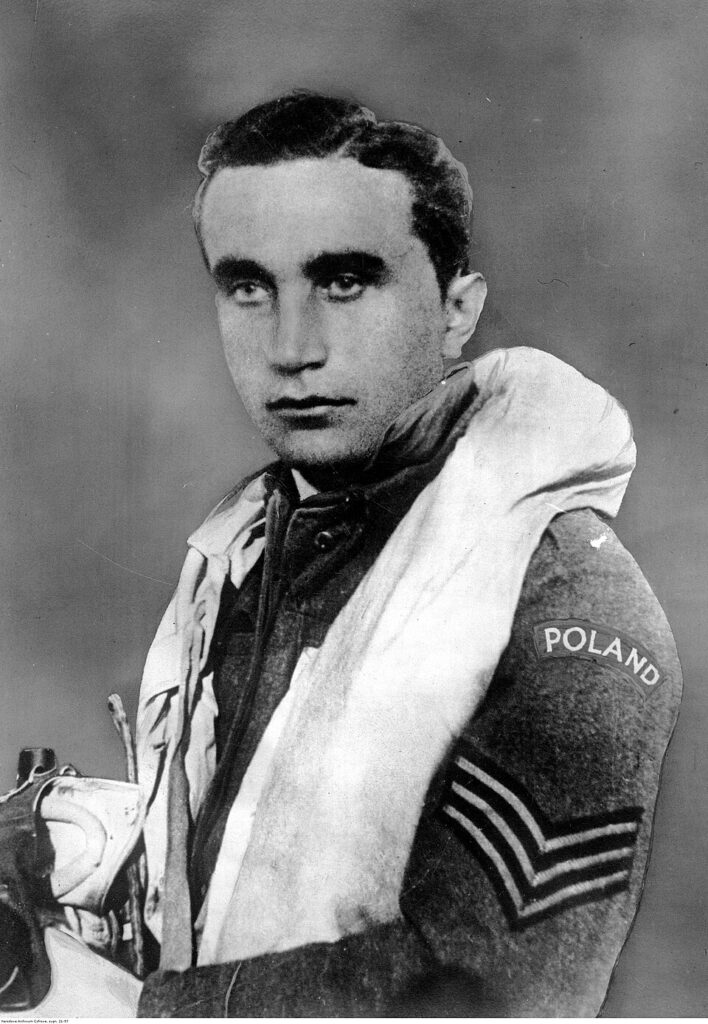
Josef František – a Czech pilot in the Polish 303 Squadron. Source Wikimedia Commons
With the outbreak of World War II, prewar disputes lost any significance. On 3 September 1939, by decree of the President of the Republic of Poland, Ignacy Mościcki, the Legion of Czechs and Slovaks was established, with Gen. Lev Prchala appointed as its commander. Below are excerpts from the proclamation issued on this occasion by Marshal Edward Śmigły-Rydz:
Proclamation of the Commander-in-Chief to Czech and Slovak soldiers
“Czech and Slovak soldier!
The age-old enemy of the Slavic peoples has launched a barbaric attack on our most sacred rights to freedom and independence. All treaties and peace obligations have been violated and trampled underfoot.
(…)
May the glorious tradition of Grunwald—when, in a bloody battle against the Teutonic Knights, the Slavic nations stood together in unity and where the sacrificial blood of all our valiant forefathers was shed—revive hope in your hearts today and arm your hands.
The Decree of the President of the Republic on the establishment of the Czech and Slovak legions should become a historic document that will inaugurate our common soldiers’ effort in the struggle for independence. (…)
Wherever you are, Czech and Slovak, I call upon you, in the name of my nation, to take up the fight against the oppressor.
On Polish lands, Czech and Slovak legions are currently being formed, whose supreme command is taken over by the experienced combat soldier, General of Arms Lev Prchala. (…)”
Commander-in-Chief
EDWARD ŚMIGŁY-RYDZ
Marshal of Poland
Warsaw, 3 September 1939
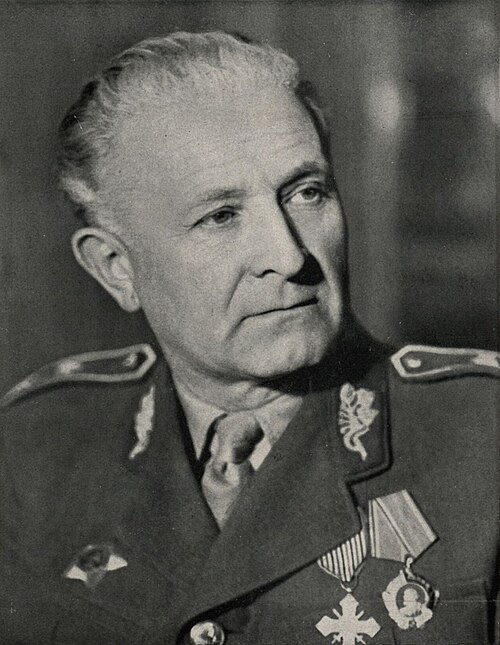
Gen. Ludvik Svoboda. Source Wikimedia Commons
The key role in forming these structures was played by Lt. Col. Ludvík Svoboda (later the communist president of Czechoslovakia). The group under his command, numbering about 700 soldiers, was stationed in a camp at Leśna near Baranovichi. After 17 September the unit withdrew south, and then surrendered to the advancing Red Army and was interned. The decision to surrender to the Russians was made out of fear that the Romanians would hand them over to the Germans. At the same time, from the first days of September, Czechoslovak volunteers fought in the Polish Air Force, including Josef Balejka and Vilém Košař. A special role was played here by the aforementioned Josef František—a Czech pilot turned back by Polish officers and tempted by the opportunity to fight the Germans quickly. During the September Campaign, with great dedication he carried out reconnaissance and liaison flights, and after evacuation via Romania and France he reached Great Britain together with the Poles.
On the Western fronts – Tobruk and the skies over Great Britain
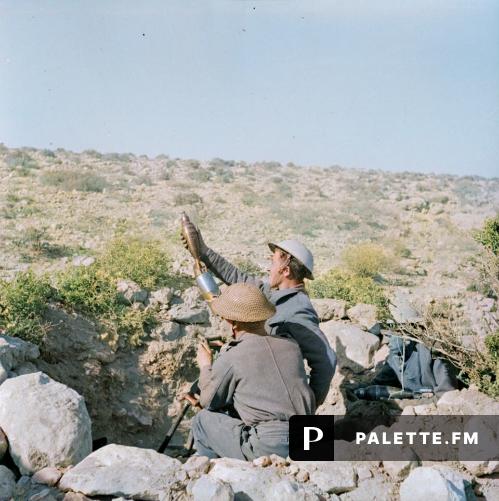
Polish soldiers at a position near Tobruk. Source Wikimedia Commons, author: No 1 Army Film & Photographic Unit, Barker (Lt)
Renewed organized cooperation between soldiers of both nations took place in North Africa, during the defense of the Tobruk fortress besieged by German-Italian forces. The Polish Independent Carpathian Rifle Brigade under the command of Gen. Stanisław Kopański (transported in August 1941) took over the longest sector of the defenses. The 11th Czechoslovak Infantry Battalion commanded by Lt. Col. Karel Klapálek reached the fortress at the end of October 1941 and was operationally subordinated to the Polish brigade. Czechs and Slovaks held a difficult western sector of the defenses, fighting shoulder to shoulder with the Poles until the fortress was relieved in December 1941. The fighting in extreme conditions resulted in casualties: 109 Polish soldiers were killed and about 400 were wounded, while Czechoslovak losses in their sector amounted to 14 killed and 81 wounded. The Czechs made an excellent feature film about this battle, “Tobruk”. You can also see Polish elements in it. I had the opportunity to see it, as probably many of our readers have, and one can safely write that this film is in every respect worth recommending.
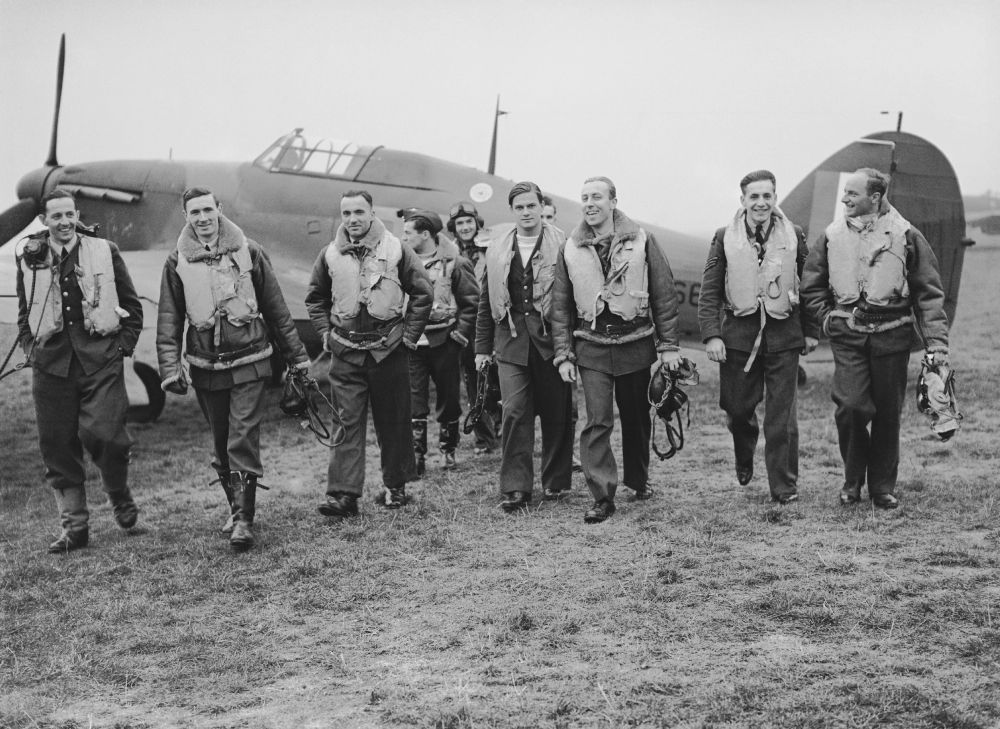
Pilots of No. 303 Squadron. Source Wikimedia Commons author Stanley Devon
During the Battle of Britain, alongside the Polish No. 303 Squadron, the Czech No. 310 Squadron was also operating. An undeniable symbol of this alliance became Josef František, with whom the Polish airmen evacuated after the September defeat. At his own request, František remained in the Polish army and flew with the elite No. 303 Squadron. As the most effective pilot of this unit, he achieved 17 confirmed aerial victories. He died in an air crash in October 1940 as a hero of both nations. Arkady Fiedler wrote a book about him and other Polish airmen already during the war — “Squadron 303”, in which Josef František is one of the main protagonists. This book was dropped into Poland while it was still under German occupation. The names of the main characters were changed so that families back home would not suffer German reprisals. After the war, the publication fell into obscurity for a time — after all, the communists persecuted soldiers who had fought in the West, and the book spoke positively about them. After it was reissued, it became a true bestseller. Its print runs during the communist era reached hundreds of thousands of copies. No wonder — it is a very good book; one could even say it is an excellent piece of reportage. The Czechs, in turn, made a film about their (and our) pilot, which recently reached cinema screens. It is excellent, as all reviews emphasize. I hope that soon it will be possible to see it in Polish cinemas as well.
The unfulfilled dream of a Polish–Czechoslovak confederation
This military comradeship forged at the front was reflected in diplomatic efforts. In 1940–1942, the governments-in-exile—led by Gen. Władysław Sikorski and President Edvard Beneš—created a plan to establish a Polish-Czechoslovak Confederation. The project envisioned the creation of a powerful bloc with a common foreign and defense policy, a customs union, and a common currency. The main geostrategic assumption was to build a barrier that, after the war, would restrain both German revisionism and Russian imperialism.
This intention ultimately collapsed as a result of pressure from Moscow and a change of policy on the Czechoslovak side. Joseph Stalin categorically opposed the creation of such a strong alliance within his sphere of influence. In turn, after the discovery of the Katyn massacre in 1943 and the severing of Soviet-Polish relations, President Beneš decided to distance himself from the Polish government in London, seeking security guarantees directly in the Kremlin. This derailed the confederation project, ultimately pushing both states into dependence on Moscow.
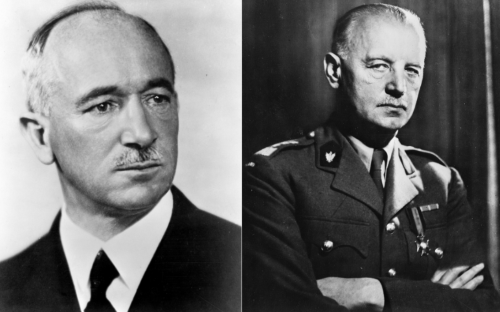
Edvard Beneš and Władysław Sikorski. Source: Wikimedia Commons
Czech historians rather believe that President Beneš never intended to build the kind of state the Poles were counting on. Beneš had a very weak position with the Western Allies, and he treated talks with the Poles about a possible federation purely instrumentally—as a way to strengthen himself and his leverage. All the more so because he knew about Polish efforts aimed at strengthening the opposition to him within the Czechoslovak émigré community. Beneš’s later about-face is, in this light, much more understandable. The Czechs still regarded the Russians as their allies, not as future occupiers. From their point of view, Poland was going to be dominated anyway, so any close tie with it would have exposed Czechoslovakia to Stalin’s hostility. Would it have turned out that way? We will never know. A joint Polish–Czechoslovak plan would have given the Allies more arguments, and perhaps an offensive from Italy would have been launched to get ahead of the Russians?
Conclusion
As you can see, the history of Polish–Czechoslovak cooperation during World War II is not an uplifting story about understanding one’s own mistakes. It is above all a brutal lesson in how easily brotherhood in arms can be squandered through political short-sightedness and disastrous decisions. Edvard Beneš believed that distancing himself from Poland and seeking guarantees directly from Stalin would save his country. The outcome of that decision was tragic—the project of a powerful Central European buffer collapsed, and both states fell for decades into the orbit of Soviet enslavement.
This lesson should resonate especially loudly today in the context of the war in Ukraine. Unity in the face of the Russian invasion is fundamental, but brotherhood in blood alone is not enough if it is not followed by the construction of lasting political frameworks for the future. The Kremlin, just as in the 1940s, is doing and will continue to do everything it can to drive a wedge between neighbors, skillfully stoking old historical grievances. If Poland and Ukraine do not draw conclusions today from the mistakes of Polish–Czechoslovak diplomacy, they risk a repeat of history. Only a complete rejection of illusions about the possibility of coming to terms with Russian imperialism, together with a tight alliance, can ensure that this time our dream of a safe and united Central Europe does not end in the nightmare of a renewed Russian occupation.



What do you think about this story?
Join the conversation. Please keep comments relevant to the article.
Write a comment