

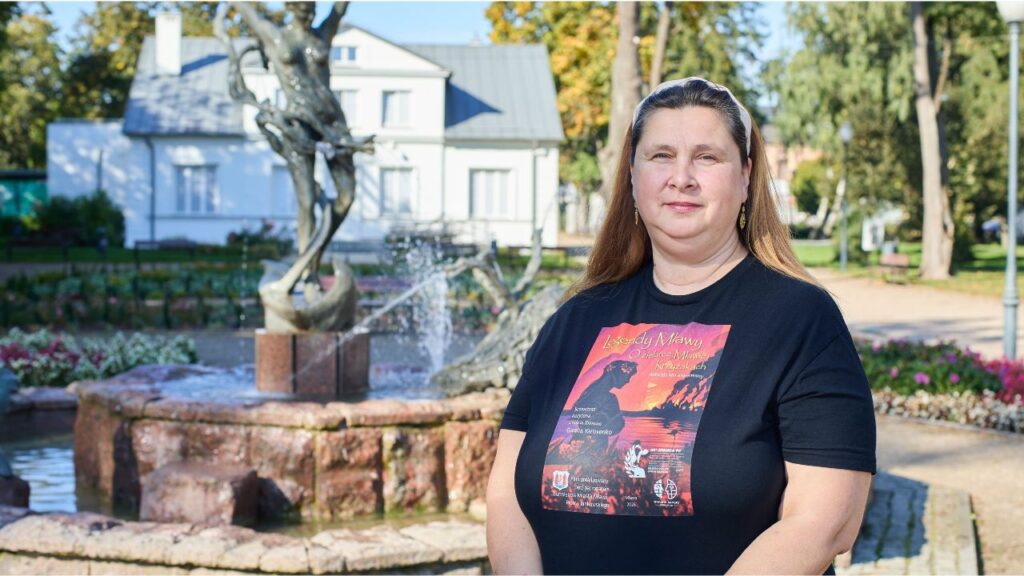
photo: Rafał Chojnacki / Mazovian Institute of Culture / edited by Nowiny Wschodnie
Ganna Yarovenko is a Kyiv-based director of documentary films and television series. On 26 February 2022, she arrived in Mława with her children and her mother. Here she made the feature-length documentary “Mother’s Voice,” founded the Children’s Film Studio “Rajskie Jajeczko” and the “Dialogi Sztuki” Foundation, and together with Ukrainian and Polish children and seniors created the animated trilogy “Legends of Mława.” This autumn, the project was recognized with the “Impulse of Culture” award of the Mazovian Voivodeship. We talk about how cinema builds bridges between peoples and where home is for her today.


Mława is a city well known to Poles, but for most Ukrainians its name means nothing. Who were you before the war, and how did you end up here?
I am a professional director from Kyiv. All my life I made documentary films and television series. When the full-scale invasion began, I was simply saving the children. We lived near Irpin, and I took them out at the moment when the assault on the airport in Hostomel was already underway (ed. note: Irpin and Hostomel are towns near Kyiv. On 24 February 2022, Russian paratroopers tried to seize the airport in Hostomel, and it was there that the first battles for Kyiv took place). It was literally just beyond the forest.
I ended up in Mława completely by accident. We were taken in by a family of musicians – Janusz and Kaja Prusinowscy (ed. note: Janusz Prusinowski is a well-known musician, the leader of the band Janusz Prusinowski Kompania, which plays Polish traditional music). And of course my directing instinct kicked in: I started filming “Mama’s Voice.”
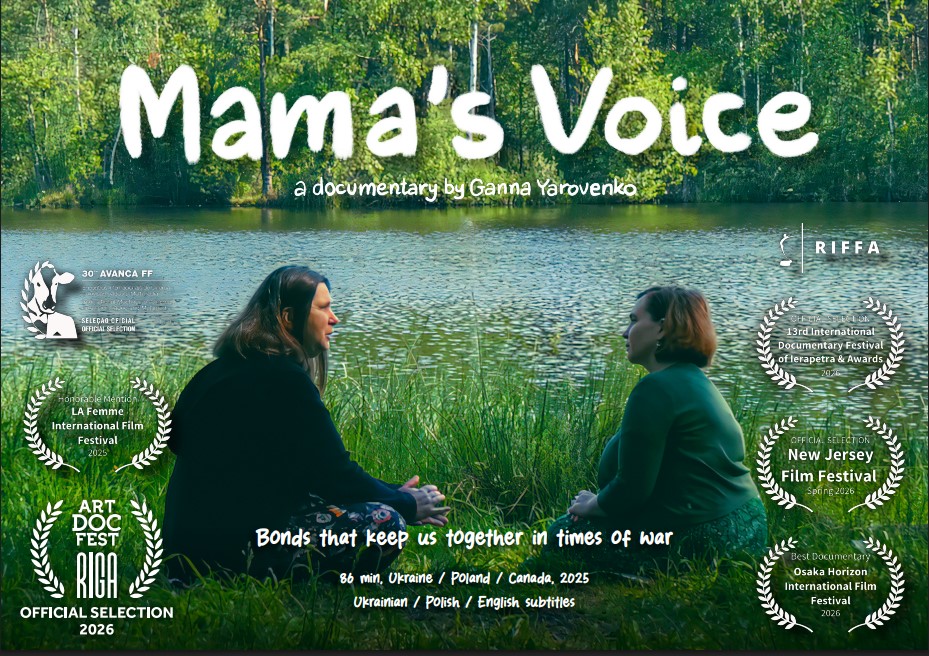
“Mama’s Voice” is a feature-length author’s documentary about the first months of her family’s life in Poland, under one roof with a Polish family. The footage was shot from April to June 2022 in Mława and in a village near Bucha, where the director’s father stayed behind under Russian occupation. How do audiences receive it?
On October 18 last year, the film premiered in Los Angeles (ed. note: at the LA Femme International Film Festival). Since then it has been screened in many countries and has won awards. On June 30 I screened it in the European Parliament. Very many people cry and say that it’s a film about them. That happens in America, in Canada, and in Brussels.
It’s good that the film is now living its own life. It touches on the themes of refugeedom, motherhood, and how culture saves you in times of crisis.
Many Ukrainian mothers who arrived with their children in 2022 remember the first months as if through a fog. You immediately started filming and working with children. Did you even have time to adapt?
I did – I talk about it in the film. My body simply began to function like a computer. My emotions switched off completely: I couldn’t cry or laugh. It was the same when we were fleeing shelling: the terminator just switched on, and that was it.
The first goal I set for myself was to gather Ukrainian children around me so they could work through trauma through art, through art therapy. And by helping others, I was helping myself.
But I have to say that the trauma hasn’t gone away anywhere. We’re still living through it; I’m also under constant stress. This tension is already permanent, like ringing in the ears. No matter how much a person tries to find peace, you can’t escape the news.
Alongside the film, Ganna Yarovenko began working with children in Mława. This led to the Children’s Film Studio “Rajskie Jajeczko” and the “Dialogi Sztuki” Foundation, which she founded in February 2025. How did it begin?
First, together with Kaja and Janusz Prusinowski we organized the St. Nicholas Community Center, where I ran handicraft workshops. And then I thought that, after all, I could teach children how to make films. That’s how the “Rajskie Jajeczko” studio was created. Later I founded the “Dialogi Sztuki” Foundation, and today I am its president.
From 2023, we started filming Ukrainian fairy tales with the children. Back then, everyone still knew Polish poorly, so I conducted the classes in Ukrainian. The first one was “Hen Ryaba,” which is where the studio’s name comes from (editor’s note: in the Ukrainian fairy tale the hen lays a golden egg). Then we filmed “The Ear of Grain” and other tales; they are all available on YouTube. Next, a Polish-language documentary film was made about the local Red Cross, where I worked for a year and a half—maybe two years.
How do you tell a city its own legends?
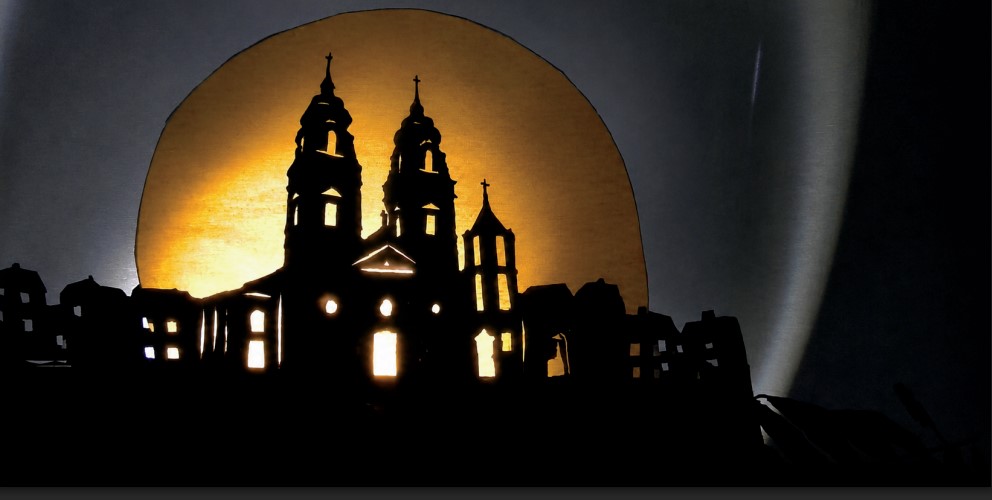
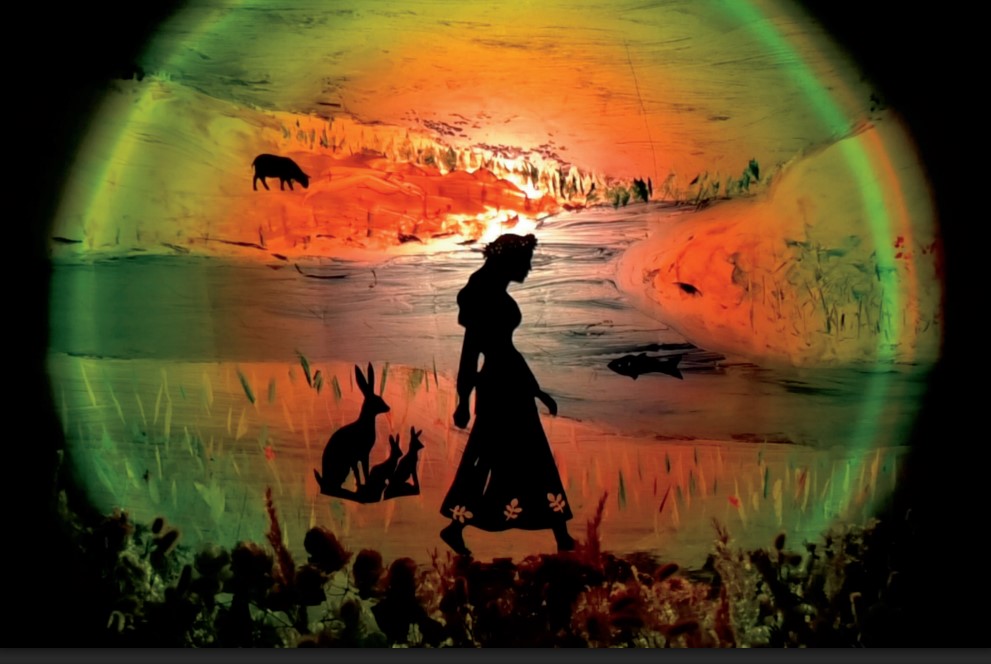
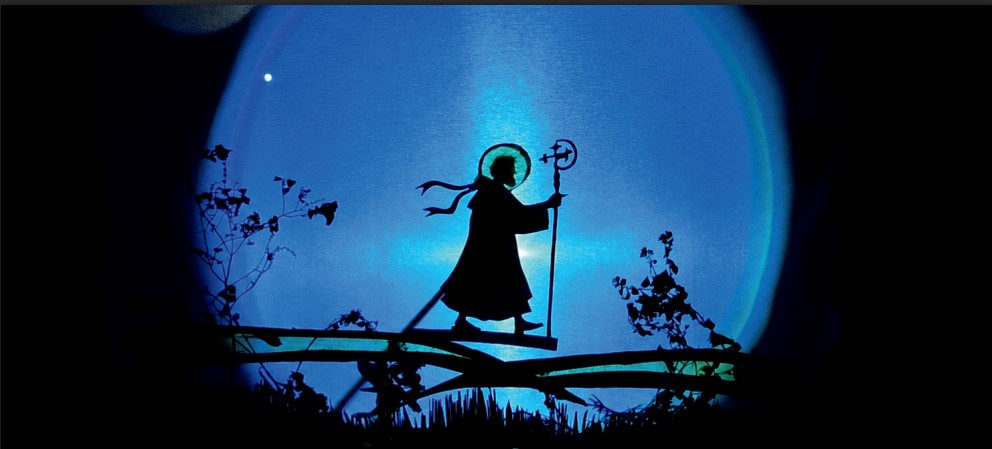
“Legends of Mława” is an animated trilogy based on local folklore. The first film tells the story of Saint Adalbert and a fisherman—according to legend, the history of Mława began with the saint’s blessing. The second is about the herbalist Mława, who defended the settlement against the Teutonic Knights and gave the city its name. The third is about an owl and a trumpeter, that is, the birth of Mława’s hejnał. Thirty-one people worked on the trilogy from July 2024 to 2026: children, parents, seniors, and filmmakers. The budget for each film was only 2000 złoty. Where did the idea come from to bring together such different generations?
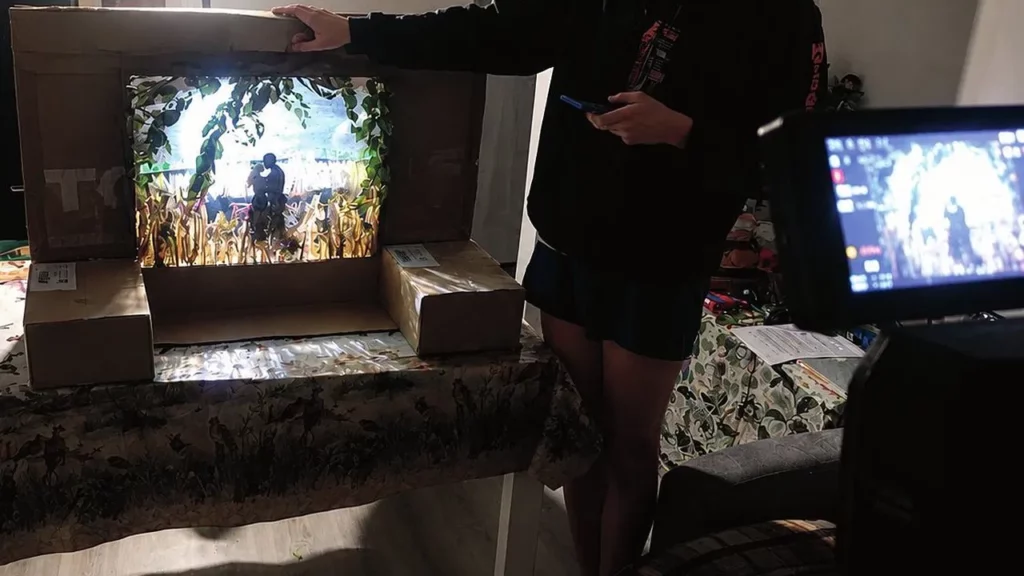
We wanted to make something like a keepsake: a film that would remain after us as something good for the city that brought us together. Mława has several legends. I took them and started with the first one, about the founding of the city. I decided it would be best to film it using the shadow theatre technique.
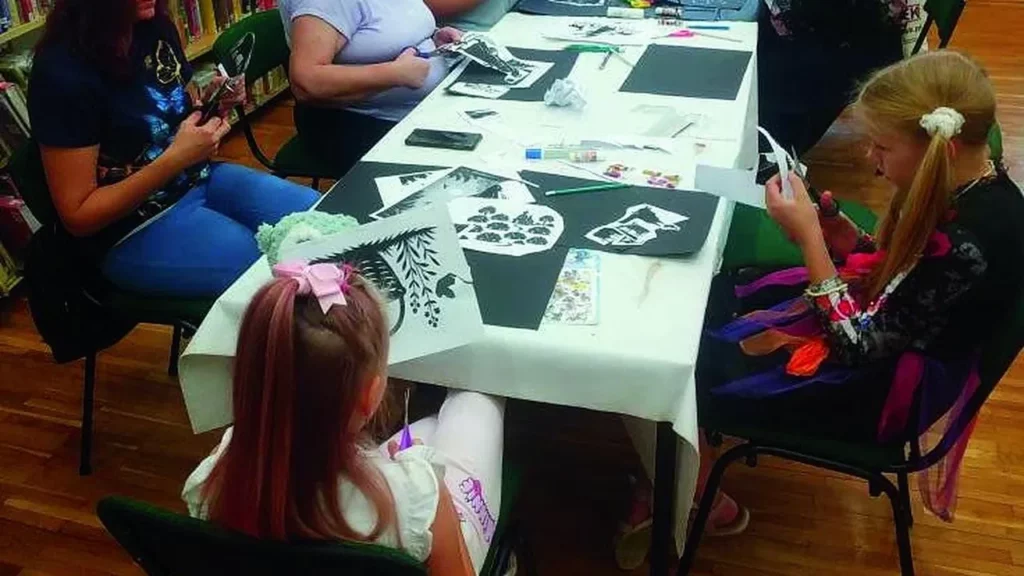
The preparations took a very long time, because we had to cut out the figures so we could later perform with them. We filmed the narrators, or rather their shadows, and also the scenes with the figures. For the trilogy, more than 500 figures were created. We worked on the first part for half a year, on the second for about nine months, and on the third for another half a year.
The seniors appeared after the first part. Older people also came to the premiere at the library and saw our work. When we started the second and third parts, I invited them: “You’ve already seen what we do. Do you want to try?” It intrigued them. They came to the figure-cutting workshops, and it went on for months.
Working together with people who are not connected by age, language, or professional experience is always a challenge. Do you remember the moment when a real bond formed between the children and the seniors?
That bond was already forming during the paper cut-outs. It’s the kind of work where you sit with scissors and paper, and older people tell stories from their lives, stories of Mława. We talked in Polish, and the children listened.
In my group I have two Morozov brothers. In the summer I saw that they had joined my seniors, who belong to a historical reenactment group. They joined it outside of my project, and a true friendship connected them. It makes me very happy. That’s probably what integration is about: the joint project ends, but human relationships last.
After the premiere of the entire trilogy at the local cinema, the project was noticed far beyond Mława. The first film received the award for Best Short Film at a festival in Brazil, and one part of the trilogy was selected for the international competition of the 30th AVANCA festival in Portugal. This autumn, Ganna Yarovenko became a laureate of the 7th edition of the competition “Impuls Kultury – Mazovian Award for Cultural Inspiration 2026”. This is an award of the Mazovian Voivodeship Self-Government for authors of projects in the field of education and cultural animation, and the competition is run by the Mazovian Institute of Culture. This year, 96 projects were submitted and 12 were awarded. What does this award mean to you?
The cinema screening was very important to me; everyone was delighted—it was a big event on a local scale. And now I have received an award from the Mazovian Institute of Culture; I became a laureate of “Impuls Kultury.”
I can’t say that the mayor summoned me, patted me on the shoulder, and said: “Hanna, bravo, keep working.” Although the second and third parts were made under the mayor’s honorary patronage. It’s like a seal confirming that the mayor looks favorably on the project.
31 volunteers worked on creating the three films of «Legends of Mława»—children and seniors, actors and set designers, people of different ages, with different experience and backgrounds. (…) This award is ours, shared—Ganna Yarovenko wrote on social media after receiving the distinction (transl. from Ukrainian).
You tell Mława its own legends, and today the voivodeship appreciates your work. How do you feel in Mława: like a guest, or already like part of the city?
You could say I’m flowing down a river between two banks. Kyiv has changed a lot. In my line of work, film and television, there’s emptiness there now, and in practice I would be sitting at home with no job. Of course I would find something to do, even planting potatoes—that’s not a problem. But professionally, it’s hard to find work in Kyiv right now. I can see it from friends who stayed there.
And am I at home here… When I’m coming back from Warsaw, I tell my mom what time I’ll be home. And I catch myself saying “home” already about Mława, about the place I rent here. Where the children are, that’s probably where home is, too.
But I speak with an accent, so Poles immediately hear that I’m from another country. That’s why I can’t say one hundred percent that I’m in my own place. However, I have Polish roots, and that gives me inner support. This land, specifically—and not Slovakia or Germany—I never thought about leaving here.
“Legends of Mława” and “Mom’s Voice” are already living a life of their own. What story are you telling now?
I’ve already shot a new film and now I’m editing it. It’s a portrait film about Ms. Maria Świtoń, a librarian and reenactor from Mława—someone of respectable age, but with a young soul.
On behalf of the foundation, every year I write applications and receive grants. At the Mława level, all my projects have been accepted. Bigger ones—Warsaw-based or EU ones—not yet. The foundation is young; it will soon be only two years old, and there are competitions to which foundations younger than two years aren’t admitted at all. You always have to start small.
Beyond cinema, Ganna Yarovenko shows Poles traditional Ukrainian culture. Please tell us about the ethnographic exhibitions.
I’ve already had two exhibitions: “The Touch of Ancestors” and “Shadows of Ancestors.” These are Ukrainian ritual towels (rushnyky) and some traditional costumes, arranged like a Ukrainian wedding. The point is to show Poles Ukrainians as a nation that knew how to create and appreciate beauty. One exhibition took place at the museum in Gorzów Wielkopolski in 2024, the other in 2025 here, at the Museum of the Zawkrze Land in Mława.
Now I’m looking for another museum in Poland. I work on my own and I don’t have the strength for everything. If any museum is interested, I will make the collection available free of charge for an exhibition. This is my volunteer work. I want my collection to be put to use, not lie in boxes.
Sometimes the best way to thank a city is to tell it its own history.
Source: Masovian Institute of Culture, Masovian Observatory of Culture, “Dialogi Sztuki” Foundation

What do you think about this story?
Join the conversation. Please keep comments relevant to the article.
Write a comment