
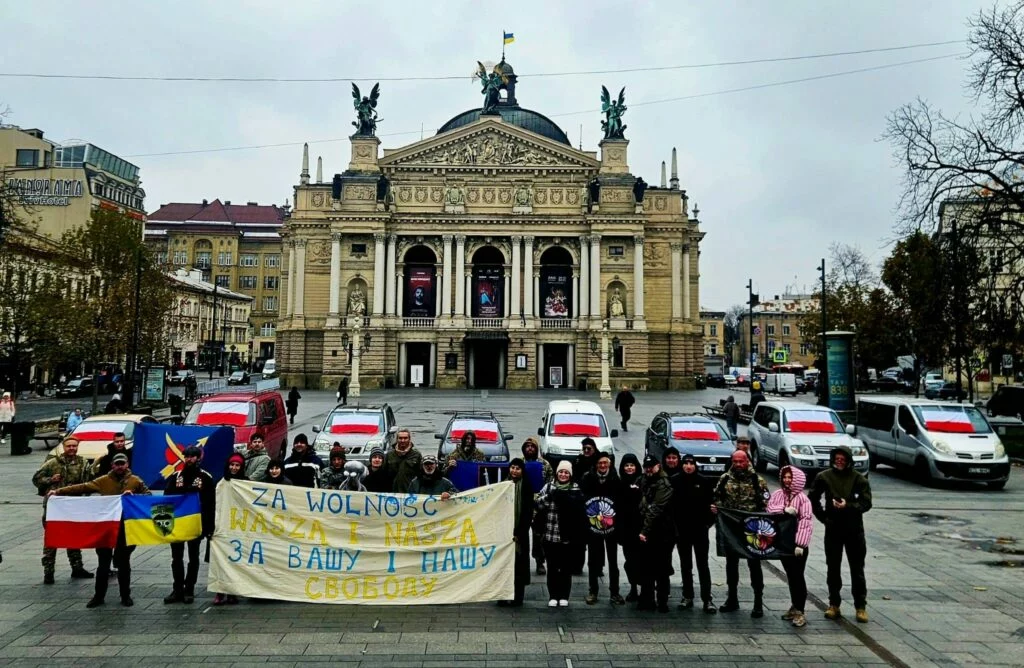
The 21 vehicles handed over to Ukrainian soldiers by Polish volunteers on Poland’s Independence Day represent more than another aid initiative. At a time when history is becoming a tool in political disputes and mutual stereotypes are once again gaining prominence, the initiative of the “Pajęczyce z Opola” group reminds us of the deeper convergence of Polish and Ukrainian interests. For both nations, the Russian threat is not an abstract geopolitical issue but a historical experience that continues to shape their present.


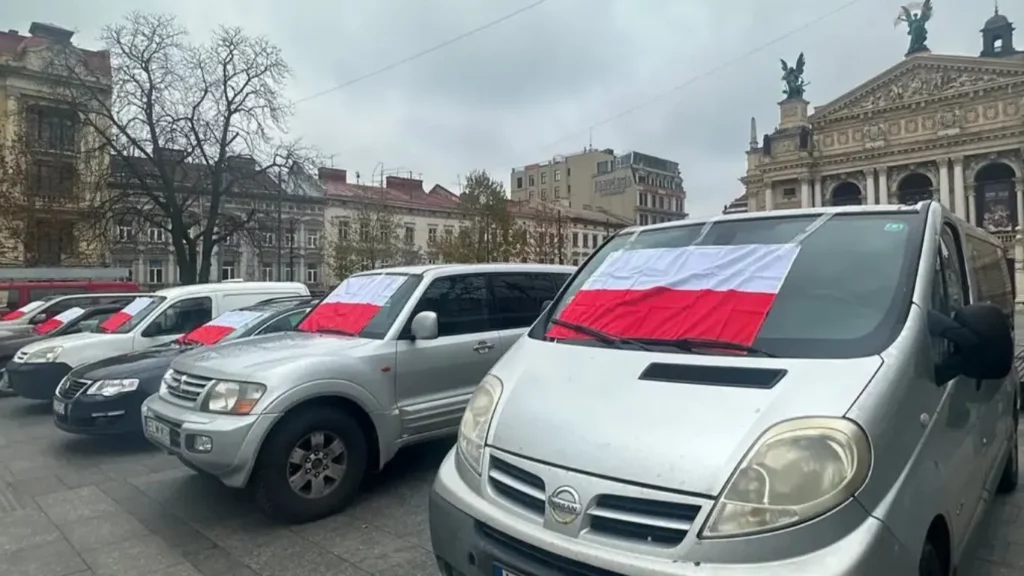
On November 11, Poland celebrated the anniversary of regaining its independence. At the same time, a group of women volunteers from the “Pajęczyce z Opola” initiative arrived in Lviv to hand over 21 vehicles to Ukrainian service members. Representatives of several brigades of the Armed Forces of Ukraine received the vehicles. In practical terms, it was another delivery of equipment needed at the front. Symbolically, it was a gesture whose significance goes beyond the value of the vehicles donated. Poles chose to celebrate their own national holiday by helping those fighting for their country’s independence.

The initiative is led by Aleksandra Czarnecka, founder of the “Pajęczyce z Opola” group. Speaking to the independent Ukrainian media outlet Hromadske , she stressed: “We have supported the front since the very beginning of the full-scale war. This matters for both your freedom and ours, because together we are strong.”
This was not a one-off initiative. According to information reported by Ukrainian media, since the beginning of the full-scale war the initiative’s volunteers have delivered more than three thousand vehicles to the Ukrainian military. The vehicles are purchased with contributions from Polish donors, while some come from private donations.
Patriotism that crosses borders
Ahead of the initiative, on October 25, Aleksandra Czarnecka gave an interview to the Ukrainian Service of Polish Radio. She explained that the group had intended to collect at least 11 vehicles for November 11, at 11:11 a.m. The symbolism of the numbers was meant to refer to Poland’s Independence Day. Ultimately, 21 vehicles were brought to Lviv.
The volunteer said: “How can we celebrate, how can we mark our independence while turning a blind eye to what is happening there, to the people who are now fighting for our independence as well?”
This statement deserves attention. It is not merely an emotional expression of solidarity. It offers a diagnosis of Poland and Ukraine’s shared geopolitical position. The vehicles delivered to Ukrainian brigades are working equipment, essential for transporting soldiers, evacuating the wounded and delivering supplies. Their importance is measured not by symbolism but by the practical capabilities they provide at the front.
Robert Jehula, a Polish volunteer and former soldier who fought as a volunteer in Ukraine, explained to Hromadske that the date of the handover was chosen deliberately: “On our national holiday, we wanted to show Ukraine that it is not alone, that we are with you and will defend our freedom and yours.”
It is precisely here that the historic phrase “For your freedom and ours” regains its relevance. It ceases to be an element of patriotic rhetoric and becomes a description of the genuine interdependence of the two nations’ security.
History as a tool of division
The significance of this initiative becomes particularly clear in the context of the current state of Polish-Ukrainian relations. In recent years, history has once again become one of the most important instruments for shaping mutual perceptions. Disputes over Volhynia, the activities of the UPA, remembrance policies and national symbols are increasingly being moved from historical research and social dialogue into day-to-day political struggles.
The mere presence of difficult subjects is not a problem. Both societies have the right to their own memory, rigorous examination of the past and an expectation that crimes will be accounted for. The problem arises when history stops serving understanding and starts being used to build lasting distrust of a present-day neighbor.
Under this mechanism, the past becomes a selective tool. Events and symbols that reinforce a negative image of the other side are emphasized, while experiences of cooperation, joint resistance to imperial violence and the centuries-long closeness of societies inhabiting the same part of Central and Eastern Europe are overlooked.
It is therefore all the more important to recognize that alongside political disputes there is another reality: a network of people who, despite changing public moods, do not give up supporting Ukraine. Their attitude shows that the exploitation of history and reinforcement of stereotypes have not managed to completely dominate society’s awareness of closeness and shared interests.
Russia — a shared experience and a shared interest
There is a dimension to Polish-Ukrainian relations that cannot be reduced to disputes over memory: the experience of Russian imperialism. For centuries, Russia was a political force seeking to limit both nations’ agency, subordinate their state institutions and challenge their right to shape their own futures independently.
Polish and Ukrainian experiences are not identical. They differ in historical circumstances, forms of violence and stages of statehood. Yet they share a fundamental problem: Russian imperial policy has repeatedly attempted to decide the fate of the nations of Central and Eastern Europe without regard for their own will.
In Ukraine’s case, this logic manifested itself with particular brutality after 2014 and then in the full-scale invasion launched in February 2022. Russian aggression is an attempt not only to seize territory but also to deny Ukraine’s historical, cultural and political agency.
For Poland, this presents a direct security challenge. An independent Ukraine capable of defending itself is an important element of the strategic security of NATO’s eastern flank and Central and Eastern Europe as a whole. The weakening of Ukraine, its political subordination or the loss of its ability to function independently would shift the balance of power in the region in Moscow’s favor.
Assistance to the Ukrainian army is therefore not merely a humanitarian gesture or an expression of historical gratitude. It is also an action consistent with Poland’s security interests. Volunteers do not need to speak the language of strategy and geopolitics to understand this relationship. It is enough to recognize that Ukraine, by defending itself today, is holding back a threat much broader than the conflict on its own territory.
Polish memory and Ukraine’s struggle for freedom
The events of November 11 reveal two different ways of understanding patriotism. In public debate, it is sometimes presented as a declaration of identity associated with symbols, historical claims and defining the boundaries of a community. The “Pajęczyce z Opola” initiative offers another perspective: patriotism understood as responsibility for freedom, whose value also comes from the willingness to defend it for others.
In an appeal on the platform Zrzutka.pl Aleksandra Czarnecka wrote: “We want to celebrate [independence] through action, not by singing the anthem or holding flags.” This is an important distinction. It is not about setting national symbols against social action. It is about restoring a practical dimension to patriotism — responsibility for the present and the security of the community.
Polish-Ukrainian relations should not be idealized, nor should one assume that a single gesture resolves disputes that have lasted for years. The handover of 21 vehicles does not erase historical tensions or mean that anti-Ukrainian stereotypes have lost their social significance. It does show, however, that they have not destroyed a deeper sense of closeness and awareness of a shared threat.
Ultimately, this is not just about vehicles. It is about answering the question of what independence means and what obligations arise from it. Can one celebrate one’s own freedom while remaining indifferent to a nation whose freedom others are trying to take away? Should the memory of one’s own history serve to build walls, or help identify threats that may once again affect us all?
The Polish women volunteers from Opole answered these questions without grand declarations. They came to Lviv, brought vehicles and handed them over to Ukrainian soldiers. It is precisely this simplicity that gives their action its political and moral force.
History can be used to fuel distrust, and stereotypes can poison public debate. Yet they do not have to determine the future. In the face of Russian imperialism, Poland and Ukraine have a fundamentally convergent interest: preserving sovereignty, security and the right to decide their own fate independently.
That is why, on November 11 in Lviv, the slogan “For your freedom and ours” was not a historical ornament. It became a practical declaration of shared interests. Independence, as “Pajęczyce z Opola” reminded us, does not end at the borders of one’s own country. Sometimes it is beyond those borders that its true value becomes most apparent.
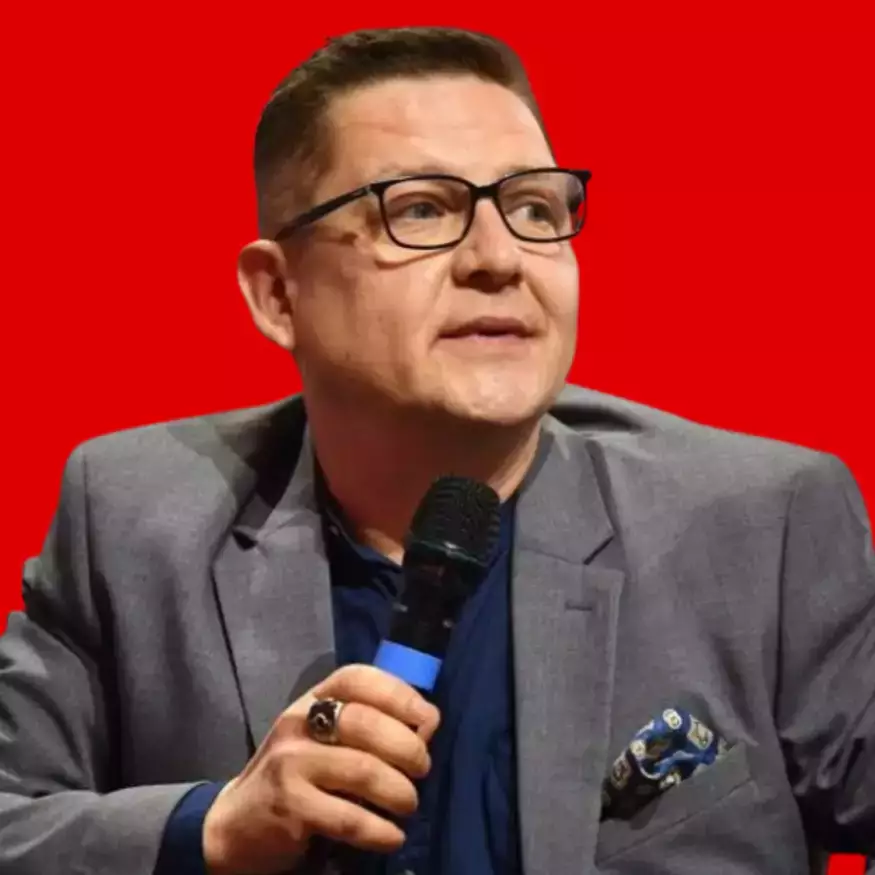
Literary scholar and researcher specialising in culture, identity, Polish-Ukrainian relations, and sociocultural processes in Central and Eastern Europe.
For many years, he has combined academic, educational, and civic activities in Poland and Ukraine. His research interests include cultural borderlands, collective memory, postcolonial processes, and intercultural interactions. He is the author and co-author of several monographs and more than 150 academic publications.
He has extensive academic and organisational experience. He has held senior positions at universities in Poland and Ukraine, led research teams, and implemented international research and educational projects.
He is actively involved in supporting the Polish community in Ukraine, particularly in Berdiansk and the southeastern part of the country. His work focuses on cultural heritage preservation, education, and documenting the experiences of communities affected by war and occupation.
In his publications and commentaries, he examines the Russo-Ukrainian war, Polish-Ukrainian relations, Polish diaspora communities in Central and Eastern Europe, politics of memory, and questions of national and cultural identity. He also addresses Russian propaganda and imperial narratives.
In recognition of his academic, cultural, and civic contributions, he has received several distinctions, including the Knight’s Cross of the Order of Merit of the Republic of Poland, the Medal for Merit to Culture – Gloria Artis, and the Honorary Badge “Meritorious for Polish Culture”.
What do you think about this story?
Join the conversation. Please keep comments relevant to the article.
Write a comment