

Hate speech at school and street violence
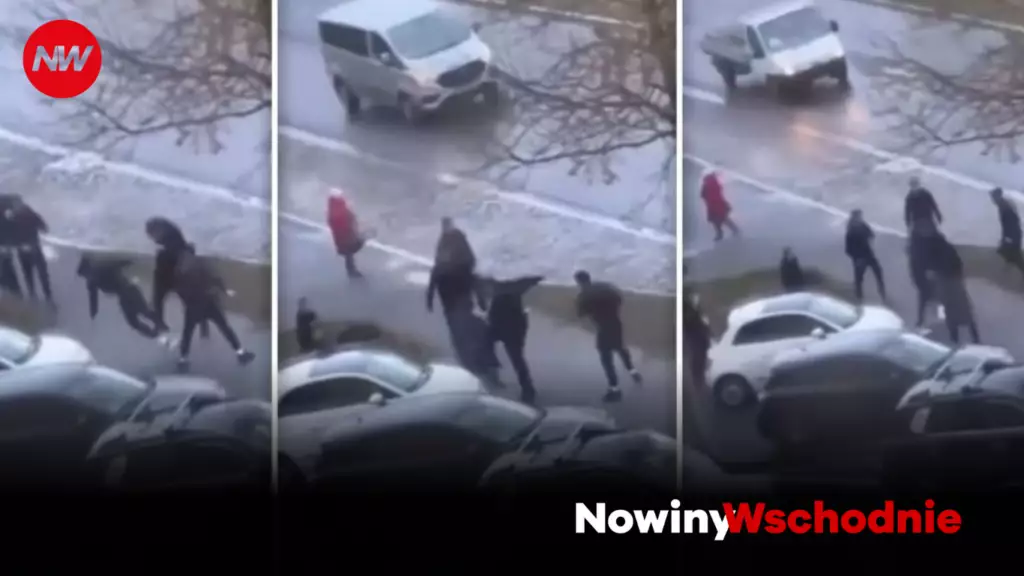
Ukrainian students were brutally beaten in Słupsk. The incident followed weeks of tension at the school, where, according to reports from parents, students, and a lawyer representing one of the families, offensive remarks were made against Ukrainian children. Some of these remarks were made in the presence of a teacher and were captured on video.


Source: Sestry.eu
#atfp_close_translate_span#
“At this stage, we are not talking about a hate crime based on nationality in the case of the teacher, as there are no elements of a prohibited act within the meaning of the Penal Code. Rather, it’s a case of neglecting to perform official duties. With regard to students who were present at the lesson, it’s possible that explanatory conversations, work with a psychologist, and educational activities will suffice. However, an incident that occurred outside of school should be assessed differently—where physical injuries occurred, the act could be classified as a crime punishable by up to five years in prison. The final decision rests with the prosecutor’s office and the court.”
says – David Dehnert, lawyer and human rights defender“The most important thing is to document such events. Record, record, and record some more. These recordings become evidence. If there were no audio recordings, no one today would likely believe the children. Recording is not prohibited, and good-quality material can be examined for editing, manipulation, or the use of artificial intelligence. After appropriate analysis, it becomes credible evidence. Therefore, it is necessary to document incidents and inform the school administration. If the school does not respond, you should contact the supervisory authorities—the city hall or the education authority. Complaints submitted solely verbally most often end with a statement that an internal audit was conducted and the teacher denies the allegations—and that’s the end of the matter.”
adds — David Dehnert, lawyer and human rights defender (Source: Sestry.eu)
An atmosphere of hostility at school
Witnesses report that during classes, comments were made that undermined the dignity of students based on their background, as well as provocations from other students referring to the war in Ukraine. Parents claim that adults’ responses were inadequate or nonexistent. It was in this atmosphere, they emphasize, that a sense of acceptance of hostility grew.
Escalation after the lesson ends
The violence escalated after classes ended. Near the school, Ukrainian students were accosted by a group of older boys. They shouted insults and slogans of a national nature. At one point, one of the attackers called someone and said, “The Ukrainians are already here.” Moments later, more perpetrators joined in and attacked the teenagers. One boy was held down, while the other was punched and kicked. The beating was only stopped by a bystander who threatened to call the police.
Serious consequences of beatings
The consequences of the attack were serious. One of the victims suffered a broken collarbone, and the other was suspected of having a concussion. Parents report that they were unable to immediately file a police report on the day of the incident. The case was not formally taken up until the following day. The families emphasize that this was not a peer fight, but an attack by several individuals on younger students.
Negligence and inaction of the Polish police
According to the lawyer, one of the mothers went to the police to report an assault that had occurred in front of the school. The police station refused to take her report. The Ukrainian woman persisted and went to the police again the next day. Only then did officers respond to a report of an attack near the school.
It’s worth noting that this isn’t an isolated case of bullying and harassment of Ukrainian children in Polish schools. For example, in the city of Siedlce, parents demanded that Ukrainian children not be admitted to classes.
Earlier, a Ukrainian woman said that when her son was playing in a sandbox on the playground with a little Polish girl, her father, hearing a Ukrainian accent, pulled his daughter aside and said, “You will not play with that Ukrainian boy.”
It is also recalled that, as of September 1, 2024, Poland has required all Ukrainian students residing in its territory to attend Polish schools. According to MP Mikołaj Knyżycki, this requirement could threaten the complete loss of identity for an entire generation of Ukrainian children.
Institutional Actions and Evidence Analysis
The police, the education authority, and other institutions are currently investigating the matter. The teacher facing allegations of inappropriate behavior is on sick leave. Recordings of his statements are being analyzed. A lawyer representing one of the families indicates that the evidence and the number of witnesses provide a basis for a thorough investigation.
Important!
This story raises questions that transcend one school and one city. It concerns the limits of adult responsibility, how institutions respond when children are victims, and ultimately, whether schools—a place that should guarantee safety and equal treatment—can effectively protect those most vulnerable.
Parents of the injured students emphasize that they are not seeking revenge, but rather sending a clear message that violence and discrimination cannot be trivialized. In their opinion, only a consistent response from institutions can prevent similar incidents in the future.

Journalist and Editor-in-Chief of Nowiny Wschodnie, a news platform followed by more than 140,000 people on social media. A graduate in Journalism and Social Communication, he has been co-creating and developing Nowiny Wschodnie since 2017. He gained professional experience working with local and international media.
He specializes in fact-checking, countering disinformation and propaganda, and information security. His work focuses on Poland, Ukraine, Eastern Europe, and Polish-Ukrainian relations. He is also the founder of a non-profit organization working in the fields of integration and intercultural dialogue.
What do you think about this story?
Join the conversation. Please keep comments relevant to the article.
Write a comment