

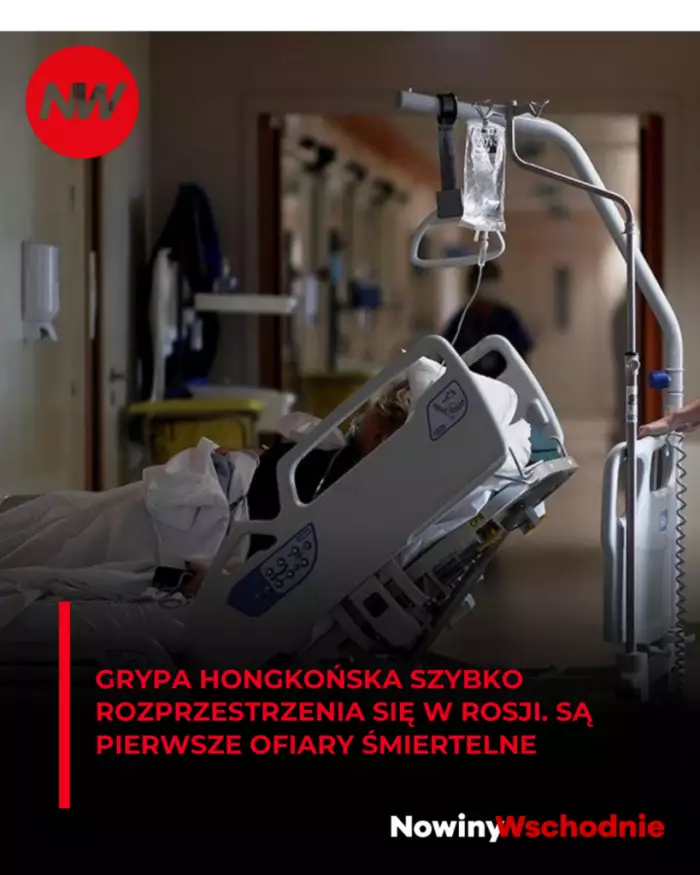


Russia has seen a sharp increase in cases of the so-called Hong Kong flu (H3N2). According to available data, outbreaks have already been confirmed in 17 regions of the country, particularly in the Far East, the Urals, and Siberia.
Source: Russian media
The most serious situation is in Dagestan, where two people have died from Hong Kong flu. Local health authorities reported that both victims were unvaccinated. A total of 99 cases have been confirmed in the region.
Hong Kong flu is an infectious disease caused by the influenza A virus, subtype H3N2. First identified in 1968 in Hong Kong, it spread beyond East Asia in 1969–1970, triggering a global pandemic. Due to its exceptionally rapid rate of transmission, the virus has led to the deaths of between 1 and 4 million people worldwide.
Currently, there is a significant increase in respiratory infections in Russia. The A (H3N2) strain dominates among detected cases, accounting for 80.9% of all identified samples.
Symptoms of the disease are usually sudden and intense. Patients complain of:
– severe muscle and body pain,
– general weakness and excessive sleepiness,
– headaches and dizziness,
– high fever, often exceeding 39°C,
– nausea and diarrhea,
– eye pain, tearing and a feeling of “sand under the eyelids”,
– scratchy throat and dry, tiring cough.
Most often, the acute illness lasts 3–4 days, after which symptoms gradually begin to subside. However, doctors emphasize that in some cases, serious complications can occur, especially in the elderly, children, and patients with chronic diseases.
Russian medical services recommend wearing masks, limiting social contacts and avoiding large gatherings.
The situation is being monitored, and the number of cases in other regions may continue to rise.

Journalist and Editor-in-Chief of Nowiny Wschodnie, a news platform followed by more than 140,000 people on social media. A graduate in Journalism and Social Communication, he has been co-creating and developing Nowiny Wschodnie since 2017. He gained professional experience working with local and international media.
He specializes in fact-checking, countering disinformation and propaganda, and information security. His work focuses on Poland, Ukraine, Eastern Europe, and Polish-Ukrainian relations. He is also the founder of a non-profit organization working in the fields of integration and intercultural dialogue.