

The Greater Poland Uprising is one of the most important, yet least appreciated, events in Polish history. It was the only fully victorious national uprising and had a crucial impact on the shape of the reborn Polish Republic. On the 107th anniversary of its outbreak, we recall the context, course, and consequences of these events.
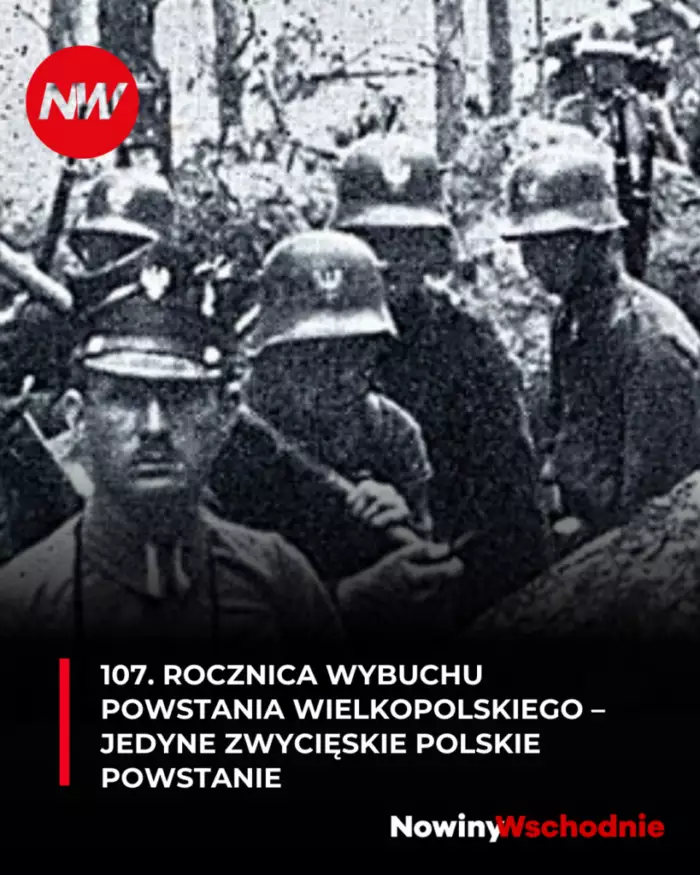
107th anniversary of the outbreak of the Greater Poland Uprising


The Greater Poland Uprising is relatively little known in Poland, which may surprise anyone even slightly familiar with Poland’s history of failed uprisings. It was the only completely successful uprising. It was led professionally, primarily by local officers and activists.
Chaos in the lands occupied by Germany and Austria-Hungary
As new countries emerged after World War I, new, local wars erupted. Eastern Europe, where the Austro-Hungarian Empire was divided, became a single battlefield. In addition, there was the crumbling Russian Empire, the civil war in Germany, and the Balkans fighting for the inheritance of the Ottoman Empire. As we can see, the signing of the capitulation by the Central Powers did not bring peace to Europe.
At that time, Poland, like other countries in the region, was drawing its own borders. It was known that the peace talks between the Allies and the Central Powers would result in a free Poland, but the shape of the new Poland remained unknown. Due to 123 years of nonexistence as an independent Polish state, the occupying powers pursued a policy of denationalization or replacing the Polish population with their preferred choice. Germany settled Germans, Austrians Austrians, and Russians Russians.
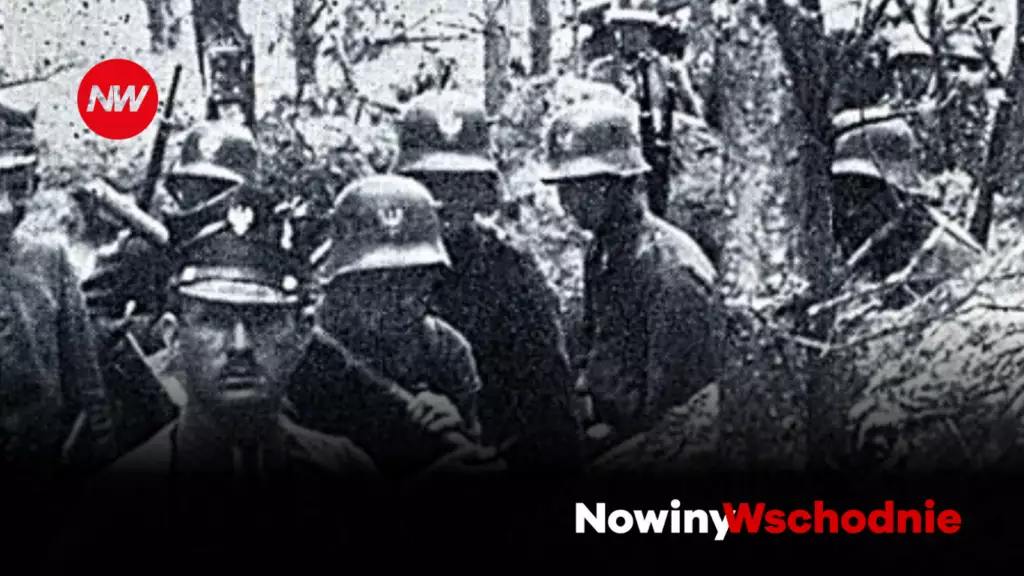
Prussian partition, occupation of Polish territories
Germans were settled in Greater Poland, which was under Prussian (German) rule. For a century, German entrepreneurs were supported, land was purchased from Polish peasants, and given to German settlers. German officials and teachers were brought in. No subjects were taught in Polish in schools except religion (which also presented problems). Then, through military service, career advancement, and offers of travel to Germany proper, efforts were made to reduce the number of Polish-speaking residents of Greater Poland. 123 years after the partition, Greater Poland was perceived by the Germans as German territory, even though the German-speaking population remained a minority.
At that time, the territory of the Polish-Lithuanian Commonwealth was divided primarily between the occupying German and Austrian armies. The Russians were far to the east, where the border had been established in the peace treaty between Bolshevik Russia and the Central Powers. Poles at that time had a great friend in US President Woodrow Wilson. He included the creation of Poland as one of the war’s goals. However, there was no mention of borders. These had to be forged in bloody battles, as the populations along all future borders were ethnically mixed. Furthermore, within Poland itself, two concepts clashed. One was the reactivation of a possibly large Polish-Lithuanian Commonwealth with equal nations (Józef Piłsudski), and the other was the creation of a state with a single nation and as many minorities as could be Polonized (Roman Dmowski).

Preparations for the uprising
After the Polish-Lithuanian Commonwealth proclaimed independence, preparations for an uprising began in Greater Poland. It was planned to break out in January 1919. Forces and weapons were gathered, and insurgent units were organized, based, as is now called, on “territorial defense.” Due to the lack of senior Polish officers in the German army, lower-ranking officers assumed command. German troops were stationed in Poznań and other cities to ensure that Greater Poland remained German.
However, the uprising broke out several weeks before its planned date. This was due to a rather accidental shootout between organizing insurgent units and the German army. On December 26, 1918, the great pianist and patriot Ignacy Paderewski visited Poznań, which sparked patriotic demonstrations. The next day, the Germans decided to make their presence felt in the city and organized a march to the Bazaar, where Paderewski was staying. The march consisted primarily of fully armed German troops. German soldiers behaved provocatively, tearing down Polish and Allied flags and symbols along the way. A shootout erupted near the Bazaar, which led to the explosion.
December 27, 1918, the outbreak of the uprising
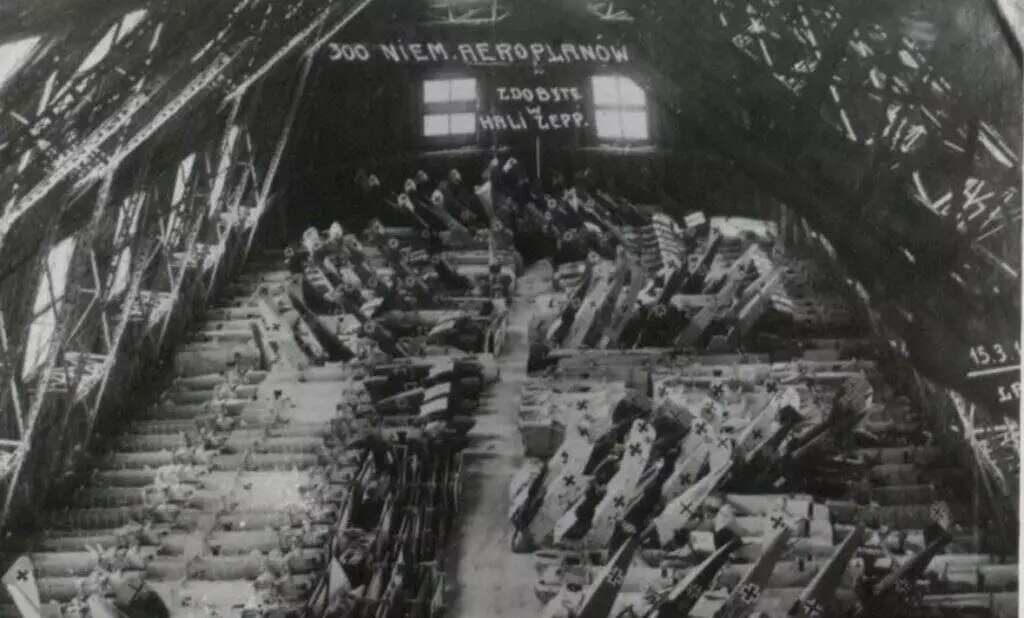
Escalation ensued. Within a few weeks, thanks to the ubiquitous insurgent forces, almost all of Greater Poland was liberated. The units were based on the local population, from which the insurgents originated. All had completed German military service, many having served on the front lines. The Germans encountered a well-trained and motivated enemy. In a short time, they also encountered a well-armed one. The insurgents had well-developed plans. They knew where the weapons depots were, and they were among the first targets of their attacks. Furthermore, less than two weeks after the fighting began, they managed to capture Ławica Airport and the largest German weapons depots in this region. Ławica was captured after a single day of attack, and by January 7th, it had been under insurgent control. As early as January 9th, Polish-manned aircraft took off from the area, providing the insurgents with a level playing field, as previously only the Germans had benefited from aerial surveillance.
Almost all of Greater Poland was liberated in its pre-partition form, almost without the participation of Central Poland, which was still organizing its army to fight the Bolsheviks and Ukrainians. The fighting was fierce and bloody in places, but the Polish insurgents’ extensive knowledge of the terrain gave them a significant advantage over the German forces. The Western Allies reacted in varying ways. France tried to help, while Great Britain was hostile to Poland and its territorial demands. This might have been understandable in the east, but not in Greater Poland, whose very name suggests its belonging. On February 16th, thanks to the Western Allies, an armistice was signed, and several months later, the peace treaty ending World War I established that the line of detention for the insurgent forces would be the German-Polish border.
Thus, the birthplace of Polish statehood found itself within the borders of the Polish-Lithuanian Commonwealth. This was crucial, as Greater Poland, unlike the other provinces, was a highly developed region industrially, technologically, and agriculturally. Without this province, it would be difficult to imagine Polish independence, nor can it be ruled out that Poland would have been occupied by Bolshevik Russia in 1920, or even earlier. Approximately 2,500 Poles died or succumbed to their wounds during the uprising.
End
It’s worth noting that during World War II, Germany reintegrated Greater Poland into Germany, and the local population was forcibly Germanized. If they resisted, they were deported to central Poland, the General Government, or, in worse cases, to concentration camps. Despite this, a clandestine Home Army existed there, which, thanks to this, had agents within the Wehrmacht itself. The first rebellion against the communists also broke out in Poznań, bloodily suppressed by tanks. Greater Poland never succumbed to either Germanization or Sovietization. Today, we can see that Poznań and Greater Poland, as before, are among the most developed regions of Poland. And we owe all of this to the Greater Poland insurgents.

What do you think about this story?
Join the conversation. Please keep comments relevant to the article.
Write a comment