

This article explores the January Uprising of 1863–1864 as a joint uprising of Poles, Lithuanians, and Ruthenians against Tsarist Russia. It outlines its course, the enormous sacrifices, repression, and increasing Russification, as well as its long-term consequences: the rise of positivism, grassroots work, and the shaping of a national consciousness that led to the regaining of independence in 1918. The text combines local memory and emotions with a reflection on the significance of uprisings in Polish history, posing questions about the cost and necessity of fighting for freedom. (ed.)


Lithuania, the village of Aukštadvaris (High Court in Polish). Mr. Jan, our host, showed us around the area and gave us directions. One day, he took us to a small lake at the foot of a mountain. We climbed it. Mr. Jan showed us the place where, in 1863/64, a gallows stood and where January Uprising insurgents were hanged. This was done in the presence of people, often their families. The aforementioned lake was formed from the tears of the mothers, sisters, and wives of those executed there… This is how the January Uprising remains in this village.
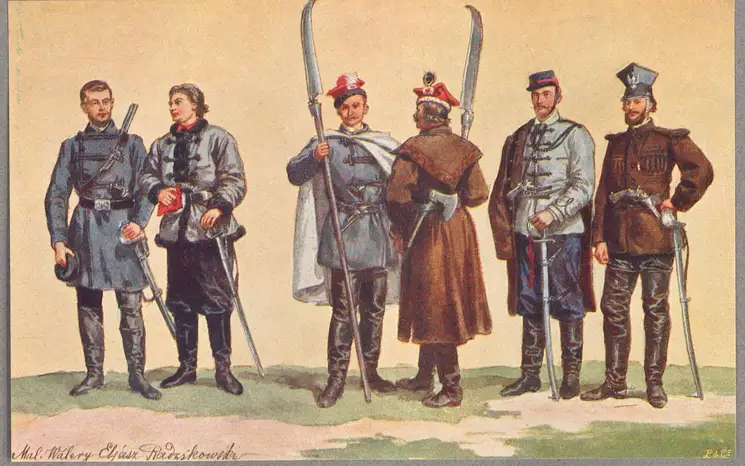
January Uprising Insurgents – Source
The beginning of the Uprising
The frosty night of January 21-22, 1863. Thousands of young people marched to attack Russian outposts. This occurred across almost the entire territory of the Russian partition, within the pre-1772 borders. Both nobility and peasants participated. Polish, Lithuanian, and Ruthenian (Ukrainian) nobility. To a lesser extent, peasants participated, as they had not yet developed a national consciousness. Peasants, both Polish, Lithuanian, and Ruthenian, often opposed the uprising and remained loyal to the Russian authorities.
This was perhaps the biggest problem the uprising’s authorities faced. The cause lay far, far behind the causes (!) of the fall of the First Polish Republic. The backwardness of the serf economy, as can be seen, had long-lasting consequences. The vast majority of peasants disbelieved the promises of their “lords.” Further consequences after the First Partition included the Second Partition, the Third, and subsequent failed uprisings, as well as the so-called Galician Slaughter of 1848, where peasants rose up to murder the nobility. Worst of all, serfdom was effectively abolished only by the occupying powers. First in the Prussian partition, then in the Austrian partition, and before the January Uprising of 1861, by the Russian authorities.
The Bloody Cost of the Uprising
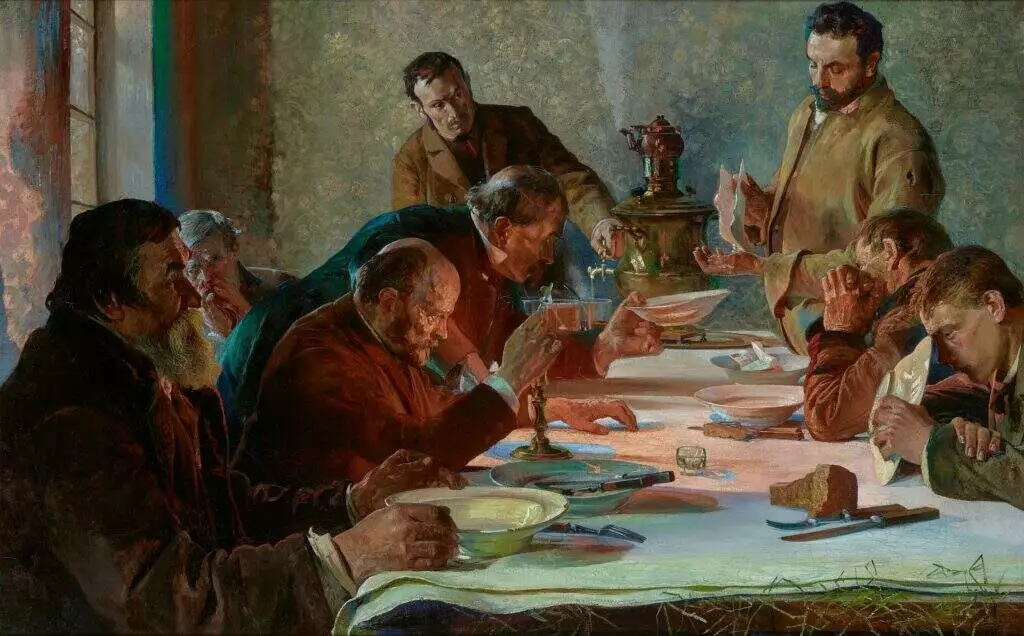
Jacek Malczewski, Christmas Eve in Siberia; source
The January Uprising was the last major uprising in the shared lands of Poles, Lithuanians, and Ukrainians (Rusyns). It was conducted primarily through large-scale guerrilla warfare. As a result, the province was completely under the control of the insurgent authorities at times. Unfortunately, large centers with large military garrisons of the Russian army were completely under Russian control, and as they were strengthened, subsequent groups of insurgents were eliminated. Approximately 1,000 battles and skirmishes were fought during the uprising. Approximately 20,000 insurgents died, and at least 1,000 were executed by the tsarist court for their participation in the uprising. One Russian, Muravyov, became particularly famous in Lithuania. He earned the deserved nickname Muravyov-Wiesatiel. The property of captured participants and those who fled, for example, to Austria, was confiscated. The uprising collapsed in late 1864.
This wasn’t the only cost of the uprising. Tens of thousands were exiled or conscripted into the tsarist army. Many were followed by their families. Few of the exiled returned to Poland, making it an irreversible loss. Intellectual elites were exiled, further worsening the situation in the former lands of the First Polish Republic. The Russification of Poland, Ukraine, and Lithuania accelerated and intensified. In Ukraine and Lithuania, fears of a return to “lords” and serfdom were raised. Schools everywhere taught exclusively in Russian, which meant that children and young people sometimes spoke it better. Only Russian was permitted in offices and the military.
And yet there was something positive…
Another consequence was a wave called positivism. It meant learning and enrichment. From then on, patriotism meant running a Polish business and allowing Poles to earn money. This was particularly evident in the Prussian (German) partition, where the economically powerful Prussia sought to dominate the Polish elites and heavily saturate Greater Poland and Pomerania with its businesses. From then on, efforts were made to “work at the grassroots level.” Positivism was crucial as a form of resistance to Germanization and Russification. Thanks to these ideas, the foundations of the future Polish state were laid, which regained independence in 1918.
Speaking of regaining independence, in 1918, several thousand veterans of the January Uprising were still alive. All were honored. Each received officer rank, and if they were an officer by marriage, they were automatically promoted one rank higher. Special decorations were introduced, as well as an insurgent uniform. Veterans could wear it during ceremonies. Every soldier, including the highest-ranking officers, upon meeting a veteran of the uprising were OBLIGED to pay their respects. They were the first to do so. General, major, sergeant, or private. There was no difference. Everyone was obligated to pay their respects to an insurgent. A house was established exclusively for the insurgents, where they could meet and even live. Their requests were to be honored first. The Second Polish Republic honored those who fought for its freedom.
The recurring question about the meaning of the uprising
Due to the toll of casualties and the wave of massive Russification that resulted from the lost uprising, its purpose is often questioned. And this is true of every uprising. The National Democrats, who collaborated directly with the tsarist regime during the 1905 Uprising/Revolution, are particularly vocal in their opinions. However, history has not vindicated them. It has vindicated the romantics, who fought despite having no chance of victory. Many in 1914 could not have imagined a free and independent Poland. And there was a considerable group, the Legionnaires, who went to fight. They did, and it was largely thanks to them that the officer elites who won the war against the Bolsheviks were formed. It was their strength and deeds that were a significant factor during discussions about the creation of a Polish state.
Myths are crucial in the lives of nations. They shape us, provide guidance, and give meaning to our memories and aspirations. One important Polish myth is the uprisings. Only one of them was truly successful, the Greater Poland Uprising. The rest were drowned in blood. Yet it was the memory of these uprisings that kept Poles from forgetting their lost freedom. For a full 123 years, from the partitions to 1918, with a brief interruption in 1939 and again until 1989, Poles continued to conspire, continued to fight for their state. First, dreaming of the return of a multinational Republic, and later of simply creating a state, their own state. And they succeeded. We live in a free Poland.
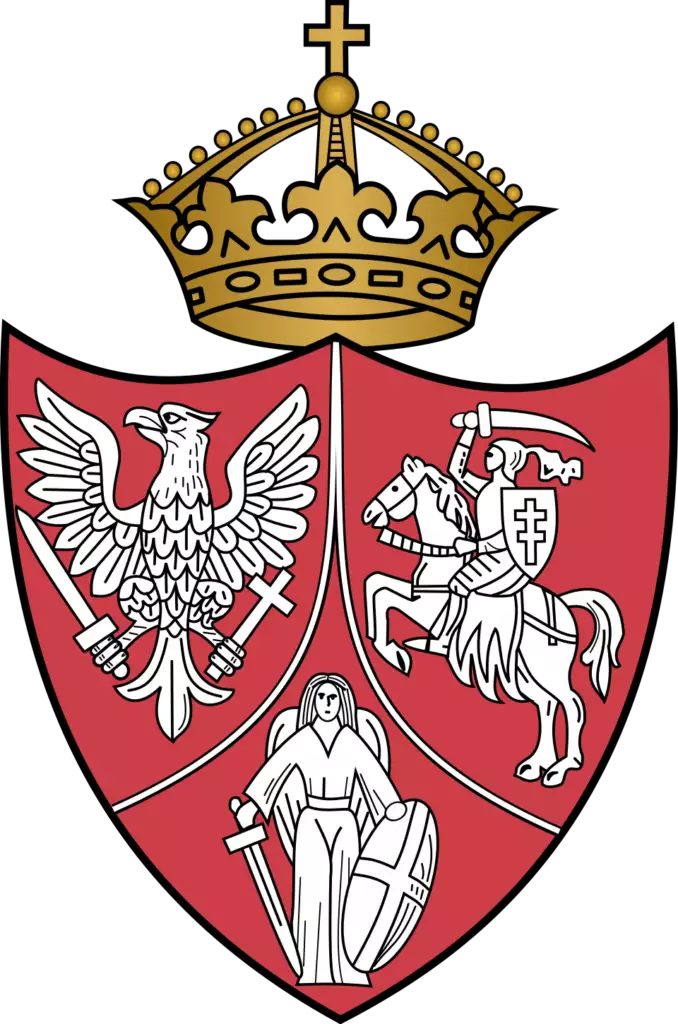
Seal of the insurgent government – coats of arms of three nations – Poland, Ukraine (Ruthenia) and Lithuania.



What do you think about this story?
Join the conversation. Please keep comments relevant to the article.
Write a comment