

Minuta ciszy dla pamięci narodowej
Jednego dnia w roku staje niemal cała Polska. O godzinie 17.00 we wszystkich miastach wyją syreny i nie są oznaką jakiegoś ataku, a szacunku dla bohaterów Powstania Warszawskiego. Sama Warszawa staje na kilka minut. Stają w miejscu ludzie, samochody, tramwaje i autobusy. Nikt się nie denerwuje, każdy z szacunkiem i powagą przez te kilka minut stoi wyrażając tym swój patriotyzm. Każdego nieznającego tego polskiego zwyczaju musi to zdziwić. I dziwi. W Polsce jest obchodzonych wiele rocznic. Jedne są zwykłe, inne ciekawe, a jeszcze inne niezrozumiałe. Ta warszawska jest szczególna. Każdego roku 1 sierpnia jest dla całej Polski dniem pamięci o czynie zbrojnym, jakim było Powstanie Warszawskie.
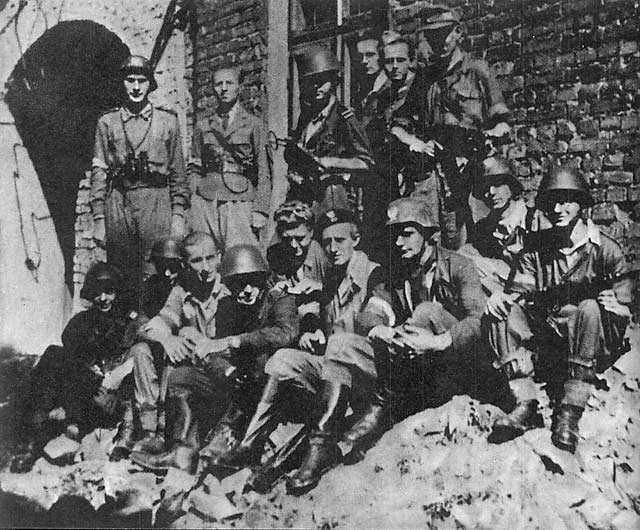


Batalion Baszta w Powstaniu Warszawskim. Źródło Wikimedia
Godzina „W” – 17:00 – stała się unikalnym w skali światowej fenomenem społecznym. Dźwięk syren zatrzymuje codzienność na pełne 60 sekund. W tym krótkim momencie zacierają się podziały polityczne i pokoleniowe; zatrzymują się przechodnie, kierowcy i komunikacja miejska, oddając hołd tym, którzy w 1944 roku oddali wszystko za wolną Polskę.
Nadzieja, heroizm i nierówna walka
Wybuchło ono 1 sierpnia 1944 roku, przygotowywane jako najważniejszy element planu przedstawiania się Rosji jako gospodarze tej ziemi. Wcześniejsze wystąpienia były połowicznie udane. Choć udawało się przepędzić Niemców z Wilna, Lwowa i wielu innych miast na terenach wschodnich, to efektem zawsze było aresztowanie i rozbrojenie żołnierzy AK. Jednych wcielano do komunistycznej armii, innych wywożono do obozów w Rosji, gdzie pracowali ponad siły. Mimo to postanowiono własnymi, polskimi siłami uderzyć na wycofujących się Niemców.
1 sierpnia 1944 roku o godz. 17.00 zaczęła się w Warszawie otwarta walka z Niemcami. Pierwsze dni to sukcesy, Polacy w natarciu. Armia Krajowa powoli zdobywała broń i amunicję na Niemcach, bowiem spora część żołnierzy nie miała karabinu ani nawet pistoletu. Niektórzy mieli granaty, jednak powszechniejsze były butelki z benzyną. Należy to podsumować tak, że fatalnie uzbrojeni powstańcy, bez broni ciężkiej, mający w zasadzie dosyć słabe przygotowanie, dzięki determinacji i znajomości miasta zajęli wiele strategicznych obiektów. Niestety nie wszystkie, co stało się zalążkiem przyszłej klęski.
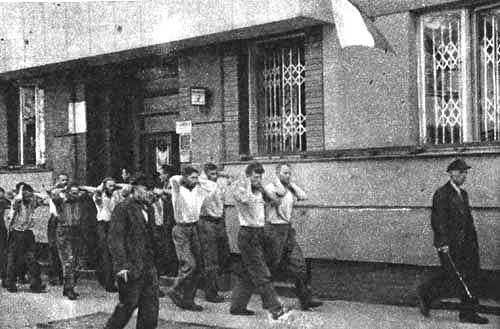
Niemieccy jeńcy z pierwszych dni powstania. Źródło Wikimedia
The Germans immediately responded with repression against the civilian population of Warsaw. They murdered entire streets: women, children, the elderly. There was no mercy for anyone, not even pregnant women. Soon, the Germans brought in collaborating Russians from the RONA (Kamiński Brigade), two battalions of Azerbaijanis, and many other random units to fight against the insurgents. The Kamiński Brigade became a symbol of the atrocities. Even the Germans could not stand the brutality of Kamiński’s soldiers and, after some time, executed him. In addition to these random units, the Germans had units in Warsaw that had been in constant combat for several years, possessing experienced soldiers and excellent weaponry. These included units from the 1st Panzer-Parachute Division “Hermann Göring,” approximately 400 soldiers from the 3rd SS Panzer Division “Totenkopf,” and heavy tanks from the SS Panzer Division “Wiking.”
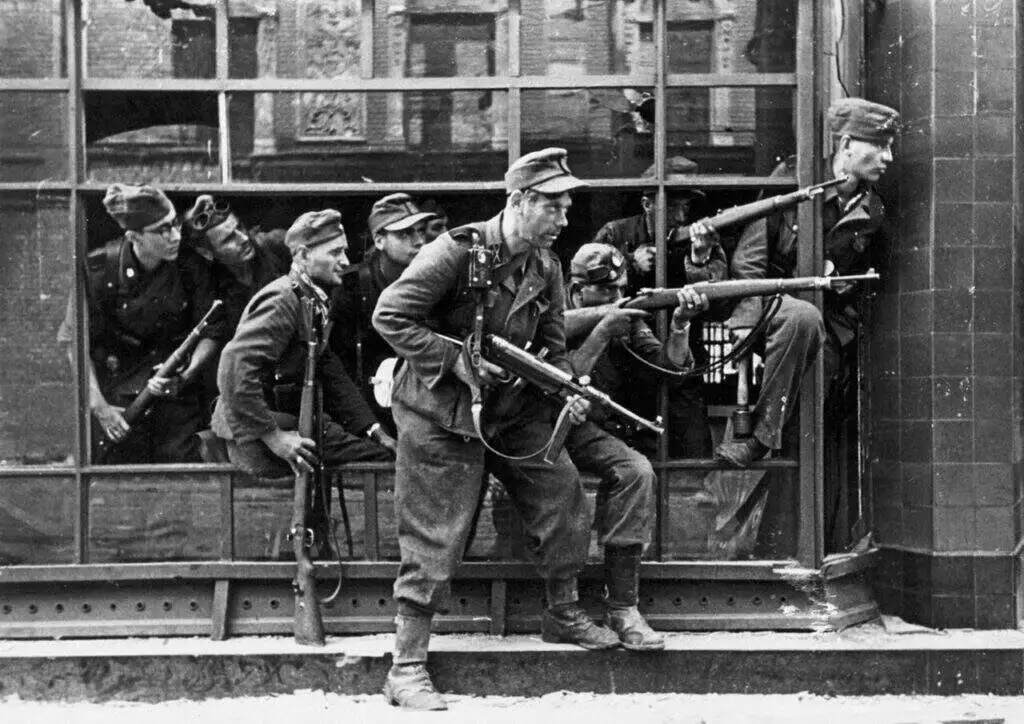
SS men from the Dirlewanger Brigade. Brutal and murderous criminals. Dirlewanger was killed by Poles in a POW camp after the Germans surrendered.. Source of the photo
The hellish fighting on the streets of the capital was not limited to clashes with regular troops. A particularly tragic fate befell the civilian residents of Wola and Ochota, where SS troops and collaborationist units committed mass murders. SS-Gruppenführer Heinz Reinefarth, commander of the Wola massacre, became a symbol of the criminals’ impunity. After the war, he was never held accountable for his actions and served as mayor of the town of Westerland in West Germany for 16 years. The memory of the tragic fate of the civilian population—between 150,000 and 200,000 perished—is as strong today as the memory of the armed uprising itself.
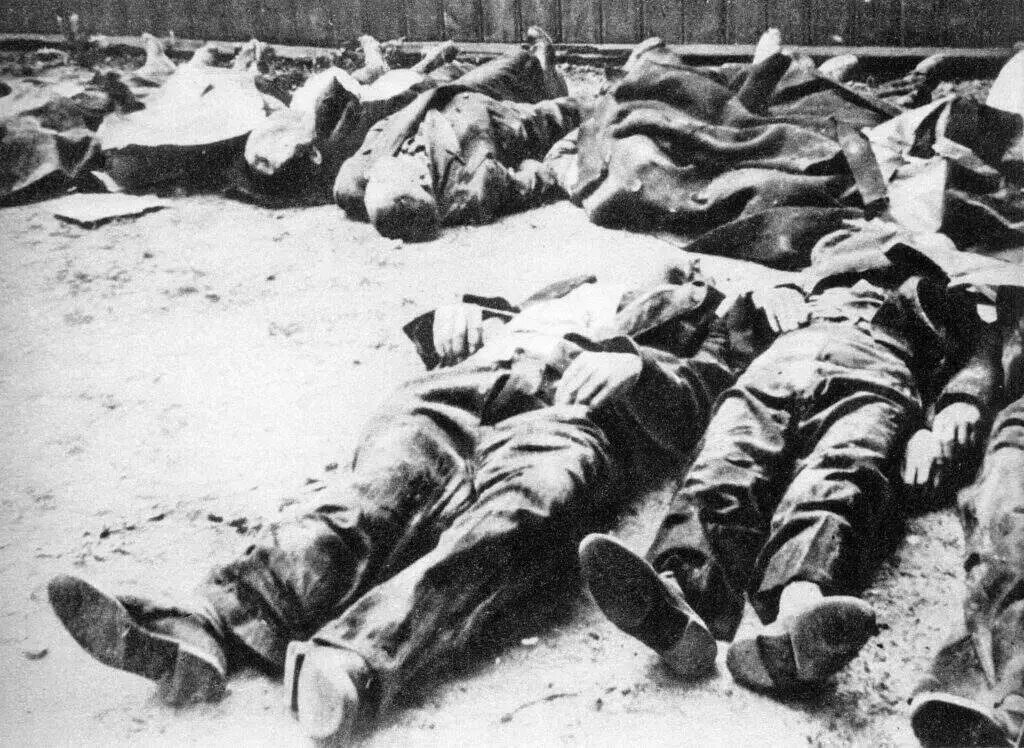
Murdered residents of Wola. Source Wikimedia
Balance and legacy in the ashes of the Capital
The uprising collapsed after 63 days. It must be admitted that it made a profound impression on the Germans. During the negotiations for the surrender terms, the German commander, Erich von dem Bach-Zelewski, treated Polish officers with complete courtesy. From the memoirs of Polish officers who participated, we know that he emphasized Polish bravery. The negotiated terms meant that Home Army soldiers were treated like all other soldiers of Western countries. This was not entirely certain, although the Western Allies unanimously declared at the outset of the uprising that the Home Army was an Allied army and that any crimes committed against them would be prosecuted.
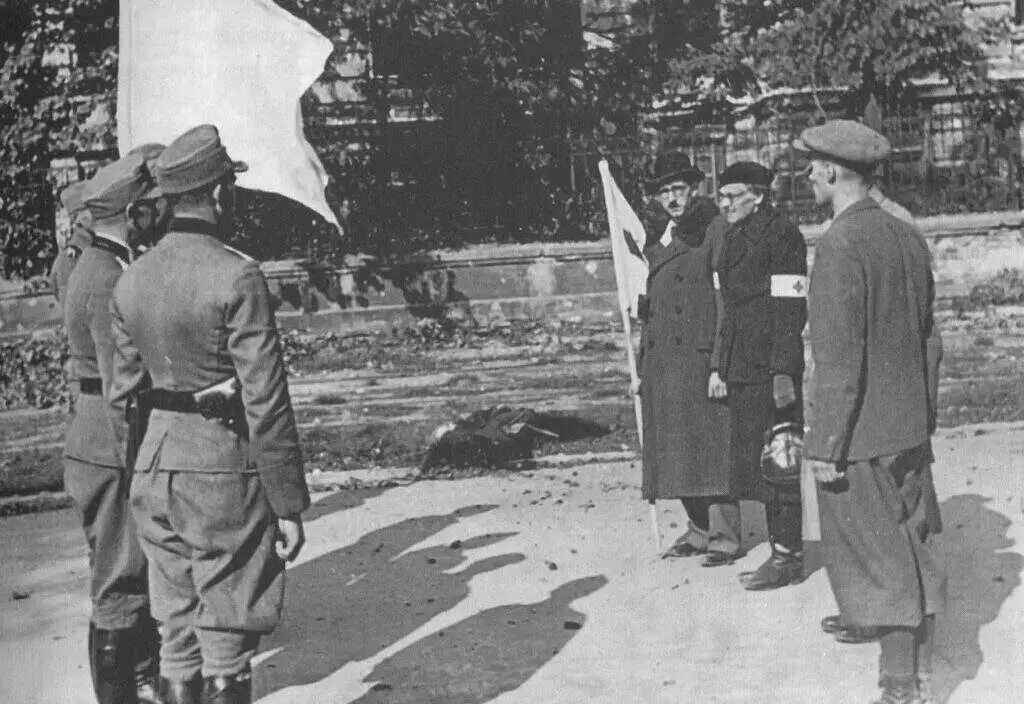
Discussions during the uprising about the evacuation of civilians from the fighting. Source Wikimedia
Today, over 80 years later, Poles still carry the pain of the Uprising. The internet is undoubtedly full of articles declaring it unnecessary, or even the opposite. However, it’s worth knowing that the Uprising itself, though unsuccessful, made a profound impression not only on Western society but also on Stalin himself. This is often used to explain why the Poles were not completely absorbed into Russia as another Soviet republic. Although the cost was enormous, the Russians feared a repeat of the Uprising, so government in Poland was entrusted to collaborators from the newly formed Polish Workers’ Party (PPR), later transformed into the Polish United Workers’ Party (PZPR). By suppressing any unrest with Polish hands, a repeat of 1944 was avoided.
Now, when everyone knows Warsaw as a city of beautiful, modern buildings and magnificent monuments, it’s hard to imagine that after the uprising, it was a ruin. Over 70% of the city was destroyed, including the entire city center. Walking around, it’s worth remembering that fighting raged on every street in Warsaw at the time. People died both in combat and in public executions. Unfortunately, there were many of the latter. Warsaw is drenched in blood, hence the Poles’ attitude toward their capital.
Warsaw’s tragedy lay not only in the loss of a generation of young people, but also in the systematic, planned destruction of the city after the capitulation. German sappers blew up historic monuments, palaces, and churches, street by street. When we walk through the rebuilt Nowy Świat or Old Town today, let us remember that beneath the foundations of this modern, vibrant metropolis lies a story of immense sacrifice—a sea of blood.



What do you think about this story?
Join the conversation. Please keep comments relevant to the article.
Write a comment