
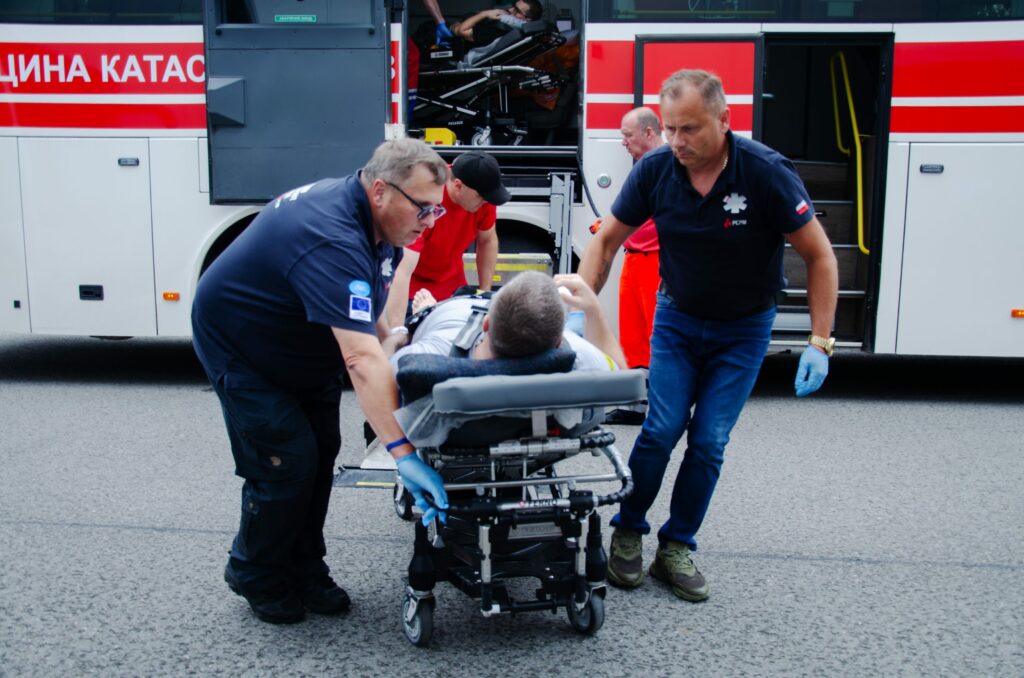
Every week, Ukrainian ambulances pull up to the hall by the airport in Jasionka near Rzeszów. Medevac Hub Jasionka, created on the initiative of the Polish Ministry of Health, is the last stop before a medical plane takes wounded Ukrainians to hospitals in Germany, the Netherlands, or Scandinavia. Over four years, several thousand patients have passed through here – most often, as the hub’s medical coordinator Adam Szyszka said, with multiple injuries and limb fractures. For most Poles, the war is news on a screen. In the Podkarpacie region it has a concrete face: a person on a stretcher who is missing an arm or a leg.


Kyiv does not publish exact figures, and estimates vary by several times: from about 20,000 Ukrainians after amputations, as “Rzeczpospolita” wrote in September, to more than 100,000 according to UN data cited by the journal “Military Medicine”. For comparison: throughout the whole of World War II, 12,000 British soldiers lost limbs, and over 16 years of fighting in Iraq and Afghanistan – about 1,705 U.S. service members. Europe has not seen anything like this since World War I – and most of these people will never be flown through Jasionka. They need to be treated locally, in Ukraine.
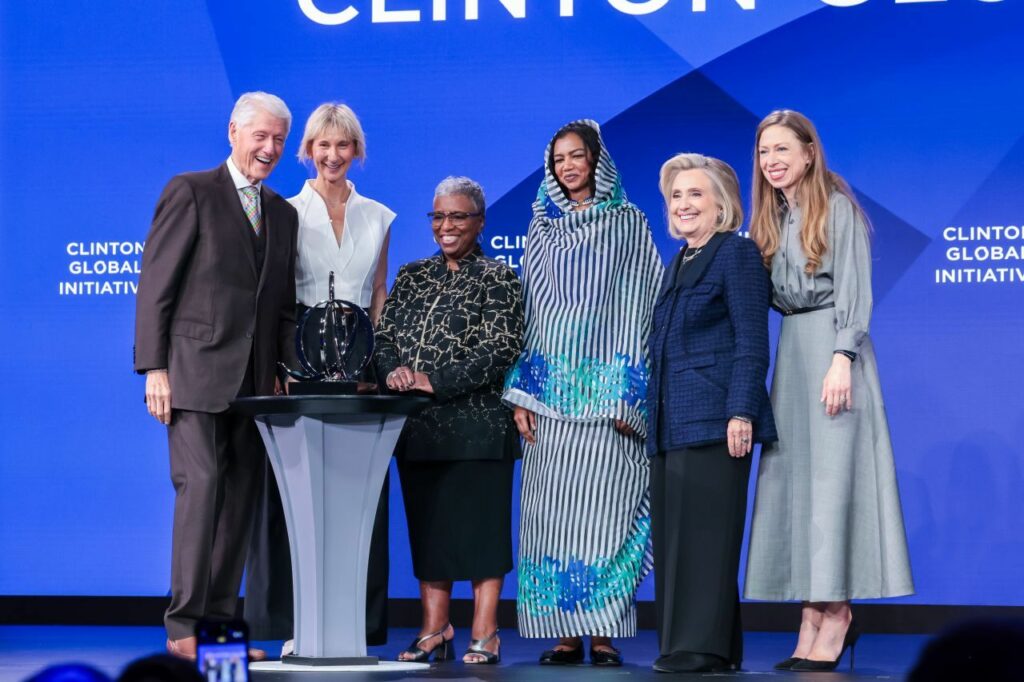
This is exactly what the Ukrainian war trauma center Superhumans does: it started with one hospital near Lviv, and has now received the Clinton Global Citizen Award in New York – a prize established in 2007 by Bill, Hillary and Chelsea Clinton for actions that change people’s lives around the world. This year, the Clinton Foundation honored three organizations that save lives every day and represent thousands of people working on the front line of aid. Among them was a center created in the midst of war for people to whom the war has taken away hands, legs, hearing, and faces.
The ceremony took place during the annual Clinton Global Initiative meeting on September 22–23, in the week of the 81st session of the UN General Assembly. The award was accepted from the Clintons’ hands by the center’s CEO, Olha Rudnieva. The meaning of this distinction is best captured by one date. As Superhumans founder Andrii Stavnitser recounted, in 2022 the team was already at the same gala—the first center in Lviv was only just being created, and Superhumans publicly committed to helping at least one hundred patients in the first year. Four years later, that is three facilities in Lviv, Dnipro, and Odesa, more than 5,000 patients, a team of 650 people, 3,888 prostheses, 3,177 surgeries, 577 hearing aids, and 410 evacuations straight from the front. The commitment has been exceeded fiftyfold.
Behind each of these numbers is a specific person. Ivan Marchak, a sapper, lost both limbs in 2023 in Kherson Oblast: while demining, he was saving a fellow soldier and both stepped on anti-personnel mines. His prostheses were made and fitted in Lviv, at Superhumans. He speaks of that time simply: “With prosthetists like that, you don’t worry about anything at all.” Today Ivan is no longer a patient, but a member of the center’s team in Dnipro. This is exactly how Superhumans conceived their work: a person after amputation returns not only to walking, but also to their profession, to a sense of meaning, and to other people.
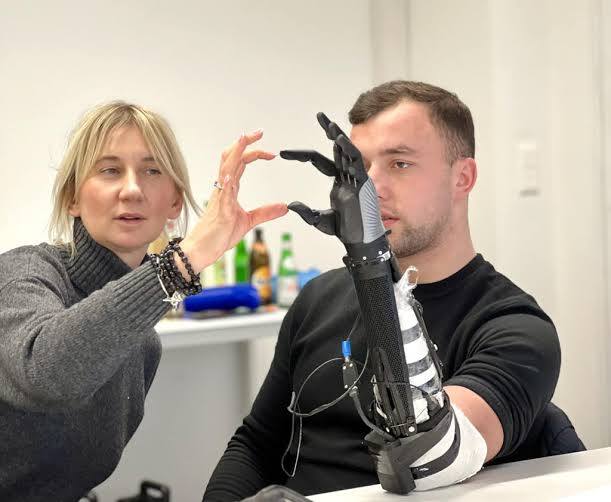
Superhumans grew out of an idea that Andriy Stavnitser, co-owner of Ukraine’s largest port TIS, presented in August 2022: to create in Ukraine a modern clinic for prosthetics, reconstructive surgery, and treatment of post-traumatic stress disorder. The project was led by Olha Rudnieva, long-time head of the Olena Pinchuk Foundation “ANTYAIDS,” included in 2024 on the BBC 100 Women list. The first center opened in April 2023 at the state hospital in Vynnyky near Lviv. Prostheses, rehabilitation, reconstructive operations, and psychological support are free of charge here, and patients can be not only military personnel, but also civilians, including children. The name is not a marketing gimmick but a program: the center’s mission is to transform Ukraine into a country of superhumans instead of a country of the wounded and victims of war.
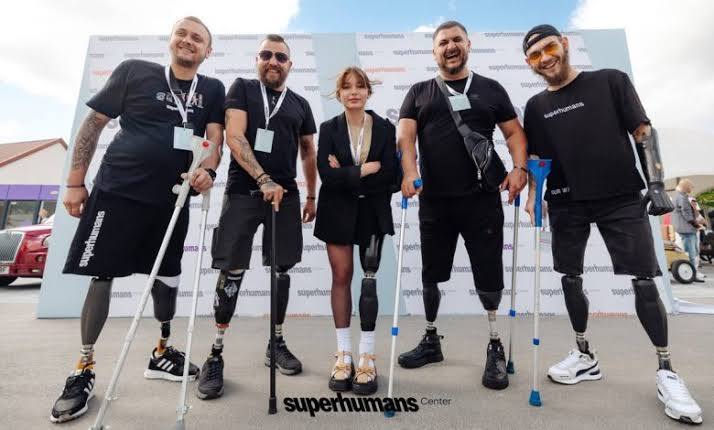
For the Polish reader, this story is closer than it seems. Vynnyky are less than a hundred kilometers from the border, and the Polish footprint in the center’s work is visible from the very beginning. The Polish company Aether Biomedical installed around 70 bionic hand prostheses in Lviv, mainly through Superhumans. The fashion platform Answear supported the center with charity campaigns already in its first year of operation, and the Polish Press Agency runs a separate тематичний service about Superhumans. Even the center’s most famous foreign guest, Prince Harry, in September 2025 traveled to Kyiv via Poland—just a few days after Russian drones entered Polish airspace. Rehabilitation of Ukrainian veterans is not a distant, foreign matter, but work being done right beyond our border—and partly by Polish hands.
Why are billionaires, a prince, and a former U.S. president betting on a facility built during the war?
The biggest contribution came from a family whose surname everyone in the world of finance knows. Not Warren Buffett himself, but his eldest son: the Howard G. Buffett Foundation donated $16.3 million to Superhumans, of which $15.3 million was allocated to renovating and equipping the hospital in Lviv, and another million to prosthetics for the first patients. “At every other meeting the question came up: aren’t you afraid to build in Ukraine during the war?” – Stawnicer recalled. Buffett wasn’t afraid. In 2024 his foundation, which since 2022 has donated more than $800 million to Ukraine, covered about 45 percent of the center’s budget.
Another symbolic ally is Prince Harry, the founder of the Invictus Games for wounded veterans. On 10 April 2025, he made an unannounced visit to Lviv, toured the center, spoke with patients and doctors, and then said that there is no rehabilitation facility in the world where you could feel what you feel here. In September of the same year, he returned—this time to Kyiv with the Invictus team, at the invitation of Superhumans. The cooperation continues: the Clintons’ gala in New York coincided with an event that Superhumans organized together with the prince, and on 1 October Harry, together with Richard Branson, will be one of the main guests at a charity dinner at London’s Imperial War Museum, with proceeds going to Superhumans and the Ukrainian organization Ptashky Peremohy.
The circle of support is much wider than two high-profile names. Since the very opening, the centre has been supported by the Richard Branson Foundation Virgin Unite, and the project’s ambassadors have become Sting, his wife, producer Trudie Styler, and adventurer Bear Grylls. Corporate partners include Mastercard, Cargill and Payoneer. European governments have also joined in: the centre in Dnipro was established in cooperation with the government of the Netherlands, and the one in Odesa — with the participation of the French agency Expertise France. On the Ukrainian side, the project is overseen by Olena Zelenska, a member of the Superhumans board.
“I remember that about 15 years ago I attended an event at the Clintons’ for the first time, I looked at those people on the stage and I couldn’t even imagine that one day I would be the person on that stage, accepting this award on behalf of the team and all of Ukraine.” – Olha Rudnieva, CEO of Superhumans Center
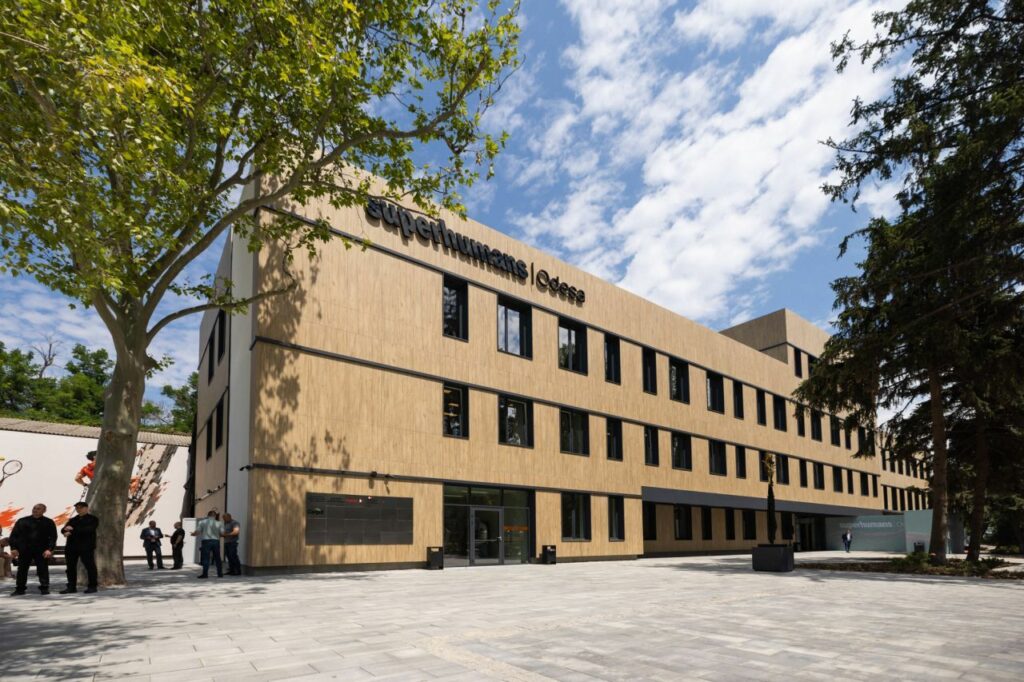
Today Superhumans is already a network. The center in Dnipro operates where the wounded from the front are evacuated daily. The center in Odesa, opened in July 2026 in the presence of President Volodymyr Zelenskyy, will be able to provide up to 800 people a year with prosthetics. The city was chosen for a reason: Odesa lies on the evacuation route; patients from Dnipro, Zaporizhzhia, and Kharkiv arrive here. The quality was also confirmed externally—in April 2026 Superhumans received the highest, diamond level of Canadian international accreditation, which only 12 facilities in Europe have.
In a conversation with the Clintons, Rudnieva said that the award is important not only for the team: “it is important for Ukraine, because sometimes it seems the world has forgotten about us.” The New York stage showed something different this autumn—at least where, instead of sympathy, concrete work is offered. The hundred patients promised in 2022 long ago turned into five thousand people who are walking, hearing, working again, and hugging their children.
The war counts its losses in limbs. Superhumans counts the steps taken on them.
Source: Nowiny Wschodnie / Tygodnik Powszechny / rzex.pl / Rzeczpospolita / Military Medicine / NV / Clinton Foundation / Clinton Global Initiative / Superhumans Center / Sestry / Euronews / CBS News / Rubryka / Euromaidan Press / InVenture / Nowy Kurier Galicyjski / Answear / PAP / Obozrevatel / Virgin Unite / President of Ukraine / Ministry of Health of Ukraine / Piwdeń Sjohodni / Podrobyci / dev.ua / Wikipedia

What do you think about this story?
Join the conversation. Please keep comments relevant to the article.
Write a comment