
A 14-year-old boy who claims he was beaten by masked individuals during riots in Petropavlivska Borshchahivka near Kyiv was entered into the controversial Ukrainian “Myrotvorets” database. The site’s authors accuse the teenager of taking part in an attack on soldiers of the National Guard of Ukraine and of actions hindering mobilization. The database also included entries concerning his mother and father. Meanwhile, the Ukrainian services present a different version of events than the boy himself.
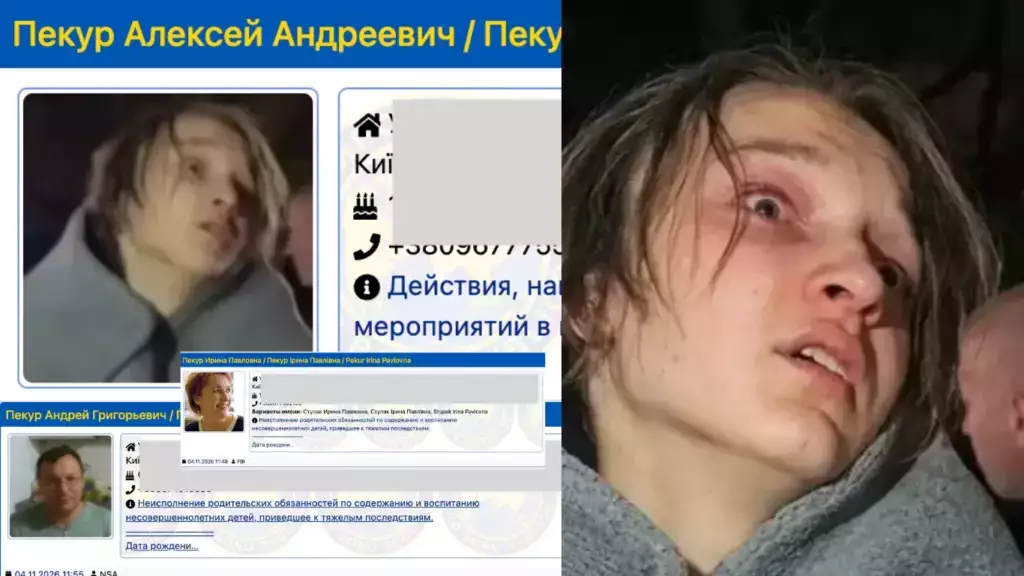
A 14-year-old boy in the “Myrotvorets” database. Serious allegations


On November 4, 2026, an entry appeared in the online “Myrotvorets” database concerning a 14-year-old participant in the events of November 2 in Petropavlivska Borshchahivka in Kyiv Oblast.
The authors of “Myrotvorets” accuse a 14-year-old of taking part in actions directed against the Ukrainian army. They allege that he tried to disrupt mobilization, called for attacks on soldiers, and took part in an assault on service members during which bodily injuries and damage to the unit’s property were said to have occurred. According to the site’s authors, the boy was also supposed to hinder the actions of the Defense Forces of Ukraine, and his behavior was said to serve Russia’s interests. These are, however, accusations published by “Myrotvorets,” not allegations confirmed by a court judgment.

The authors of the entry also claim that on November 2 the teenager was to have acted as part of an organized group of people participating in an attack on National Guard soldiers.
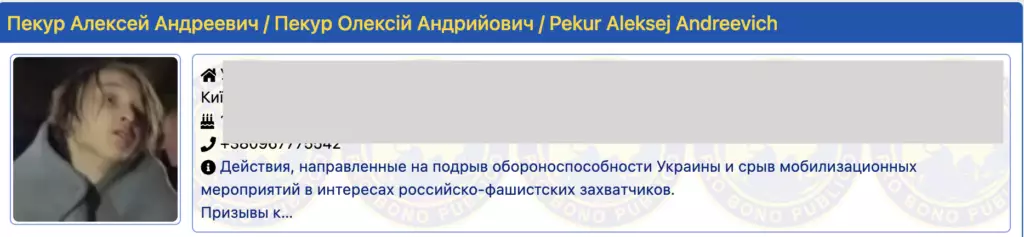
According to the description posted there, during the incident the location of a military unit was allegedly disclosed, soldiers allegedly suffered injuries, and material losses allegedly exceeded several dozen million hryvnias.
However, the materials made available do not present evidence that would allow independent confirmation that it was the 14-year-old who was responsible for all the actions attributed to him or for the indicated losses.
“Myrotvorets” is not an official register of Ukrainian law enforcement authorities. The information and accusations published there do not constitute court rulings or confirmation of guilt.
The teenager’s parents were also entered into the database
The matter did not end there. According to screenshots from November 4, separate profiles for the boy’s mother and father also appeared in the database.
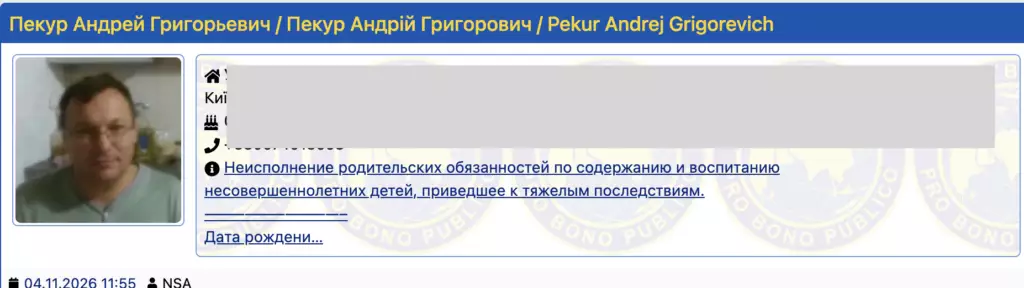
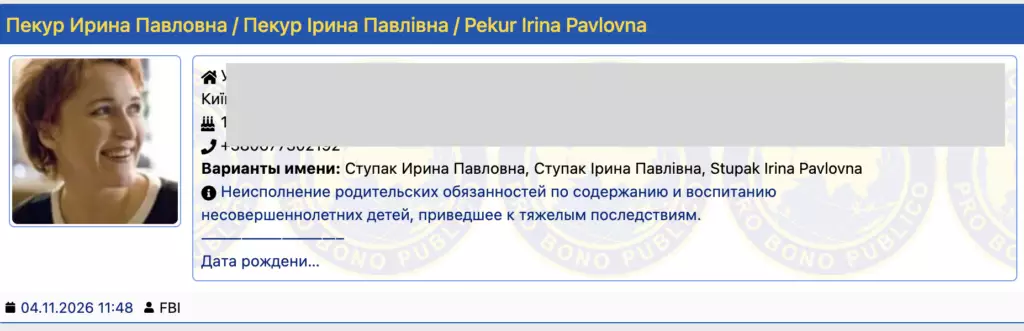
The site’s authors accused the parents of improperly fulfilling their parental duties, which was said to have led to their underage son’s involvement in the events near Kyiv.
The entries also contain the family members’ personal data.
Publishing information that identifies a minor, especially in the context of unverified allegations of serious crimes, raises questions about the protection of the child’s privacy and safety.
What did the 14-year-old say about the events of November 2?
Nowiny Wschodnie previously reported on recordings in which the teenager talked about the events in Petropavlivska Borshchahivka.
According to his account, on November 2 he came to the area around the building with his friends when he learned about the gathering.
The boys were said to have been climbing trees and the fence to observe the situation. The teenager claims that at one point he was sprayed with fire-extinguisher agent. He then returned home for a gas mask and afterwards showed up at the scene again.
Later he was to have climbed onto the fence. According to his account, bricks were thrown at him from the property, causing him to fall into the yard.
The boy maintains that after the fall, people in black uniforms and balaclavas ran up to him and pulled him into the building.
The teenager claims that he was punched, kicked, and hit with shovels, and then moved upstairs, where the violence was allegedly continued.
These are his own allegations, which so far have not been confirmed by official investigation findings.
The National Guard denies the beating. It presents a different version
As NV Ukraine reports, the Commander of the National Guard of Ukraine, Oleksandr Pivnenko, denied that soldiers beat the teenager.
According to him, the boy climbed onto the fence or a tree himself and fell onto the facility’s grounds. Then the soldiers were to have led him into the building to protect him from the danger associated with the unrest.
Pivnenko maintains that the teenager was covered with a blanket, given assistance, and then allowed to leave the facility’s grounds.
A similar version was presented by the State Service of Ukraine for Children.
According to this institution, the boy learned about the events from Telegram and, after classes, came to the site to record the situation on his phone.
When those gathered began moving the fence, the teenager was said to have lost his balance and fallen into the yard.
The official position of the services therefore remains contradictory to the boy’s own account.
Budanov spoke with the boy. The teenager was taken to hospital
On the evening of 2 November, the head of the Office of the President of Ukraine, Kyrylo Budanov, arrived at the scene.
He spoke with the teenager, who was inside the building, wrapped in a blanket. He then contacted the boy’s sister by phone and asked her to come and pick up her brother.
The woman picked up the boy from the premises.
On 4 November, the State Service of Ukraine for Children reported that the teenager is staying at the Kyiv Regional Children’s Hospital.
According to the medical information provided, his life and health are not in danger.
Representatives of the services also visited the family, checked the living conditions, and conducted a preventive talk with the parents.
Minister of Internal Affairs: the parents may face liability
On 3 November, Ukraine’s Minister of Internal Affairs Ivan Vyhiwskyi commented on the involvement of minors in the events near Kyiv.
As he reported during a press conference, under certain circumstances the parents of the 14-year-old boy may bear administrative liability.
The minister explained that if minors have not reached the age of criminal responsibility for certain acts, it is possible to consider the issue of liability of their parents.
However, this does not mean that a decision to penalize the teenager’s parents has already been issued.
The minister’s statement was preceded by the publication of entries about the family in the “Myrotvorets” database.
What happened in Petropavlivska Borshchahivka?
On November 2, people gathered in front of a building used by the National Guard of Ukraine after information spread on social media about alleged unlawful detention and beatings of servicemen.
Some of those gathered identified themselves as relatives of mobilized soldiers. They claimed that their loved ones were being held in improper conditions and that access to them was being restricted.
The gathering turned into riots. The fence, windows, and service vehicles were damaged. Clashes occurred with officers and soldiers of the National Guard.
Representatives of the First Corps of the National Guard “Azov” confirmed that the building was being used as a temporary accommodation site for soldiers of unit No. 3121, including servicemen returning after unauthorized departure from their units.
Four soldiers with injuries were taken to hospital. The circumstances of any possible use of violence against them are to be clarified.
In connection with the riots, National Guard officers securing the area were also injured.
The Security Service of Ukraine reported identifying about one hundred people present during the incidents and suspected of actively participating in organizing them.
Investigators are examining the events. What about the allegations concerning the 14-year-old?
Ukraine’s State Bureau of Investigation initiated proceedings regarding the events of November 2, including suspected abuse of authority by a person performing military service.
Separate proceedings concern, among other things, obstructing the activities of Ukrainian military formations, the unauthorized disclosure of information about their deployment, and mass riots.
At the time of preparing the article, no final findings had been made public that would settle the conflicting accounts regarding the injuries of the 14-year-old boy.
It is also unknown what specific evidence formed the basis for the “Myrotvorets” authors attributing to the teenager participation in an organized attack and causing multi-million losses.
The case leaves two separate questions: who is responsible for the violence during the riots, and whether publishing the personal data of a 14-year-old child and his family in an online database of allegations is justified.
Answers to the first question should be provided by an independent investigation. The second also concerns the protection of children’s rights and responsibility for publicly disseminating unverified allegations.
The 14-year-old’s case in the Polish debate. Borys Tynka warned against repeating the Russian narrative
The events in Petropavlivska Borshchahivka also resonated widely in Poland, especially in right-wing circles. One of the politicians who publicized the case was Confederation MP Konrad Berkowicz.
In Nowiny Wschodnie, the case was previously analyzed by Borys Tynka, drawing attention to the way unconfirmed information about the events near Kyiv began to function in the Polish public debate.
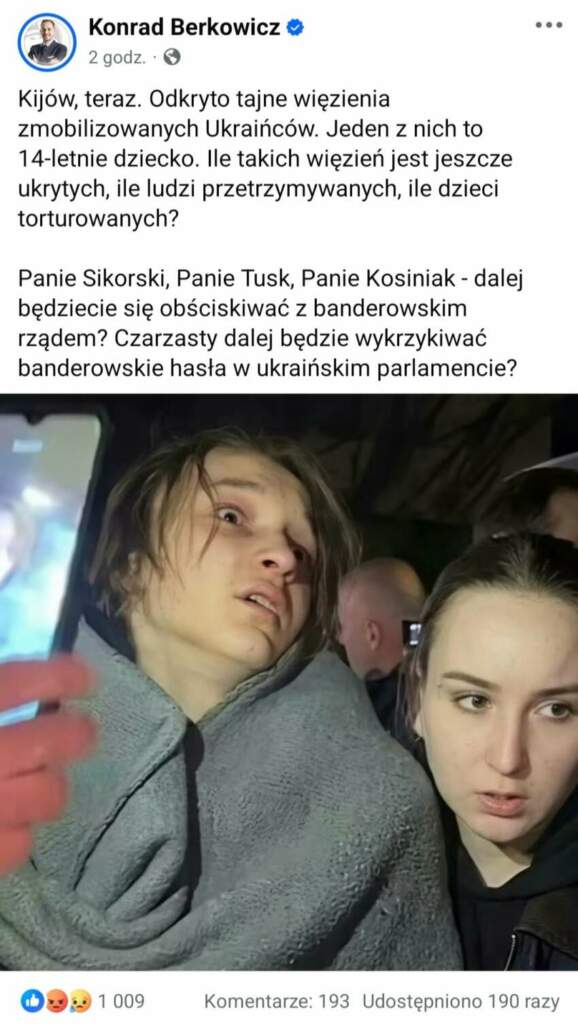
In the article “Secret prisons, tortured children and a «Bandera government». How Konrad Berkowicz turned unverified reports into an accusation against Ukraine,” the journalist cited two posts by the MP published on November 2.
In the first, Berkowicz reported an alleged discovery of secret prisons in which mobilized Ukrainians were supposedly being held, including a 14-year-old child. In the next post, he stated that the teenager had been tortured, presenting this information as fact.
Borys Tynka pointed out that at the time these accusations were published, no credible evidence had been presented for the existence of a network of secret prisons or for the torture of children by Ukrainian servicemen.
In the author’s view, presenting events in this way fits into the mechanisms of Russia’s information war, one of the aims of which is to undermine the credibility of Ukraine and its institutions. At the same time, Tynka emphasized that there are no grounds to accuse Berkowicz of cooperating with Russia. He did, however, criticize the way unverified information was disseminated.
New reports that the 14-year-old and his parents have been entered into the “Myrotvorets” database show that the case is still developing and requires a thorough clarification. Both the allegations against the teenager and his own account of being beaten should be verified by the relevant authorities.
Borys Tynka’s earlier analysis remains an important voice in the discussion about the responsibility of politicians and the media for the way wartime events are presented, especially when they concern minors.
Journalist and Editor-in-Chief of Nowiny Wschodnie, a news platform followed by more than 140,000 people on social media. A graduate in Journalism and Social Communication, he has been co-creating and developing Nowiny Wschodnie since 2017. He gained professional experience working with local and international media.
He specializes in fact-checking, countering disinformation and propaganda, and information security. His work focuses on Poland, Ukraine, Eastern Europe, and Polish-Ukrainian relations. He is also the founder of a non-profit organization working in the fields of integration and intercultural dialogue.
What do you think about this story?
Join the conversation. Please keep comments relevant to the article.
Write a comment