
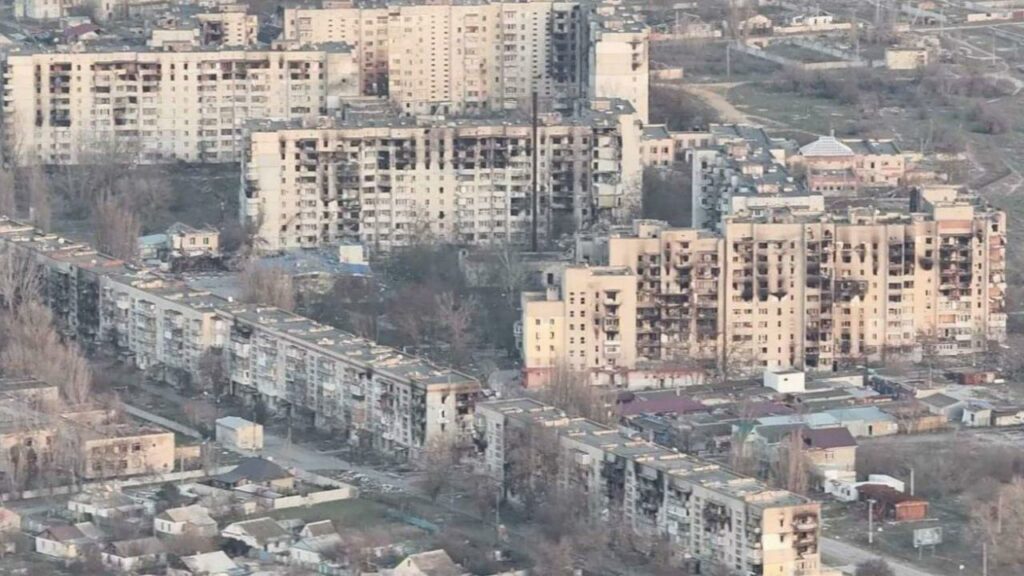
On a stool lay cookies. From a distance, they looked ordinary, brownish, arranged as if at a bazaar. Only up close did you notice something was wrong with them: grass, flour, onion skins, nettles. Everything you could gather in a place where there were no shops anymore. Someone had mixed and baked it to show the people of Gdańsk what, according to reports from occupied Oleszki, the locals were eating today.
Menu from Oleszek


The "Light of Hope for Oleszek" event took place on Sunday, September 27th, at the Neptune Fountain. It was organized by the Zjednoczeni Gdańsk / Обєднані Гданськ association. The "leftover" cookies were intended to act as both a prop and an argument. They lack flavor, and that's how they were meant to be. According to the organizers, they are the only food left in the city and the surrounding community. Photos from the event confirm this: a stool is placed in front of the crowd, cookies on top, and no one tries to decorate them.
Sixty people and the voice of the consulate
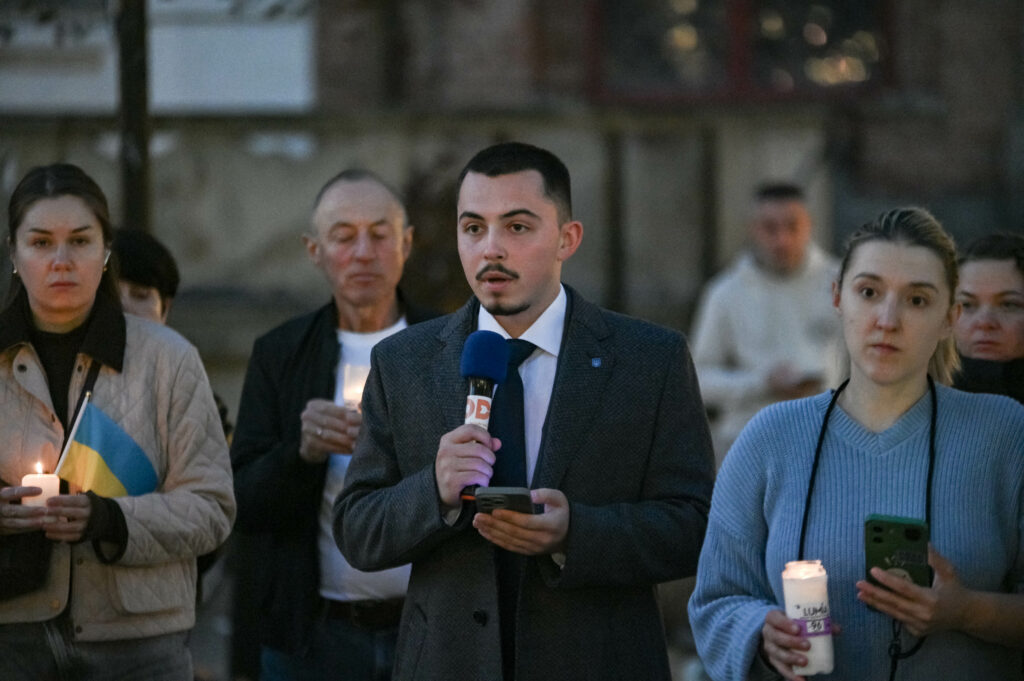
About sixty people showed up. Not many for a city this size. But they took to the streets for an issue that's hard to find more than a brief mention in the Polish media.
Maksym Sydorchuk from the consulate spoke on behalf of the Ukrainian Consul General in Gdańsk, Svitlana Krysa. The consulate described the action on its website, and Ukrinform also published the report. The statement highlighted several factors: over 2,000 people in Oleszki are "in a humanitarian trap." The last grocery store there ceased regular operation in January 2026, the infrastructure is destroyed, the roads are mined, and traveling by civilian transport is life-threatening. The organizers appealed to the UN, the International Committee of the Red Cross, and other humanitarian organizations for access to the city and the safe, voluntary evacuation of civilians. They also thanked Ukrainian defenders who, despite the risks, are delivering food to residents, although, as noted, continuous and uninterrupted access is necessary.
What is known about the Oleszki family?
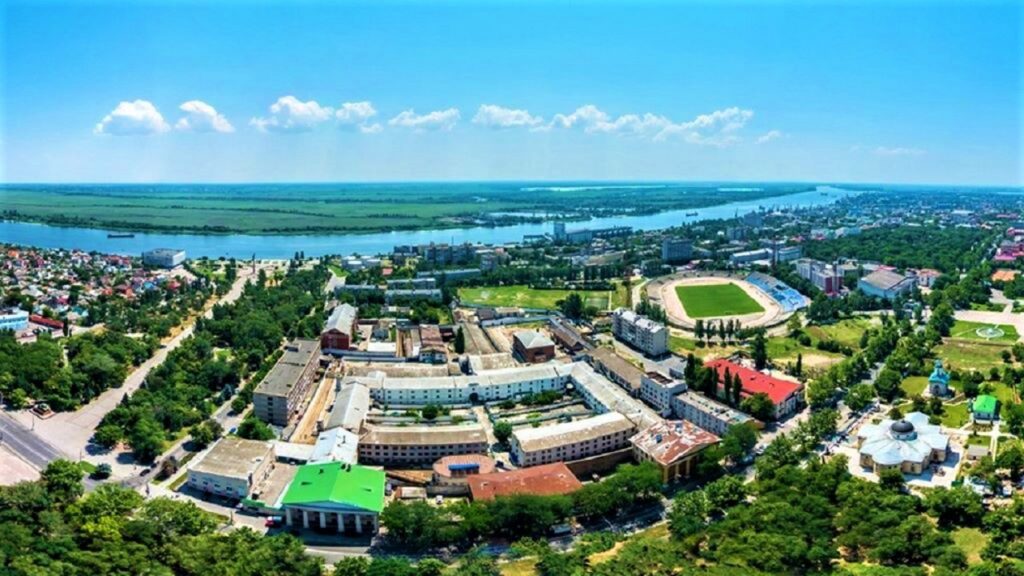
Before the war, approximately 24,000 people lived in Oleszki. Today, according to Ukrainian Foreign Minister Andriy Sybiha, around 2,000 remain, including 50 children (Ukrinform). There is some confusion about the numbers. The town itself is estimated at around 2,000, but the entire municipality may have around 6,000. Some media outlets cite the latter as the town's population, while other sources suggest over 6,000 people and around 200 children (TVP Info) or 6,000 and 180 children (Ukrinform, citing legitimate Ukrainian authorities).
The timeline, as compiled by Ukrainian media, looks like this: In January, the last store closes. The last food deliveries arrive at the end of May (TVP Info). On September 1st, Russian troops are said to have shelled four volunteer vehicles (Babel). On September 11th, volunteer Soboleva speaks of a "real famine," and on September 20th, the Ukrainian Council of Churches asks for help from Pope Leo XIV and the UN (Espreso). Babel adds that other towns in the region, including Hola Prystan and Stara Zburyivka, are also expected to be subject to a humanitarian blockade.
Voices from the City
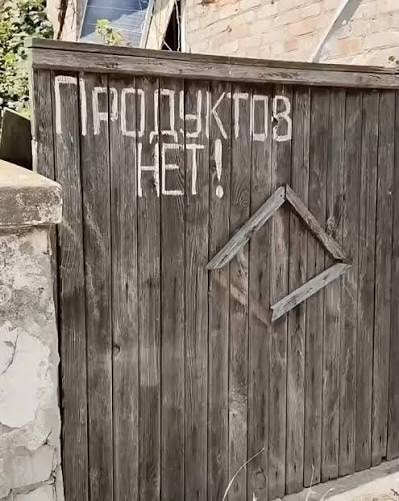
The most compelling fragments of this story come from people who have contact with Oleszki. Journalist Oleh Baturin, citing local residents' accounts, speaks of cases of starvation. People are cooking purslane and are afraid to leave their homes. Residents themselves deny the rumors about eating dogs and rats, but admit that the situation may vary depending on the district (Ukrinform, ZMINA, 24 Kanal).
A BBC report, cited by TSN, quotes a resident nicknamed Galia: "One meal a day: a tomato or honey pie." The same report also notes that occupation authorities prohibit the burial of civilians killed by drones or landmines, which is why bodies have been lying in the streets since December.
Human rights ombudsman Dmytro Lubinets says civilians cannot leave on their own because the roads are mined, and those who tried to escape have died (24 Channel). Sybiha goes further, claiming that Russian FPV drones are hunting people on the streets (Ukrinform). Swiss broadcaster SRF describes Oleshki as a frontline town, with around 2,000 people trapped. The author also analyzes whether Russia might be using civilians as "human shields." The daily Dzerkalo Tyzhnya (ZN.UA) writes that Ukrainian drones dropped around four tons of aid, but one resident received only a bottle of oil and a kilogram of flour.
It's important to be clear: almost all of this information comes from the Ukrainian side or from sources obtained by Ukrainian journalists. It's impossible to independently verify it on the spot.
The world hears, but nothing changes
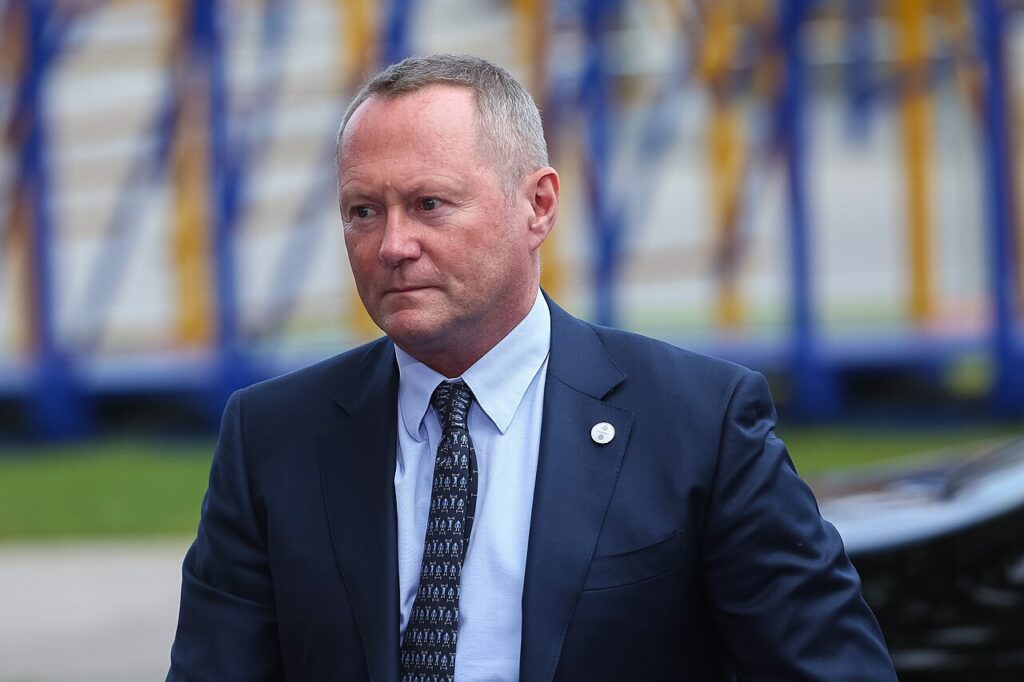
Council of Europe Commissioner for Human Rights Michael OFlaherty called for an immediate local ceasefire, ensuring humanitarian access, and the safe evacuation of civilians. He recalled that, as the occupying power, Russia is responsible for providing food and medical care (Ukrinform). Lubinets claims that a "clear algorithm" for the evacuation has been agreed with Russia, and the Red Cross has declared its readiness, but Moscow has long refused to confirm this (Kyiv Post). ZMINA writes that Russia has rejected all Ukrainian proposals for a temporary ceasefire during the evacuation. Lubinets describes the international community's reaction as "completely ineffective" (24 Kanal).
The Russian side tells a different story. Kremlin spokesman Dmitry Peskov blames supply difficulties on shelling and drone attacks on Ukraine, denying Russia's responsibility (Kyiv Post). Russian "governor" of Kherson Oblast Vladimir Saldo refused to provide the number of civilians, calling such information "biased," and has not announced any evacuation (Ukrinform).
Why Gdańsk?
In its announcement, the Consulate referred to the Gdańsk Solidarity movement and wrote that this word has a special power in this city. No one at Neptune pretended that sixty people would change the course of the war. But they came out, set up a stool with grass cookies, and said out loud that there are people in Oleszki. The organizers are asking for something everyone can do: spread the word about Oleszki, support humanitarian initiatives, and not remain indifferent.

What do you think about this story?
Join the conversation. Please keep comments relevant to the article.
Write a comment