

This analysis by Nowiny Wschodnie may not appeal to some Ukrainians. It may not appeal to some Poles either. But that’s precisely why it’s worth sharing.


A Ukrainian woman living in Katowice published a post on social media describing the situation at the meat department.
A Ukrainian woman in Poland heard “fuck off to Ukraine”
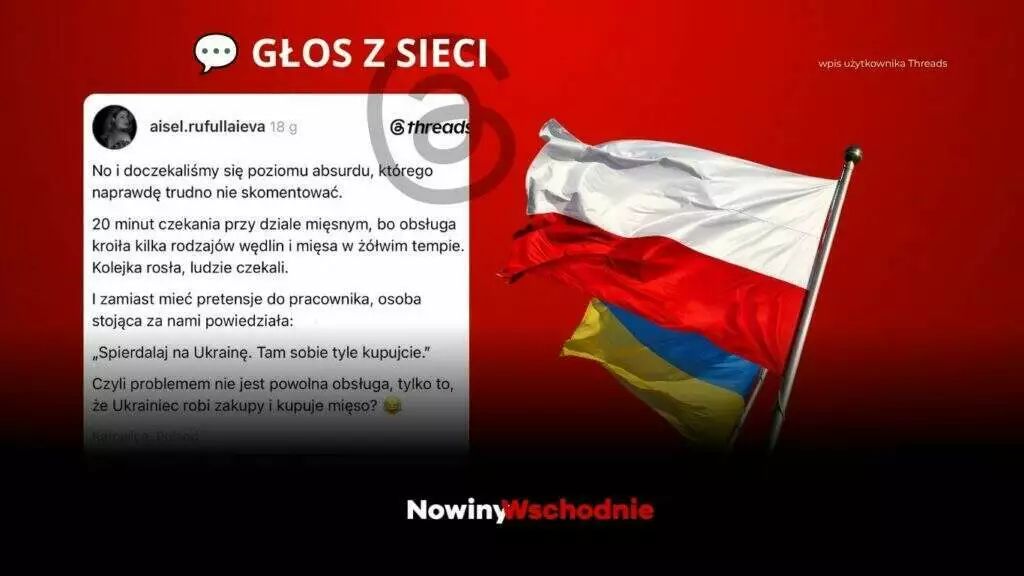
She reportedly waited for about 20 minutes as the employee sliced several types of cold cuts and meats, and the line grew longer. She was dissatisfied with the pace of service. The person behind her reportedly said:
“Fuck off to Ukraine. Buy as much as you can there.”
The Ukrainian commented:
“So the problem isn’t slow service, but that Ukrainians shop and buy meat?”
We didn’t witness this situation and only know about it from the woman’s account. However, the post itself highlights a problem that extends much further than the meat queue.
Two people can see the exact same situation completely differently
From a Ukrainian perspective, the matter may seem obvious.
She’s a customer. She came to the store, intends to pay for the goods, and expects efficient service. If she waits 20 minutes, she has the right to be dissatisfied, complain to the employee, or ask if the service can be expedited.
In short: I pay, so I have the right to demand.
This does not mean, of course, that the employee must fulfill her request. He can do his job as quickly as he can. But the customer has the right to say he’s not satisfied.
The problem is that some Poles may look at exactly the same situation completely differently.
Not to see a customer dissatisfied with the service, but A Ukrainian woman who came to Poland and now demands something from Poles.
And this is where the conflict begins.
“You’re a guest here, so don’t make demands.”
The experiences told to us by people from Ukraine, but also from other countries, show that a similar mechanism appears in very different situations.
Someone criticizes the health service. Someone is dissatisfied with the office. Someone complains about another person’s behavior. Someone complains about the service.
The comment may even be completely justified, but the reaction is:
“If you don’t like it, go back home.”
In this way of thinking, it no longer matters whether a person was right.
What becomes important is that he is a visitor.
There’s a belief that if someone comes to Poland, they should, above all, be grateful. They shouldn’t be overly demanding, critical, or lecture the locals.
It should be – to put it simply – “a polite guest.”
But the concept of “guest” itself is very broad.
You can live in Poland for several or a dozen years, work here, pay taxes, run a business, and raise children. But sometimes, a simple accent is enough to make you a “guest” again during a conflict.
And since you are a guest, then according to this way of thinking you shouldn’t demand too much.
However, there is another side to this – Poles themselves often react differently.
Now let’s look at the same queue from a different perspective.
In Poland, it’s common to see long lines at a store. One checkout is open, the other is empty, and a dozen or so people are waiting.
And what’s happening?
Most often, people just stand there.
The same applies in many other situations – in a clinic, office or service point.
Of course, sometimes someone will ask: “Can I open a second cash register?”. Someone else will start complaining. But very often the response is simply to wait patiently.
After all, a cashier, doctor, or any other employee is human too. They work as fast as they can. You can’t force a meat department employee to suddenly start cutting twice as fast either.
“We have to wait. What will you do?”
For many Poles this is completely natural.
And this is where the difference in how we react may appear.
Ukrainians often have a different experience
It is not that one way of behaving is good and the other is bad.
It’s about other social and cultural experiences.
For many years in Ukraine, people often had to take care of their own affairs. If they needed something, they had to ask, press, remind, and demand a response.
If something doesn’t work, you try to change it.
If someone gets in line ahead of you, you ask why they are doing so.
If the service is too slow, you ask if there is anything that can be done.
If the office does not respond, you try again.
This doesn’t mean that every Ukrainian behaves this way, just as not every Pole will stand calmly in line. different experiences of living in both countries may influence how we react to exactly the same situation.
And that’s when the misunderstandings begin.
“Why do you skip the line?”
Do you remember the story from Żabka? which we described?
Ukrainian she drew attention person who – according to her account – tried to enter before her.
From her perspective, the situation was simple:
I’m in line. I might be in a hurry too. So why should someone get in before me?
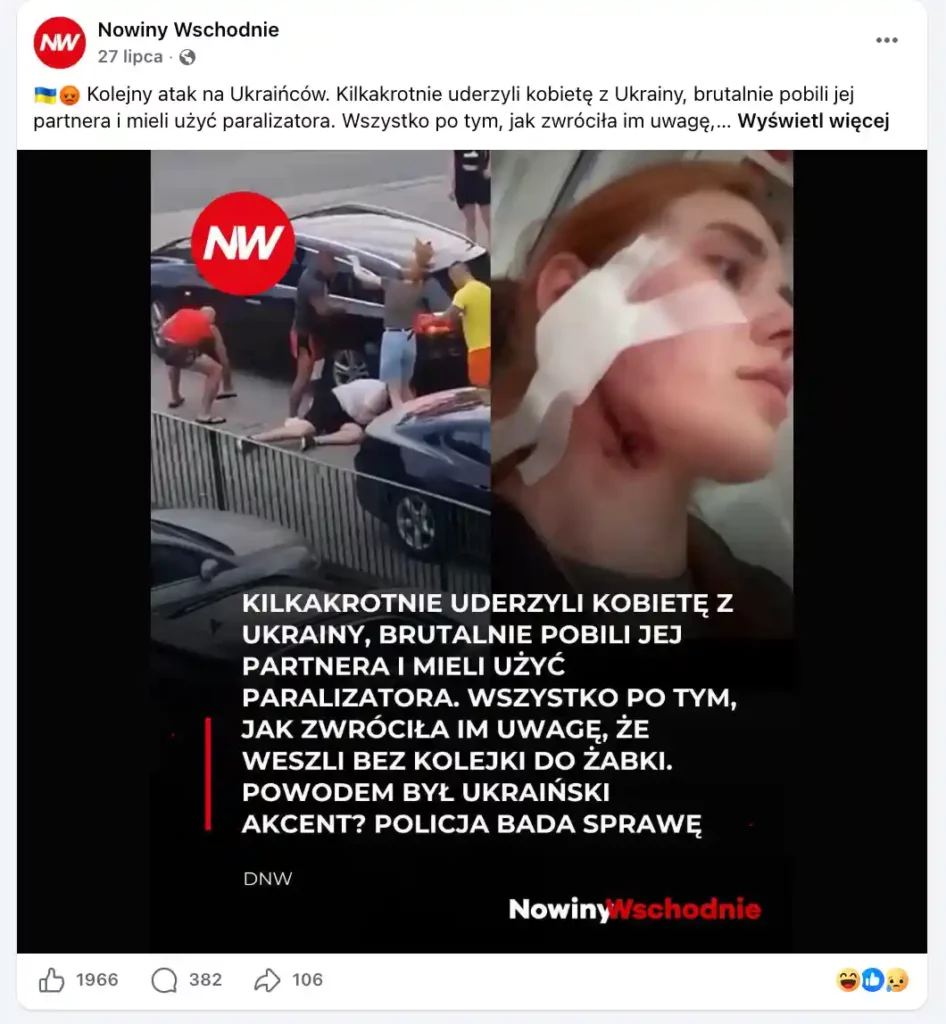
Did she have the right to point that out?
Of course.
The problem is that the other side may see something completely different:
“Will a Ukrainian woman lecture me in Poland?”
And an ordinary conflict over a queue suddenly ceases to be a conflict over a queue.
Nationality appears.
Appears: “get the fuck out of here in Ukraine.”
And sometimes it doesn’t end with words.
In the case we described earlier, the conflict ended in violence against a woman and a man from Ukraine, and the case was brought to justice.. (MOVIE)
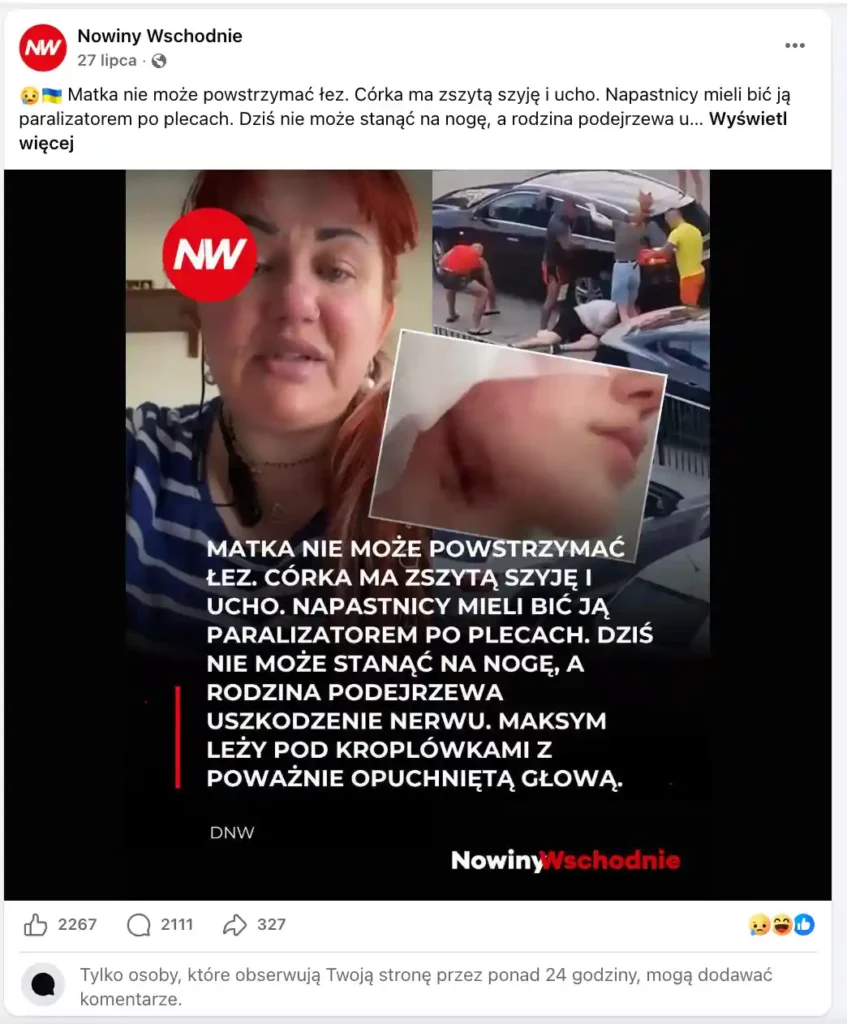
This shows how a trivial situation can escalate when a simple dispute turns into a matter of origin.
Maidan was, of course, something completely different. But a certain way of reacting is worth noting.
You shouldn’t compare a queue in a store with historical events of a completely different scale.
But there is one feature of Ukraine’s social experience that should not be ignored.
It was also visible during Maidan in 2013 and 2014.
People refused to accept what they saw as the conditions imposed on them. They took to the streets because they wanted to influence the direction of their country.
The mechanism is of course incomparable in terms of scale, but a certain attitude is similar:
If you think something is unfair or wrong, you try to react instead of just accepting it.
And a person takes this way of thinking with him even when he moves to another country.
And that is why a simple queue can turn into a Polish-Ukrainian conflict
So let’s go back to the meat department.
The Ukrainian woman looks at the situation and thinks:
“I’m a customer. I’ve been waiting 20 minutes. I have the right to say I’m dissatisfied.”
A Pole standing nearby might think:
“We’re all waiting. The employee is doing what she can. Why is she making a problem?”
Up to this point there is no national conflict.
These are just two different reactions to the same situation.
The problem begins only when the third thought appears:
“What right does a Ukrainian woman have to demand anything from us?”
Because then we no longer talk about whether the service was fast or slow.
We talk about it, Does a person from Ukraine have the same right to be dissatisfied in Poland as a Pole?
And the answer should be obvious: it does.
Just as a Pole has the right to consider her behavior excessive and say that the employee is doing everything he can.
The nationality of either side should not be an argument.
However, there is some practical advice for Ukrainians.
You can be right and still find yourself in a dangerous situation.
Therefore, it is worth saying one thing to people from Ukraine living in Poland today: Be careful and don’t get into every discussion just because someone has acted unfairly.
If someone gets in front of you in line, you have the right to call attention to them.
If you are dissatisfied with the service, you have the right to say so.
If an office, shop or other institution is acting incorrectly, you have the right to file a complaint.
But when a simple dispute begins to turn into aggression, with insults based on nationality or threats, It’s not always worth proving your point to the end.
Sometimes it’s better to walk away, ask a staff member or security for help, and if there’s a threat, call the police.
Not because a person from Ukraine has fewer rights.
Just because no queue, cash register or piece of meat is worth beating.
And perhaps that is the most important conclusion from this story.
Not every conflict between Poles and Ukrainians is an ethnic conflict. Not every criticism of a Ukrainian is xenophobic. Not every Ukrainian is right simply because they encountered an unpleasant reaction.
But when the response to simple customer dissatisfaction becomes “fuck off to Ukraine”, nationality has already been introduced into this conflict.
And then it is worth understanding not only what happened, but also why two people could see the same situation in a completely different way.
Eastern News — Follow us. The most important news from Poland, Ukraine, and Eastern Europe
Publication and distribution of the material is permitted only with the author and an active link to the original article.

Journalist and Editor-in-Chief of Nowiny Wschodnie, a news platform followed by more than 140,000 people on social media. A graduate in Journalism and Social Communication, he has been co-creating and developing Nowiny Wschodnie since 2017. He gained professional experience working with local and international media.
He specializes in fact-checking, countering disinformation and propaganda, and information security. His work focuses on Poland, Ukraine, Eastern Europe, and Polish-Ukrainian relations. He is also the founder of a non-profit organization working in the fields of integration and intercultural dialogue.
What do you think about this story?
Join the conversation. Please keep comments relevant to the article.
Write a comment