

From Romanians to “Soviet People” – Social Engineering of Tsarism and Soviet Russia
Moldova, occupied by Russia, was going through a difficult time. During the Tsarist regime, the classic Russification process began. In a census taken shortly after Russia’s occupation of Moldova, Romanians constituted approximately 86% of the region’s population. Planned Russification, which involved the expulsion of elites, schools teaching primarily in Russian, sending rebels to the outskirts of the Russian Empire, mandating work outside Moldova, and bringing in Russian-speaking officials, teachers, and soldiers, resulted in a decline to less than 48% by the end of the 19th century. Despite this, only 8% were Russians. Nearly 20% were Ukrainians, and 11% were Jews. Within three generations, Russia systematically reduced the Romanian population of Moldova.


After World War I, Moldova was incorporated into Romania, but population policy did not significantly alter its ethnic composition. In 1940, before the renewed Russian occupation, Moldovans (Romanians) constituted just over 53% of the population. The effects of ethnic cleansing were felt with some persistence. Only a small part known as Transnistria remained with Russia. To completely eradicate the Romanian-speaking population, a transition from the Latin alphabet to the Cyrillic alphabet was ordered in the 1920s. From then on, the Romanian language was written in Cyrillic in the occupied region. The rest of Moldova was also subject to this obligation after 1940, and this obligation remained in force until the collapse of the Soviet Union.
The Hitler-Stalin Pact and the Sentence Against Moldova. Behind the Scenes of Diplomatic Betrayal.
As a result of the Molotov-Ribbentrop Pact, better known in Europe as the Hitler-Stalin Pact, Poland first fell, divided between Russia and Germany. Russia then absorbed the Baltic states and Moldova. Romania was given an ultimatum, and lacking the support of either the Western Allies or Germany, it was forced to accept it. Russia cleverly played the Hungarian and Bulgarian cards, posing a threat in the event of military resistance. These countries had territorial claims against Romania, and in the event of a Russian attack, they would certainly seize the opportunity to sever from Romania the parts they considered their own.
Siberia instead of home – the tragic fate of the Moldovan elite and clergy
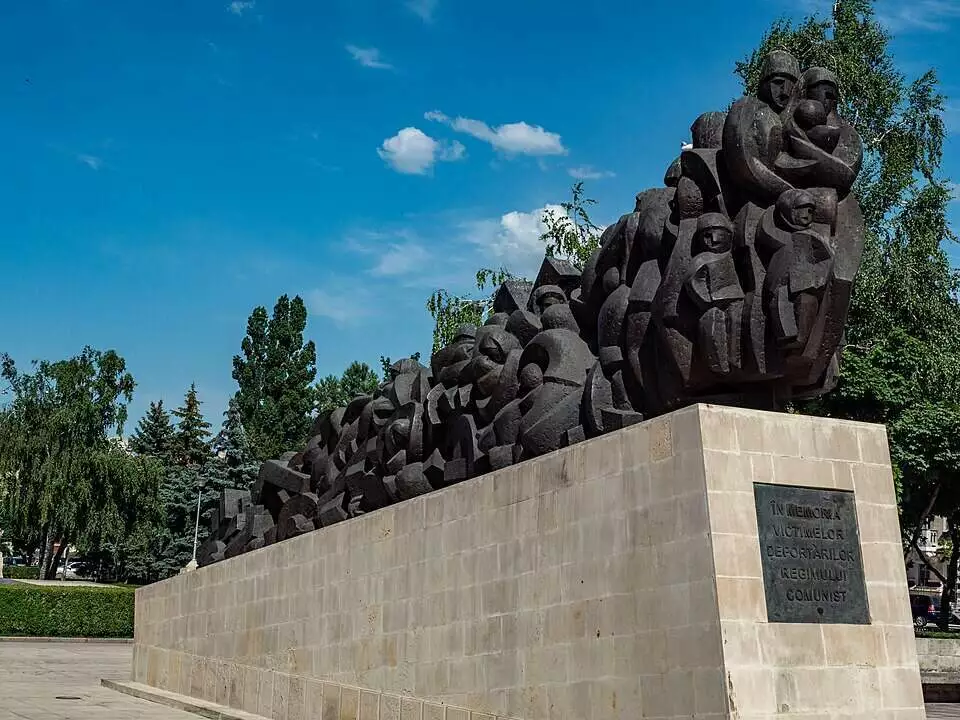
TRAIN OF PAIN – a monument to the victims of Russian repression. Chisinau. Source: Wikipedia, Link
As a result, Moldova fell entirely under Russian occupation. The same month, after the occupation by Russian troops, the first repressions began. Before the German invasion in 1941, approximately 85,000 people were deported, sent to forced labor in Russia, or imprisoned. It is important to remember that at that time, Moldova had a population of less than 2.5 million. After Russia reoccupied Moldova in 1944, further repressions began. As a result, tens of thousands more were imprisoned, resettled, or sent to camps. By 1953, the number of victims was estimated at over 100,000. It is important to remember that these victims were not ordinary people. They included officials, teachers, policemen, soldiers, priests, priests, and even, in the postwar period, peasants who resisted collectivization and failed to pay their quotas.
The Great Famine – not only Ukraine
The Russians also resorted to tried-and-true methods. In 1946, they imposed massive grain quotas on Moldova, which caused the Great Famine, the same as that which raged primarily in Ukraine in the 1930s. According to statistics, Moldova’s victims ranged from 125,000 to as many as 350,000. Determining the number of victims is similar to that in Ukraine – the Russians did not allow research on the subject, and documents were destroyed. This was a massive population loss. The famine wiped out 5-10% of the population. If you add “ordinary” Stalinist repressions to this, the losses could reach 10-15% of the Moldovan population. It’s also important to remember that Moldova was not spared from World War II, which resulted in the loss of a significant portion of its male population.
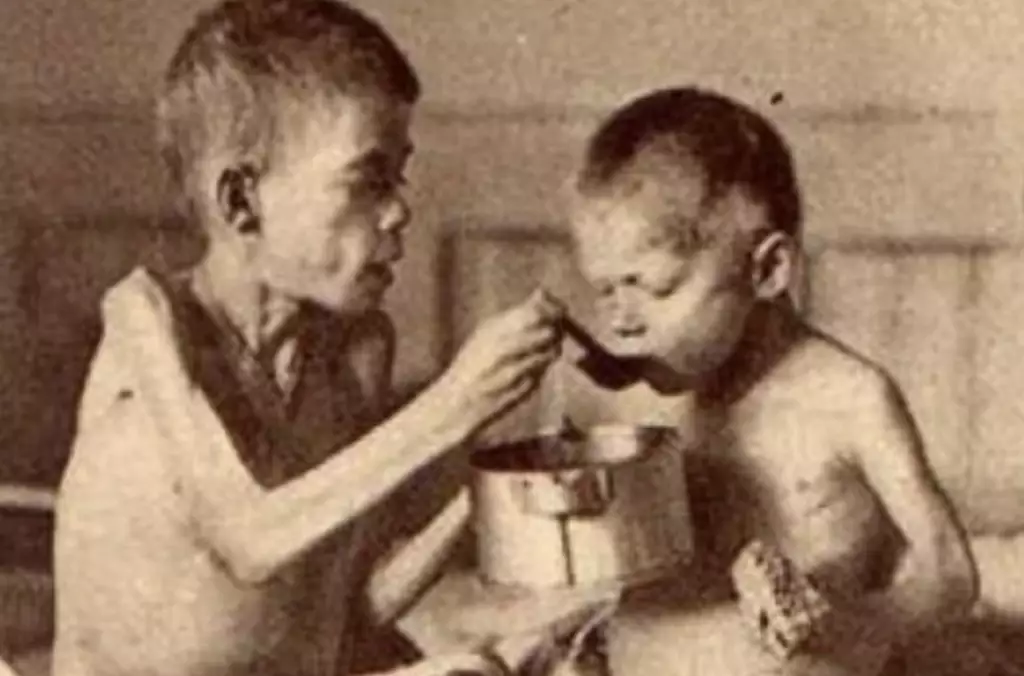
Famine in Moldova. Photo posted on the Romanian IPN press agency. Link
Half a million Russian settlers – how Russia exchanged its population
In line with the policy of Russification, Russian-speaking teachers, police officers, and officials were assigned to the new republic first. Educated Moldovans were sent to work in other republics of the Soviet Union, and Russian or Russian-speaking personnel were sent to replace them. This resulted in the settlement of over half a million Russians in Moldova. This significantly altered the national balance and led to it becoming unfavorable to the indigenous population. Changing national relations meant genocide. The Russians had extensive experience, having spent a century and a half Russifying the occupied territories of Poland, Ukraine, Lithuania, Belarus, Kazakhstan, Armenia, Azerbaijan, and so on. This was consistent with Russian policy. An educated Soviet citizen was expected to speak Russian.

Source: All-Union Population Census of the USSR of 1989. Detailed demographic data.
As you can see, Moldova’s current problems with itself and its territory known as Transnistria didn’t arise out of nowhere. They reflect Russia’s deliberate policy of murdering or displacing the local population, replacing them with Russians and Russian-speakers. This policy, pursued for almost two hundred years, can be, and is, called genocide. Not to mention the Great Famine in Moldova or the classic repression of deporting the local population to the vastness of Russia. Wherever we encounter a Russian minority in other countries, deliberate ethnic cleansing is evident. Romania and Moldova are making great efforts to restore the Romanian identity of the territories occupied by Russia. The problem is the Russian minority, well-armed and equipped by Russia and protected by its military in Transnistria.
Nothing new. Genocide has many names in Russian.
Russia has dealt with other countries in a similar manner. Expulsions, genocides, and the repatriation of Russians to replace them are a constant Russian practice. They have done the same in Lithuania, Latvia, Estonia, Kazakhstan, Georgia, Armenia, Azerbaijan, Ukraine, Chechnya, Dagestan, Belarus, Turkmenistan, Tatarstan… The list could go on. A very long time. Too long. The number of crimes committed by this single country alone is unparalleled by anything in the world. The Germans are like apprentices to their masters. The Russians spread their genocide out in installments and carried it out over years, which is much more effective. They have reached a point where they have their own Fifth Column in many neighboring countries. And they use it, just as they did in Ukraine and other countries.
State Terror in Soviet Moldova, 1940–1989 (ResearchGate)
Geopolitical situation and history of Moldova (Europa Libera)
Moldovan Great Famine 1946-1947 (Eastern Time)
Holodomor in Soviet Moldova – analysis (Stanford University)

What do you think about this story?
Join the conversation. Please keep comments relevant to the article.
Write a comment