

Because I recently wrote A, as a supporter of remaining Polish In European Union, I will present B. So what does one of the benefits look like, omitted in the public debate by part of the far right (ed.)
Poland after 1989: poverty, sell-offs and complexes


Poland has been going through a very difficult period since regaining independence in 1989, when an almost mass sale of supposedly national property, but in reality stolen from Poles by communists – Russian collaborators. This process continued until the entry into EU. For years, the communists were mainly engaged in selling off property taken from its rightful owners and giving away to Russia, for next to nothing, Polish technical knowledge, raw materials and highly processed goods, as well as the country’s sorely lacking food.
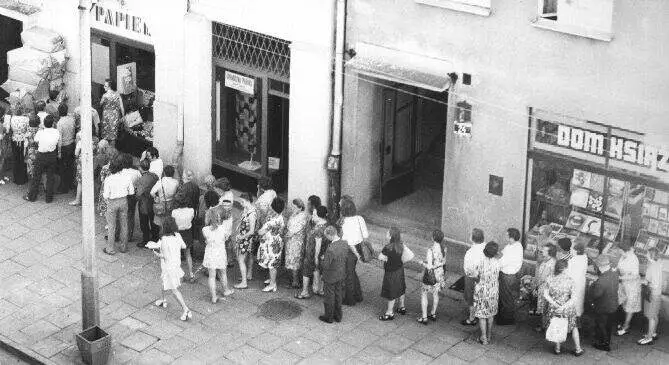
As a result, we entered the European Union with the perception of being a small, poor, and constantly exploited country. Although Poland was already being hailed as a place where the economic transformation from an inefficient planned economy to a capitalist one, where the market determines the need for products and services, had been remarkably successful, we perceived ourselves as a colony of wealthier countries. Yes, German investments saved us from unemployment and even starvation, but something was nagging under the surface.
Yes, national pride suffered. It suffered during the partitions, it suffered during the German occupation, and it suffered during the longest Russian occupation. That’s why Poles treat others with a great deal of distrust—foreigners always “came to make money off us,” without giving anything in return. Investments from Western companies have significantly changed this perception. There are many companies running social programs and helping local communities. Examples of such companies can easily be found online.
PKN Orlen
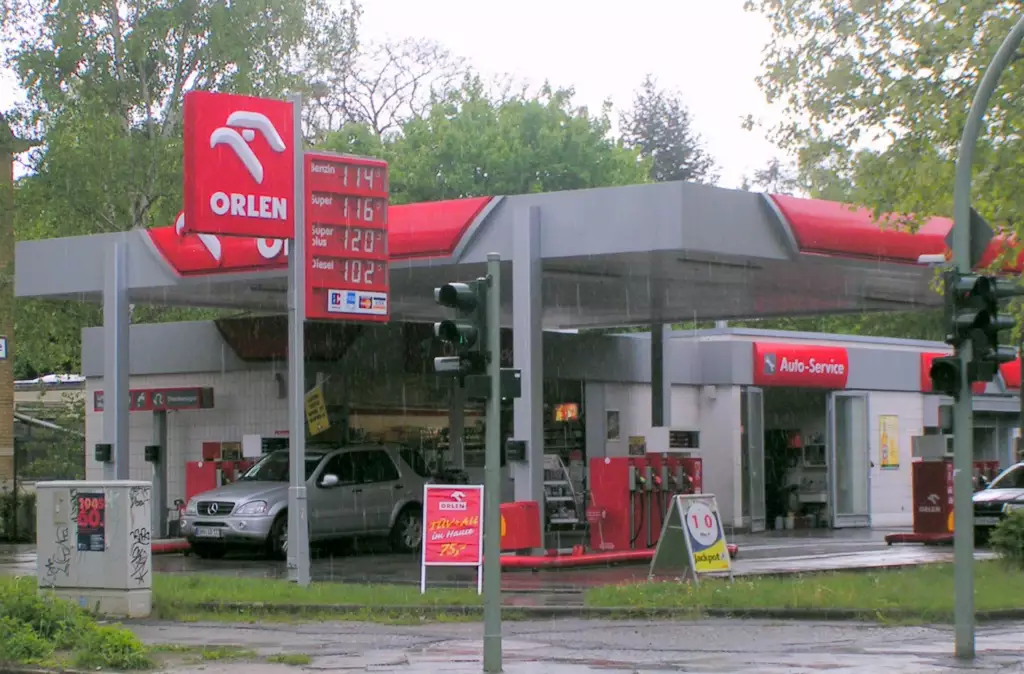
And another aspect of our membership in European Union. When Polish companies gained a foothold, they began to confidently seek investment opportunities in Germany. PKN Orlen did this long ago. Today, it has over 600 gas stations there, mainly under the STAR brand. Slowly but steadily, the rebranding to Orlen is taking place. Our champion already has over 6% of the market (data from 2022), which looks excellent in the quarterly and annual reports of the entire group. We’re making great money on the Germans.
I say “we” because ORLEN is owned primarily by the State Treasury. Either directly or through intermediaries such as PZU or Bank PeKaO SA. It’s worth noting that PKN Orlen has stations in the Czech Republic, Austria, Hungary, and Slovakia. When driving through these countries, fill up there. You’ll be making money for Poles. That’s what I do. I have apps for Germany and the Czech Republic. While driving, I search for Orlen stations and fill up there, eat, and drink great coffee. That’s what patriots do.
Many Polish companies have invested in Germany. The most successful investments occur when a Polish company acquires a company well-established in the German market. And there are plenty of them. I’ve created a table with just a few of them.. It’s worth considering this before we commit to Polexit and cause serious problems for many Polish companies. Politicians openly critical of the European Union often ignore these consequences, focusing primarily on media appearances and slogans. (ed.)
| Polish company | Acquired German company | Sector | Date |
|---|---|---|---|
| PESA Bydgoszcz | HeiterBlick GmbH (Leipzig) | Tram production | January 2026 |
| ZPUE | BWTS GmbH | Renewable Energy Service | December 2025 |
| Trend Group | Gala Group (Wörnitz) | Candle production | October 2025 |
| Recycling Group | HRV (Harzer Reifenhandel und Verwertung) | Tire recycling | 2025 |
| TT PSC | x-Info Wieland Sacher | IT | 2025 |
| MDD | Waiting | Furniture | 2025 |
| Boryszew, Ciech, KGHM, Nowy Styl | Various entities | Chemicals, metals, furniture | Earlier years |
PESA
The most famous takeover of a German company by a Polish company in 2025 took first place. PES, a railcar manufacturer from Bydgoszcz. I sometimes travel by train and appreciate the comfort of the railcars they produce. They also produce tramcars. They acquired the German company HeiterBlick GmbH from Leipzig. This is intended to give them access to German technologies they haven’t yet mastered, as well as to the German tender market. Major rail and tram tenders require a history of winning tenders in Germany. The idea is to verify how the company has previously performed its work. Thanks to this acquisition, PESA gains a history of tenders and can participate in them.
ZPUE
In second place in the table is the ZPUE company dealing with production and servicing of the broadly understood market Renewable energy and energy. The company’s revenue in 2024 reached PLN 1.5 billion. This Polish giant produces, among other things, transformer stations, switching stations, energy storage systems, as well as products for photovoltaic, wind, and biogas farms, and vehicle charging stations. It’s worth familiarizing yourself with their offerings and avoiding the myth that only Germany is making money from green energy. Last year, the company acquired the German company BWTS, which services German farms producing green energy. ZPUE was already present in the German market. Now it’s only getting stronger. And again, it begs the question – why does this bother the Confederation?
Trend Group
Radom can also boast of a company that has successfully completed an acquisition in Germany. Trend Group, a manufacturer and distributor of household, decorative, and utility glassware. The acquisition of the German company is interesting because Trend previously had no presence in the candle market. The German Gala Group is the manufacturer of candles, home fragrances, and decorations. It employs nearly 4,000 people. Yes, a Pole now employs thousands of German workers. And a Pole is their boss. A Pole tells them what to do. This bothers Mentzen, Braun, and Zajączkowska-Hernik (fictional figure). The question of why is very valid.
Recycling Group
For years, it’s been said that Poland is a dump for Germans. Is that true? I don’t want to elaborate on that. But I’d be happy to write about the company. Recycling Group, listed on the Polish stock exchange, engaged in recycling, as its name suggests. Extensive experience in processing tires into rubber led it to purchase a German company with a similar profile. This time, a Pole will be the one to litter in Germany… Do I even need to ask why the Confederation is bothered by this?
TT PSC
IT companies are also making acquisitions. I remember the days when an IT specialist’s dream was to work in Germany. Now, German IT specialists have the opportunity to work for a Polish company. TT PSC in its German subsidiary, which acquired x-Info Wieland Sacher GmbH. This gives it access to the highly specialized German market. Highly qualified German IT specialists are on the Polish company’s payroll. I won’t ask any more questions. It’s clear what it’s about.
MDD
The last company comes from the office furniture industry. It is MDD based in Sępólno Krajeńskie. It was from this small town that the expansion into Germany and the acquisition of a company with a similar production profile began. The German CEKA company from Alsfeld has been working for Polish profit since 2025. This is an industry in which Poland is slowly becoming a leader. We are starting to expand from IKEA subcontractors into the global market.
Why is this so important? It demonstrates that the common market brings many benefits to us Poles. The most well-known measure of economic success or failure is GDP – Gross Domestic Product. It has a somewhat broader counterpart, GNP – Gross National Product. The latter includes, among others, the German companies acquired here. Yes, German companies also contribute to Polish prosperity, which some people find hard to fathom. Apparently, these minds are very small. Tiny.
Source: Orlen / TTPC / Money.pl / Biznes.pap.pl
Editor: Mikele Bakhur


What do you think about this story?
Join the conversation. Please keep comments relevant to the article.
Write a comment