
I’ve been a Krakow resident since birth. I know this city not only from postcards, guidebooks, and tourist brochures. I know it from daily walks, from its streets, alleys, squares, and the stories hidden behind the walls of its old tenement houses. As someone connected to Krakow and a guide to this city, I feel a special connection to it. Therefore, the events of November 7th touched me not only as a resident. They also touched me as someone who shows others the beauty of this magnificent place every day. Today, I’d like to talk about Krakow a little differently.
The city that I carry within me


To me, Krakow is much more than just a dot on the map of Poland. It’s the place where I grew up, whose streets I’ve known since I was a child, and whose history I’ve been exploring practically my entire life.
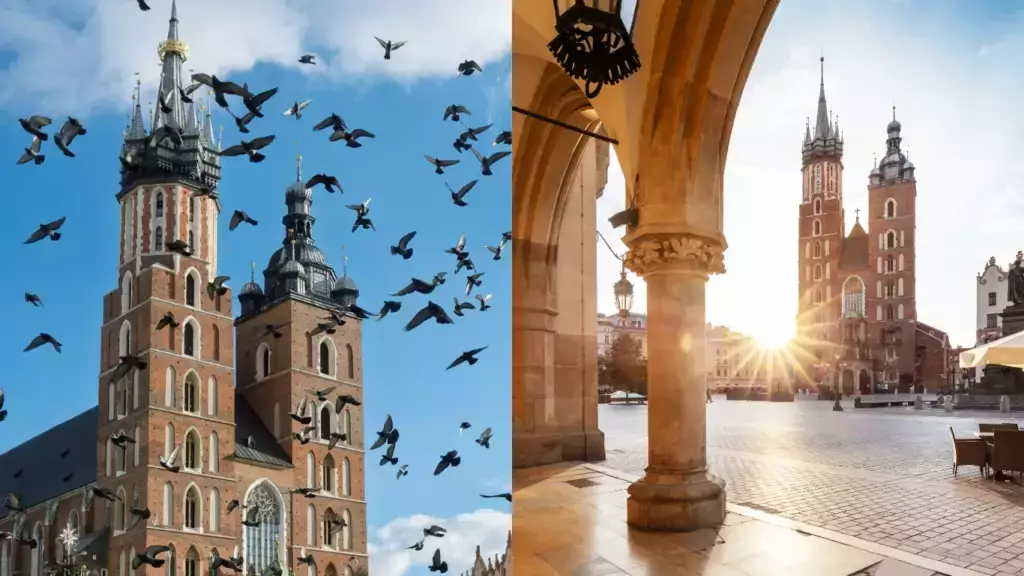
When you’re born a Krakow resident, some things cease to be extraordinary. You walk past the Cloth Hall without considering its centuries-old history. You pass St. Mary’s Church, hearing the bugle call, which for visitors can be one of the most beautiful moments of their visit, but for a local, it’s an almost natural part of everyday life. You walk down Floriańska Street, pass through St. Florian’s Gate, peek into the Small Market Square, or take a stroll through the Planty Park.
It is only when you show people around the city from other parts of Poland and the world that you begin to see again what previously seemed so obvious.
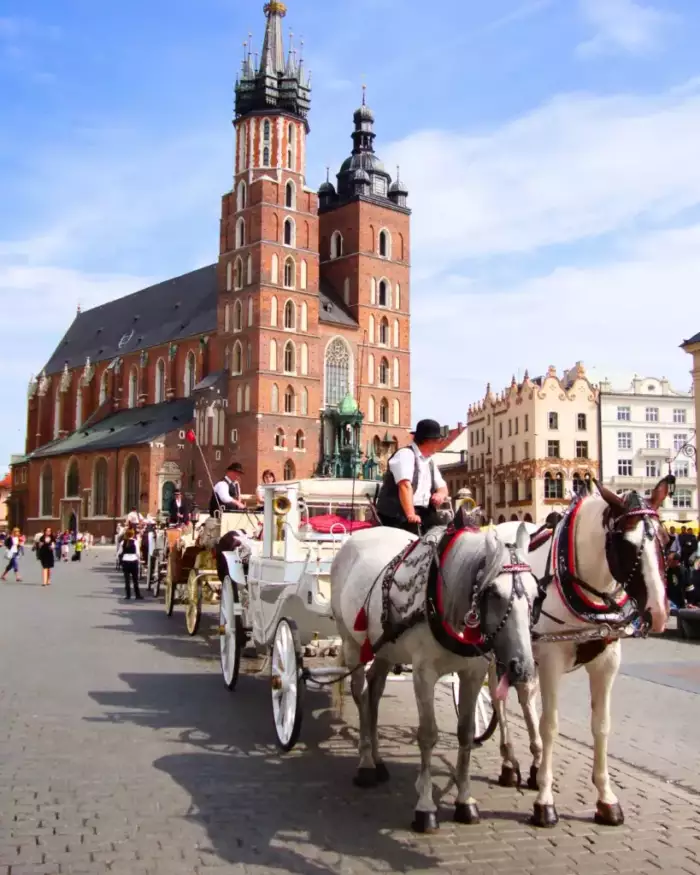
I see their delight when they first enter the Main Market Square. I see them pause in front of the Cloth Hall, photograph the towers of St. Mary’s Church, and listen to stories about royal coronations, ancient merchants, professors of the Kraków Academy, and the people who shaped this city over the centuries.
Sometimes people ask me what I find most beautiful about Krakow. I don’t have a single answer. Because Krakow isn’t just a collection of monuments. It’s a city where history isn’t confined to museum display cases. It still lives on in the space, in the architecture, in the street names, in the traditions, and in the daily lives of its residents.
Kraków – a city whose history is the history of Poland
It’s impossible to talk about Kraków without going back many centuries. Wawel, towering over the Vistula River, recalls the days when Kraków was the political and cultural center of the Polish state. It was here that the royal court was centered for centuries, where decisions affecting the fate of the country were made, where coronations took place, and where many Polish monarchs are buried.
Wawel Cathedral is more than just a church. It is a unique chronicle of Polish statehood, recorded in stone, tombstones, chapels, and works of art.
Nearby is the Main Market Square, whose medieval urban layout has been preserved for centuries. It is this remarkable continuity of history that makes a stroll through it feel like a journey through successive eras.
We also can’t forget about Kazimierz – a district whose history is inextricably linked to the centuries-old presence of the Jewish community. Synagogues, old streets, cemeteries, and preserved buildings are reminders of the world that for centuries helped shape the city’s character.
Today, Kazimierz is one of the most recognizable parts of Krakow, visited by tourists from around the world. Its uniqueness, however, stems not only from its restaurants, cafes, and atmospheric streets. It stems primarily from its history, which should be explored with respect.
It’s places like these that make Krakow not just another European city with a beautiful market square. It’s a place with a unique identity. It’s no coincidence that Krakow’s historic center was inscribed on the first UNESCO World Heritage List in 1978..
A city that is known all over the world
Over the years, Krakow has become one of Central Europe’s most important tourist destinations. People come here from the UK, Germany, the United States, Spain, Italy, the Czech Republic, and many other countries. For some, it’s a weekend getaway, for others, the beginning of a longer journey through Poland. Some come for the first time, but others return regularly because they discover something new each time. And it’s no wonder.
Krakow has an extraordinary ability to unite different worlds. On the one hand, it’s regal, historic, and full of monumental monuments. On the other, it’s vibrant, modern, brimming with restaurants, cafes, galleries, theaters, museums, and cultural events.
You can start your day with a stroll around Wawel Castle, then visit the Market Square, visit one of the museums, stroll over to Kazimierz, and in the evening, attend a concert or simply sit in one of the many cafes. You can also venture outside the city center, discover Podgórze, stroll along the Vistula River, visit Nowa Huta, see Kościuszko Mound, or relax in the city’s green spaces.
Krakow doesn’t end at the Main Market Square. And that’s exactly what I try to show the people I guide. I don’t want them to leave with only photos of the monuments. I want them to take away a story about the city, its people, its history, culture, and atmosphere. Because true understanding of Krakow begins when you stop looking and start understanding.
November 7th: When Familiar Streets Take on a Different Meaning
Today I went to the Main Market Square. It wasn’t any particular trip. I simply wanted to walk through the city I’ve known since birth. I practically know the route from Sławkowska Street towards Dietl by heart. I’ve done it many times, as have thousands of other locals.
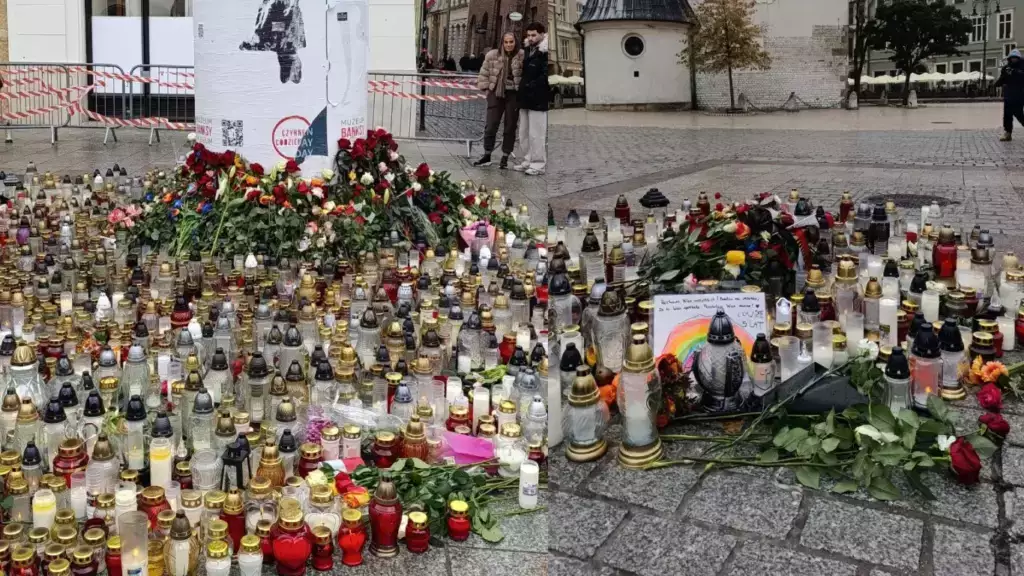
This time, however, everything looked a bit different. It seemed to be the same tenement buildings, the same intersections, familiar storefronts, restaurants, and cafes. It seemed to be the same space that, just a few days earlier, I had treated as an ordinary part of my Krakow life. In this same space, on November 7th, people fought for their lives. Someone who had left their home for a simple walk never returned to their family. In this same space, police officers confronted an armed man, while paramedics and bystanders did everything they could to save the victims.
I stopped for a coffee in the Main Market Square. And I don’t think I’d ever tasted ordinary coffee so different. It was still the same coffee, in the same city, surrounded by the same monuments. And yet, it was hard not to think about the people who had been here a few days ago. Their conversations, their plans, their daily lives. About how suddenly and brutally an ordinary day can turn into a tragedy. I looked at the Market Square and had the feeling that the city looked familiar, but I saw it differently.
Perhaps this is precisely the essence of a resident’s special bond with the place where they live. People are not mere observers. Every street, every square, and every part of the city becomes a fragment of their own history. For me, the Main Market Square will never be merely a tourist attraction. It’s part of my Krakow. And that’s why the events of November 7th touch me deeply personally.
Let’s not let the tragedy become the only image of Krakow.
I’d like to write something very important now. We can’t allow Krakow’s image to be reduced to a single tragic day. We can’t allow a situation in which people from Poland and abroad begin to perceive our city solely through the prism of fear and violence.
Remembering the victims is a duty. Sympathy for the families is natural. Respect for the injured, witnesses, and all who participated in the rescue operation should remain with us for a long time. But remembrance does not mean renouncing life. Krakow has not ceased to be a city of culture, history, science, art, and encounters. Its monuments, museums, theaters, restaurants, and unique atmosphere have not disappeared. The people who shape the city’s tourist, cultural, and economic identity every day have not ceased to work. It continues to function. Residents go to work, students go to universities, restaurateurs open restaurants, guides prepare new routes, and cultural institutions invite visitors to events. Krakow is alive. This is simply the truth about a city that, for over a thousand years, has endured wars, fires, epidemics, political turmoil, and historical dramas, yet has retained its identity.
Krakow needs guests. But above all, it wants to welcome them.
As someone involved in tourism, I know how many people and families depend on Krakow remaining an important point on the travel map.
Tourism isn’t just about hotels and restaurants. It also involves guides, drivers, museum staff, artists, craftspeople, event organizers, small shop owners, and hundreds of other professions. These are the people who contribute to the city’s image every day.
Krakow plays a crucial role on the tourist map of Poland and Europe. After recent events, I wouldn’t want anyone to refrain from visiting Krakow solely out of fear sparked by media reports.
Of course, everyone has the right to their own assessment of the situation and make their own travel decisions. Safety is important and cannot be underestimated. There’s also no point in pretending that tragic events didn’t happen. But it’s worth remembering that one dramatic incident doesn’t define an entire city or all the people who live in it. That’s why I’d like to extend a special invitation to tourists from Poland, but also to our international guests.
Come to Krakow. Come see Wawel Castle, stroll through the Main Market Square, listen to St. Mary’s bugle call, discover the history of Kazimierz, visit museums and galleries, and discover Krakow’s restaurants and cafes. See places that have delighted travelers from all over the world for centuries.
Come not only to take a photo at the Adam Mickiewicz Monument or in front of the Cloth Hall. Come to experience the city’s atmosphere, talk to its residents, and learn about its history. Krakow is open. Krakow awaits visitors. And it truly has so much to offer them.
Let’s not forget that behind the tourist Krakow there are people
I want visitors to Krakow to leave convinced that they’ve seen more than just beautiful buildings. I want them to experience a place with true soul, centuries-old traditions, and people who are proud of their city.
As a guide, I find particular satisfaction when, after a tour, someone says that Krakow turned out to be even more beautiful than they imagined. Or that they’d love to return. It’s moments like these that build a city’s brand. Not just advertising campaigns, brochures, and international rankings, but above all, authentic experiences. And that’s what I wish for Krakow.
A city that remembers but looks ahead
As I think about my coffee in the Market Square today, I’m reminded of one thought. A city can be wounded. Its inhabitants can be moved and sad. Some places may forever evoke special memories. But that doesn’t mean we have to close our doors to the world. Quite the opposite. Krakow has over a thousand years of history behind it. It has seen royal triumphs and national tragedies. It has experienced periods of prosperity, but also moments that seemed like the end of an era. And yet, it remains one of the most important Polish cities and one of the most recognizable historical centers in Europe.
As a native of Krakow, I have an emotional connection to this city. As a guide, I have the privilege of showing it to others. And that’s precisely why I don’t want recent events to be the only story the world remembers about Krakow.
I want to continue guiding people through its streets. Telling stories of the kings, artists, scientists, merchants, and ordinary residents who shaped its history over the centuries. I want to show Wawel, the Market Square, Kazimierz, and those lesser-known places that often prove to be the greatest discoveries for visitors.
I want people from all over the world to continue to meet in Krakow’s Market Square. I want the cafes to be filled with conversations in different languages, for tourists to admire the architecture, and for locals to be able to proudly talk about their city. And for that ordinary coffee in the Market Square to once again taste just like coffee.
Let us not forget the victims of November 7th. Let us not forget the heroes of those events. But let us also not forget what Krakow is and what it will remain. Because Krakow does not need sympathy in place of visitors. It needs remembrance, respect, responsibility, and people who will continue to want to explore it.
See you in Krakow. The city is waiting.
Journalist, columnist, author of books about Ukraine, tour guide, and commentator on developments in Ukraine and Polish-Ukrainian relations.
A certified guide to Odesa, the Odesa catacombs, Ukrainian Bessarabia, and Kyiv. He is the author of numerous publications on Ukraine’s history, culture, and contemporary affairs, some of which have been translated into Ukrainian and published in Ukraine. In 2020, he received the honorary title of Ambassador of Odesa in Poland from the Mayor of Odesa.
On 24 February 2022, the day Russia launched its full-scale invasion of Ukraine, he was in Odesa. He remained there for several months, helping coordinate humanitarian aid and reporting on the war for Polish media outlets. He described his experiences during this period in his book Odessa 4.5.0.
At Nowiny Wschodnie, he publishes articles and commentary on the Russo-Ukrainian war, Russian propaganda and disinformation, Ukrainian history, particularly that of Odesa, as well as Polish-Ukrainian relations and changing public attitudes.
He collaborates with Ukrainian newsrooms and online news outlets and appears in Polish media as a commentator on Ukrainian affairs.
What do you think about this story?
Join the conversation. Please keep comments relevant to the article.
Write a comment