

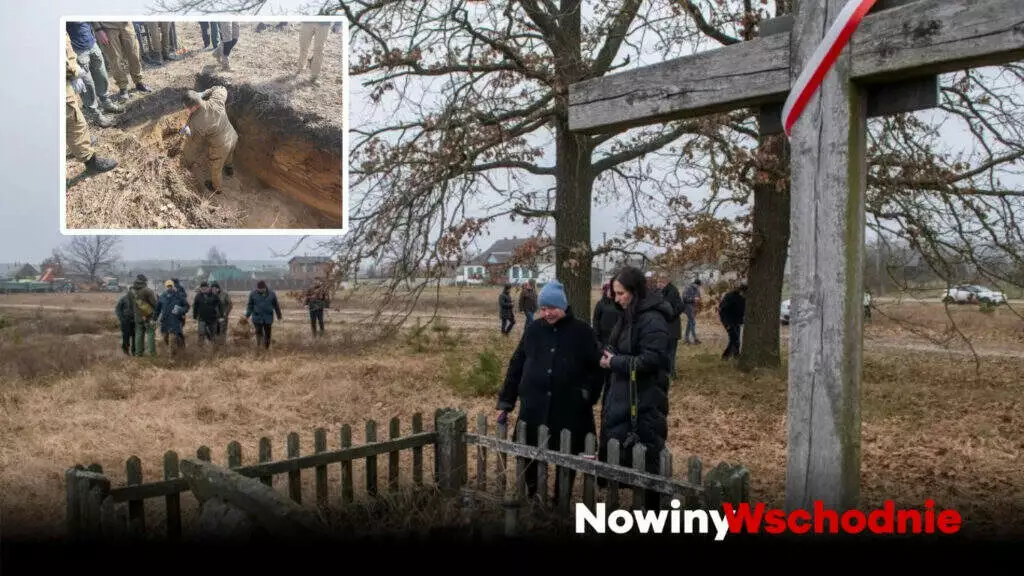
In the town of Uhly in the Rivne Oblast in Ukraine, a search has begun for victims of the 1943 events that were part of the Volhynian massacre – one of the most tragic pages in the history of Polish-Ukrainian relations.


The aim of the operation is to find the burial site of the village’s inhabitants – Poles and Ukrainians – who died in the 1940s. The expedition is initially expected to last approximately week.
Joint actions and international cooperation
The work is carried out by the company “Fate” from the Lviv region, which obtained the appropriate permission from the Ministry of Culture of Ukraine in 2025. The commissioner of the activities is the Ukrainian Institute of National Remembrance.
The initiative was launched by Karolina Romanowska, president of the association “Polish-Ukrainian reconciliation. Polish specialists are also involved in the project, including a team from Pomeranian Medical University under the supervision of Prof. Andrzej Ossowski.
How informs According to the Ministry of Culture of Ukraine, the probable burial site is located near the former Evangelical cemetery, where residents of German settlements were buried in the early 20th century.
The exact number of victims and the circumstances of the tragedy in Uhły have not been fully established to this day.
The village of Uhly, currently located in the Sarny Municipality in the Rivne Oblast, belonged to the Stepan Commune in the Kostopol County, Volhynia Voivodeship of the Second Polish Republic in the 1920s and 1930s. During this period, a significant portion of the population was Polish.
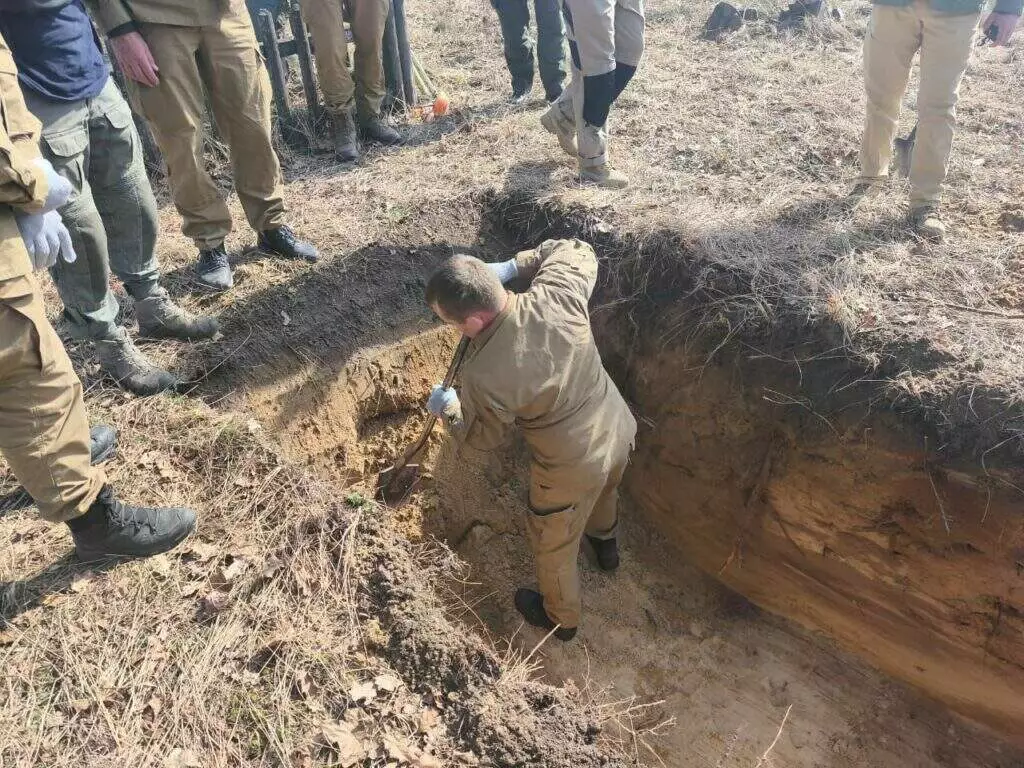
As reported by the Pomeranian Medical University, Teams of specialists from Poland and Ukraine, as well as representatives of public institutions and the victims’ families, are participating in the project. This type of collaboration is crucial not only for the research itself but also for reliably documenting history and building a responsible approach to difficult past events.
The work being conducted in Uhły is part of a broader research program implemented by the Pomeranian Medical University in Szczecin. Its primary goal is to locate and identify victims and to restore the memory of those who perished as a result of totalitarian regimes.
This program utilizes advanced genetic analysis methods to compare DNA and determine the identity of discovered remains. Research is conducted in collaboration with partners in Poland and abroad.
This project plays a crucial role not only in identifying victims but also in assisting families who have been searching for information about the fate of their loved ones for years. This allows us to gradually expand our knowledge of historical events and restore the memory of their victims.
Searching for a burial site
According to available information, the examination site was selected based, in part, on witness accounts. It is suspected that the remains of dozens of victims may be located there.
In the village there is a symbolic cross commemorating the former inhabitants – Poles – with an inscription in Polish and Ukrainian.
As the Polish representatives emphasize, the aim of the actions is not only to find the remains, but above all to provide the victims with a decent burial.
“We are not doing this for politics. We want each victim to have their own resting place, name and cross,” emphasized Marta Cienkowska, Minister of Culture and National Heritage of Poland, in an interview with PAP.
Historical background and significance of the works
Before World War II, the village of Uhły was within the borders of the Second Polish Republic, with a significant Polish population. Between 1943 and 1945, the region was the site of tragic events related to the Polish-Ukrainian conflict.
For many years, issues related to exhumations and the search for victims remained a source of dispute between Poland and Ukraine. In 2017, Ukraine introduced a moratorium on such work, which was only lifted at the end of 2024 following an agreement between the two countries.
Since then, search and exhumation efforts have been gradually resumed. In 2025, work was carried out, among others, in the town of Puźniki in the Ternopil Oblast, where the remains of at least 42 people were found.
Deputy Minister of Culture of Ukraine Ivan Verbytskyi emphasized:
Ukraine and Poland are working together to commemorate the victims with dignity and build mutual trust between our nations in order to establish the truth about the difficult pages of the shared history of Ukrainians and Poles.
Next stages
The current activities in Uhły constitute the first stage of the process. If the burial site is confirmed, further steps are planned:
– exhumation of remains
– victim identification (including genetic testing)
– organization of dignified burials
Further work is also planned for 2026 in other locations, including Huta Pieniacka and Ostrówki.
Source: Polish radio / PAP / mincult /

Journalist and Editor-in-Chief of Nowiny Wschodnie, a news platform followed by more than 140,000 people on social media. A graduate in Journalism and Social Communication, he has been co-creating and developing Nowiny Wschodnie since 2017. He gained professional experience working with local and international media.
He specializes in fact-checking, countering disinformation and propaganda, and information security. His work focuses on Poland, Ukraine, Eastern Europe, and Polish-Ukrainian relations. He is also the founder of a non-profit organization working in the fields of integration and intercultural dialogue.
What do you think about this story?
Join the conversation. Please keep comments relevant to the article.
Write a comment