
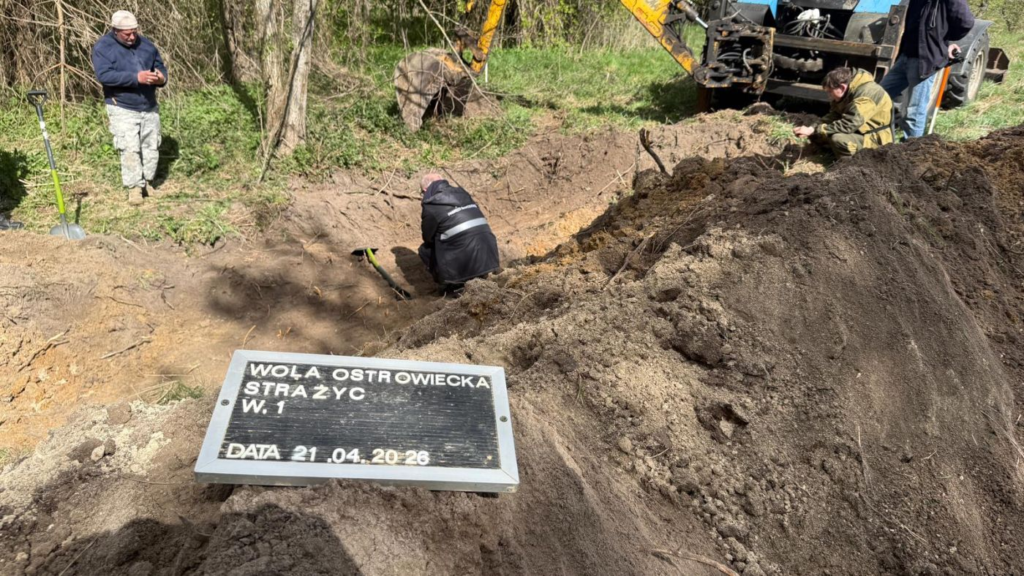
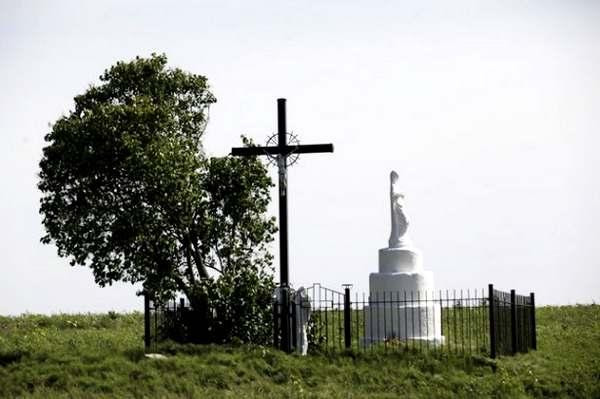
On Sunday, 30 August, exactly on the 83rd anniversary of the crime, at the Cemetery of UPA Victims in Ostrówki in Volhynia, the remains of 55 people—including 26 children—found this summer during joint Polish-Ukrainian exhumation work will be buried. This is the first exhumation in years carried out on the initiative of the Institute of National Remembrance (IPN) itself, and its completion by the set deadline is—along with the number of victims found—the best proof that the mechanism of bilateral historical cooperation is finally working—though still unevenly.


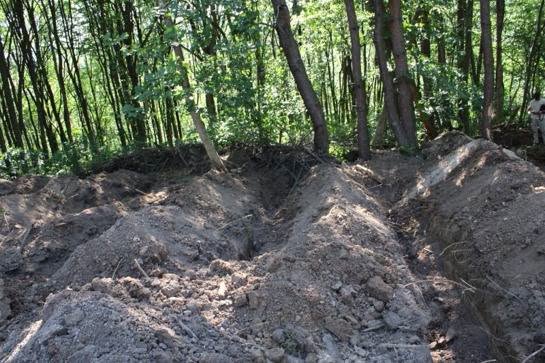
The work lasted from 13 July to 7 August 2026 and was a continuation of the trial excavations from April. It was carried out by an interdisciplinary team of the IPN together with the Ukrainian company “Volhynian Antiquities”, with the participation of a forensic medicine specialist from the Wrocław Medical University and representatives of the Ministry of Culture and National Heritage. Journalists from 21 newsrooms from around the world also worked on site — from Polish and Ukrainian outlets to The Wall Street Journal, Le Monde, and Deutsche Welle. The remains of 55 people and more than 300 personal items were found — medallions, crosses, buckles, and buttons — which made it possible to unequivocally identify the victims as Poles. Most of the adults were women; skull injuries confirm the accounts of surviving witnesses about the method of killing.
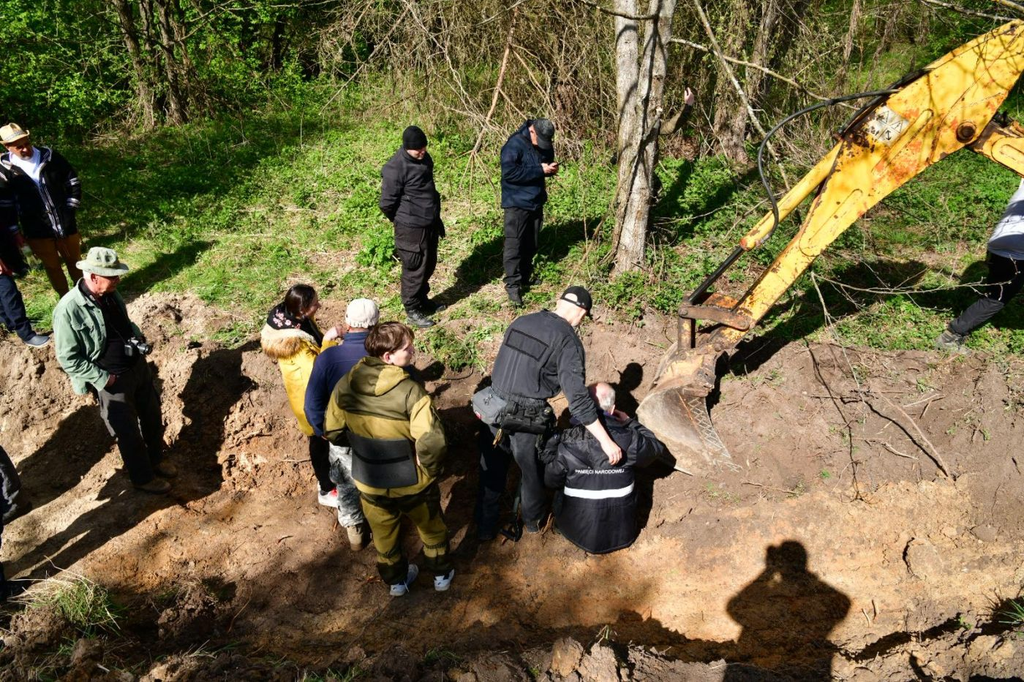
Ostrówki and Wola Ostrowiecka were former Polish villages in the Luboml County that ceased to exist on 30 August 1943, attacked by UPA units with the participation of residents of neighboring Ukrainian villages — part of a larger operation then directed against more than 30 localities in the region. Historians’ estimates speak of nearly 500 killed in Ostrówki and about 600 in Wola Ostrowiecka. Earlier stages of archaeological and exhumation work — in 1992, 2011 and 2015 — made it possible to find the remains of 674 people. Even so, according to lists prepared by historians, the burial places of about 300 residents of both villages still remain unknown.
Is this cooperation really symmetrical?
The formal basis for this year’s work is the arrangements of the Polish-Ukrainian Working Group for Dignified Burials, led on the Polish side by Paweł Kowal and on the Ukrainian side by Deputy Minister of Culture Ivan Werbycki. At the July meeting in Lviv, the Ukrainian side reported that it had issued all the permits agreed earlier, and not only for Volhynia — in 2026, Ukraine’s Ministry of Culture also agreed to searches in Huta Pieniacka, Puźniki and Uhły.
The numerical balance is unambiguous. In Ukraine in 2026, Polish teams carried out work at five search sites: Ostrówki, Wola Ostrowiecka, Puźniki, Huta Pieniacka and Uhły. In Poland, Ukraine actually carried out work in only one place — in Jureczkowa. For a long time, Ukraine has also been seeking permission to search for its own civilian burials in Poland — among others in Łasków, Sahryń and Przemyśl, where victims of the events of 1944 lie. In the summer of 2026, the IPN provided procedural support in the case of Łasków, but the applications concerning the other two locations still required supplementation. Ukraine’s Ambassador Vasyl Bodnar announced the start of work in Łasków as early as August. The only place where the Ukrainian side actually conducted searches on Polish territory — Jureczkowa in the Podkarpackie region, the grave of UPA soldiers killed in a clash with the Polish Army in 1947 — has so far yielded no result.
It is worth remembering that five permits on the Ukrainian side do not mean five confirmed successes. In Puźniki in the Ternopil region, where in 1945 the UPA murdered between 50 and 120 Poles, the second stage of searches ended in June 2026 — and, as Minister Cienkowska admitted, the second mass grave, which was supposed to contain the remains of as many as 90 victims, was not found. Another stage was planned for August. This is a reminder that not every place indicated by Polish witnesses and historians actually hides a mass grave — searches can be fruitless on both sides of the border, not only due to a lack of permits.
Minister of Culture Marta Cienkowska consistently denies that Ukraine has been blocking Polish work on its territory, and emphasizes that cooperation is going well. The Working Group itself summed up its first year of activity with a modest balance of two exhumations and two burials — a number that, in light of this year’s results in Ostrówki and Wola Ostrowiecka, already looks like it has been broken through.
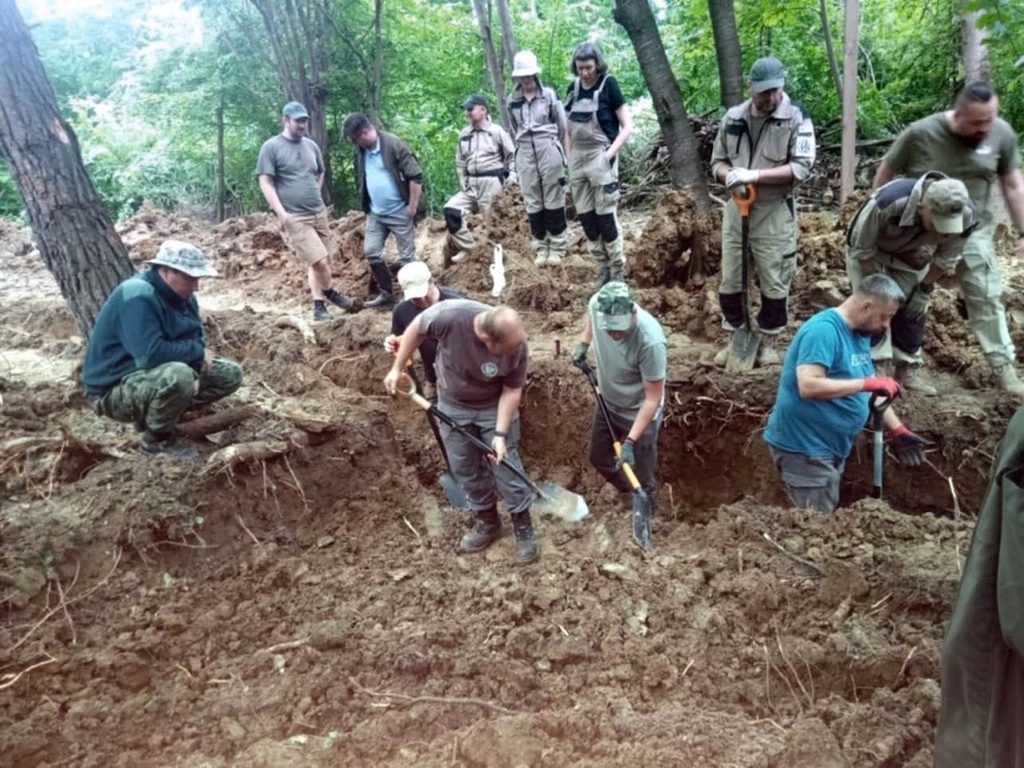
Bone material taken from the recovered remains will now go for genetic testing — specialists will try to determine the victims’ identities. On Sunday at 12:00 Ukrainian time in Ostrówki, a requiem Mass will be held, and at around 13:00 the remains will be laid to rest in a common grave next to the victims found in 1992, 2011 and 2015. The ceremony will be attended by the Deputy President of the IPN, Dr hab. Karol Polejowski, as well as representatives of Volhynian families and the local community.
300 names are still waiting for their place in the ground. But these 55 — after 83 years of lying in a random pit without coffins — will finally find it on Sunday.
Source: Nowiny Wschodnie / IPN / rp.pl / Interia / dzieje.pl / Kresy.pl / historia.org.pl
