

In 1918, Poland was full of teachers and officials who didn’t speak our language. Today, looking at the problems Ukraine and other post-Soviet countries face with the Russian “fifth column,” it’s clear that the uncompromising nature of the governments of Paderewski, Piłsudski, and others in removing the occupying forces wasn’t xenophobia, but a brutal state necessity. Despite their differences, Polish elites maintained the same stance toward the occupiers. I am presenting my own reflections here; you may agree or disagree with them. History provides us with a basis for comparison. Many Russian supporters accuse Ukraine of Ukrainization after 1991. I believe that Ukraine’s actions were far from sufficient to protect the country from the events of 2014. And looking only at Polish actions after 1918, Ukraine adopted a suicidal option of leaving Russia’s influence on its offices and schools and culture.


The Polish state, emerging in 1918, faced threats directly comparable to those that befell Ukraine after 1991 and became a pressing issue in other post-Soviet republics. The reborn Polish-Lithuanian Commonwealth was a country torn between three partitioning powers: Russia, Germany (Prussia), and Austria. While Galicia enjoyed autonomy, the other two powers pursued a policy of ruthless Russification and Germanization in Polish lands. Counting officials, teachers, police, and the army, by 1914, the Second Polish Republic had well over 1.5 million Russians and Germans. While the army departed with the partitioning powers, the situation with officials and teachers had to be resolved in the best possible way for Poland.
The trap of disloyal elites
In the Russian and Prussian partitions, the system was designed to exclude Poles. Civil servants and teachers were almost exclusively Russians or Germans. These positions were open to Poles only on the condition of completely renouncing their nationality and adopting the language of the occupying power as their own.
This created a danger identical to the one we see in contemporary Ukraine.. The bureaucratic and teaching elites, if they had been left in their positions, would have remained loyal to Berlin and St. Petersburg, and not towards the nascent Republic. In Warsaw, it was perfectly understood that it was impossible to build a sovereign state using officials from the former occupiers.
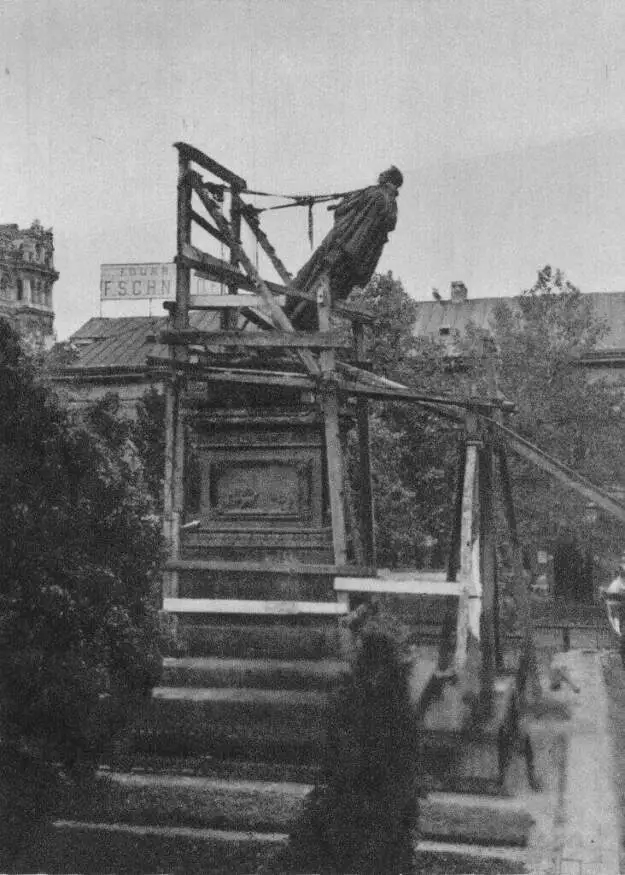
Dismantling of the monument to the Russian criminal Ivan Paskevich. Source: Wikipedia Link
The Great Escape and Empty Desks: The Russian Exodus of 1915.
As for Russian officials, the matter largely resolved itself. Specifically, we’re dealing with administrative officials, but also with teachers and university professors, judges and prosecutors, police officers, and gendarmes. Germany occupied Poland during World War I, prompting the evacuation of Russian officials and some teachers. They mostly fled with their families, estimated at at least 150,000. A few remained, and some tried to return after 1918. The Polish state was ruthless. It did not allow returns.. Russians’ property was confiscated for the state. There was no leniency for almost anyone.. “White” Russians were allowed to retain small estates (houses, small businesses), but their declaration of 100% loyalty to the Polish state was withheld. Teachers who did not flee during the German offensive were vetted for their knowledge of the Polish language and their loyalty to Poland. Lack of language skills excluded them from employment in education, let alone in public offices. Furthermore, street and square names were completely de-Russified. Church buildings confiscated for the benefit of the Orthodox Church were closed and handed over to the Catholic Church.. The most important symbol of the fight against Russification in public space was the dismantling of the long-standing symbol of Russian domination in Poland – the St. Alexander Nevsky Cathedral, which stood in Saxon Square in Warsaw.
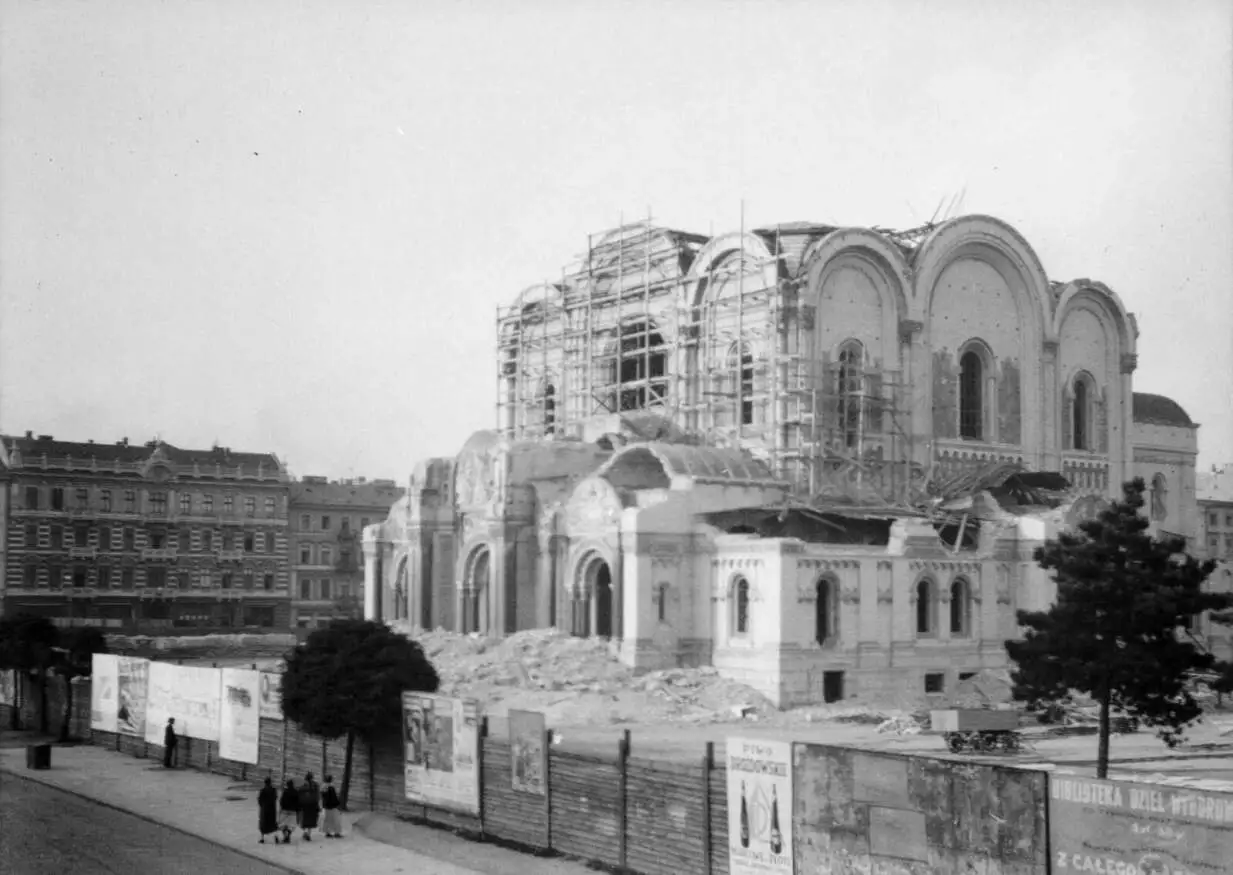
The demolition of the Alexander Nevsky Cathedral, a symbol of the Russian occupation of Poland. Source: Wikipedia Link
De-Prussification of the West: The End of the “Hakatist” Era.
In the German (Prussian) partition, the situation was much more difficult, but the same radical measures were applied there as well. All German state property was confiscated, as well as property granted to Germanizers, such as those from the Prussian Colonization Commission. German farmers who arrived in Poland as part of the Germanization campaign after 1886 were forced to abandon their farms. There were no leniencies. In 1919, Paderewski’s government removed the languages of the occupying powers, including German, from offices and schools in one day, introducing Polish in their place.. German officials were vetted for suitability (e.g., technical staff), and a category of “unblemished reputation” was introduced, which immediately excluded from employment in offices and schools those actively involved in Germanization, as well as employees of any “commissions” involved in the purchase and expropriation of Poles’ land. The Treaty of Versailles forced Poland to agree that Germans living in the German partitioned territories could choose between German and Polish citizenship. Efforts were made to force Germans to leave Poland by, for example, confiscating official apartments. These officials also lost the financial benefits they had received for years for working in the partitioned territories.. However, if a German wanted to continue working in a Polish office, he had to pass a very difficult Polish language exam and then swear full loyalty to Poland.. It is estimated that approximately 200,000 Germans were forced to leave Poland in this way.
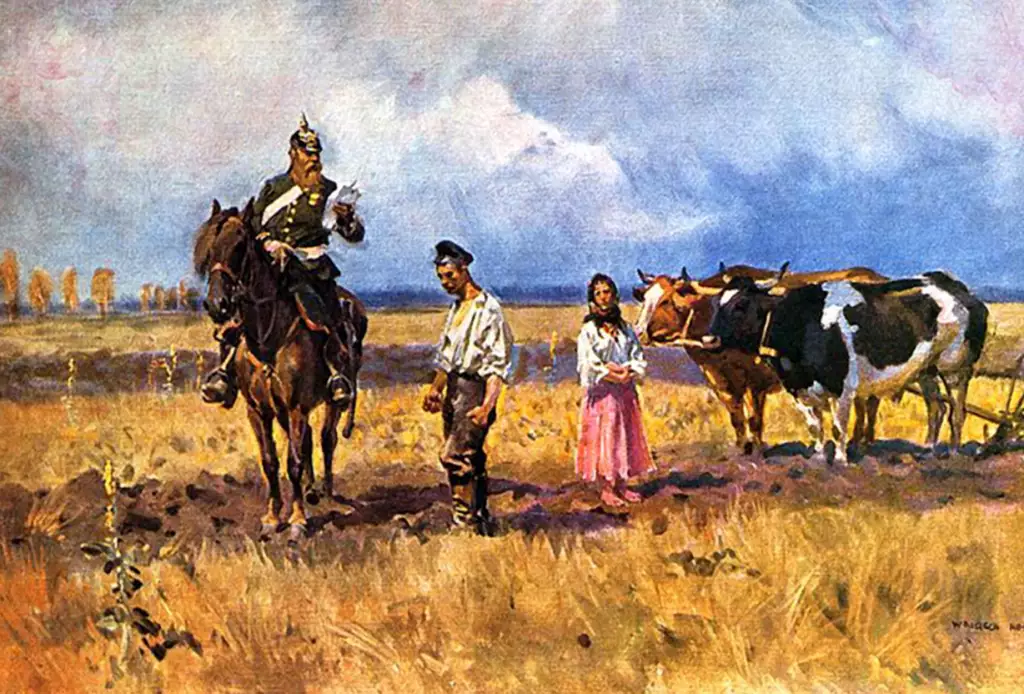
Wojciech Kossak “Prussian Rugs”. Source: Wikipedia Link
Galician landing: Why did Krakow have to save Warsaw?
Here, we have a completely different situation. Austria did not Germanize, and German officials who arrived in the area often Polonized themselves. Living among Poles in the second half of the 19th century, we already encounter people who, despite having German surnames, identified themselves as Poles. In offices, it was easy to speak Polish, and schools offered instruction in Polish. A shared Catholic faith was also important. There was no conflict between religions, unlike in the German (Protestant) and Russian (Orthodox) partitions. However, the most important factor was the partitioning powers’ approach to the Polish population. Austria, and later Austria-Hungary, was a country of many nations, and Austrians were not the majority. At the royal court, all children were required to speak several languages, and these were the languages of the Austrian nations. Efforts were made to ensure that at least one child knew Polish, Czech, Croatian, Italian, and other languages. As a result, the imperial children were raised as polyglots and had direct access to the culture of the nation that was part of the Habsburg Empire. All this meant that in the new Poland, officials from Galicia were brought in to fill the gaps left by the expelled Russians and Germans. They needed official housing, which gave the Polish government an additional reason to pressure the Germans to leave.
Pension for Russification? Poland says a firm “NO.”
In this regard, the Republic of Poland demonstrated considerable radicalism in its first years. Germans and Russians lost their right to pensions overnight, but in truth, they did not gain the right to a Polish pension.. The Polish state took the position that it would not pay any reward to former Russifiers and Germanizers.. They were sent back to the German and Russian states, for which they had worked. This led to accusations of xenophobia from both Germany and Russia at international conferences. Ultimately, Poland agreed to pay pensions only to those who accepted Polish citizenship and declared their loyalty. Polish citizenship was a non-negotiable requirement, providing the basis for applying for any pension. Poland did not want to pay for work for Germany or Russia itself, so it tried to force these countries to share the costs of these pensions. As a result, certain solutions were adopted for settling the payments, but both Russia and Germany paid their portions incompletely and with delays. Russia was the worst affected. Under the Treaty of Riga, Russia was obligated to pay Poland compensation and gold, which was intended, among other things, to finance the pensions of Tsarist officials. However, Poland received only symbolic payments.. Poland took a principled approach to paying pensions to tsarist generals and high-ranking officials who received estates and life annuities in Poland. It was considered that these were rewards for destroying Polishness, and therefore paying even a złoty to these people would be an insult to Polish sovereignty.
Balance of a Heavy Hand: Did Radicalism Save Polishness?
As you can see, the Polish approach to removing the languages of the occupying powers from public space was very swift and without unnecessary delay. The Poles knew what they wanted and how to achieve it. The action was well thought out and executed, resulting in the extermination of several hundred thousand Russians and Germans who were loyal not to Poland, but to Germany and Russia. In the years to come, this became a decisive factor in preserving Polishness during and after World War II. We presented ourselves as a unified state with a unified message of good and evil.. Although the same accusations were made against us as against Ukraine in the years after 2014, they did not have such an impact in Poland because the number of its “recipients” was drastically limited. We have rid Poland of the influence of thousands of Germans and Russians who would have worked for their homelands for the full two decades of war. In my opinion, although this was done in a tough, even very harsh, manner, the Republic of Poland acted correctly.
Featured image: Wojciech Kossak “Rugi Pruskie” (Prussian Rugs). Source: Wikipedia Link



What do you think about this story?
Join the conversation. Please keep comments relevant to the article.
Write a comment