
In 2026, Poles’ attitude toward Ukrainians and aid to Ukraine has become the subject of an increasingly intense public debate. Polling data and conversations with Warsaw residents show that mutual relations are shaped by war fatigue, social tensions and historical issues, as well as narratives circulating on social media. Does this mean that Poles have already had enough of Ukrainians, or does solidarity still remain an important element of relations between the two nations?
What do the numbers say?


In 2026, Polish-Ukrainian relations are becoming increasingly tense. This is evidenced by this year’s report by the Centre for Public Opinion Research, which for the first time recorded that negative attitudes toward support for Ukraine outweigh positive ones. 52 percent of respondents opposed providing aid, while 42 percent expressed support. At the beginning of the full-scale invasion in 2022, support reached 94% and held until mid-2023, and by December of the same year it began to gradually decline.
“I had my first class at eight in the morning. Then the lady said that at four in the morning the war broke out in Ukraine. And I remember that the whole day we were basically checking articles and information about it. It was this kind of—I don’t want to say—psychosis, that the end of the world was about to happen. Then various fundraisers were organized. Everyone was very positive. Even when this influx of immigrants from Ukraine appeared” – a student at a Warsaw university.
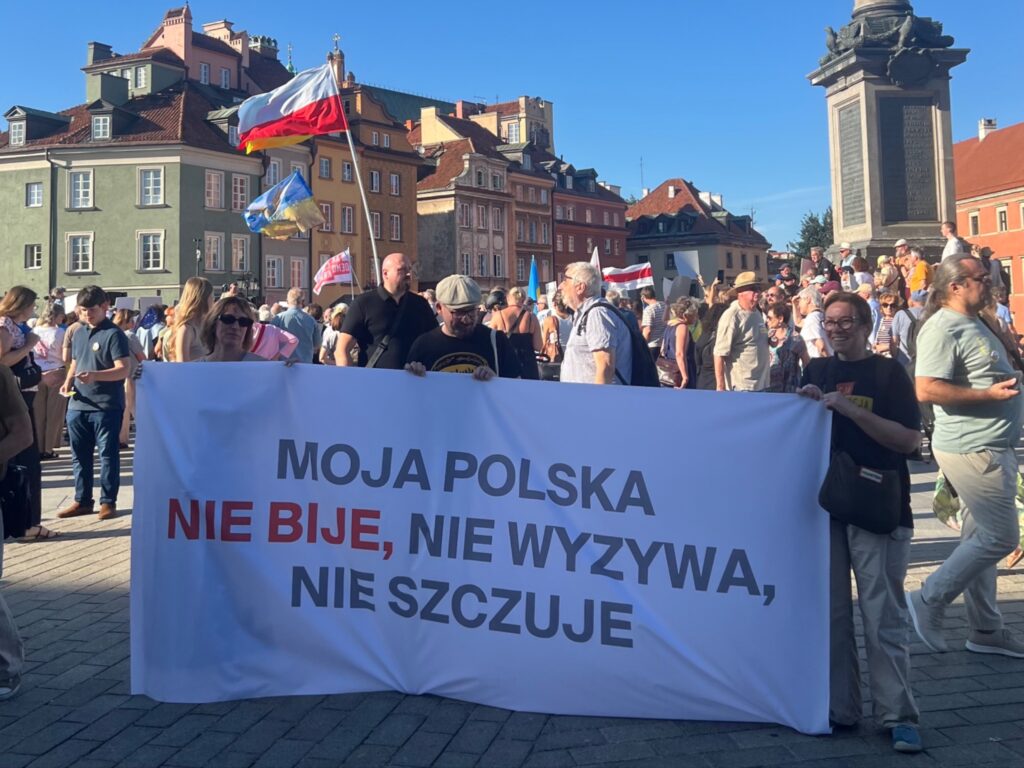
Photo: Anastasiia Sabatovska
War fatigue and an unaccounted-for past
The influence of social media and politicians’ statements has contributed to weakening the trust of some Poles in the assistance provided to refugees from Ukraine. Online, messages often appear suggesting that Ukrainians enjoy numerous privileges and receive financial support at the expense of Polish citizens, who themselves struggle with economic difficulties and feel left without sufficient help from the state. Such narratives, sometimes based on uncertain or manipulated information, can reinforce a sense of social injustice and trigger negative emotions toward Ukrainian refugees.
Poles’ attitudes are also shaped by fatigue from the prolonged war, media reports on the international situation, and controversies related to decisions made by the Ukrainian authorities. Additionally, some political events stirred emotions, such as Volodymyr Zelensky’s visit to the United States, during which his appearance and clothing became the subject of public criticism. As a result, the discussion about helping Ukraine is increasingly going beyond questions of its effectiveness and legitimacy, also becoming a battleground for disputes over social justice, national interests, and mutual obligations.
“But surely some gestures by the Ukrainian authorities don’t help either. U.S. policy after the elections doesn’t help either. Why doesn’t he bow? Why doesn’t the president of Ukraine say thank you?” – a student at a Warsaw university.
An important, though unresolved, issue in Polish-Ukrainian relations remains the question of the Volhynia massacre and its commemoration. After the start of Russia’s full-scale invasion of Ukraine, this topic did not disappear from public debate, and on social media it is sometimes used to stir negative emotions and deepen divisions between Poles and Ukrainians. In this way, unresolved historical issues also become an element of contemporary tensions between the two societies.
“It happened gradually. From the psychological and spontaneous ‘rally around the flag’ since 24 February 2022 to very rough relations on the government-to-government and people-to-people lines. We screwed it up; both governments screwed it up.” – Kacper (name changed at the protagonist’s request)
It is worth noting, however, that despite the polarization of public opinion around unresolved issues in Polish-Ukrainian relations, there are also voices saying they should be resolved after Ukraine’s victory in the war with Russia.
“The Volhynia issue, just like the Lviv issue, should be settled. Not now, but after Ukraine’s victory on the eastern bank of the Dnipro.” – Kacper (name changed at the protagonist’s request)
Fatigue does not mean indifference
Despite growing tensions and social fatigue, not everyone gives in to negative moods. Many people try to keep their distance from radical statements and messages that fuel animosity between Poles and Ukrainians. In the face of attempts to deepen divisions, it remains important to maintain mutual understanding and to prevent political and historical tensions from turning into a conflict between societies.
“I think Polish-Ukrainian relations have changed. On the one hand, there are loads of Poles who behave disgustingly and scandalously toward Ukrainians, and some Ukrainians don’t owe them anything and also behave badly. But I also see loads of Poles and Ukrainians who ignore this stupid little war between our nations and show solidarity. I hope good will prevail and our relations will continue to be good. Obviously something is going on, because there are these attacks on the grounds of nationality, but it seems to me that this is, unfortunately, a very prominent minority, and violence always spreads easily in the media” – Mateusz, a resident of Warsaw
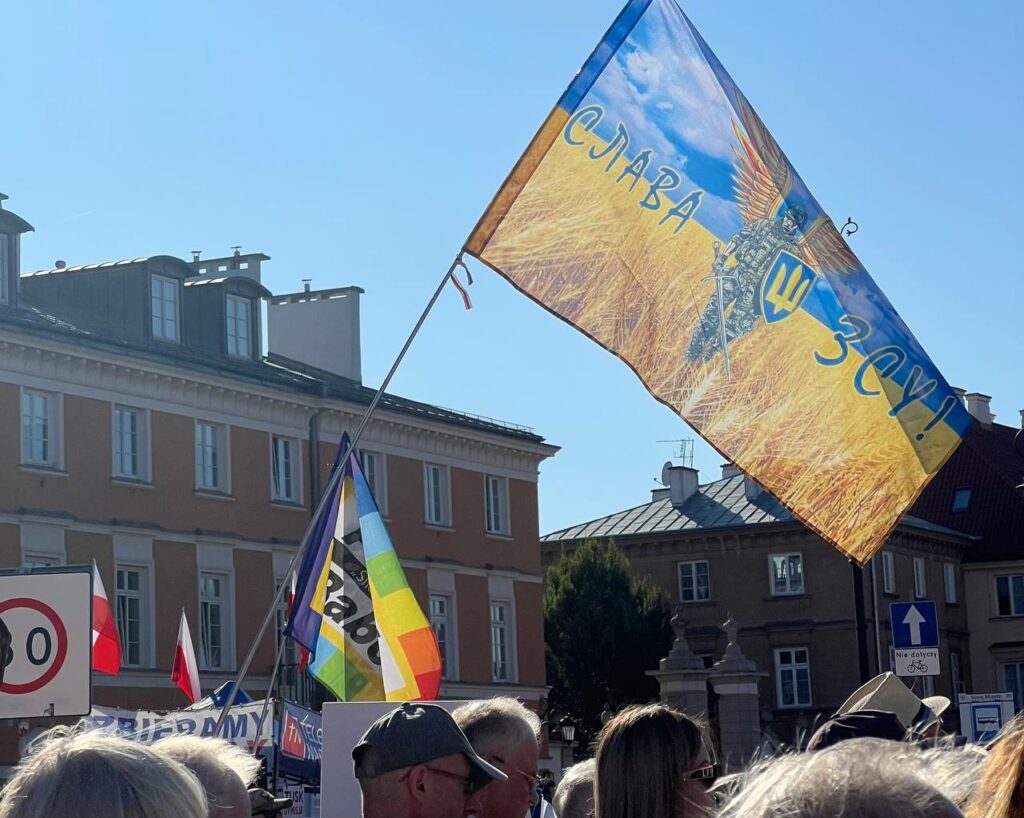
photo: Anastasiia Sabatovska
The year 2026 brings further challenges in Polish-Ukrainian relations. Unresolved historical issues, social and economic tensions, and narratives present on social media influence how the two nations perceive one another. Conversations with Poles show, however, that despite fatigue and growing doubts, solidarity does not have to mean unconditional acceptance, and a more critical view of Polish-Ukrainian relations does not have to lead to a rejection of mutual support.
Source: Nowiny Wschodnie

Holds a master’s degree in International Relations from Taras Shevchenko National University of Kyiv. She is currently pursuing a master’s degree in Journalism and Media Studies at the University of Warsaw. Since the beginning of Russia’s full-scale invasion of Ukraine, she has been involved in volunteer work and humanitarian assistance. She has journalistic experience, having published articles covering the war in Ukraine.
At Nowiny Wschodnie, she primarily focuses on disinformation, propaganda, and the influence of media narratives on public opinion. She also writes about migration, social integration, and Polish-Ukrainian relations, examining shifts in public attitudes and how Poles and Ukrainians perceive one another.

What do you think about this story?
Join the conversation. Please keep comments relevant to the article.
Write a comment