
Would Jerzy Giedroyc be raising money for the Ukrainian army today? This provocative question was posed this year to the audience in Poznań by the organizers of the Ukrainian Spring. The conclusion reached by the discussion participants turned out to be surprisingly optimistic and completely unlike what we see every day on social media.


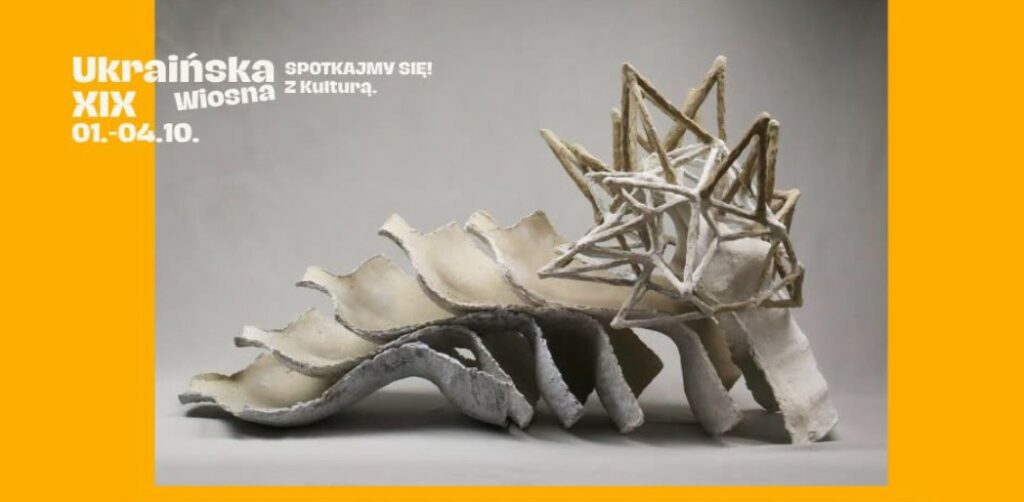
The “Ukrainian Spring” Culture Festival has been showing Poles Ukraine without hopak and sharovary for 19 years, and increasingly it has been showing Ukrainians Poland. After the 19th edition, which took place on 1–4 October 2026 in Poznań under the slogan “Let’s meet! With Culture.”, we talk with Maria Andruchiw, vice president of the “Poland–Ukraine” Social and Cultural Association and co-coordinator of the festival. About Giedroyc and the Armed Forces of Ukraine, about wybijka, about stereotypes that still live on both sides of the border, and about why we must talk about the war in the language of those we want to reach.
Poznań lies quite far from the Ukrainian border. How did you end up here and where are you from?
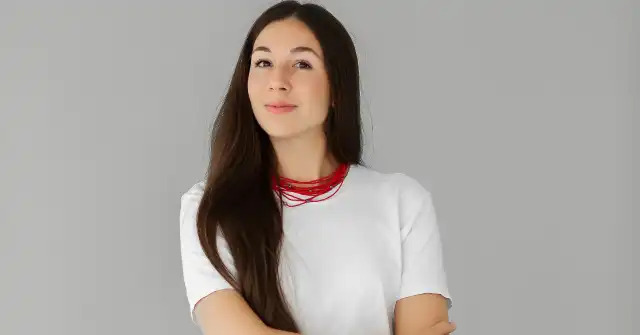
I come from the town of Dubno in Rivne Oblast; that’s the western part of Ukraine. I have been living in Poznań for 12 years now; I came here some time ago to study. I also graduated in journalism.
In fact, my ties with Poland were formed even earlier. When I was at school, I attended a Saturday–Sunday Polish diaspora school. In my city there is a Polish Culture Society, and it was there that my interest in Poland was sparked. Very often we went on various kinds of exchanges, and children from Poland spent the summer in Ukraine. That’s when I understood that I would like to study journalism in Poland. Right after school I moved here and stayed. But it so happened that my activities here are directly connected with Ukraine, even though I haven’t lived in Ukraine for a long time.
We are talking about Ukrainian Spring in Poznań. Is it the largest festival of Ukrainian culture in Poland?
Yes, it is considered the largest in terms of scale and history, because it has already been around for 19 years. Our monitoring shows that it is also the largest festival of Ukrainian culture in Eastern Europe, if we are talking about festivals outside Ukraine.
Is the festival your main activity?
It is a small part of our activity. Our organization is called the Social and Cultural Association “Poland–Ukraine.” We deal with cultural diplomacy—that’s one part. The other big part is social activity: humanitarian aid for Ukraine, educational and integration projects, and projects to counter disinformation and discrimination in schools.
Our members—myself included—sit on various advisory bodies at the city government. I am already serving a second term as a member of the Council for Migrants. That is, we defend the rights of Ukrainians and advocate for their needs, but not only that. Ukrainians’ migration experience is very similar to the experiences of other nationalities, so we try to apply the solutions we have developed to them as well, so that everyone can live here comfortably and well. The demographic situation in Poland is changing quickly, and this does not concern Ukrainians only.
How did the festival come about? And why “spring” if it takes place in autumn?
This is the question that always comes to mind first for everyone who learns about us.
The festival was created on the basis of an association. First, the “Poland–Ukraine” Association was established, founded by Witold Horowski. He ran a farm in Poland and went to Ukraine to check whether he could also carry out agricultural activity there. And he fell in love with Ukraine—especially with Podolia. He fell in love so much that he founded this association and devoted a very large part of his income to Ukrainian Podolia. There is a village there called Cygany. He invested a great deal in it, opened a school for children there, built a sports field. In short, he fell in love with Ukrainian culture and history and founded the association to show the Poznań community what he feels for Ukraine and what Ukraine is like. That was when the festival came into being.
At the same time, an honorary consulate was established on the basis of the association. He became the Honorary Consul of Ukraine and held this position for a very long time. Later, his son took it over. Unfortunately, in 2019 the honorary consulate was closed down.
It is an unusual origin story for a Ukrainian organization. Most Ukrainian organizations were created here in 2022 or a little earlier, in 2014, on the wave of the Maidan. And our association has roots in a completely different place. From the very beginning, the goal of my colleagues was to show the real Ukraine—not only hopak, sharovary, and Shevchenko, but something much deeper, something that truly stays with a person.
Are your colleagues mainly Poles?
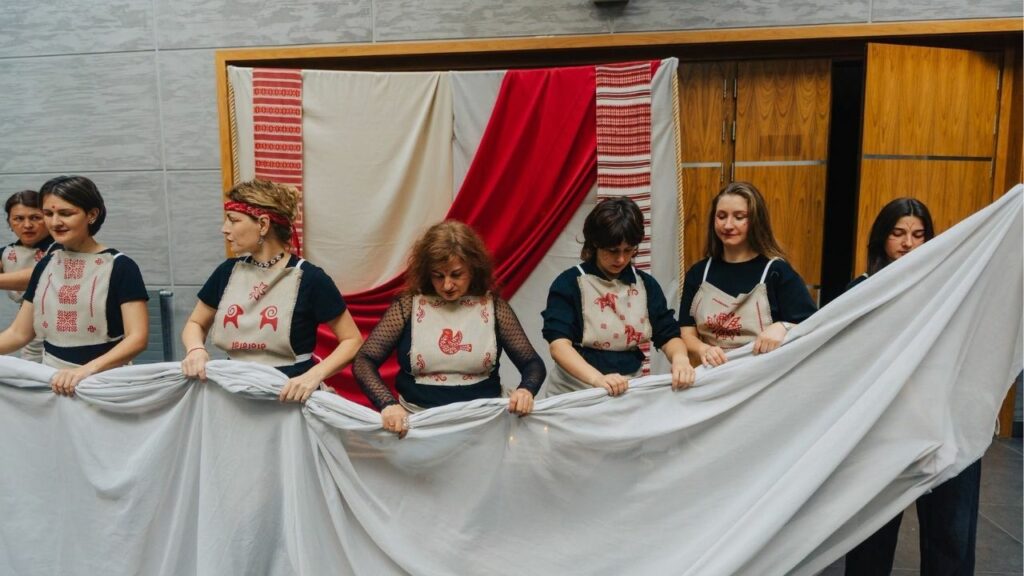
Yes, and that is what sets us apart. All of my colleagues speak Ukrainian; all of them graduated in Ukrainian studies. Our second vice-president holds a PhD in philology in the field of Ukrainian studies, teaches Ukrainian to Polish students, and knows Ukrainian literature better than I do. It is a truly exceptional group of people who wanted to debunk myths and stereotypes about Ukraine.
Over time, since 2014, a great many social challenges began to emerge and we felt the need to broaden our activities. Now we have a fund from which we pay scholarships for Ukrainian children. We also support several families who were harmed by Polish employers. We handled their cases in court, won certain amounts, organized fundraisers, and now we provide mentoring for these families. We had to go to court so that Ukrainians who were injured at work due to non-compliance with occupational health and safety rules and lost limbs would receive compensation. We fought their cases at ZUS and for employers to face criminal liability. And they did. These were very long cases.
This work comes solely from the needs of the heart. We all have full-time jobs, and this is our additional activity. That’s why my colleagues deserve great respect, because they have jobs, families, and children too.
So why spring in autumn, then?
Until 2019, the festival took place in May. But when the pandemic came, all our grant providers moved their calls to different dates. We find out that we have received a grant roughly in April or May, and by then it’s impossible to organize a festival, so we move it to October. And that’s how it will stay, because we have a new tradition: we bring spring precisely when the cold weather is starting and there’s a need for a bit of sunshine.
This year’s slogan is “Let’s meet! With Culture.”, and the symbol is a punch. What did you want to say by that?
There is a certain subtext to it. I don’t know whether everyone picked it up, so I’ll explain it, because we wanted to refer to it very diplomatically.
First, we wanted to invite everyone to a meeting and to an honest conversation, to a confrontation of views. In the current situation of Polish-Ukrainian relations, which unfortunately are deteriorating significantly against the backdrop of various public discourses, we wanted to create space precisely for such a conversation. And second — “with culture.” It’s a play on words. With culture, because we show art, but also with personal culture, with respect for one another. And that is ultimately what happened. We are glad that our audience demonstrates exactly such personal culture.
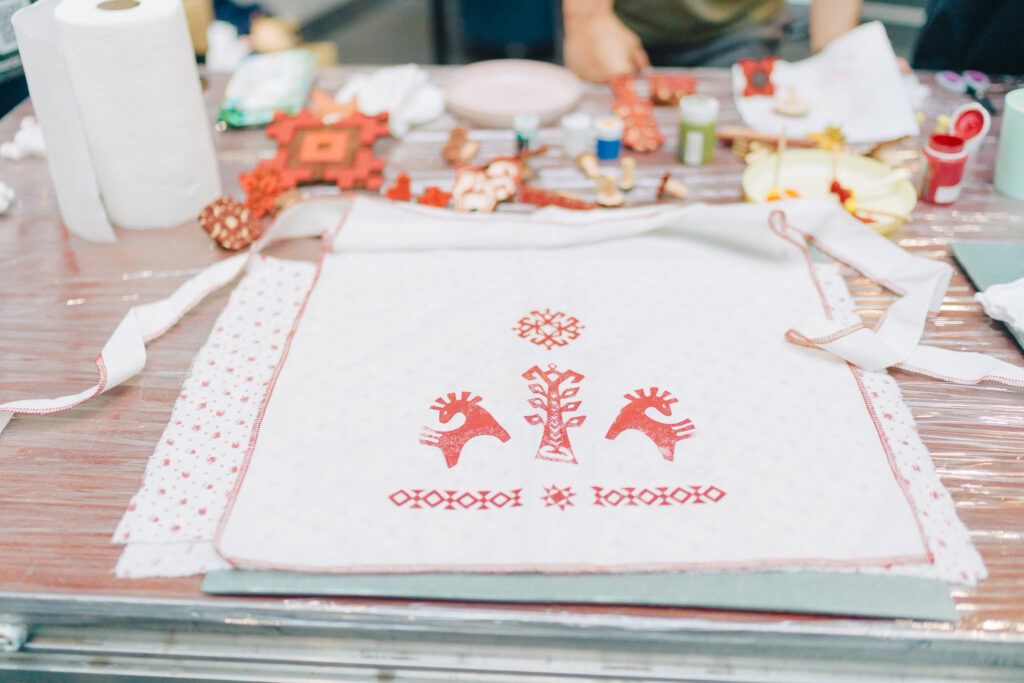
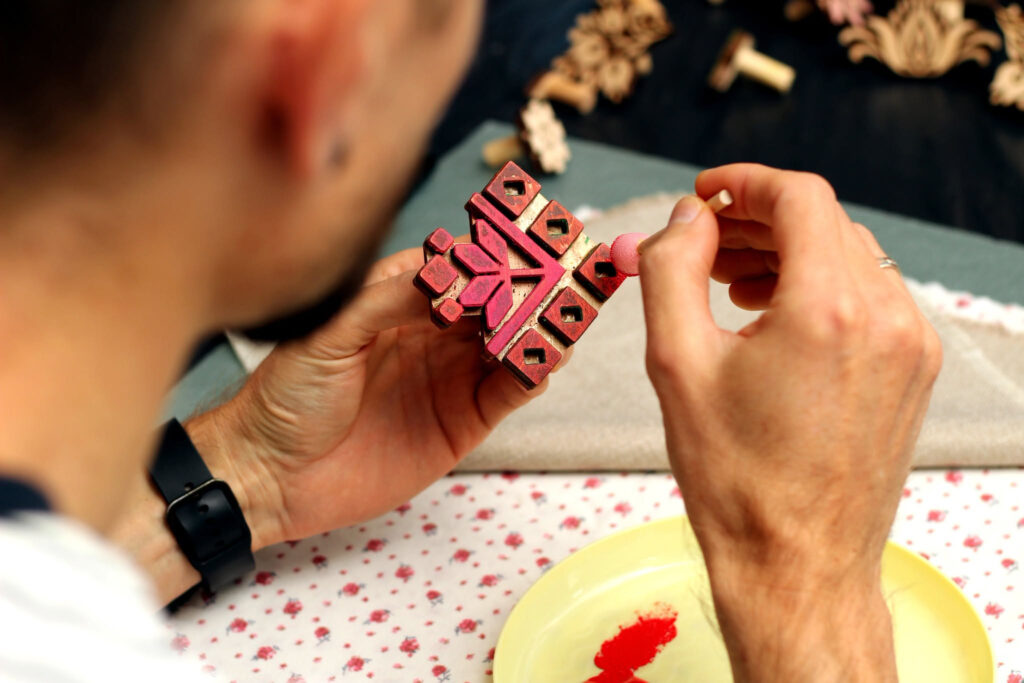
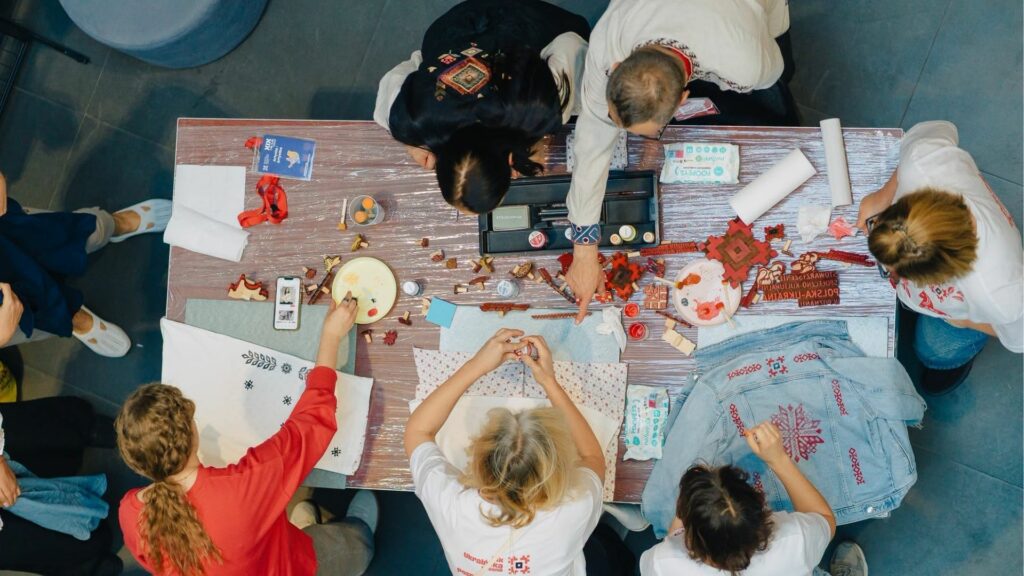
Why vybijka? Every year we want to show Ukrainian craftsmanship that is already forgotten, little studied, or completely unknown here. Last year we showed Daria Alyoshkina’s paper cut-outs (ed. note: a Lviv-based artist who revived and popularized Ukrainian paper cutting worldwide; she died on 15 August 2026 at the age of 44). This year — vybijka. It’s a kind of return to the roots. We ourselves, honestly speaking, are delighted with this craft. It looks very stylish, especially in combination with contemporary motifs.
Is there no similar element in Polish culture?
Vybijka exists, but it was widespread mainly in Podlasie, in the Polish part of Polesia, thanks to the interpenetration of Belarusian, Ukrainian, and Polish culture. In other regions it was not so developed. Poznań, however, lies further west; there are more Prussian influences here, and everything connected with Ukraine is less well known here. Probably in Polesia vybijka would not arouse as much interest as here, in Greater Poland.
How did the 19th edition differ from the previous ones? Does the festival change during the war?
Without a doubt. Today the festival serves an entirely new function. It is a platform for cultural diplomacy and for reminding people about the real war. Most of our events are, in some way, connected with the war, directly or indirectly: in discussions, in theatre, and in cinema. This year both Ukrainian films we screened were directly about the war.
But we wanted to talk about the war while also referring to the Polish context. There are two elements here. The first is Giedroyc, an outstanding figure in Polish history—a publicist, social activist, a symbol of the revival of Polish democracy and of building Polish-Ukrainian relations. This year is also his year (ed. note: the Senate of the Republic of Poland declared 2026 the Year of Jerzy Giedroyc on the 120th anniversary of his birth). [LINK WEWNĘTRZNY NW: wywiad z dr. Jarosławem Kitem — na frazie „jego rokiem”] We put forward a controversial thesis: if he were alive today, would Polish-Ukrainian relations be so tense, would he have an influence on public discourse, and would he be raising money for the AFU. And in the course of the discussion we came to the conclusion:
“There are tens of thousands of such Giedroycs in Polish society today—who go to the front, who help, who lobby for Ukrainian interests, and do many other things.”
In real life everything looks much better than, unfortunately, on social media. Narratives from social media create a bubble in which it seems that everyone is against one another. Unfortunately, some media outlets and opinion leaders in Poland follow these narratives as a way to increase reach. This is very sad.
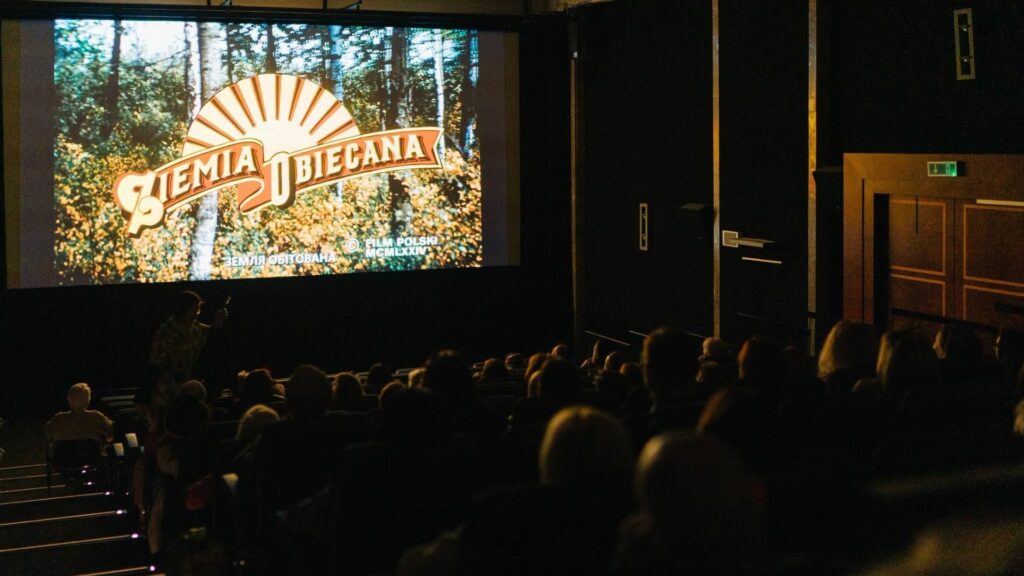
The second element is Polish culture as interpreted through a Ukrainian lens. This year is also the Year of Andrzej Wajda, so we screened “The Promised Land” with Ukrainian subtitles. This film intersects very strongly with the realities Ukraine is experiencing today. In this way, we are slowly introducing Polish culture into the festival specifically for a Ukrainian audience. First, to show that we are not acting one-sidedly and that we are in favor of dialogue. Second, mutual getting to know each other and integration work only when both sides get to know one another. Because the truth is that Ukrainians also do not fully understand how Poles think.
Do we know each other as well as we think we do?
Don’t you get the impression that we, Ukrainians, know very little about Polish culture, and Poles about Ukrainian culture?
It seems to us that we are very, very similar. And we are similar, but in many matters it only seems that way to us. You can see it even when Ukrainians come to Poland: they Polish-ify Ukrainian words, thinking that this will be correct in Polish. I also made such language mistakes. And it’s the same with cultural contexts: we have many different ways of perceiving certain processes and we have to learn them.
Elements of Polish culture that we add to the festival help Ukrainians better understand Poles. And preparing the festival itself with partners is also an element of integration, because we learn from one another how we work and what our approach to work is.
Year after year, the festival is becoming a warmer place to talk about what really hurts, but in a balanced, calm and respectful way. In all these years, not once has any provocateur come to us who would discuss with us without respect. Even when questions from the audience concern Volhynia, and this year they appeared again, these are words spoken in a very balanced manner. We see that around us we are building a certain level of communication. I would say a mature attitude. Silence about these facts is a mistake. Speaking about them one-sidedly is also a mistake. We need to talk about what happened, but also about the fact that we do not want it to return, regardless of geography.
How has the audience changed? It used to be, in a sense, a festival by Poles for Poles about Ukraine.
The Ukrainian audience has certainly grown—that is clear. But still, a large part of our audience are Poles. Our main principle remains that communication takes place in Polish and additionally in Ukrainian. We are not switching entirely to Ukrainian, and that allows us to keep the same target group.
I often see that Ukrainian organizations abroad communicate only in Ukrainian, even though their message is aimed at lobbying for Ukrainian causes, at talking about the war. But after all, we need to talk about the war in the language of the country and the people we want to reach. We, unfortunately, already know a great deal about the war. And the average citizen of Poland, France, or Germany does not know what, as it seems to us, they should know. To achieve that, you have to communicate in their language.
What do average Poles still most often not understand about Ukrainians? And vice versa?
A large share of both Ukrainians and Poles still live by stereotypes. Ukrainians believe that Poles are conservative Catholics focused only on family and the values of “God, Honor, Fatherland.” That is not entirely true. Such a part of society exists; it exists in every country. But Poland is a modern and, in many contexts, very progressive state—one of the leaders in terms of the development of civil society. The NGO sector is very active here, lobbies lawmakers, and truly influences what happens even in the Sejm.
Just yesterday, my friend, who for a long time served on an advisory body, made it so that artists in Poland would have the right to support, because they do not have normal conditions or employment contracts. This is the most unstable professional group in Poland. The Sejm finally passed this law (ed. note: this refers to the law on social security for people practicing an artistic profession; after the vote in the Sejm it was sent to the Senate), because the NGO sector pushed these issues every year. Ukrainians do not know this about Poland. Likewise, the decentralization reform that Poland carried out long ago turned out to be very effective, and now Ukraine is implementing it following the Polish model. We have a lot to learn from Poland.
Poles, in turn, believe that Ukraine is economically underdeveloped, that we have a lot of social problems and no time for art, education, or the economy. I work as a volunteer; we traveled to the front with Polish colleagues, and everyone was shocked at how developed the infrastructure in Ukraine is. It’s banal, but—gas stations: you can wash up there, eat, and rest. It may come as a surprise that we have good roads and very beautiful cities.
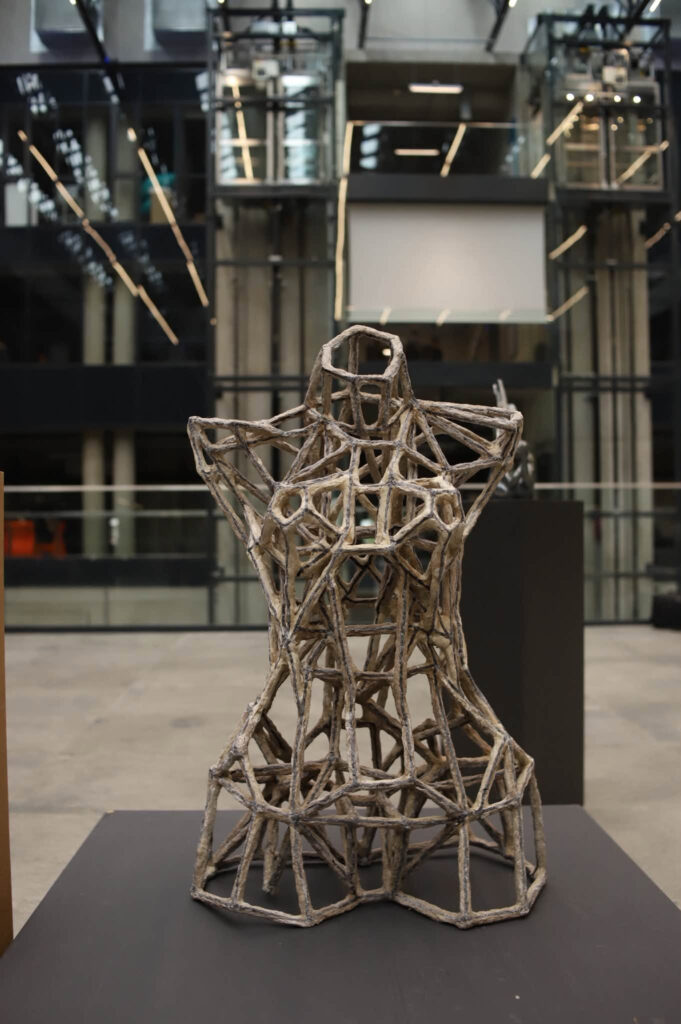
And what about culture. When we bring orchestras, artists, world-class sculptors, viewers come up and say: “Wow, you have such a well-developed cinema! We didn’t imagine that a Ukrainian documentary could be so interesting.” And when we add that the performance they saw was created underground, because it’s a theatre from Kyiv and Kyiv is being shelled, people—so to speak—take their hats off. These contexts are not secondary, even when we talk about art.
We often invited Andrij Lubka (editor’s note: a Ukrainian writer and volunteer; at the beginning of 2026 he joined the Armed Forces of Ukraine) to meetings and promotions of his books. Now he serves in the AFU. This year we wanted to invite him, but he couldn’t come, so we presented his essay at the festival. And our audience, who had been coming every year to meet him, immediately saw differently how real this war is.
The war is not somewhere far away. They saw this man a year ago, and this year he is already at the front.
Exactly. Last year we dedicated the edition to cultural creators at the front and to those who, unfortunately, were killed. We talked about Viktoriia Amelina (editor’s note: a writer, killed as a result of a Russian missile attack on Kramatorsk in 2023), about Volodymyr Vakulenko (editor’s note: a children’s writer, abducted and murdered by Russian occupiers in the Kharkiv region in 2022). Only when we bring these contexts closer through culture do people understand that the war is ongoing—when it’s concrete: a specific person, a specific story, a specific situation.
What would you say to Poles who have never been to the Ukrainian Spring?
Next year will be the anniversary, and we are already preparing for it very carefully. But really, it’s because it will be, like the previous ones, a unique opportunity to grow closer to one another—both culturally and interpersonally. We do this to show that we can talk to each other with respect and tolerance.
Ukraine is striving to join the European Union also because the values we stand for, and the democracy that Ukraine’s civil society is building so fiercely today, in wartime, have long since reached the level everyone talks about. In many respects we can already be an example: in freedom of speech, in building the state, in how easily Ukrainians take to the streets when they want to resist. Here, for citizens to take to the streets, something truly radical has to happen. That is why we encourage people to discover the real Ukraine, not the stereotypical one that may have become ingrained in some people.
A spring that comes in autumn is not a calendar mistake. It is a reminder that it is never too late for a meeting.
Source: an interview by Nowiny Wschodnie with Maria Andruchiw; the “Poland–Ukraine” Socio-Cultural Association; the Kultura Literary Institute; the Senate of the Republic of Poland

What do you think about this story?
Join the conversation. Please keep comments relevant to the article.
Write a comment