

The most painful consequence of the far-right’s activities for Polish companies and farmers was the restriction of the dynamically growing dairy sales to Ukraine. Its supporters began blocking the border in 2023, leaving Ukrainian entrepreneurs and the Ukrainian government with a difficult dilemma about what to do next. The Ukrainian market for Polish products grew dynamically until 2021, growing steadily. Cheese dominated among the products we supplied; it accounted for the majority of all dairy exports. It’s a highly processed product with the highest margins. A week ago, I spoke with a friend from near Kyiv. She loves Polish products and buys them. And, as she says, although this is an isolated opinion, many Ukrainians readily choose Polish cheeses and yogurts.
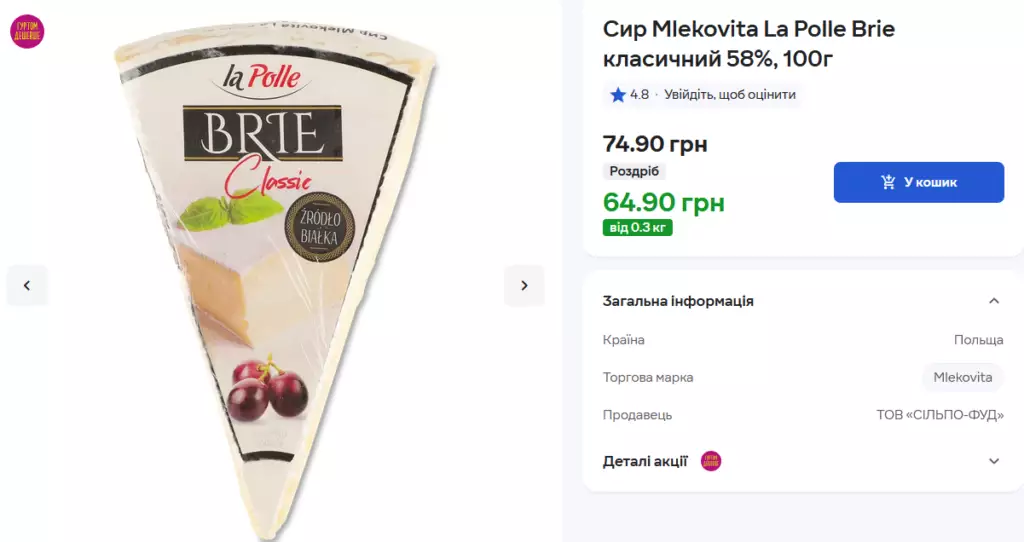


Polish product in a Ukrainian store
It remains to be seen how this plays out for other products. And in other products, Polish exports to Ukraine have been growing in recent years. Fuel, machinery, weapons (drones, ammunition, etc.), and vehicles related to war and reconstruction are driving record revenues, while Polish dairy industry did not regain its pre-war position, and the export gap is now even 40–60 million euros per year. If we calculate that Polish dairy exports should grow similarly to other products, we can safely assume that the loss in the form of unrealized sales is even more than 100 million euros per year. And I’ll return to the question – by whom? By a handful of those blocking the border in 2023-24, supported by politicians of a certain persuasion. In short, their activities are causing Polish companies to lose millions of euros annually.
The border blockade not only resulted in the loss of contracts for Polish companies, but also in additional costs for Polish dairy producers.
1. Transport demurrage costs. Drivers must be paid, and Polish transport companies paid fines for delays..
2. Insurance. Insurance rates for shipments crossing the Polish-Ukrainian border have increased. This is a real cost for transport companies, but it’s passed on to producers.
3. Perishable food. Dairy products have short shelf lives. Sometimes only a few days. This cost was much higher.
4. Image. Polish companies were losing their reputation as reliable suppliers. And reputation in the trade sector is a very important factor when concluding contracts.
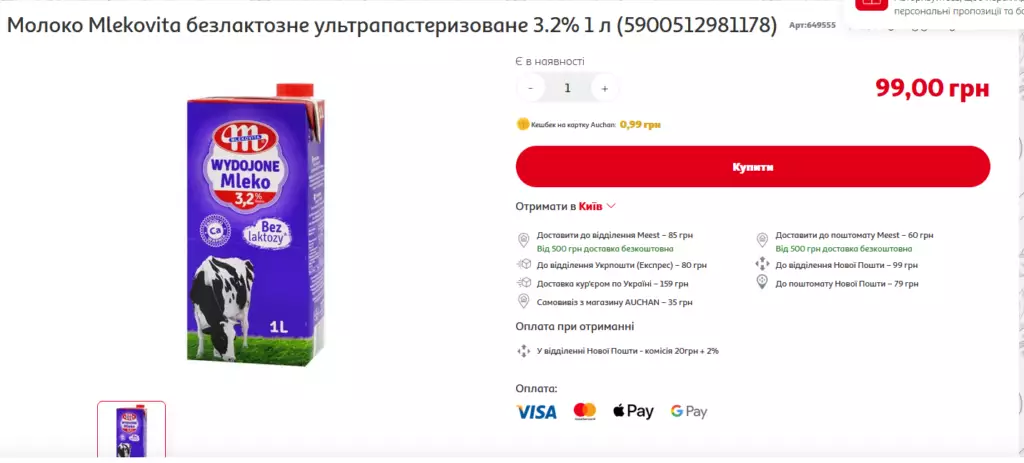
Polish product in a Ukrainian store
Dairy: A Market That Hasn’t Recovered
2021 was a peak year for Polish dairy exports to Ukraine. Mature cheeses, cottage cheese, and yogurt enjoyed huge demand, and Ukraine became the largest recipient outside the EU. Cheese exports then exceeded 23 thousand tons, and the value of all dairy products sold is estimated at up to 150 million euros. Polish exporters were treated well, and judging by the annual increases since 2014, it’s safe to assume that sales after 2022 could be much, much better. The ever-increasing sympathy of Ukrainians for Poles, and consequently for Polish products, also played a role. A soft influence came from Ukrainians working in Poland. They sent food parcels there and transported large quantities themselves. Border restrictions were minimal. Polish products were valued extremely highly. While in Ukraine, I often saw Ukrainian companies advertising that a given product was from Poland. Doing so signified that our country achieved a high status. I personally remember the times when products produced in the broadly defined “West” were perceived in Poland as superior to Polish or Soviet products.
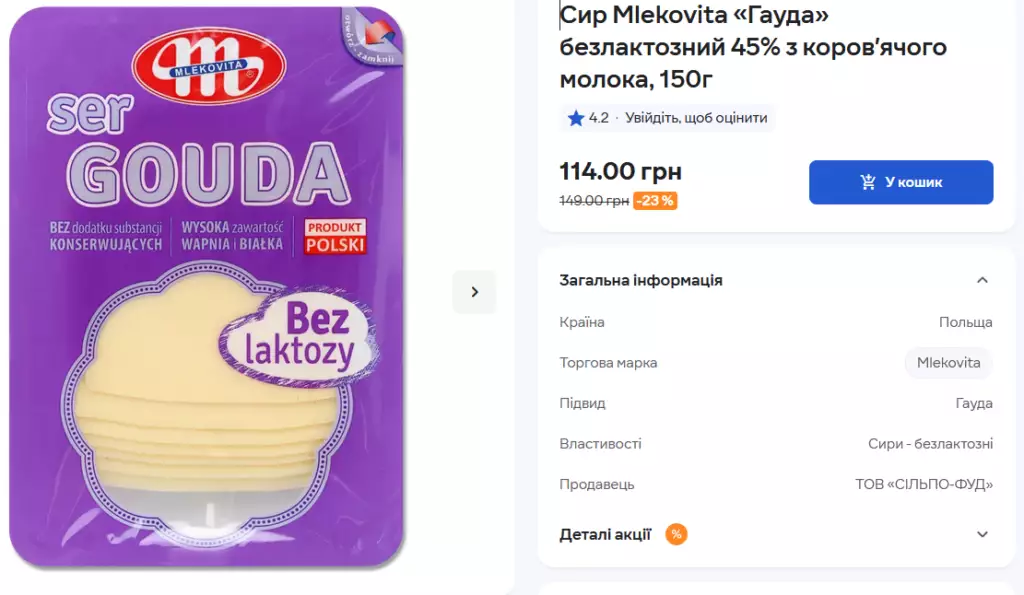
Polish product in a Ukrainian store
Consequences of the Russian invasion
Since 2022, the situation has changed dramatically. The Russian invasion disrupted transport logistics, which had a huge impact on Polish producers of milk and dairy products. There was a drastic drop from 23,000 tons of cheese to 16,000 tons. The following year, 2023, unfortunately, was not an easy return to the Ukrainian market. Protests by a group of Polish farmers led to a border blockade, which caused Polish producers to experience difficulties. As a result, dairy exports did not even reach the critical level from 2022 and recorded another decline. In 2023, ONLY 15,409 tons reached Ukraine. Ukraine understood the farmers’ blocking, especially considering the Polish election calendar, but when politicians began supporting Polish farmers, they introduced their own phytosanitary restrictions. This is completely understandable. Far-right politicians were well aware that seeking applause among part of the electorate, they are ruining Polish companies. They have access to export data and it was enough to think about it, especially since Polish dairy companies had warned against it.
| Segment | Export 2025 |
|---|---|
| Cheeses | ~€65–75 million |
| Liquid milk | ~8–12 million EUR |
| Butter | ~5–8 million EUR |
| Milk powder | ~5–7 million EUR |
| Other | ~10 million EUR |
Own compilation. Export of dairy products to Ukraine.
Ukraine is the third largest recipient of our dairy products outside the European Union. If it weren’t for the aforementioned barriers introduced by far-right politicians, it could have been the first. Ukraine has seen a massive decline in dairy production due to the war. It’s understandable that this isn’t a priority, as it can be easily imported. Given the constant attacks on energy infrastructure and the deliberate diversion of workers to the defense industry or military, Ukraine is forced to import food. It did this before the 2022 attack, and now it does so to a greater extent.. Hence, it seems incomprehensible that Poland does not achieve HIGHER exports than in 2021.
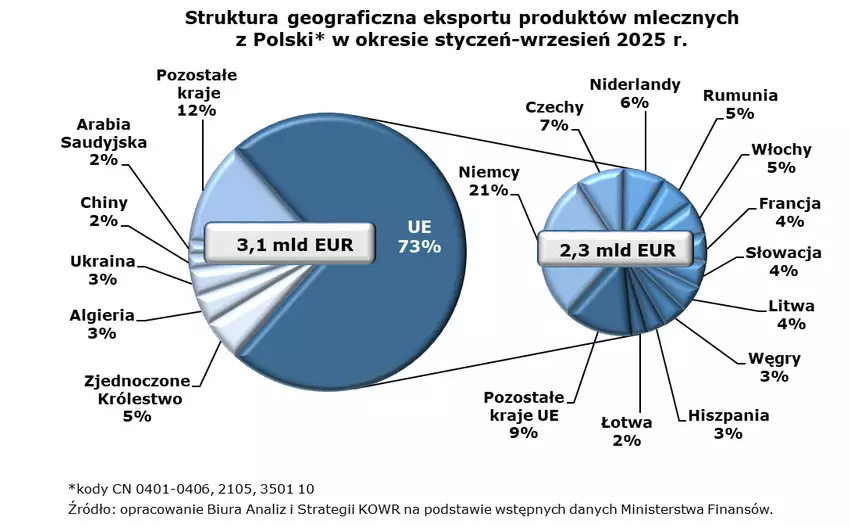
Source: government website – LINK
All of this takes on added significance when we note the peak in sympathy for Poland and Poles, which emerged in surveys in 2022 and 2023. Even the worst economics student knows that sympathy for a nation translates into its products. In Ukraine, we had an ideal situation. Ukrainians respected us, liked us, and were grateful for the help Poland provided in 2022. This should continue to translate into strong sales in the country. Unfortunately, politicians decided to unleash an anti-Ukrainian campaign, which largely succeeded. This made it more difficult, sometimes even impossible, for Polish companies to conclude contracts.. If anylage, an employee of a company selling to Ukraine behaved like them, he would be fired from that company disciplinary due to loss of trust.
The chance for Polish companies to establish a leading position in Ukraine is running out. Dairy production in Ukraine is strengthening, recovering, and it won’t be long before it begins to displace Polish and other companies. Ukrainian producers are already raising the need to introduce restrictions. We’ve wasted three years from 2023 trying to establish a foothold in that market and ingrain ourselves in consumer memory so we won’t be displaced. I’ll say it again. Members of the far right are to blame for this. Unfortunately, they have their supporters, and they range from pseudo-patriots to the lost, looking for blame for their failures everywhere but at home. Ruthless politicians prey on them. And Polish companies are losing. They’re losing €100 million annually.

What do you think about this story?
Join the conversation. Please keep comments relevant to the article.
Write a comment