

This is a historic moment for many couples in Poland. The Supreme Administrative Court (NSA) has issued an unprecedented ruling that requires Polish offices to register same-sex marriages concluded abroad. An end to official refusals and years of court battles? We examine what exactly this decision means and what the new procedure entails.
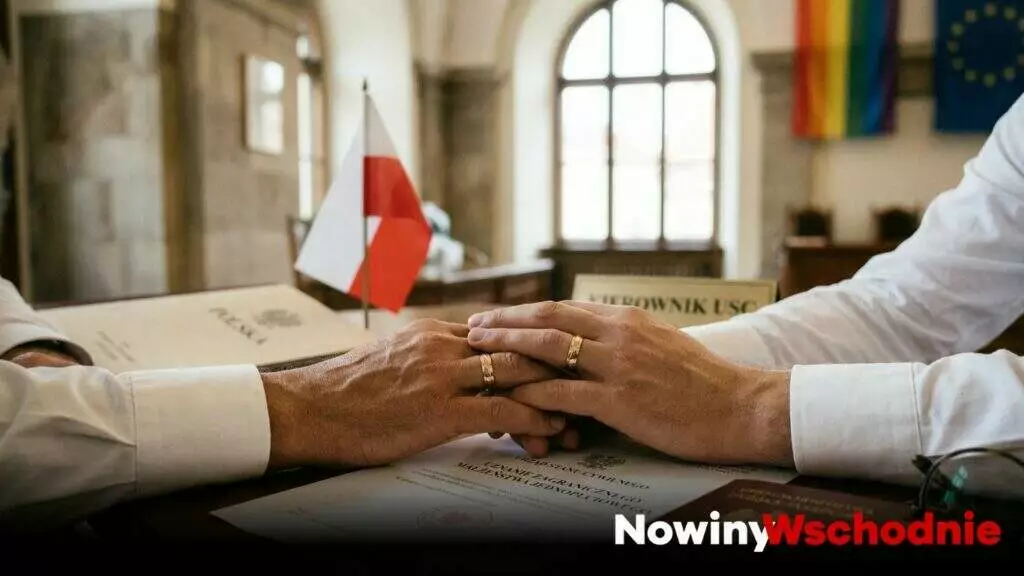
The historic ruling of the Supreme Administrative Court changes everything


For years, same-sex couples marrying outside Poland have faced a wall from domestic institutions. Civil Registry Offices (USC) have been massively refusing to transcribe foreign marriage certificates, citing Polish law, which does not provide for such unions in the Family Code.
However, on March 20, 2026, a major breakthrough occurred. The Supreme Administrative Court ruled unequivocally: Polish offices are obligated to recognize same-sex marriages if they were legally concluded in another European Union country. This decision is a direct consequence of previous rulings by the Court of Justice of the European Union (CJEU). Onet portal informs, the case concerned Poles who got married abroad and after returning to their homeland demanded equal treatment.
What does this mean in practice for same-sex couples?
Above all, this ruling paves the way to normalcy for thousands of citizens. According to the ruling, officials can no longer invoke the Polish Constitution as an “absolute obstacle.” Transcription of a foreign marriage certificate allows couples to exercise fundamental rights, such as joint tax filing, easier inheritance, and the right to make decisions about their partner’s medical matters.
Instead of spending years in trials before the European Court of Human Rights (ECtHR) in Strasbourg, citizens can finally settle their matters locally, in Poland.

What documents are needed at the office? (Step by step)
The Supreme Administrative Court’s decision means that the Civil Registry Office must develop new procedures. For couples wishing to register their foreign marriage, the path becomes much simpler. What should you prepare before visiting a Polish office?
- Original foreign marriage certificate (preferably on multilingual, so-called EU print).
- Sworn translation of a document into Polish (if the document is not multilingual).
- Transcription Request (entering the act into the Polish civil status register).
- Identity cards or passports of both spouses.
What’s more, as reported by OKO.press, the judgment imposed a strict deadline on the head of the capital city’s Civil Registry Office – he has only 30 days to enter the foreign act into the register.
Heated political debate and public reactions
The Supreme Administrative Court’s ruling sparked a wave of commentary across the country. Human rights organizations, such as the Campaign Against Homophobia (KPH), called the ruling a “milestone” and a “triumph of European law over discrimination.”
This ruling, in turn, comes at an extremely heated political moment. Fierce discussions are currently underway behind the scenes in government over the Civil Partnership Act, which is generating resistance from some coalition partners. However, the court’s ruling forces politicians to act more quickly and adapt the state’s IT systems (e.g., the mObywatel app) to the new legal landscape. Right-wing politicians and conservative groups have already announced protests, arguing that the ruling undermines the traditional definition of family.
A step towards European standards
The Supreme Administrative Court’s ruling sends a clear message that Poland must adapt to EU standards regarding freedom of movement and respect for family life. This does not mean that the Sejm will automatically legalize marriage equality for couples marrying in the country, but it is a significant breakthrough in the current system.. The Polish Press Agency (PAP) notesthat this ruling paves the way for other couples who have so far lived in legal limbo.
For many activists, lawyers and citizens, this is only the beginning of the road to full equality, but it is undoubtedly one of the most important court decisions in Poland in recent years.
Sources: Onet, OKO.press, Polish Press Agency (PAP), Prawo.pl

What do you think about this story?
Join the conversation. Please keep comments relevant to the article.
Write a comment