

Przemysław Gintrowski once performed a song by Józef Czech about Prince Józef Poniatowski. Referring to France’s treatment of Poles, it includes the following phrase:


“(…)But foreign memories are short, after all.
Spilled blood and last year’s snow
They have the same price in this world (…)”
Is it just a foreign memory? What about ours? Poles are not immune to Russian propaganda, and it would seem they should be. It turns out that approximately 200 years of captivity haven’t instilled common sense or distrust in many Poles towards the genocidal regimes of Russia. Every now and then, someone claims, contrary to the truth, that Russia has no demands on Poland. That partitions, occupation, and communism haven’t taught many of us reason is one thing. But the memory of Russia’s demands on Poland has faded strangely quickly. And they were formulated recently – in December 2021. Russian troops were massing at the Ukrainian border at that time. Perhaps it’s time to revisit recent history: what conditions Russia imposed for not attacking Ukraine? Perhaps those who claim Ukraine is fighting for us are right? At the end, a link to a document on the government website of the Russian Federation and to another on websites in the USA.
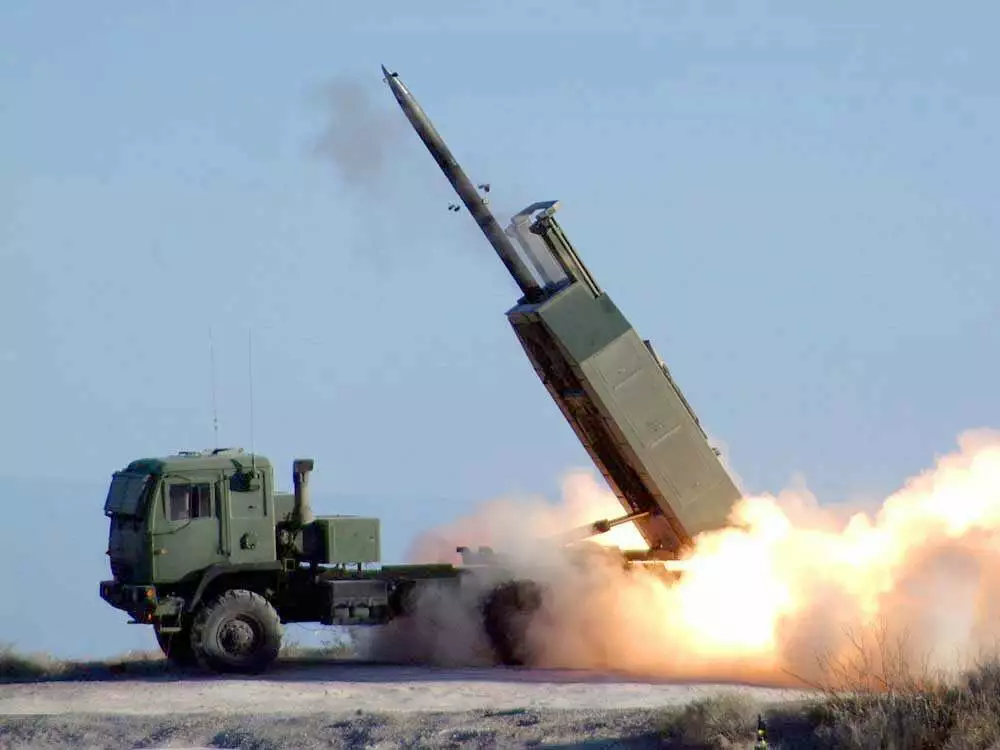
Himars launching a rocket. Wikimedia Commons, US Army
NATO Surrender Demand. December 2021 Drafts
In December 2021, the Russian Ministry of Foreign Affairs presented two draft agreements to the United States and NATO member states. These documents—the “Draft Agreement between the Russian Federation and the United States on Security Guarantees” and the “Draft Agreement on Measures for Ensuring the Security of the Russian Federation and NATO Member States”—proposed a reformulation of the entire existing security architecture in Europe. In reality, this was a humiliating demand for NATO countries to capitulate to resurgent Russian imperialism. This document, of course, is cloaked in diplomatic rhetoric about mutual security, and its implementation deprives NATO countries of the ability to immediately react if Russia attempts to invade any NATO country admitted since 1997.
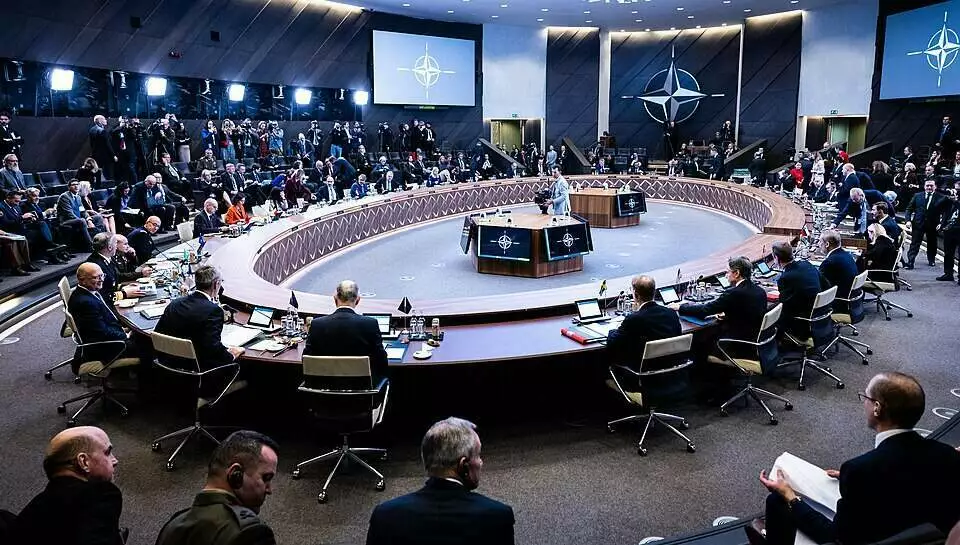
NATO meeting. Source: Wikimedia Commons, Estonian Ministry of Foreign Affairs
The document is so long that discussing point by point all the references to noble security ideals is pointless. I will focus on those demands that have a real impact on Poland’s security.
Key provisions regarding the military status of Poland:
1. Reversion of infrastructure and forces to the 1997 state (Article 4 of the NATO-Russia project).
The document stipulated that NATO member states before May 27, 1997, would not deploy troops or armaments on the territory of other European states admitted after that date. For Poland, this required the withdrawal of all allied troops (including American) and the dismantling of all related defense infrastructure established after Poland’s accession to NATO in 1999. This regressed us to the communist era in terms of military infrastructure, which at that time was oriented westward. We had no defenses from the east, and Russia wanted to return to this state. Most interestingly, if we were threatened by Russia, we were to ask its consent to allow NATO troops to arrive on our territory. This provision also prevented the operation of the American missile defense base in Redzikowo.
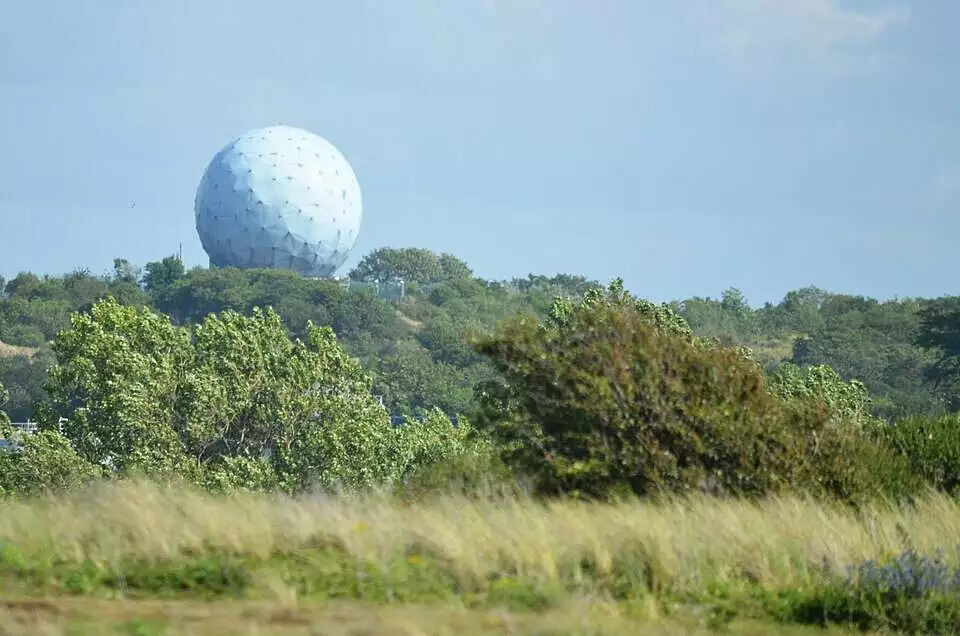
NATO infrastructure radar site near The Hague. Source: Wikimedia Commons, author: Steven Lek
2. Limitations on operational activities and maneuvers (Articles 6 and 7 of the NATO-Russia project).
The draft introduced a ban on military exercises exceeding one brigade in the border zone and a requirement to abandon all NATO military activity in Eastern Europe. These provisions blocked the possibility of organizing international exercises on Polish training grounds and conducting operations in airspace and in the Baltic Sea.
3. Limitations on missile systems (Art. 5 of the NATO-Russia draft / Art. 6 of the US-Russia draft).
Russia demanded a ban on deploying short- and medium-range missiles (500 to 5,500 km) in areas from which they could strike its territory. This provision limited the deployment of missile launchers and air defense systems with similar ranges in Poland. It essentially made active defense impossible in the event of a Russian attack. Without weapons capable of projecting a strike against Russia, we would become as defenseless as Ukraine in February 2022, which could only passively endure blows. We would also be deprived of some elements of our anti-missile shield, as the Americans in Redzikowo provide us with important assistance in this regard..
In summary, Russia demanded that we strip ourselves of our offensive weapons. Of course, they wouldn’t do that. We were also supposed to strip ourselves of some air defenses. This would have left us vulnerable to unanswered attacks. It took Ukraine three years of war to gain the ability to attack Russian territory. How long would it take us if we were defenseless? And would we have had the time to acquire such capabilities? Our operational depth is half that of Ukraine’s.
4. The issue of nuclear weapons and enlargement policy (Articles 6 and 7 of the US-Russia draft).
The project dictated the withdrawal of American nuclear weapons exclusively on US territory, which excluded the participation of regional states in the program Nuclear Sharing. They also demanded a legal obligation for NATO to permanently suspend the process of expanding the Alliance eastwards (including Ukraine and Georgia).
Diplomatic reaction and Poland’s response.
The presented projects were discussed in a series of diplomatic talks in January 2022, bilaterally (US-Russia) and within the Russia-NATO Council. That same month, the US government and NATO representatives openly rejected Russia’s key demands, pointing to the right of every sovereign state to freely choose its defense alliances and the impossibility of withdrawing defense infrastructure from the territory of NATO member states. Russia attempted to use faits accomplis to ignore the position of the countries it had formerly occupied – Poland and the Czech Republic, and even more so Lithuania, Latvia, and Estonia. It sought direct talks with the US, Great Britain, France, and Germany. In this case, it failed to divide the allies, and all adopted the same position. The example of Munich in 1938, when Czechoslovakia was forced to surrender in the name of peace, was well-remembered.
And how exactly did Poland react to these demands? Adequately to the scale of the threat. Together with the United States, in December 2021, the construction of a logistics base for Ukraine in Jasionka near Rzeszów began. It also began shipping significant volumes of weapons and ammunition, emptying its warehouses of the weapons most needed by Ukrainians. The shipment was decided during two government meetings on February 1 and 8, 2022. Thanks to the action of President Duda’s ministers, it was possible to quickly overcome the bureaucratic resistance encountered in January. Ukrainians requested weapons and ammunition from post-Soviet systems. They received a large quantity of Soviet-caliber ammunition, thanks to which they did not have to conserve much of it while repelling the attack. Zelensky told Duda in January 2022 that their ammunition stocks were at a catastrophic level. During this period, even before the invasion, not only ammunition was shipped, but also grenade launchers and, for example,. Lightning – excellent, modern anti-aircraft weapons. Polish companies were also prepared to supply Ukraine with fuel during the initial period, which was a remarkable Polish logistical success. While in central Ukraine in June 2022, I witnessed a tanker truck from Poland filling a gas station. When asked, the driver replied with a smile that yes, the fuel was from Poland.
Ukraine – thank you
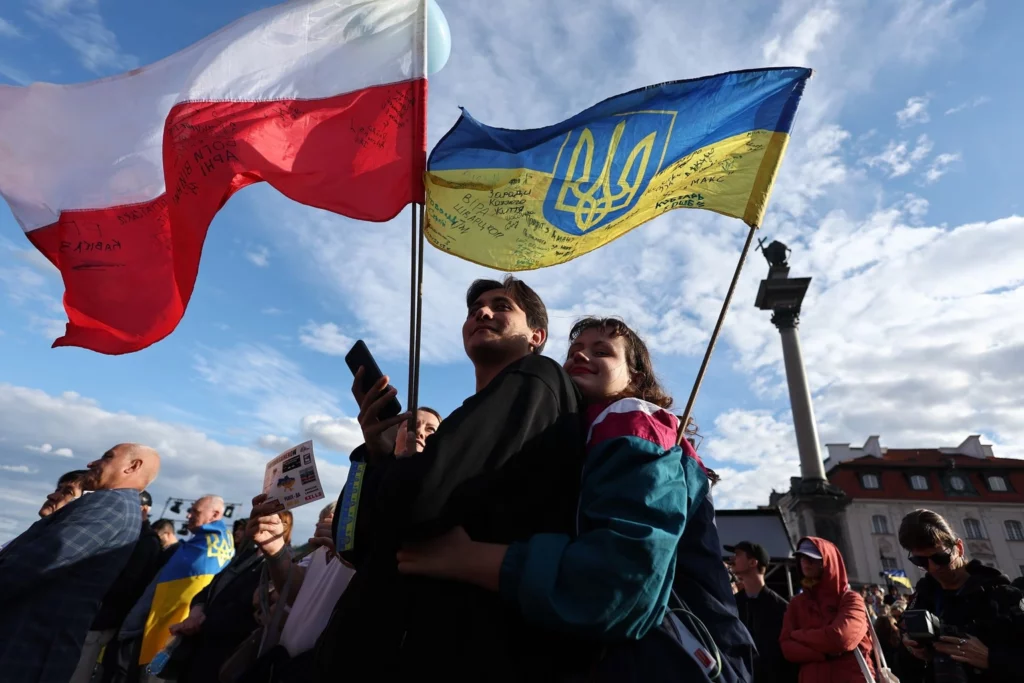
The Russians demanded NATO surrender. The price for surrender would be not to attack Ukraine, which would fall to them without a fight. The Russians did not stop thinking about reconquering the lands they had once occupied. In light of these documents Ukraine is truly fighting and bleeding for our freedom. It gives us the necessary time to prepare for conflict with Russia. I personally, and many others who understand the scale of the threat from Russia, thank you Ukraine.
And for those unconvinced, let them do the math. Russia has a population of 147 million. Adding conquered Ukraine, that’s a population of 190 million. The remnants of Belarusian independence will quickly vanish, and Russia will have over 200 million. It’s still a long way from the point where, together with its vassals, its bloc had a population of around 400 million, but having several dozen million people who can be sent as cannon fodder to Poland without unrest in Moscow is priceless from the Kremlin’s military perspective. If this seems impossible, consider the territories occupied by Russia since 2014. Thousands of men were conscripted and sent against Ukraine. Few had a chance to survive.
Therefore, I repeat: Thank you, Ukraine.
Link to Russian request page – press here
Link to the page with demands towards the USA – press here



What do you think about this story?
Join the conversation. Please keep comments relevant to the article.
Write a comment