

Three characters: a young Czech patriot, a Polish former Home Army soldier, and a Ukrainian former UPA soldier. What united them?
January 16th marked the 58th anniversary of the self-immolation of a young Czech patriot. It was a protest against the invasion of Czechoslovakia by Russia and its five vassals, including the Polish military. I present three figures here. People who did not hesitate to sacrifice their lives on the altar of freedom.


Invasion of Czechoslovakia
On the night of August 20-21, 1968, Russia invaded Czechoslovakia. In this unparalleled act of barbarity, it had its own accomplices. Russian vassals also sent troops to crush the country’s nascent freedom. Along with the Russian army, Polish, Bulgarian, German (East German) and Hungarian troops entered Czechoslovakia. It should be added that the Polish military contingent was the second largest after the Russian one and constituted a real force. Poland did not limit itself, as other countries did, to sending a symbolic military unit. As a result, the Poles were entrusted with the occupation of a very large area, including cities such as Jičín and Hradec Králové.
There were casualties. In just one year of occupation, over 100 Czechs and Slovaks died in combat or in other ways. Occupation forces brutally suppressed civilian resistance. In Prague, Russian tanks fired on civilian protesters. After a year, Russia succeeded in establishing a new, collaborative government, subservient to Moscow. From then on, repression began with the assistance of Czechoslovak secret services. The Czechoslovak political police (StB), infamous for their brutality, played a role in this.
The Polish military also played a role in killing Czechs. In Jičín on September 7, 1968, a drunken Polish soldier, Stefan Dorna, murdered several Czech passersby and wounded Polish soldiers who tried to disarm him. In Poland, he initially received the death penalty. General Wojciech Jaruzelski secured a pardon for him, and the death sentence was commuted to life imprisonment. After amending the penal code and abolishing “life imprisonment,” this meant 25 years in prison. Dorna was released in 1983, after 15 years. Nevertheless, this was a different case from the murders committed by the Russians, who fired machine guns at protesters and suspects.
Young Czech – Jan Palach.
On January 16, 1969, Jan Palach set himself on fire in Prague. His act sought to galvanize Czechs and Slovaks to fight against the Russian occupation. He died of severe injuries a few days later, on January 19, 1969. In the hospital, he was surrounded by respect, horror, and tears. It was known that the boy had chosen a terrible, painful death. Although he was barely 20, the hospital staff, though not in the habit of addressing him, addressed him exclusively as “sir.” His act became a model. Around 30 people throughout Czechoslovakia set themselves on fire during this time. Several died: Jan Zajic, Josef Hlavaty, and many others. This contradicts the notion that Czechoslovaks were cowards.
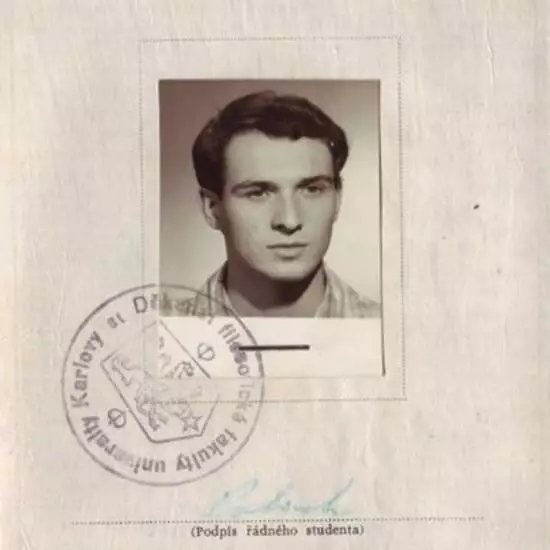
His funeral became an opportunity for a patriotic demonstration. The occupation authorities did not intervene, likely because several hundred thousand people showed up. He was buried in the cemetery in Olšany. The grave immediately became an object of veneration for Czechoslovak patriots. Unfortunately, after his death, Palach’s body rested in peace. The StB used threats and blackmail to persuade his family to agree to transfer his body to the cemetery in his native Všetaty. Only after 1990 did Jan Palach return to his original resting place. His family was persecuted throughout the entire period of Russian occupation.
https://www.janpalach.cz/pl/default/jan-palach
Pole, soldier of the Home Army – Ryszard Siwiec.
Could there be anyone more boring than an accountant? Ryszard Siwiec, in his own lifetime, contradicted this stereotype. Born in Galicia, he studied in Lviv. After graduation, he moved to Przemyśl. During World War II, he served in the Home Army. After the war, he resumed an ordinary life, continuing to live in Przemyśl. However, he refused to reconcile himself to the Russian occupation of Poland. In March 1968, he wrote and distributed leaflets supporting the student strikers in Poland.
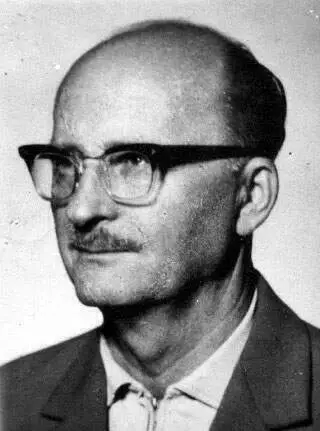
Source: janpalach.cz / Ryszard Siwiec, 1907-1968
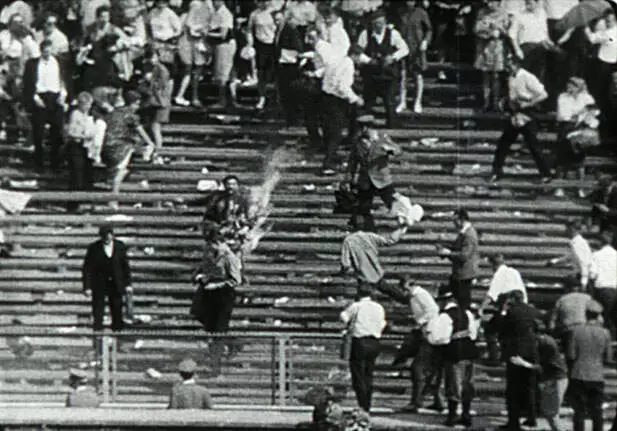
On September 8, 1968, Ryszard Siwiec set himself on fire in protest against the participation of Polish troops in the invasion of Czechoslovakia. He committed his act in front of a packed audience at the 10th Anniversary Stadium in Warsaw. The film survives because the harvest festival celebration held at the stadium was filmed. The film of Siwiec burning is incredibly moving, not for viewers with strong nerves. He died in the hospital, surrounded by security officers. Despite this, his family managed to record his final message to the Polish people. Siwiec, on the train to Warsaw, wrote a letter to his family explaining his actions. The letter was intercepted by the Security Service and returned to his family more than twenty years later, after Poland regained its independence.
Ryszard Siwiec is revered as a hero in the Czech Republic. His memory was popularized there by Czech historian Petr Blažek. Thanks to his efforts, a street in Prague was named after Ryszard Siwiec. A small monument was also erected in his honor. It’s worth visiting this place while in Prague, not far from the city center.
https://www.janpalach.cz/pl/default/zive-pochodne/siwiec
Ukrainian, UPA soldier – Vasyl Makhuch.
Vasyl Makuch was born a citizen of the Second Polish Republic in 1927. He was raised in Ukrainian patriotism, which led him to join the UPA in 1944. He was captured by the NKVD in 1946 and, after torture, sentenced to 10 years of forced labor. This was a relatively lenient sentence, likely due to his youth and the lack of workers in the camps emptied due to World War II. When he was released in 1955, he was deported to Siberia and banned from living in Western Ukraine. In 1956, he settled in Dnipro, where he worked and tried to study. When the charges against him were discovered, he was expelled from university. Makuch opposed the ongoing Russification of Ukraine.
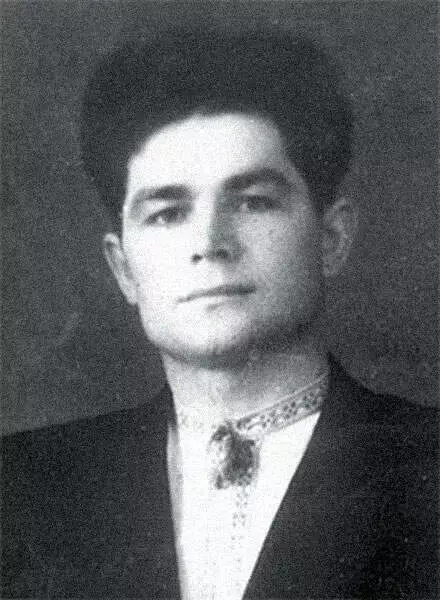
Source: janpalach.cz / Wasyl Makuch, 1927-1968
On November 5, 1968, he traveled to Kyiv. There, on the main street of Hreshchatyk, at number 27, he doused himself with gasoline and set himself on fire. He ran toward what is now Independence Square, shouting slogans against the Russification of Ukraine and the occupation of Czechoslovakia. Vasyl Makuch died in severe pain from burns a day later, on November 6. Until recently, his act was virtually unknown in Ukraine. Only in 2017 was a commemorative plaque unveiled in Kyiv next to the site of the arson. In Prague, a bridge was named after him. The aforementioned historian Petr Blažek is credited with popularizing his name in the Czech Republic.
https://www.janpalach.cz/pl/default/zive-pochodne/makuch
Three tragedies, three nations.
And almost the same time. It was a few months after the Russian invasion of Czechoslovakia. How much must one love freedom to choose such a cruel death for oneself? Of these three individuals, Ryszard Siwiec’s deed was almost forgotten. The communist authorities effectively prevented knowledge of him from spreading after his deed. The situation was different in Czechoslovakia and Ukraine. Both Jan Palach and Wasyl Makuch became objects of worship among patriotic, independence-oriented forces. All three protested against the occupation of Czechoslovakia. A young Czech, a soldier of the Home Army, and a soldier of the UPA. None of them knew anything about the others.
Source: janpalach.cz
What do you think about this story?
Join the conversation. Please keep comments relevant to the article.
Write a comment