

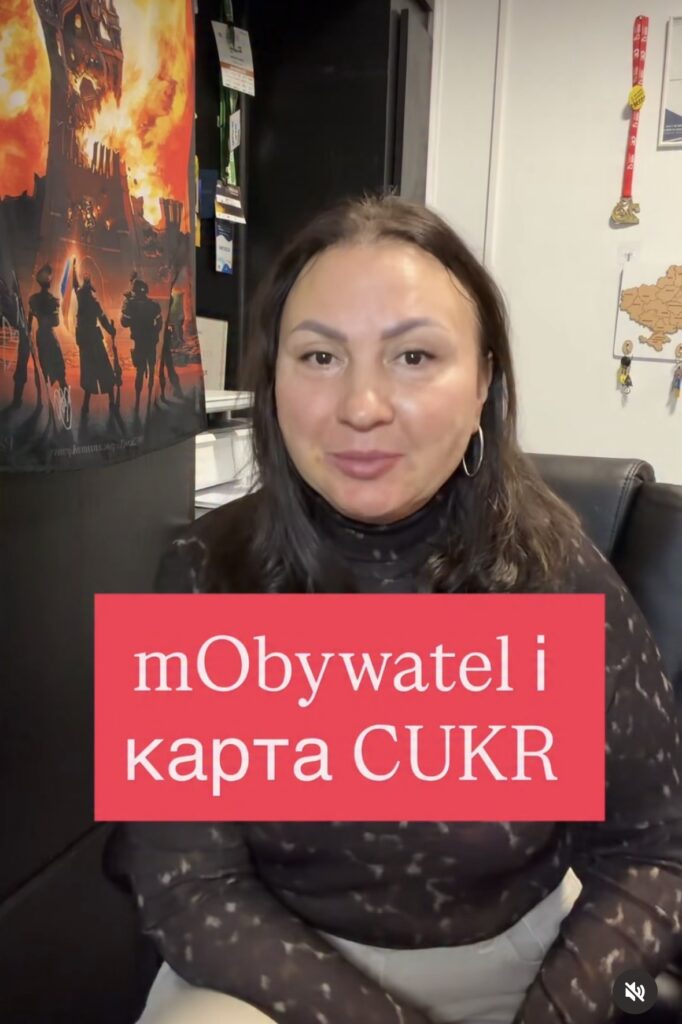
Source: Olena Dekhtiar
Source: illustrative image / Nowiny WschodnieFor more than four years, Poland extended Ukrainians’ right to live and work legally, often without applications or formalities. For most people under temporary protection, this period lasts until 4 March 2028. But for one group, 4 March 2027 will be the crucial date: Ukrainians who lived in Poland before the full-scale war and still reside here on visas and residence cards extended automatically by law. This deadline also matters to Polish employers and Polish-Ukrainian families. Olena Dekhtiar, a residence-legalisation expert and president of the “Home Is Where You Are” foundation, explains who can feel secure, who should act quickly and why the CUKR card is not for everyone.


Olena Dekhtiar has lived in Poland since 2015. She runs a popular blog, while her foundation explains Polish regulations to Ukrainians in simple language: their rights and obligations here. Today, the question she hears most often is what to do next: remain under temporary protection or switch to another residence basis. Whenever the EU extends protection, she says the news has two sides: “On the one hand, there is joy because Ukrainians can continue to stay legally in the Union. On the other, there is sadness because it feels as though the war will continue.”

What changed in 2026?
On 5 March 2026, the special provisions of the 2022 law on assistance to Ukrainian citizens ceased to apply. They were replaced by regulations gradually bringing Ukrainians’ situation into line with that of other foreigners. What does this mean in practice?
First of all, the number of people with UKR status has fallen. There used to be about a million; today, according to various figures, there are around 800,000. Some legalised their stay on another basis, some returned home and others moved to other countries.
The assistance available has also changed. Healthcare based solely on UKR status was retained only for the most vulnerable groups: children under 18, pregnant women and seniors living in collective accommodation centres. Those already undergoing treatment, such as cancer therapy or dialysis, face particular difficulties. The 800+ child benefit has been linked to employment. Grandparents caring for grandchildren in Poland, for example, face difficulties: they cannot work themselves, while their grandchildren attend school here.
There is, however, one change that has brought Ukrainians greater peace of mind. Previously, Poland’s “UKR status” and the EU’s “temporary protection” were separate categories. Whenever the EU extended protection, Poland had to amend its own law separately, and people waited until the last moment to see whether it would be passed and signed. UKR status has now been aligned with temporary protection, so the extension applies automatically in Poland (editor’s note: the EU Council extended temporary protection by a decision of 30 July 2026 until 4 March 2028).
For many Poles, all Ukrainians in Poland are the same. Yet the largest group consists of those who arrived after 24 February 2022 and have UKR status. What is their situation today?
I do not want to divide people into groups, but their routes to legal residence really are different. Ukrainians covered by temporary protection have an electronic document in the mObywatel app. Together with a valid international passport, valid for at least six months, it gives them the right to reside legally in Poland until 4 March 2028 , as well as to travel and cross borders. There is just one restriction to remember: an absence of more than 30 days means losing the status.
Who is affected by the 4 March 2027 deadline?
Another group consists of Ukrainians who were living in Poland before 2022. After the war began, their documents were extended automatically by law. This applies to national visas, residence permits and residence cards that expired after 24 February 2022. What awaits them?
There are very many such people. They hold work visas and other visas, residence cards that expired as far back as 2021, or they entered visa-free shortly before the invasion and stayed. All these documents are valid only until 4 March 2027. Nobody has extended this deadline, and as of today there is not even a draft law to change it. If these people do not obtain another legal basis for residence by 4 March 2027, their stay in Poland will become unlawful after that date.
Poland has been very understanding towards Ukrainians and has given them time for years. Some, however, took this to mean they did not need to think about legalising their stay. Some still live on residence cards that expired in 2021. I often hear: “Will Poland deport everyone?” There are no exceptions here: anyone without a legal basis for residence will have to leave, as in any other country. I am convinced most will legalise their stay. But they need to know this date now.
People say this winter in Ukraine will be very difficult. Can those arriving in Poland right now also obtain temporary protection?
There is no separate “wintering” status. To cross the border, you need a biometric passport, visa or residence card. Someone with a biometric passport is primarily treated as a tourist and may stay in Poland for 90 days.
The right to temporary protection has not been abolished, but the procedure has changed. Until 4 March 2026, a Ukrainian arriving in Poland could personally report to the municipal office that they were fleeing the war. Now the Border Guard plays an important role: the purpose of entry is recorded at the border. Everyone should therefore clearly tell the officer that they are fleeing war and intend to seek protection. In my experience, this does not always guarantee the correct entry in the system, for example if someone has previously crossed the border frequently. In such cases, letters must be sent to the Border Guard and the municipality to document the date of the declaration, because there are 30 days to obtain status (editor’s note: people arriving after 4 March 2026 must apply for a PESEL number with UKR status within 30 days of entry). Older people may find this hard to handle alone, so it is worth arranging help in advance.
Does everyone need a CUKR card?
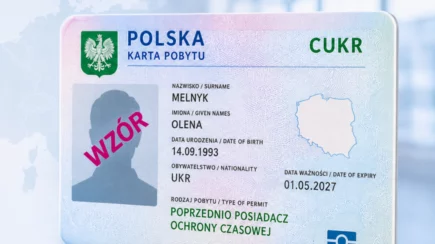
Temporary protection has been extended until March 2028, but life goes on: people work, study, marry and have children. Nobody knows when the war will end. What options do Ukrainians with UKR status have?
There is no single best route for everyone. Each person must choose their own instead of following others and regretting it later. If the EU does not extend protection further, by 4 March 2028 people will have to leave or switch to another residence basis. Since 2023, Ukrainians under temporary protection have been able to apply for residence cards based on employment or running a business. Many have done so and already have two or three years of residence history needed for applications for permanent residence or EU long-term resident status. Family reunification is also an option.
For people who cannot work, Poland introduced the CUKR card. It is not linked to employment and allows residence in Poland for another three years. However, it is available only to those who held UKR status on 4 June 2025 (editor’s note: the status must also have been held continuously for at least 365 days and on the application date; applications are accepted from 4 May 2026 to 4 March 2028. – details on the Office for Foreigners’ website). Those who arrived later must plan another route.
There is a lot of conflicting information about CUKR: some advise applying immediately, others say there is no rush. For whom might this card be unsuitable?
CUKR is ideal for some people, but not for others. Receiving the card means losing temporary protection status and the entitlements associated with it. For example, a grandmother living in a collective accommodation centre may lose her place there after receiving the card. Students under temporary protection study free of charge, whereas with CUKR their studies may become subject to fees. So it is unwise simply to follow a neighbour who has received the card and is happy with it.
I often give this example. A husband has received CUKR. His wife has lived in Poland for a long time and has a residence card extended only until 4 March 2027. They recently had a child. The wife cannot join her husband on the basis of his CUKR card. On what basis should she legalise her stay? That is why every family should assess its situation together, rather than each member separately.
Sometimes people apply because they have heard it is quick and beneficial, but then, when protection is extended until 2028, they do not even collect the completed card (editor’s note: according to Office for Foreigners data cited by OKO.press, by the end of October 2026 Ukrainians had submitted 77,460 CUKR applications, and 24,397 people had received the card).
Why does obtaining a residence card take so long?
Nowiny Wschodnie recently reported on queues for residence cards: instead of the statutory 60 days, proceedings in some provinces take months or even years. Can people leave Poland while waiting?
It all depends on the circumstances. If someone has temporary protection status in mObywatel and has applied for a residence card, nobody restricts their movement. But if their previous card has expired and they are waiting for a new one, it is better not to leave: they can go to Ukraine, but can return only with a visa or under the 90-day visa-free regime.
This is a problem for all foreigners, not only Ukrainians. Provincial offices have been unable to keep up with applications since the pandemic. Until April 2026, applications were filed on paper, and many people applied for residence cards simply to remain legally in Poland while their cases were pending. Some Ukrainians applied in 2020–2021, then changed their plans and left without withdrawing their applications. When they returned after the war began and obtained status, they discovered that a residence card was waiting for them, causing them to lose that status. So if someone changes their mind, they absolutely must withdraw the application.
In some provinces the wait is two years or longer; in Warsaw, the best-case scenario is about a year. Electronic applications have so far changed little: an official still has to examine the case, applicants must submit fingerprints and documents in person, and the Border Guard and Internal Security Agency check each applicant. Moreover, regulations allow offices to suspend the counting of deadlines for such cases until 4 March 2027. For people, this means a long wait during which, in practice, they cannot leave Poland.
Will the rules for obtaining Polish citizenship change?
For now, the rules have not changed, and this applies to all foreigners. There is a draft proposal, but it has not yet been adopted. As far as is known, it envisages a higher level of Polish (B2 instead of B1), a test on Polish culture and a longer period of residence before applying. We will see exactly how that period is calculated when the law is passed, because today everything depends on the basis of residence.
Time to put things in order
What advice would you give someone who has lived in Poland for three or four years and still does not know what to do about legalising their stay?
I may say something unpopular: often it is not that a Ukrainian does not know, but that they do not want to know. When I arrived in 2015, information really was scarce. Today there are plenty of explanations in Ukrainian, and people need to read them in the context of their own situation. They can contact our foundation’s specialists or watch my explanatory videos. Poles used to understand that we did not know certain things, but more than four years have passed.
So sort out legal residence for your entire family, not just yourself. Come for a consultation, ask questions and make your own decisions. I do not answer the question “What would you advise me to do?” because I see what happens when people simply do what someone tells them.
“Even if you do not plan to stay here, you must know the laws of a country where you have lived for more than six months.”
— Olena Dekhtiar, residence-legalisation expert and president of the “Home Is Where You Are” foundation
The time Poland has given is not a postponement but an opportunity. Only each individual can make use of it.
Source: Nowiny Wschodnie interview with Olena Dekhtiar, gov.pl, Office for Foreigners

Historian, ethnographer, and social media specialist. She has many years of experience developing YouTube channels, helping experts and businesses build their online presence. She has conducted academic research in ethnopsychology and ethnopedagogy in Galicia and the Northern Black Sea region. Her interests include the history of Ukraine and Europe, Polish-Ukrainian relations, and ethno-national and intercultural issues.
What do you think about this story?
Join the conversation. Please keep comments relevant to the article.
Write a comment