
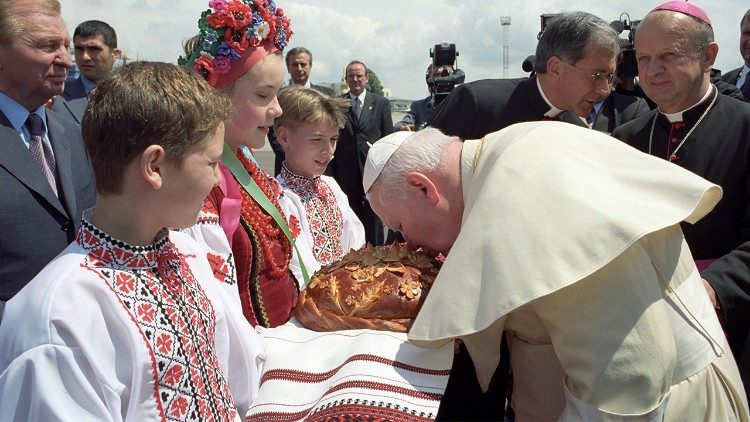


Zdjęcie: wizyta Jana Pawła II w Ukrainie, czerwiec 2001 r. / media społecznościowe / opr. Nowiny WschodnieThe National Bank of Ukraine announced that in 2026 it will mint a commemorative coin dedicated to John Paul II — on the 25th anniversary of his apostolic visit to Ukraine. The decision was presented by NBU Governor Andriy Pyshnyy and Ukraine’s ambassador to the Holy See, Andriy Yurash. The announcement coincided with another piece of news, far more painful: a few days earlier a Polish volunteer was killed in Kharkiv, who for years had been bringing humanitarian aid there — in the city the Pope mentioned by name in 2001.
On 23 June 2001, John Paul II landed on Ukrainian soil and in his very first speech said a sentence that Kyiv’s central bank still quotes today to justify its decision: “Ukraine has a clear European vocation”. At that time, the Revolution of Dignity was still twelve years away; the outbreak of Russia’s aggression in Crimea and Donbas — thirteen; the full-scale invasion — more than twenty. The Pope spoke of Ukraine not as a territory between two worlds, but as a European nation with its own history and the right to decide its own future.
During that same visit, one more sentence was spoken that today sounds different than it did a quarter of a century ago: the pope said that he embraces everyone — from Donetsk to Lviv, from Kharkiv to Odesa and Simferopol. In 2026, the names of these cities carry a completely different weight. Especially Kharkiv.
Zdjęcie: X/Twitter, Andrii Sybiha / opr. Nowiny WschodnieOn 27 July 2026 in Kharkiv, Marek Rusek-Wolski, a Polish volunteer from Wrocław, was killed. As Polish journalists determined, including TVP’s correspondent in Ukraine, Piotr Kaszuwara, the man was fatally hit by a Russian FPV drone. For several years he had regularly traveled to eastern Ukraine with humanitarian aid, administered the “Together for Ukraine” group on Facebook, and — as accounts from people familiar with his work indicate — he was also involved in evacuating civilians from areas close to the front line. The death of the Pole was confirmed by the Ministry of Foreign Affairs only on 4 August; as the ministry’s spokesperson Maciej Wewiór explained, “as a rule, the MFA does not inform on an ongoing basis about such situations out of consideration for the deceased’s loved ones.”
Why is Kyiv reaching for a symbol from 25 years ago דווקא now?
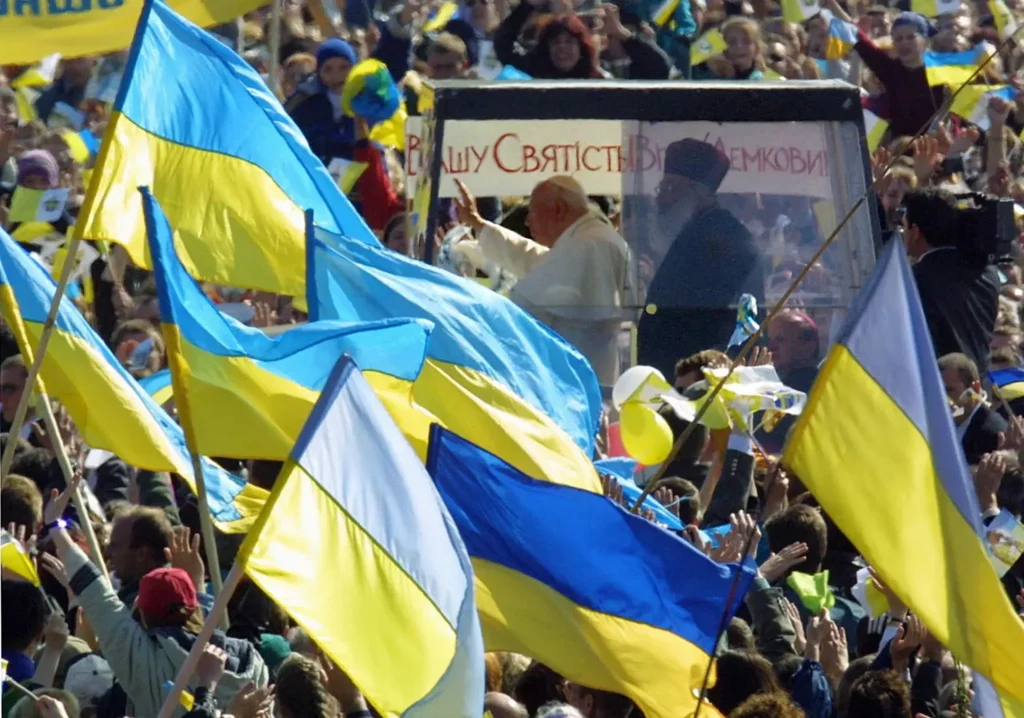
Zdjęcie: media społecznościowe / opr. Nowiny WschodnieThe answer given by the National Bank of Ukraine itself is: because today this symbolism is more relevant than on the day it was announced. President Pyszny, presenting the decision about the coin, recalled not only the pope’s visit in 2001, but also his 2003 appeal addressed to Ukrainians and Poles in connection with the tragic events in Volhynia — an appeal for both nations not to remain hostages to painful memories, to forgive the wrongs they suffered, and to ask forgiveness for their own faults. The point was that subsequent generations should not step into the future carrying inherited hatred.
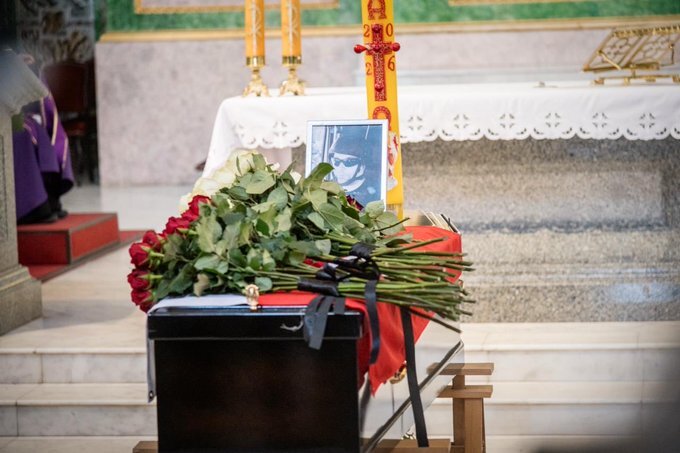
The funeral of Marek Rusko-Wolski took place at the Roman Catholic co-cathedral of St. Alexander in Kyiv. Among those who attended were the head of the Polish embassy in Kyiv, Piotr Łukasiewicz, and Ukraine’s Foreign Minister Andrii Sybiha, who said during the ceremony: “Mr. Marek proved through concrete actions that solidarity is not an abstract slogan, but concrete action and a tangible contribution.”
This is not the first initiative of this kind by the NBU. In 2023, the central bank of Ukraine, together with the National Bank of Poland, issued a set of two silver commemorative coins titled “Friendship and brotherhood — the greatest wealth,” dedicated to Polish solidarity with Ukraine after the full-scale invasion. Poland was among the first to stand by Ukraine — it took in millions of refugees, opened schools, hospitals and homes, and provided military, humanitarian and political support. The coin dedicated to John Paul II is, according to the NBU’s announcement, meant to continue the same story — only reaching deeper, to the shared opposition to totalitarianism.
“His death once again reminded us: Ukrainians and Poles today stand on the same side of history” — said the Governor of the National Bank of Ukraine, Andrii Pyshnyi, announcing the decision about the coin and remembering Marek Rusko-Wolski.
Details of the future coin — denomination, mintage, artistic design, and the exact date of release into circulation — are to be announced later, after the completion of work by the Mint of the National Bank of Ukraine. It is already known, however, that earlier in the same year another NBU commemorative coin entered circulation — dedicated to the Day of Remembrance of the Defenders of Ukraine, including those who died in Russian captivity.
The symbolism of these two events—of the coin and the funeral—overlaps regardless of their authors’ intentions. The Pope who in 2001 embraced Kharkiv with words, and the Pole who in 2026 went to Kharkiv with tangible help, are today mentioned in the same sentence by a Ukrainian central bank official. This is a rare case where numismatics and an obituary say exactly the same thing.
The Pope did not propose forgetting the difficult past—on the contrary, he urged people to look at it honestly. Twenty-three years after his appeal from Volhynia, it is hard to find more pointed proof of what reconciliation can look like in practice than a Pole going to rescue Ukrainian civilians, not to fight them.
The banners used to be different. Today, the price of solidarity has a first and last name.
Source: Nowiny Wschodnie / Ukrinform / RBC-Ukraine / National Bank of Ukraine / Polsat News / Interia / naszapolska.pl

What do you think about this story?
Join the conversation. Please keep comments relevant to the article.
Write a comment