
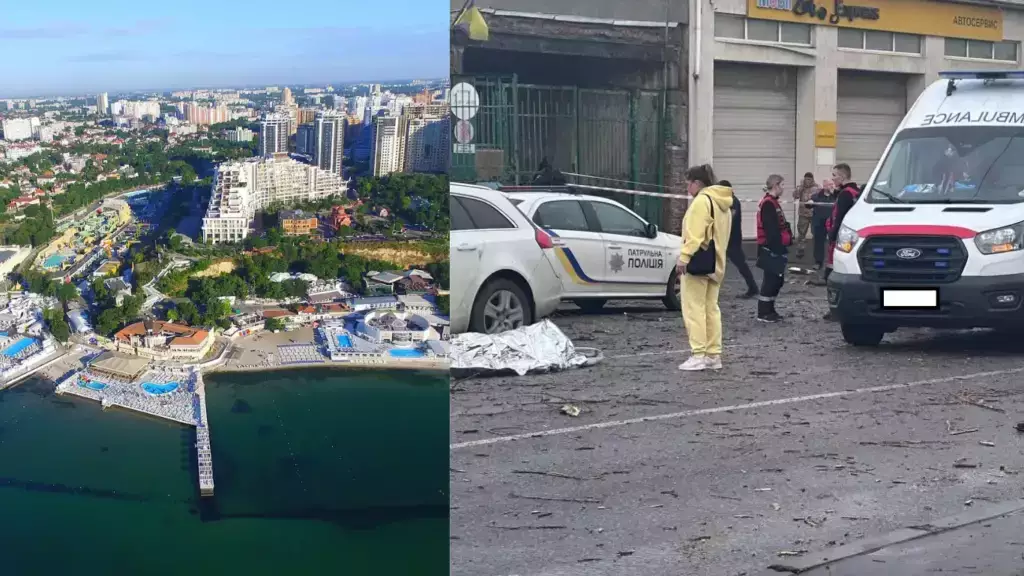
Today, November 13, 2026, Odesa once again awoke in the shadow of Russian terror. A morning attack by Russian drones killed two women and injured five other people. Homes, cars and places that only yesterday formed part of residents’ ordinary lives were also damaged. Once again, they became evidence of the brutality of this war.


I write this with pain because Odesa is not an anonymous dot on the map to me. It is a city I love, a city I have spent years getting to know, to which I have devoted my books and given a part of my life. When I read about another Russian attack, I do not see only numbers and news reports. I see streets I have often walked, familiar buildings, places I have visited and people I have spoken to. I know that behind every such report lies someone’s tragedy, fear and suffering.
At moments like these, I understand even more deeply why Odesa matters so much to me. Some cities you visit only briefly; others you return to throughout your life. Odesa belongs to the latter.
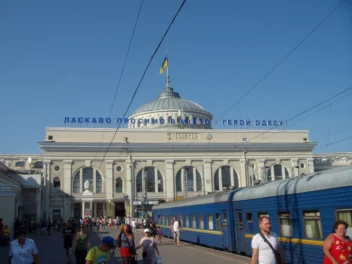
It all began with a single name
There are moments in life when something seemingly small changes a great deal. Sometimes one meeting, one conversation or even the name of a place you have never heard of is enough. Something catches your interest, gradually becomes a fascination and eventually turns into an important part of your life. That is what happened with Odesa.
I am Polish and come from Kraków. For years, Odesa was primarily the name of a city on the Black Sea to me. I knew it existed and associated it with history, its port and its famous steps. I had no idea that one day I would devote such a large part of my life to it.
The name itself seemed extraordinary. It suggested something distant, slightly mysterious, a city with its own character and history. I began reading about Odesa, searching for information and learning about its past. The more I learned, the more I wanted to see it for myself.
In 2008 I decided to fulfil that dream. I travelled to Odesa for the first time with my family. I did not suspect that the journey would begin something lasting many years and affecting my life more than I could imagine.

Pryvoz Market (photo: Borys Tynka).
The first encounter that changed everything
I remember my first moments in Odesa: the first walks, the first glimpses of old apartment buildings, the first encounters with people and impressions that are difficult to describe. I felt I had arrived somewhere strangely close to my heart. It was hard to explain: I had never been there and knew neither the city nor its people or daily life. Yet I quickly felt comfortable, as though I were at home.
Odesa had something I could not find in other cities. It was elegant yet somewhat neglected. It had beautiful buildings, broad streets and grand squares, but turning into a side street revealed a completely different world. Romantic without being sentimental, noisy, lively and sometimes chaotic, it was endlessly interesting. It did not try at all costs to please tourists. It had a character of its own and no intention of changing it.
After returning to Poland, I knew I would go back, though not how many times. Gradually, I stopped being a tourist and became someone who wanted to understand Odesa. Visiting the best-known sights was no longer enough. I wanted to know why streets had their names, who had lived in particular buildings, what had happened in certain squares and what life had been like there decades or a century earlier.
I began searching for books and historical sources. At the time, there were few Polish-language publications that offered a genuinely detailed understanding of the city. So I turned to Ukrainian materials and Russian-language books, reading and discovering new places through them.
Each subsequent visit brought new discoveries: unfamiliar streets, courtyards hidden behind old gateways, small squares, markets and neighbourhoods far from the centre. I began to understand that the real Odesa did not end at Deribasivska Street and the famous steps.
I also realised that books alone cannot teach you about a city. You have to walk through it, observe everyday life and, above all, talk to people. Residents tell their city’s stories best. Sometimes one conversation reveals more than hours spent reading a guidebook.
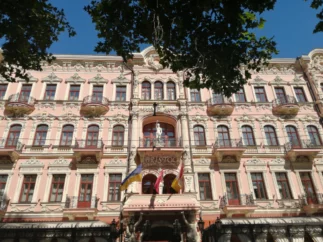
Hotel Bristol (photo: Borys Tynka).
Odesa is, above all, its people
For many, Odesa means the Black Sea, the opera house, the famous steps, Deribasivska Street and beautiful historic buildings. These are important symbols, and I love returning to them. But for me, the real Odesa also lies beyond its best-known attractions.
It is found in markets, old courtyards, little shops, tram stops and conversations between residents. It lives in the way people joke, comment on events and talk to strangers; in their attachment to the city, pride in its history and complaints about everyday problems.
From the beginning, Odesa was a city of people arriving from many parts of the world. Different nationalities, languages, religions and traditions met here. Ukrainian, Jewish, Greek, Polish, Armenian, Bulgarian and other influences formed an extraordinary mixture. The history was not always easy or beautiful: there were conflicts, tragedies, persecution and difficult periods. Yet this diversity profoundly shaped the city’s character.
When I walk through Odesa, I often wonder how many people once walked along the same street. What were their lives like? What did they discuss? What hopes and dreams did they have? Who lived in the building I am passing? Such questions gradually turned an ordinary walk into a journey through time.
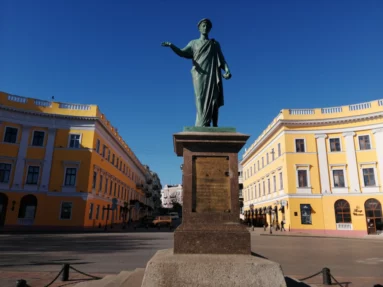
Monument to the Duke de Richelieu (photo: Borys Tynka).
The sea, the streets and everyday pleasures
You cannot fall in love with Odesa without also loving its everyday life. I adore walks towards the sea. It is not merely about the beach or relaxing beside the water. To me, the Black Sea is part of Odesa’s identity. It changes with the hour, weather and season: sometimes calm and almost motionless, at other times rough, dark and forbidding.
I enjoy watching it from Odesa’s boulevards, but I am equally happy on beaches farther from the centre. One such place is Dacha Kovalevskoho. I have been there countless times. I return not because it appears in every guidebook but simply because I feel good there.
I also love Odesa’s architecture: old apartment buildings, decorated balconies, stairwells, gates and inner courtyards. Some buildings are magnificent, others need renovation, and still others bear the marks of difficult decades. Even the less well-maintained ones can hold something special.
Of course, some places are unmissable. The Opera and Ballet Theatre, one of the city’s most recognisable buildings, always impresses me. The steps widely known as the Potemkin Stairs, a symbol of Odesa throughout the world, have a remarkable atmosphere. Deribasivska is a place to sit, watch passers-by and feel the city alive around you.
Then there are the markets: Pryvoz, New Bazaar, Starokonnyi and many others where everyday Odesa is on display. I particularly enjoy Starokonka at weekends. It is another world entirely: you can find almost anything, meet extraordinary people and see trading as an ordinary part of local life.
Odesa also has its own flavours: fresh fish, seafood, chebureki, forshmak, aubergine caviar and many other dishes. Its cuisine is as diverse as its history, combining different peoples and traditions. Not everything will appeal to everyone, but for me eating in Odesa is another way of discovering it.
I cherish such ordinary moments. You do not always need to sightsee, take photographs or visit another monument. Sometimes it is enough to sit down, order something to eat and feel part of the city for a while.
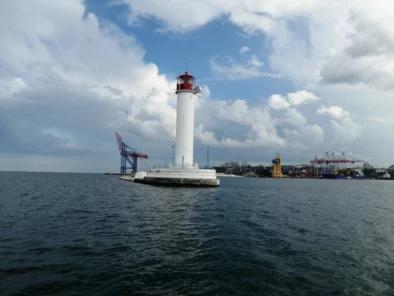
Vorontsov Lighthouse (photo: Borys Tynka).
A city that cannot be understood from just one side
My love for Odesa is not based on beauty alone. I am fascinated by its contrasts. On one side are the grand centre, elegant buildings, lovely squares and traces of former splendour. On the other are Moldavanka, Peresyp, Slobidka and other districts showing a very different face of the city.
Not everywhere is beautiful or as tourists imagine it. There are ageing buildings, damaged courtyards, neglected streets and places requiring immense work. Yet it is often there that you see the most authentic Odesa and how its residents really live.
Odesa is not perfect. It never was. It has flaws, a difficult past and many problems. Perhaps that is precisely what makes it so interesting.
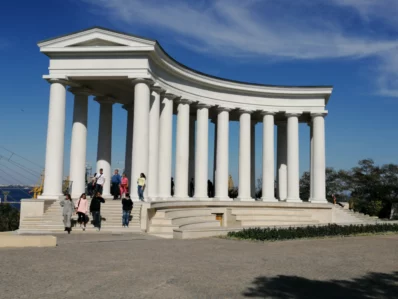
Colonnade of the Vorontsov Palace (photo: Borys Tynka).
A love that became a life’s mission
Over the years, my fascination with Odesa took an increasingly tangible form. Exploring the city was no longer enough; I felt a need to tell others about it. I began writing because I wanted to show Polish readers an Odesa they often did not know.
Today I have written five books devoted to Odesa. Each matters to me because it arose from a need to share something I had discovered. I do not regard them merely as additions to my bibliography, but as records of my many years of fascination with the city.
I also became a guide, taking Polish tourists around Odesa and telling them its history. I love the moment when someone arrives expecting only a handful of famous monuments and leaves a few days later with a completely different picture of the city. I am always glad when I can pass on even a little of my fascination.
In time, I received the honourable title of honorary ambassador of Odesa in Poland. I have never seen it merely as an award. Above all, it is an obligation to tell the city’s story, explain its history and remind people that Odesa is an important part of Ukraine.
At some point, I realised that Odesa had become not only an interest but something to which I devoted increasing amounts of time, work and energy.
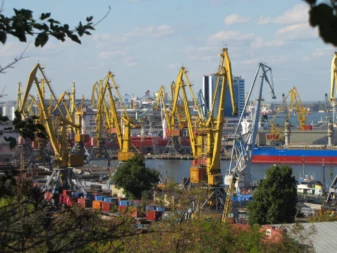
Commercial port (photo: Borys Tynka).
February 24, 2022 changed everything
When Russia launched its full-scale invasion of Ukraine, my relationship with Odesa entered an entirely new phase. Previously, I had travelled there to explore, meet friends, write books and guide tourists. Suddenly everything changed. The city I loved so much was in danger. But I stood with it.
From the first days of the war, I became involved in helping people on the ground. I organised support and helped deliver essential supplies, including medical items and fuel. I did not stop to ask whether it was convenient, whether I had time or what the consequences might be. I knew help was needed.
Gradually, I realised I could no longer regard Odesa merely as a place I visited. Its safety, future and residents’ fate became deeply personal matters. I am not Ukrainian. I was not born in Odesa and cannot call it my hometown. But I can say it is exceptionally close to me and that its fate matters. That is why I try to fight with my pen: writing about Ukraine, explaining its history to Polish readers, exposing Russian propaganda and challenging lies about the country. I believe this too is a way of helping.
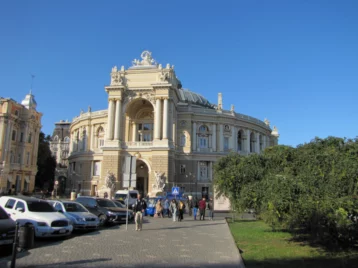
Opera and Ballet Theatre (photo: Borys Tynka).
Why do my thoughts keep returning to Odesa?
Sometimes I ask myself what truly draws me to this city. Is it the familiar streets, the sea, the architecture, markets, scents and flavours? Or the people I have met? Probably all of these. But there is more. Odesa taught me to see cities differently: beauty need not be found only in great monuments and guidebook landmarks. Sometimes the most interesting things lie in everyday encounters: a conversation with a market vendor, a walk along a familiar street, a view of the sea that still amazes me, or meeting friends I have not seen for months.
Odesa also taught me patience. You cannot get to know this city in a weekend or even several visits. Each return brings something new: a place, a story or an event.
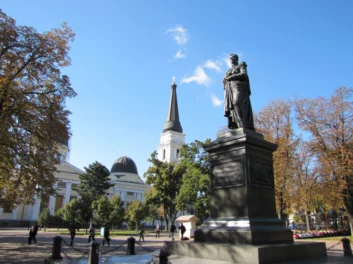
Cathedral Square (photo: Borys Tynka).
The Odesa that cannot be taken away
Today, with Russian drones regularly attacking the city, I think about Odesa very differently than on my first visits. I used to worry whether I would have time to see another place, eat at a favourite restaurant or meet all my friends. Now I wonder whether the people I know are safe, whether their homes have been damaged and whether the next night will bring another air-raid alert.
War has changed everyday life in Odesa, but it has not taken away the city’s character. Residents still try to live normally, work, meet and plan for the future. It is not easy. Every Russian attack reminds them that the war continues and complete safety is impossible.
I would like to walk along Deribasivska again without thinking about air-raid sirens. I would like to ride tram number 20, stroll by the sea, visit Pryvoz and Starokonka, meet friends and simply enjoy an ordinary day. I want Odesa to become a city people can visit without constant anxiety again.
I believe that day will come.

Monument dedicated to sailors’ wives (photo: Borys Tynka).
The city that will remain in my heart forever
Looking back, I see how much one trip in 2008 changed. It began with simple curiosity, a wish to see a city I knew little about. Then came more journeys, books, guidebooks, meetings with people and many years of work connected with Odesa.
Today I find it hard to imagine life without this city. It appears in my books, articles, conversations and plans. Even when I am far away, I often think about it.
I do not know whether it is possible to explain rationally why someone falls in love with a particular place. Sometimes it just happens. The feeling appears unexpectedly and then becomes part of your life. Odesa is such a place for me. It still has something that makes me want to return.
I do not know when I will next be able to walk peacefully along its streets or show it to Polish tourists again. But I know I have not stopped loving it. Odesa is no longer just a city on the Black Sea, a subject for my books or a place where I work as a guide. It is part of my life, memories and personal history.
And if someone asks why I fell in love with Odesa, I probably cannot give one simple answer. I will say: go there, see the city, meet its people and feel its atmosphere. Then perhaps you will understand.
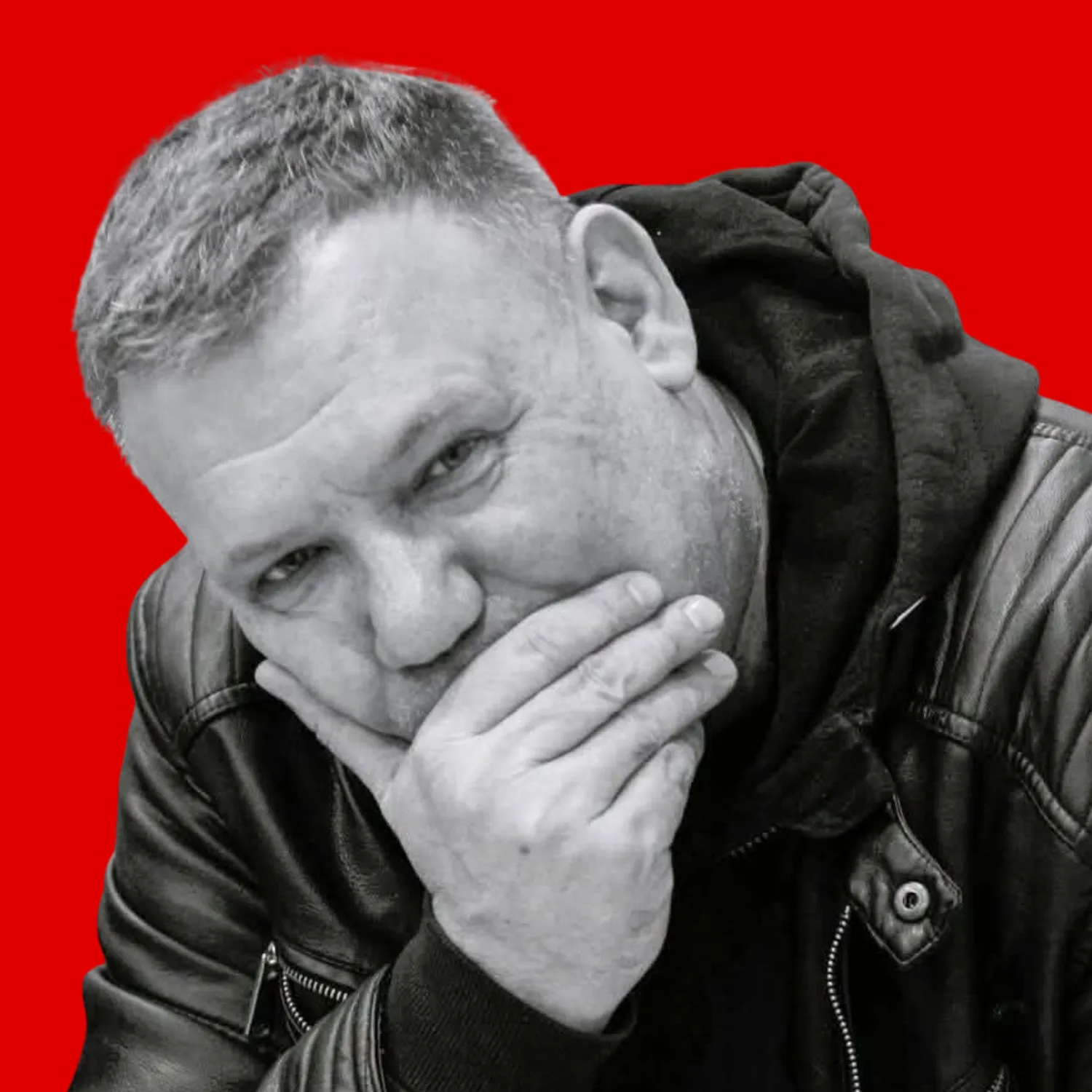
Journalist, columnist, author of books about Ukraine, tour guide, and commentator on developments in Ukraine and Polish-Ukrainian relations.
A certified guide to Odesa, the Odesa catacombs, Ukrainian Bessarabia, and Kyiv. He is the author of numerous publications on Ukraine’s history, culture, and contemporary affairs, some of which have been translated into Ukrainian and published in Ukraine. In 2020, he received the honorary title of Ambassador of Odesa in Poland from the Mayor of Odesa.
On 24 February 2022, the day Russia launched its full-scale invasion of Ukraine, he was in Odesa. He remained there for several months, helping coordinate humanitarian aid and reporting on the war for Polish media outlets. He described his experiences during this period in his book Odessa 4.5.0.
At Nowiny Wschodnie, he publishes articles and commentary on the Russo-Ukrainian war, Russian propaganda and disinformation, Ukrainian history, particularly that of Odesa, as well as Polish-Ukrainian relations and changing public attitudes.
He collaborates with Ukrainian newsrooms and online news outlets and appears in Polish media as a commentator on Ukrainian affairs.
What do you think about this story?
Join the conversation. Please keep comments relevant to the article.
Write a comment