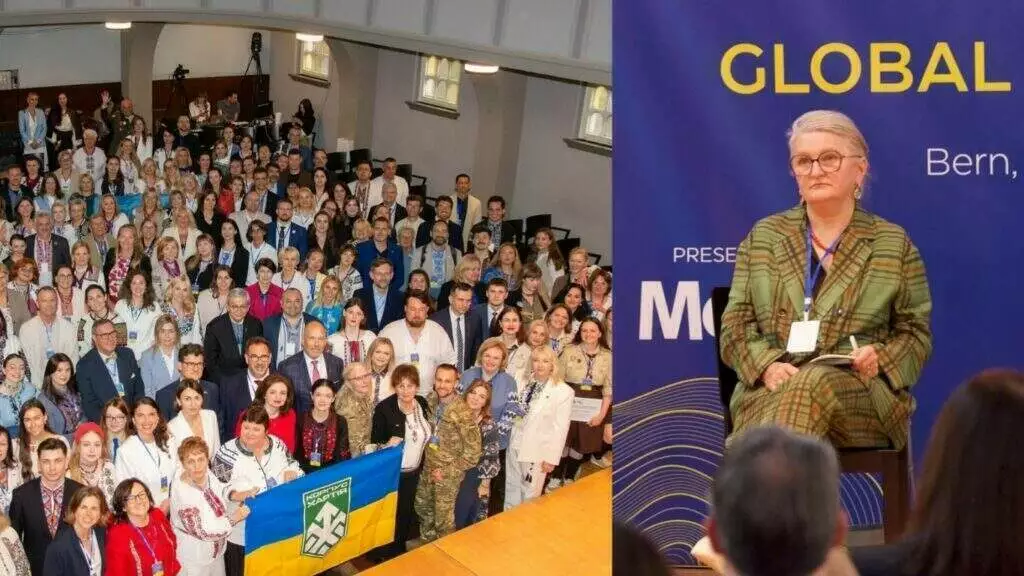
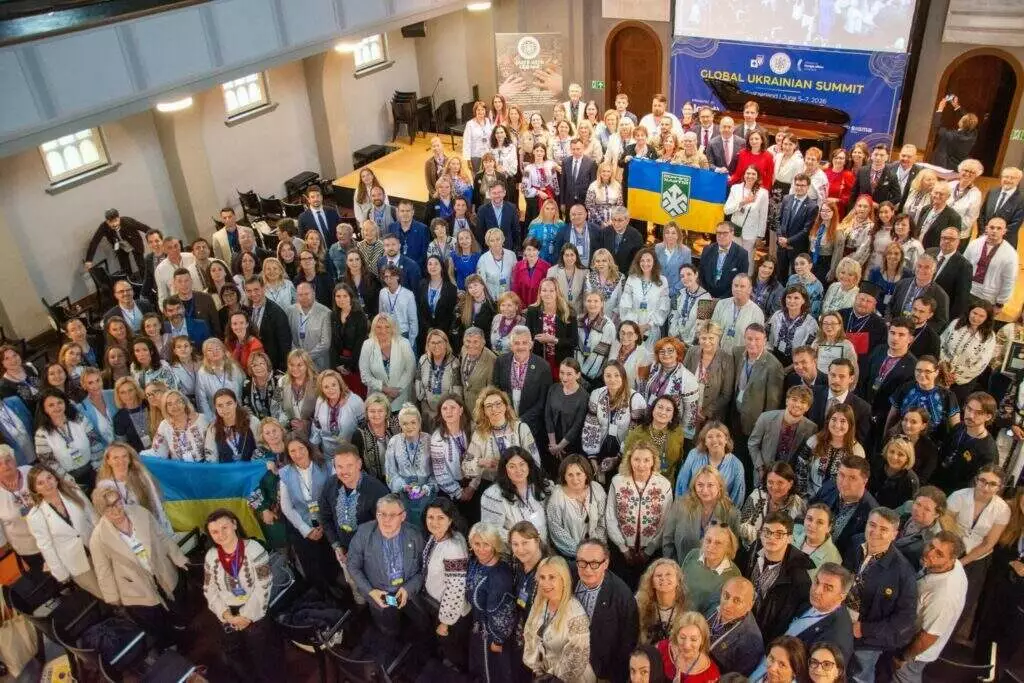
It ended in Bern Samit of World Ukrainianism — one of the most important meetings of the global Ukrainian diaspora. Over 350 participants and guests from over 50 countries attended the event. The forum provided a forum for discussions about supporting Ukraine, rebuilding the country, refugee rights, countering Russian disinformation, and the role of Ukrainian communities abroad.
🔴
Eastern News
— follow us. The latest important news from Poland, Ukraine and Eastern Europe.
President of Ukraine Volodymyr Zelensky, addressing the participants of the samitu, he stressed the importance world Ukrainianism during the war.
Today, when Ukraine is steadfastly fighting against the Russian occupier, you are helping our state by being its voice of truth and an example of unity, said the President of Ukraine.
Ukraine’s voice in the world
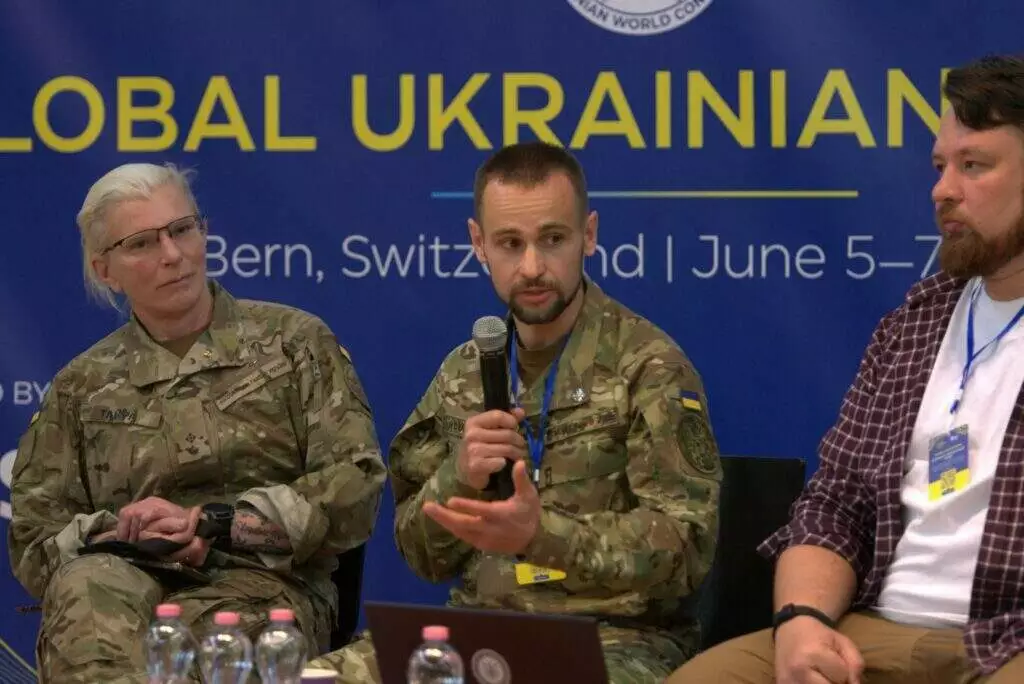
The Samit was organized by the World Congress of Ukrainians in cooperation with the Ukrainian Society in Switzerland and in partnership with the Ministry of Foreign Affairs of Ukraine. The event was attended by representatives of Ukrainian social organizations, diaspora leaders, experts, politicians, volunteers, military and representatives of state institutions.
source: Samit of World Ukraine / Halyna Khramova
The topics that were discussed included security issues, continued support for Ukraine, mobilizing international aid, and maintaining ties with the millions of Ukrainians who found themselves outside the country after the outbreak of the full-scale war.
Data shows that Ukrainian refugees contribute significantly more to the Polish budget than they receive in aid.
Participants emphasized that Ukrainian communities abroad are not exclusively emigrant groups. During the war, they became an important tool social diplomacy, humanitarian support, information defense and influence on the policies of the countries in which they live.
Ukraine’s reconstruction begins now
One of the main topics of the samitu was reconstruction of Ukraine. Participants pointed out that it is impossible to wait for the end of the war to begin activities related to restoring infrastructure, strengthening the economy and preparing the return of citizens to the country.
Safety remains the primary condition for our people to return home.
Ilona Hawrońska, Deputy Minister of Social Policy of Ukraine
Investing in the education of Ukrainian children today is an investment in a strong Ukraine tomorrow.
During the panel discussion on reconstruction, the role of international partners, foundations, businesses, and Ukrainian organizations operating worldwide was discussed. It was emphasized that reconstruction involves not only investments in buildings and infrastructure, but also in education, security, energy, mental health, and social capital.
Representatives of Ukrainian organizations pointed out that the Ukrainian diaspora could become a real bridge between Ukraine and foreign institutions, investors and donors.
A Ukrainian victory is the best guarantee of global security and stability. If Ukraine loses, Russia will move on.
Eugen Czolyj, former president of the World Congress of Ukrainians
Supporting our defenders is paramount. Our priority remains military assistance and sanctions pressure on Russia.
Kateryna Arhyru, Union of Ukrainian Organizations of Australia
Refugees, integration and return to Ukraine
The situation of Ukrainian refugees and forcibly displaced persons was a key focus of the discussions. Participants discussed temporary protection, integration in host countries, and how to maintain ties with Ukraine.
It was emphasized that integration should not mean assimilation. Ukrainians living abroad should have the opportunity to participate in the social life of the countries that have welcomed them, while simultaneously preserving their language, culture, and national identity.
In this context, the importance has been repeatedly raised Ukrainian Saturday schools, Social organizations, diaspora media, and educational initiatives help children and young people born or raised outside of Ukraine remain part of the Ukrainian community.
Being a Ukrainian abroad means not only preserving Ukraine within yourself, but also bringing it to the world.
Jarosława Hortiani, vice president of the World Congress of Ukrainians
Ukrainians abroad are not just voters. They are partners.
Petro Rewko, World Congress of Ukrainians
Defense, the front and the real needs of the army
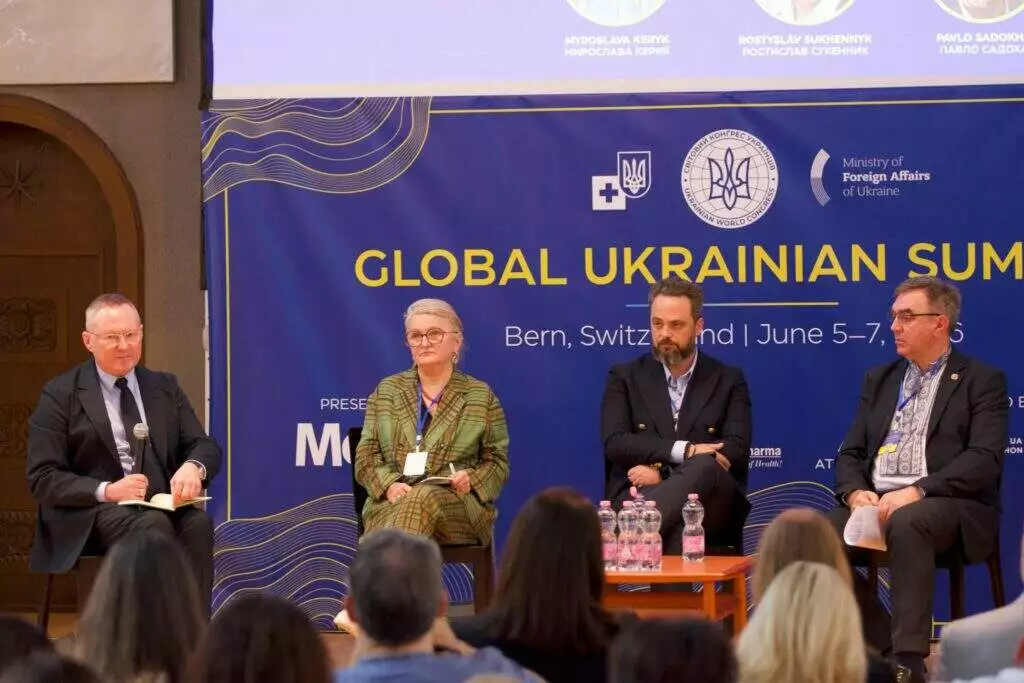
The samita also featured a discussion with Ukrainian military personnel and supporters. They discussed the situation on the front lines, the modern nature of warfare, the role of drones and technology, and the importance of quickly responding to soldiers’ needs.
source: Samit of World Ukraine / Halyna Khramova
Military representatives emphasized that financial support from the diaspora is not abstract assistance but translates into real life-saving equipment. They emphasized the need for systematic collections, cooperation with units, and ongoing contact with Ukraine’s defenders.
One of the recurring themes was that the war is changing every day, so Ukrainian communities around the world must act quickly, flexibly and professionally.
Fighting Russian disinformation
A separate section of the samit was devoted to Russian propaganda and information warfare. Participants emphasized that disinformation affects not only Ukraine’s image but also specific political decisions, the level of military support, and social attitudes in Western countries.
Russia’s war has long since spread beyond Ukraine’s borders. Ukrainian communities are being targeted by hybrid operations as the adversary attempts to undermine international support for Ukraine.
Yevhenii Semenov, Vice President of the World Congress of Ukrainians for the Middle East and Central Asia
Russian propaganda often relies on half-truths. Therefore, our task is not only to correct false information but also to build our own presence in the media space.
Natalia Popovych, director of the Ukrainian House in Denmark
France has created an entire system to counter Russian propaganda. Social resilience and media education are crucial today.
Lidia Taran, journalist and media education expert
In Poland, Moldova, and Romania, we see attempts to exploit stereotypes about refugees and migrants. Ukrainian organizations play a crucial role in countering such narratives.
Mirosława Keryk, president of the Ukrainian Home Foundation in Poland
We cannot limit ourselves to reacting to fake news. We need an active media presence and a consistent presentation of the Ukrainian perspective.
Valeria Chunikhin, United Help Ukraine
The need for Ukrainians to actively participate in the media, respond to false narratives, and work with local politicians, journalists, and the public was discussed. It was emphasized that simply correcting fake news is not enough. A long-term strategy is needed to build the Ukrainian narrative internationally.
It was also pointed out that Russian propaganda often uses half-truths, historical manipulations and stereotypes regarding refugees, migrants and Ukrainian identity.
Bern Declaration
The summit culminated in the adoption of the Bern Declaration. The document reaffirms the shared priorities of global Ukrainians and calls for joint action towards Ukraine’s victory, the reconstruction of the state, and the strengthening of Ukrainian identity.
The declaration emphasized that the most important goal remains Ukraine’s victory, achieving a just and lasting peace, restoring the territorial integrity of the state and holding Russia accountable for the crimes it has committed.
The participants of the samit called on Ukrainians around the world to support the defenders of Ukraine, conduct informational and political activities, participate in the reconstruction of the country, protect the language, culture and education, and counteract attempts to disintegrate the unity of the Ukrainian nation.
“Global Ukrainian unity is not a symbol. It is a strategic condition for the success of Ukraine and the Ukrainian nation,” the declaration states.
Unity as a tool of victory
The Bern Samit demonstrated that global Ukrainianness has become a key element of Ukraine’s resilience. The diaspora is no longer limited to cultural or symbolic activities. In times of war, it serves as a support network, an information resource, a community of experts, a channel of political influence, and a partner in rebuilding the state.
The message from Bern was clear: Ukraine is fighting not only on the frontlines. It is also fighting for the memory, narrative, subjectivity, future of its citizens, and place in the world.
And Ukrainian communities scattered around the world want to be part of this fight — not as observers, but as active participants in a common national cause.
Source: World Congress of Ukrainians / Nowiny Wschodnie
When using the material, please indicate the source: Nowiny Wschodnie and an active link to the publication.
Journalist and Editor-in-Chief of Nowiny Wschodnie, a news platform followed by more than 140,000 people on social media. A graduate in Journalism and Social Communication, he has been co-creating and developing Nowiny Wschodnie since 2017. He gained professional experience working with local and international media.
He specializes in fact-checking, countering disinformation and propaganda, and information security. His work focuses on Poland, Ukraine, Eastern Europe, and Polish-Ukrainian relations. He is also the founder of a non-profit organization working in the fields of integration and intercultural dialogue.



What do you think about this story?
Join the conversation. Please keep comments relevant to the article.
Write a comment