
Poles have always envied the Czechs for their industry. After World War II, Czechoslovakia became one of the most important arms producers and had one of the better-equipped armies in Europe. Polish generals could only dream of the weaponry possessed by Czech soldiers. Czech technical expertise allowed this country to get through communism in relatively good condition. They did not have the same economic troubles as Poland. They were reaping the benefits of the democracy and true free market they had built in the interwar period. They emerged from communism with an economy in quite decent condition for a state occupied by Russia.
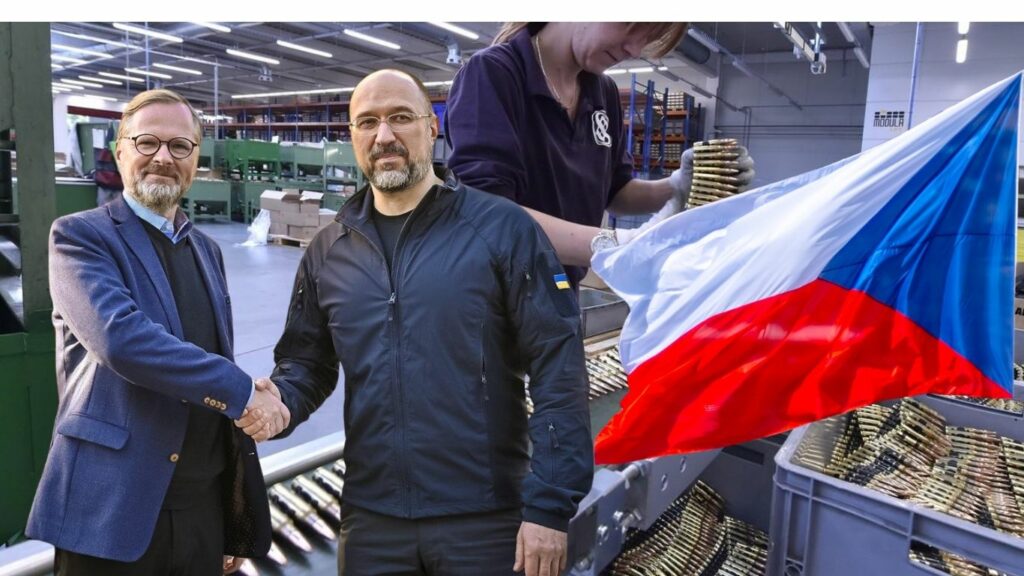


This Czech pragmatism makes one look with surprise at the constant meetings, conferences, talks and declarations about the reconstruction of Ukraine. Ukraine, however, does not need only reconstruction. It needs an economy to have money for the war. It needs cooperation with companies that, despite the war, will invest in Ukraine and increase both defense capabilities and civilian production. Now. Not in a year or two. What about Czech business? It does not wait to line up in the long queue of those unwilling to take risks and has entered the Ukrainian market forcefully. It is taking over key footholds not only in the arms and technology sectors, but also in renewable energy, ecology, and nuclear engineering. Part of this cooperation stems from pre-war plans, as in nuclear energy, and part from needs arising in a country fighting for its existence.
Behind this strong start is an exceptional young man: Tomáš Kopečný. At just 36 years old (born in 1990), he has already made his mark in the history of Czech economic diplomacy by building a new model of cooperation between the state and private capital.
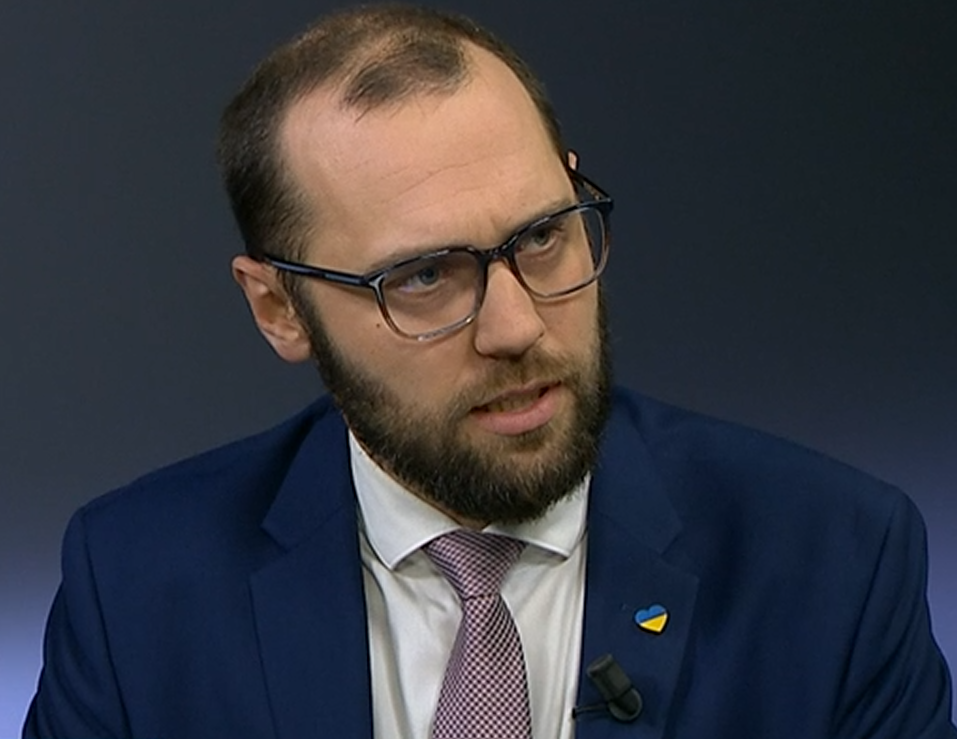
Tomáš Kopečný
Young age, socks with a burning Kremlin, and the “Tomáš” tank
Kopečný entered politics with a bang. He took the position of Deputy Minister of Defense for industrial cooperation in Petr Fiala’s government at just 30 years old. The day after the outbreak of the full-scale invasion in February 2022, he organized, together with the Ukrainian embassy in Prague, the world’s first public fundraiser to purchase weapons directly from Czech manufacturers — within a few weeks, Czechs contributed over a billion crowns.
He is also known for his unconventional style and dark humor. His trademark became socks featuring a burning Kremlin, which he wore to meetings with EU diplomats. Russian media and politicians went into a frenzy over this. Kopečný commented on wearing such socks as follows:
“It is a symbol of resilience and Ukrainian humor. It shows that we do not have to be afraid to think forward-looking and hide from absurd threats that we might upset someone.”
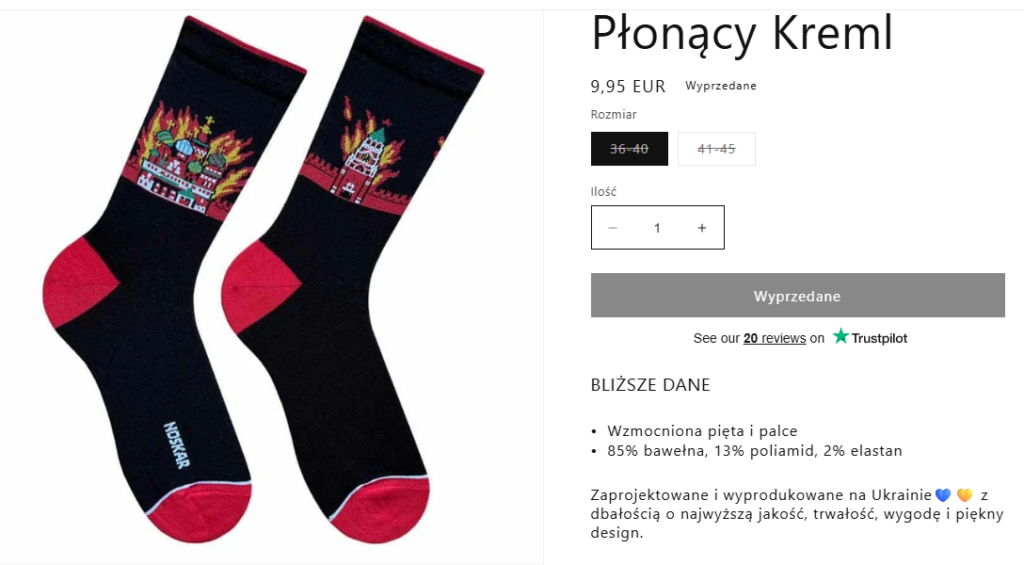
Socks with a burning Kremlin. Listing from one of the websites.
When Czech citizens raised millions in a fundraiser for a modernized T-72 tank for the Ukrainian army, the organizers named the vehicle “Tomáš” in tribute to the first president of Czechoslovakia. However, there are voices suggesting it is in honor of the Czech government official most involved in helping Ukraine.
A rapid impulse: Fiala’s visit to Kyiv and the appointment of a Plenipotentiary
In March 2022, Czech Prime Minister Petr Fiala traveled to besieged Kyiv in a train delegation together with Polish Prime Minister Mateusz Morawiecki, constituting the first international signal of unequivocal support for Ukraine. At that time, Kyiv’s residents felt a moment of relief. For the first time since February 24, they were not bombed for that one day. The Russians feared the possible consequences of attacking the prime ministers of NATO countries. It was precisely after this historic visit and direct talks with President Volodymyr Zelensky that Fiala drew the right conclusion: support cannot be limited to charitable aid, but must take the form of a hard, business partnership bringing direct, mutual benefits to both nations.
One of the most important conclusions Petr Fiala drew from his visit to Ukraine was the creation of a government position that would link the interests of Czech enterprises with the needs of the Ukrainian economy. The result was the formal appointment of Tomáš Kopečný to the position of Government Commissioner for the Reconstruction of Ukraine (effective January 1, 2023). Due to his commitment, as well as his strong knowledge of procedures and of the capabilities and needs of the Czech defense industry, he was an almost natural candidate. He proved himself almost immediately. It is thanks to him that the Czechs secured a contract for Ukraine to purchase the Czech competitor to Poland’s Grot rifle. To this day, the Polish industry has not managed to have anyone lobby in Ukraine at such a level as the Czech representative does.
Kopečný created an express “bridge” connecting ministries, Czech credit insurers, and private business. He replaced cautious exports of finished goods with direct localization of production, license transfers, and entering into joint-venture partnerships. The Czechs began supplying hard engineering. Ukraine receives modern technology, energy, and armaments under wartime conditions, and Czech business – a large number of orders as well as feedback from the battlefield on how their equipment performs in modern warfare conditions. This greatly helps in talks with potential foreign buyers. The equipment has proven itself and is praised by Ukrainian soldiers. It is estimated that thanks to this strategy, licensing markets, and post-war contracts, revenues of the involved Czech industrial and defense companies will increase by 30% up to as much as 50% in the coming years.
However, it is not only the defense industry that is seeking new opportunities in Ukraine. Other sectors are also interested in cooperation and are not waiting for a green light from Brussels, considering that by then it will already be too late. I have noted several enterprises successfully investing in Ukraine.
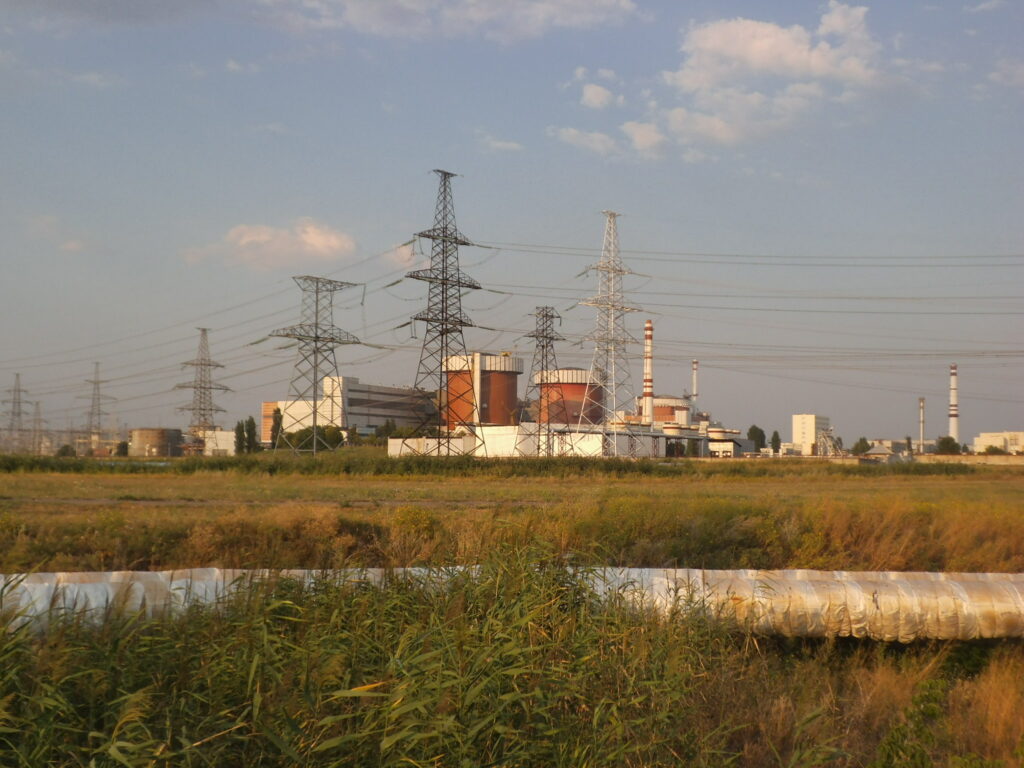
Nuclear power plant in Ukraine. Author: Kryzhanivskyi Volodymyr, source Wikimedia Commons
Several selected companies investing in Ukraine
1. MND Group (Moravské naftové doly)
- Profile and scope of activity: The energy and extraction giant belonging to the KKCG investment group specializes in the exploration and production of gas and oil, as well as the development of renewable energy sources.
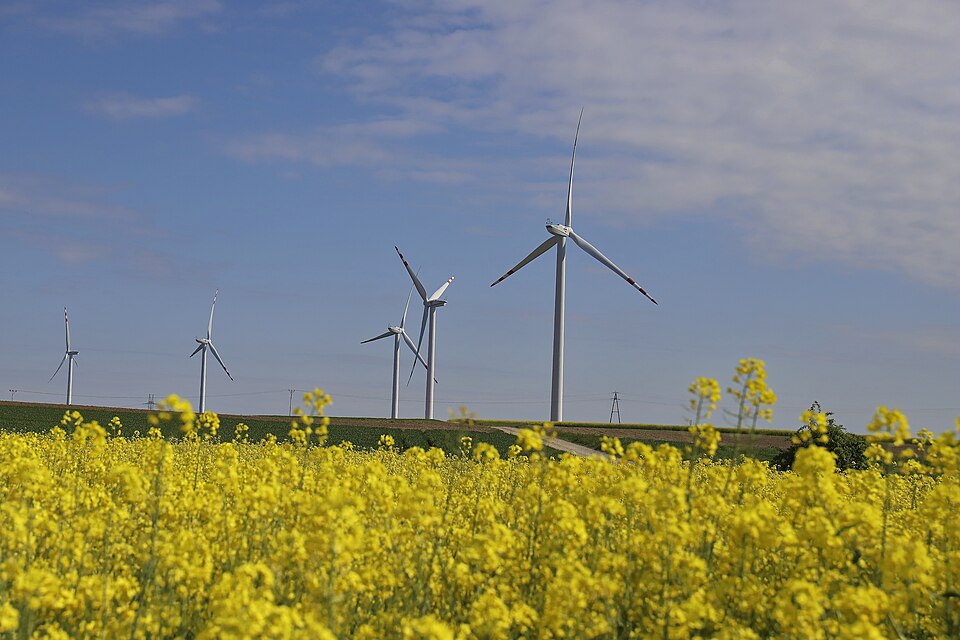
- Investment: The company undertook financial and logistical risk by building a wind farm in the Lviv region with a total value of EUR 75 million (with its own contribution exceeding EUR 37 million). Despite ongoing fighting and shelling, the Czech investor independently organized and secured the cross-border transport of over 100 oversized shipments with massive components for 10 Nordex turbines. Since 2024, the farm has been supplying 54.6 MW of green energy to the Ukrainian system (with plans to expand to 60 MW). Additionally, MND holds licenses and invests in the exploration and production of natural gas in western Ukraine, building the region’s energy independence.
2. Czechoslovak Group (CSG)
- Profile and scope of activity: One of the fastest-growing private defense conglomerates in Europe, controlled by Michal Strnad, producing ammunition, armored vehicles, and military technology. It is listed on the Amsterdam stock exchange, where it has raised the necessary funds for further investments.
- Investment: CSG has shifted from merely selling equipment to direct production in Ukraine. Under an agreement with partner Ukrainian Armor (Ukrainska Bronetechnika), the Czech group transferred full technical documentation, licenses, and production lines for manufacturing scarce 155 mm artillery ammunition directly in Ukrainian facilities. The plan assumes producing 100,000 shells in the first stage and increasing capacity to over 300,000 units annually. Additionally, through the company AviaNera Technologies, CSG is investing in local production of engines and propulsion systems for Ukrainian drones and missiles.
3. Colt CZ Group
- Profile and scope of activity: An international arms holding, owner of well-known small arms brands (Česká zbrojovka, Colt) and ammunition (Sellier & Bellot). A product of this company beat our Grot.
- Investment: The holding concluded a strategic licensing agreement with the state-owned concern Ukroboronprom for local assembly and ultimately full, closed-cycle production of modern automatic rifles CZ BREN 2 (manufactured in Ukrainian facilities under the local name “Sich”). Czech engineers set up assembly lines capable of assembling several hundred rifles per day and trained Ukrainian personnel. This investment constitutes the backbone of the systemic process of phasing out Kalashnikov-system weapons from the Ukrainian army in favor of NATO standards.
4. Škoda JS
- Profile and scope of activity: A leading European supplier of engineering equipment and service solutions for the nuclear energy sector.
- Investment: The company has for years been a key technological partner for the Ukrainian operator Energoatom. After 2022, Škoda JS significantly increased its on-site involvement, executing multi-million contracts for the production and delivery of modern drives for reactor control and safety systems (type PRO-M) and control cabinets, among others for the Rivne Nuclear Power Plant. The company’s investments and deliveries help maintain the technical stability of Ukrainian WWER-type nuclear units under conditions of continuous grid destabilization.
5. PBS Group (První brněnská strojírna)
- Profile and scope of activity: A globally recognized advanced engineering group from Brno, specializing in precision mechanics, turbines, and miniature jet engines for aviation.
- Investment: PBS has provided its know-how directly to the Ukrainian defense sector. The company established cooperation with the Ukrainian design bureau Ivchenko-Progress, creating a miniature jet engine AI-PBS-350. The engine features an exceptional thrust-to-weight ratio and was designed as propulsion for a new generation of Ukrainian heavy strike drones, cruise missiles, and interceptor systems.
6. GeoTest
- Profile and scope of activity: One of the largest Czech engineering-environmental companies, specializing in geology, hydrogeology, and remediation of contaminated sites.
- Investment: GeoTest deploys its own analytical equipment, mobile laboratories, and capital to address the effects of wartime environmental disasters in Ukraine. The company’s experts conduct mapping and cleanup of soils and groundwater contaminated with heavy metals and fuels at sites of bombed refineries, ammunition depots, and industrial plants (including in the Dnipropetrovsk Oblast). Additionally, GeoTest invests in the design and modernization of local wastewater treatment plants for destroyed cities.
7. Witkowitz
- Profile and scope of activity: A historic Czech industrial giant in the heavy industry, machinery, steel structures, and energy sectors.
- Investment: The holding company is carrying out a broad program of logistics and infrastructure investments in Ukraine. Witkowitz has declared, among other things, an investment project worth EUR 50 million aimed at cooperation and technological modernization of the Yuzhmash plants. In addition, the company designs, supplies, and installs large-scale pressure vessels for the rebuilding chemical industry, as well as steel structures necessary for the expansion of rail transshipment terminals on the Ukrainian-EU border.
Pure business and a pragmatic pact with Babiš
After the coalition of Prime Minister Petr Fiala lost the 2025 elections, the post-election government of Andrej Babiš abolished the position of plenipotentiary in the existing structure. Concerns about a slowdown in business relations appeared immediately. The reality turned out to be completely different.
An informal, pragmatic pact between Czech entrepreneurs and the new Babiš government was concluded. Czech industrial leaders convinced the new cabinet that investments in Ukraine are not charity, but pure, highly profitable business generating jobs and substantial tax revenues in the Czech Republic itself. Kopečný moved to the private sector as a Special Envoy at the Chamber of Commerce of the Czech Republic (Hospodářská komora ČR), retaining full support from the state administration, the state insurer EGAP, and the Ministry of Industry. Does this mean that Prime Minister Babiš is helping? Rather not. He simply does not interfere. Looking at the Polish political scene, that is already a lot.
Czech logistical independence
Moreover, the Czech expansion has a powerful advantage in the form of complete logistical independence from Poland. The Czech Republic does not directly border Ukraine, but it has created efficient, permanent transport and rail connections running through Slovakia. Key routes and freight corridors bypass Poland, using direct Slovak-Ukrainian road and rail border crossings.
Such a corridor alternative means that Czech business is completely immune to potential blockades, social protests, or political crises on the Polish-Ukrainian border. The Czechs are in no way dependent on Polish infrastructure – their supply chains and oversized transports (as in the case of MND turbines) go via the southern route. It is worth adding that Poland loses millions of zlotys annually because of this. Initially, due to the A4, transport from western Czechia went through Poland, but after the border blockade during farmers’ protests, this route was considered only auxiliary. Now the Slovaks are earning. Where is the Confederation’s slogan “Poles first”? Where is the slogan “I am Polish and I have Polish duties”? As we can see, these duties mean losses. It is also worth noting that Czech companies are strongly supported by President Petr Pavel, who has excellent relations with President Zelensky. It seems necessary to ask the question: what has President Nawrocki done for Polish companies in Ukraine?
Summary: Czech capital will overtake Polish
If the current pace of technology transfer, factory construction, and diplomatic support continues, the cumulative value of Czech investments in Ukraine will soon surpass Polish investments. And they do not share a border or have as many opportunities. We argue over who gave less, while the Czechs have started to profit. And so have the Slovaks.
The smaller, 10.5-million-strong Czech economy proves that the lack of a shared border is not an obstacle, but paradoxically an advantage that ensures political neutrality, logistical stability, and freedom from border tensions thanks to direct transit through Slovakia. Thanks to the foundations laid by Tomáš Kopečný, the pragmatism of the Babiš government, and pressure from private business, Prague is moving forward with increasing strength—building a dominant market position that will give Czech companies a unique springboard for economic expansion worldwide. It is worth asking a question. Is it easier to sell a Czech machine gun that has been battle-tested and praised, continuously modified in Ukraine, or the range-only Grot?
Source Materials
- https://mnd-report.mnd.cz/en/we-install-installed-wind-farm-oil-in-the-ukraine-is-in-service
- https://defence-industry.eu/csg-and-ukrainian-armor-signed-an-agreement-for-the-production-of-artillery-ammunition-in-ukraine/
- https://news.liga.net/ua/politics/news/do-300-000-na-rik-chekhiia-vyrobliatyme-v-ukraini-snariady-155-mm
- https://www.coltczgroup.com/en/media/press-releases/the-cz-bren-2-rifles-will-be-assembled-in-ukraine
- https://www.janes.com/defence-intelligence-insights/defence-news/industry/ukraine-begins-licensed-assembly-of-colt-cz-bren-2-assault-rifle
- https://euromaidanpress.com/2025/05/30/ukraine-plans-full-production-of-czech-bren-2-assault-rifles/
- https://www.info.cz/czech-news/skoda-js-signs-contract-for-supplies-to-nuke-plant-in-ukraine
- https://en.wikipedia.org/wiki/PBS_AI-PBS-350
- https://cleanair.org.ua/en/15106/chesko-ukrainskiy-proekt-hotspot/
- https://ukraineinvest.gov.ua/en/news/czech-concern-to-invest-eur-50-million-in-yuzhmash/
Featured image by Uoaei1, source Wikimedia Commons


_Farma_wiatrowa.jpg)
