
Iran often appears in Polish media, primarily in the context of politics and crises, while its daily life, culture, and history remain less well-known. An Iranian living in Poland discusses misunderstandings about Iran, the differences between Iran and Iraq, and the historical ties between Iran and Poland. Why is it worth considering this country beyond the prism of headlines?
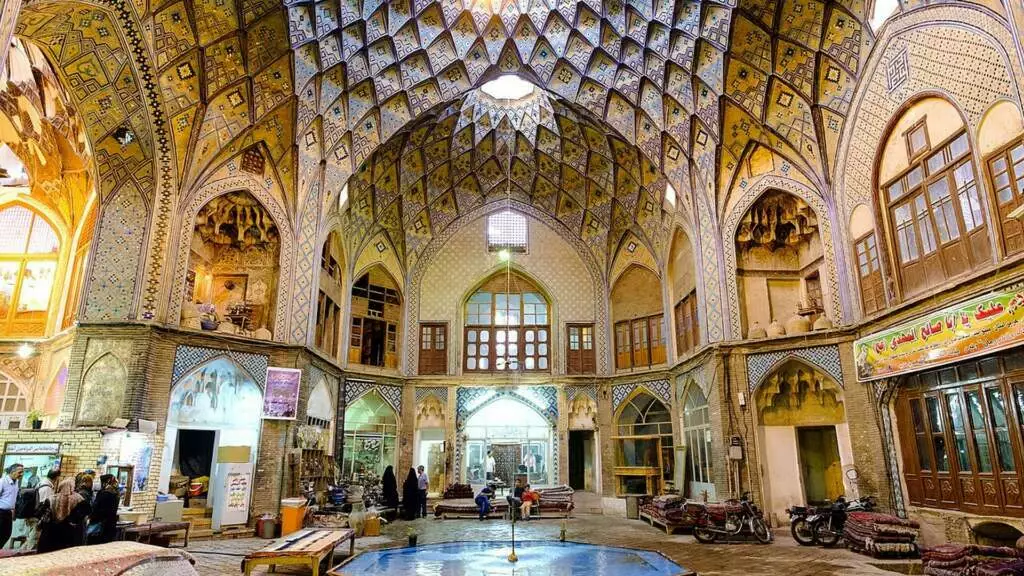


Source: Wikimedia Commons. Photo by: Jérémie B. License: CC BY-SA 4.0.
When I say in Poland that I’m from Iran, I sometimes hear, “Iran is very far away!” It also happens that someone talks about Polish companies carrying out large construction projects in the Middle East, and after a moment’s conversation, it turns out they’re referring to Iraq, not Iran. Such mistakes aren’t necessarily intentional. However, they demonstrate how easily distant countries can blend into one image, especially when our knowledge of them is limited mainly to news about conflicts and politics.
When I explain that I was referring to Iraq, not Iran, some people respond, “It’s almost the same thing!” However, the border between these countries not only separates two territories but also different languages, histories, and social experiences.
But does mere proximity really mean that two countries are the same? If we accepted this argument, we would have to say that there is no significant difference between Poland and Germany, since they also share only a single border. Of course, such an assumption would be incorrect.
The differences between Iran and Iraq are evident primarily in language, history, and culture. Iran is a Persian-speaking country, while Iraq’s official languages are Arabic and Kurdish. Understanding these differences helps avoid simplifications and better understand both societies.
One common misunderstanding is the conflation of Persian with Arabic. In Iran, Persian is the official language, although the languages of national and regional minorities are also spoken. Questions about polygamy also require further clarification: it’s important to distinguish legal provisions from actual social practices.
These questions aren’t necessarily born of malicious intent; they often stem from limited knowledge and the media’s portrayal of Iran. The country is often viewed through the prism of politics, international news, and crises, while the daily lives of its people, their culture, traditions, and personal experiences receive far less attention. Meanwhile, like any society, Iran is much more than the headlines that shape its image abroad.
In this article, I want to talk about Iran from an Iranian perspective: about the real differences between Iran and European countries, the similarities in people’s everyday lives, and the historical and cultural ties between Iran and Poland.
My goal is not to deny Iran’s problems or to ignore the differences between the two countries. Rather, I want to present a more comprehensive picture of a society whose identity and character should not be reduced to a few common assumptions.
Iran is not Iraq, and Persian is not Arabic
Source: Wikimedia Commons. Photo by: Evgeny Isaev (Flickr: somiz). License: CC BY-SA 2.0. Photo has been cropped.
Iran and Iraq are neighbors, but they have distinct histories, languages, and national identities. Iran’s official language is Persian, while Iraq’s official languages are Arabic and Kurdish. Both countries also have other languages spoken by ethnic and regional minorities. These differences illustrate why the two countries should not be equated.
From a linguistic perspective, Iran and Poland share a distant kinship. Persian and Polish belong to the Indo-European language family, although they represent different branches. Their distant common ancestor was Proto-Indo-European, whose origins are attributed by scholars to the period around 4000 BCE. Its features are reconstructed by comparing the vocabulary and grammatical structures of related languages. This distant kinship serves as a reminder that the histories of European and Asian languages are intertwined.. Source: Encyclopaedia Iranica – Iranian and Slavic-Iranian languages. Source: Anthony, David W. and Ringe, Donald (2015), “The Indo-European Homeland from Linguistic and Archaeological Perspectives”, Annual Review of Linguistics.
Some of the confusion between Iran and Iraq may stem from the history of Polish economic involvement in the Middle East. In the second half of the 20th century, Polish companies implemented large-scale construction and industrial projects in Iraq. One example was the involvement of the Dromex company in the construction of a section of Iraqi Highway No. 1 between Baghdad and Basra. According to the daily “Puls Biznesu,” this section was approximately 147 kilometers long and cost approximately $330 million to build. This is an example of Polish economic presence in Iraq, not Iran. In the second half of the 20th century, Polish companies implemented large-scale construction and industrial projects in Iraq. One of the most prominent examples was the involvement of the Polish company Dromex in the construction of a section of Iraqi Highway No. 1 between Baghdad and Basra. According to an interview published in the business daily “Puls Biznesu,” this section was approximately 147 kilometers long and cost nearly $330 million.
Sources:
Other Polish companies also operated in Iraq. Polimex-Cekop, for example, was involved in the assembly of industrial facilities and the delivery of complete industrial installations. This activity was therefore not limited to small, isolated projects but was part of Poland’s broader economic cooperation with Iraq.. Source: Puls Biznesu – “Iraq was a good market for us” Source: WP – “Polish companies are not eager to invest in Iraq”
This history also has a more complex dimension. The Dromex contract for the construction of part of the highway was signed in September 1980, around the time of the outbreak of the Iran-Iraq War. The war lasted until 1988. A technical study of Iraqi Highway 1 indicates that the road was used during the war, including for the movement of military convoys. The history of economic cooperation between Poland and Iraq developed during the war, which had enormous significance and far-reaching consequences for the Iranian nation.
Sources:
- NBI – the history of Polish road investments
- TRID – a study on the construction of Highway No. 1 and its use during the war
A shared history that has connected generations
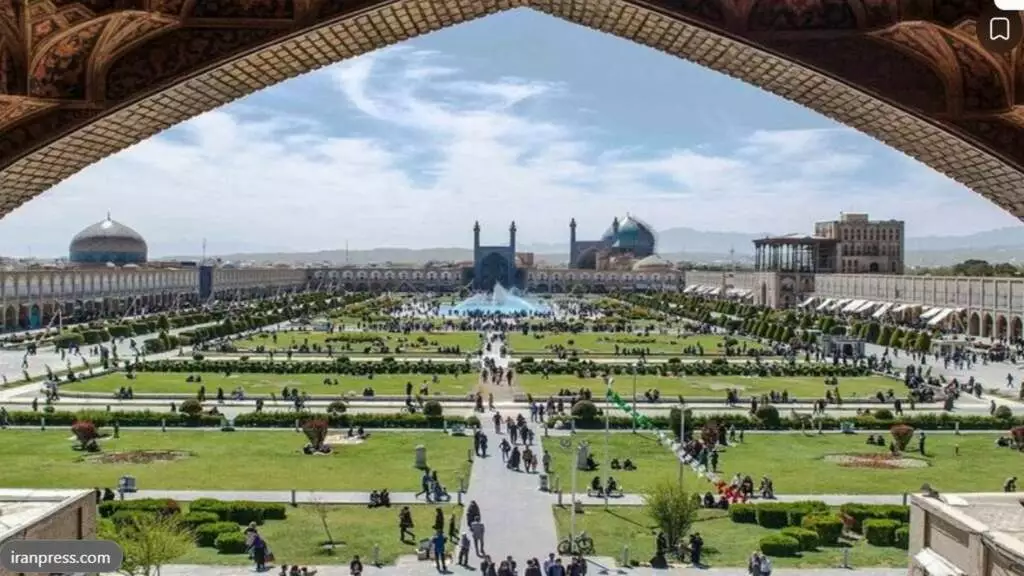
Source: Wikimedia Commons. Photo by: Faraz ahanin. License: CC0 1.0.
In 1942, tens of thousands of Polish refugees evacuated from the Soviet Union arrived in Iran. Among them were soldiers from General Władysław Anders’ army and civilians, including many women and children. Iran became a place of refuge and a starting point for them. Isfahan was a particularly important center for Polish children, where schools and childcare facilities were established. This is one of the most important chapters in the history of relations between Poland and Iran, a memory preserved in documents, books, and family memoirs.. Source: Ministry of Foreign Affairs of the Republic of Poland – evacuation of Poles to Iran in 1942 Source: United States Holocaust Memorial Museum – Polish refugees in Iran
An example of this heritage is the story of Helena Stelmach-Nikpour, a Polish woman who, after being deported to the Soviet Union, came to Iran with her mother in 1942. Her fate and experiences were described in the Persian-language book “Az Warszo ta Teheran” (“From Warsaw to Teheran”) by Mohammad Ali Nikpour, published in 2009. For Polish readers, learning about such stories allows them to look at Iran from a different perspective—through the prism of shared memories, human solidarity, and historical ties.. Source: digital version of the book Az Warszo ta Tehran
Source: Mohammad Ali Nikpour, Az Warszo ta Tehran (From Warsaw to Tehran), first edition, 2009, digital version of the book (PDF).
Additional sources:
- Ministry of Foreign Affairs of the Republic of Poland – Iran
- United States Holocaust Memorial Museum – Polish refugees in Iran during World War II
Polygamy in Iran – the difference between law and social reality
Source: Agence France-Presse (AFP) / Getty Images. Photo by Atta Kenare.
People sometimes ask me if Iranian men have multiple wives. Polygamy has a long history in the Middle East and existed in various societies even before the advent of Islam. In Islam, a man is allowed to have up to four wives, provided each is treated fairly. However, the mere fact that it is a religious and legal possibility does not mean that this type of marriage is universal.
In contemporary Iran, the law permits polygamy under certain conditions and also recognizes temporary marriages (sigheh). However, this does not mean that polygamy is a common practice. According to a 2020 Pew Research Center report, less than 1% of Muslim men in Iran, Afghanistan, Pakistan, Bangladesh, and Egypt lived in households with more than one wife. This data applies to the aforementioned countries combined, not Iran alone. Importantly, the study focuses on cohabitation, so it does not necessarily cover all marriages in which wives live separately. Therefore, the legal permissibility of polygamy should not be confused with its social universality. Source: Pew Research Center – “Polygamy is rare worldwide and occurs primarily in a few regions”.
Cinema: a bridge between two cultures
Cinema can help us understand a society that viewers may never have the opportunity to experience in person. Iranian filmmakers have participated in international film festivals, and some of their works have also attracted attention in Poland.
For example, the film Malaria directed by Parviz Shahbazi won the main prize in the international competition of the 32nd Warsaw Film Festival in 2016, known as the Warsaw Grand Prix. Source: winners of the 32nd Warsaw Film Festival
The cinematic connections between Iran and Poland extend beyond contemporary productions. The Lost Requiem directed by Khosrow Sinai, tells the story of Poles who came to Iran during World War II. The film recalls the shared history of both nations and the role of cinema in preserving historical memory. Source: President of the Republic of Poland – Khosrow Sinai and The Lost Requiem.
Culture can be a bridge between nations. Sometimes a film, a memoir, or a true story offers a more human perspective on a society that’s difficult to understand based solely on news reports.
Iran Through the Eyes of an Iranian – Getting to Know the Nation Beyond the Headlines
I don’t expect every Pole to know the history of Iran, just as not every Iranian knows the history of Poland. It’s natural to know less about distant countries, but the problem arises when limited knowledge turns into overconfidence.
Such misunderstandings can become opportunities for dialogue and mutual understanding. Sometimes a family memory, a film, or a simple conversation can say more than dozens of newspaper headlines. For me, living in Poland has become an opportunity to share my own perspective on Iran, while also learning more about Polish history and society.
I believe that true understanding between cultures begins with curiosity, listening to other people’s experiences, and moving beyond stereotypes to discover the stories of those who call a country home.
Of course, it’s worth emphasizing that the opinions presented here are based on my personal experiences living in Poland. However, they should not be taken as reflecting the experiences of all Iranians living in the country, as each may have their own, different observations and feelings.
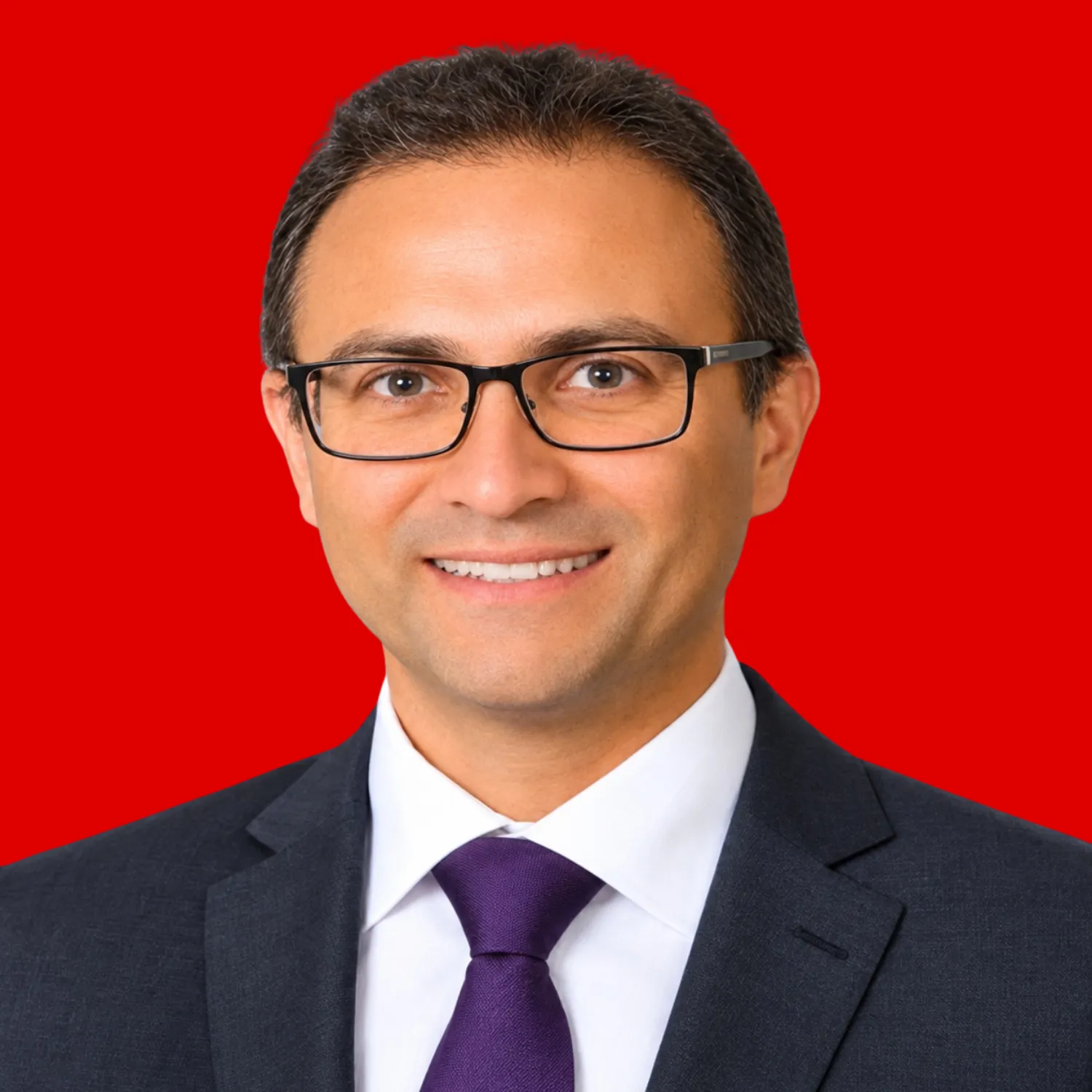
Iranian researcher and analyst specialising in Middle Eastern geopolitics, Iranian politics, and international security. He has published articles on Iran’s nuclear programme and Iranian-Russian cooperation, including on the BiznesAlert news portal.
He holds a Master of Business Administration (MBA) degree. He pursued doctoral studies in economics, finance, and management for five years at the Krakow University of Economics.
At Eastern News, he analyses international political and economic developments, armed conflicts, and great-power competition, with particular emphasis on their impact on the security of Poland, Ukraine, and Europe. In his publications, he combines his knowledge of Middle Eastern affairs with an economic and strategic perspective.
What do you think about this story?
Join the conversation. Please keep comments relevant to the article.
Write a comment