

Beyond the visible activities of uniformed services, there are also less visible mechanisms of supervision and control that may affect any foreigner staying in Poland. One of them is the system Eurodac, a database of fingerprints of asylum seekers and third-country nationals illegally crossing the EU borders or staying illegally in the EU.
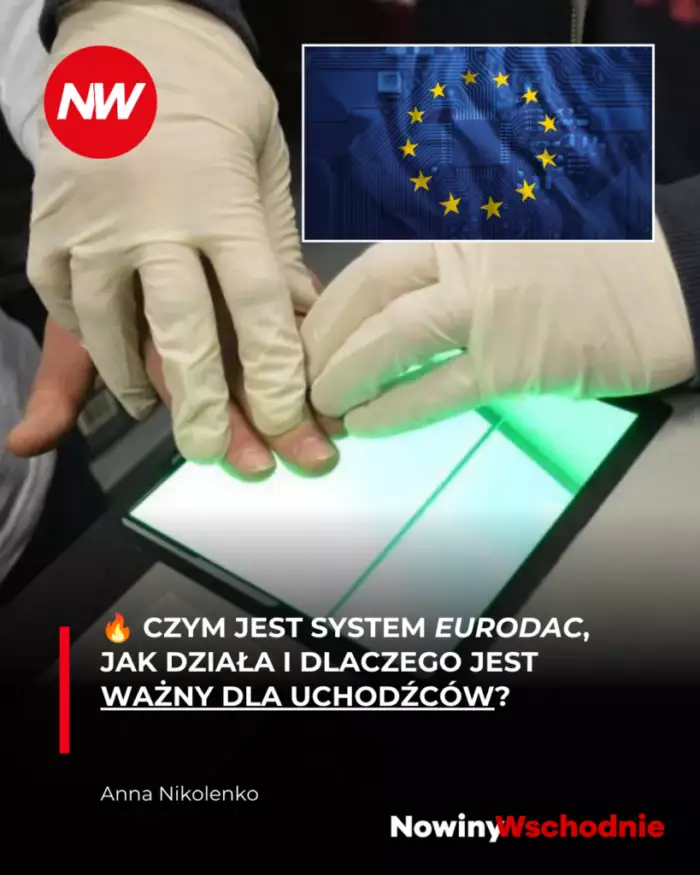


Eurodac is a pan-European information system designed to process and compare biometric data. Its primary purpose is to identify individuals seeking international protection or staying illegally in the European Union.
The legal basis for the functioning of the system is Regulation of the European Parliament and of the Council (EU) 2024/1358. Thanks to Eurodac, Member States – including Poland – can determine whether a person has already been registered in another EU country, for example in connection with submitting an application for international protection or illegally crossing a border.
Two basic types of data are used in the identification process:
- biometric data – fingerprints and facial image;
- personal and document data – name, surname, date of birth, citizenship, as well as information contained in identity or travel documents.
The combination of this information creates a complete identification profile, enabling the unambiguous identification of a given person.
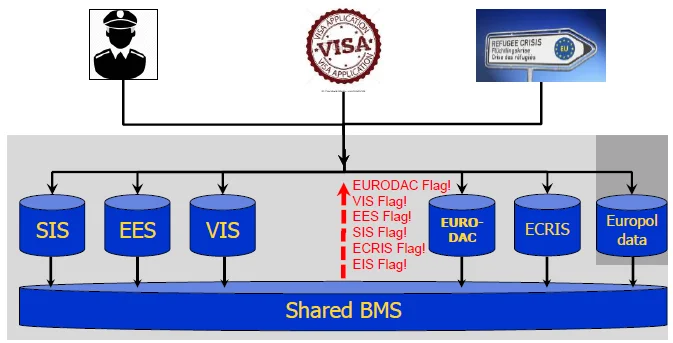
Eurodac does not function as a standalone system. It is an integral part EU management system migration and remains closely linked to the provisions of the so-called. Dublin system, which designates the Member State responsible for examining an application for international protection.
How does the Eurodac system work?
The principle of Eurodac is the same across all European Union countries. Biometric data collected by the relevant national authorities are transferred to a central database, where they are automatically compared with information already stored in the system.
The procedure is initiated by competent national authorities in certain situations, such as:
- submitting an application for international protection;
- detention of a person while illegally crossing the external border of the European Union;
- determination of illegal stay on the territory of a Member State;
- receipt of a reasoned request from the relevant law enforcement authorities.
We will return to the categories of individuals subject to registration in the system later in this article. At this stage, it’s worth emphasizing that upon receiving the data, the central Eurodac system automatically compares the fingerprints and facial images with the records in the database. The verification result is then forwarded to the requesting country.
It should be noted that the central Eurodac system does not make any administrative or legal decisions regarding a foreign national. Its role is limited solely to identifying and comparing biometric data. Decisions regarding responsibility for examining an application for international protection, the return procedure, or other proceedings are made solely by the competent national authorities based on information obtained from the system.
What is the procedure for collecting biometric data in Poland?
The procedure for operating the Eurodac system in Poland is regulated in detail by law. The main body responsible for collecting biometric data is Border Guard.
In certain cases, competences in this area also include:
- Police – towards persons detained for illegal stay in the territory of Poland;
- Head of the Office for Foreigners – in the framework of proceedings concerning the granting of international protection;
- Refugee Council – when considering selected categories of cases.
Procedure for transferring data to the Eurodac system
The collected fingerprints and other biometric data are immediately transmitted to the Eurodac national access point.
The regulations impose on the competent authorities the obligation to meet a strictly defined deadline – all data must be sent to the system no later than 48 hours from the moment they are downloaded.
This deadline is calculated from the moment the biometric data is actually obtained, not from the moment the foreigner is detained or submits an application for international protection. This means that the competent authority has exactly two days to process the information and transmit it to the central database.
Failure to meet this deadline may result in disciplinary liability for officers or officials, but does not invalidate the registration itself.
The person concerned by the procedure is obligated to allow biometric data collection. Refusal may result in administrative consequences, including the imposition of a fine. An exception is provided only for minors. If a foreigner refuses to voluntarily submit to the procedure, applicable regulations allow the use of direct coercive measures.
The procedure doesn’t end with entering data into the system. Competent authorities are also obligated to update it on an ongoing basis and immediately delete it in cases required by law.
Data is deleted from the system, among other things, when:
- the person obtains citizenship of one of the Member States of the European Union;
- the foreigner will be granted refugee status or another form of international protection;
- the statutory data retention period appropriate to the given entry category expires.
Once one of the above circumstances occurs, the continued storage of biometric data in the Eurodac system loses its legal basis and the competent authority is obliged to initiate the procedure for their deletion.
Who is subject to registration in the Eurodac system?
The group of individuals whose data is entered into the Eurodac system is precisely defined by law. Individual categories correspond to a specific migration status and the circumstances of a foreigner’s contact with authorities responsible for border protection and European Union migration policy.
Category 1. Persons seeking international protection
This group includes foreigners who have filed an application for refugee status or another form of international protection in a Member State. Registration in the Eurodac system occurs at the application stage.
Its primary purpose is to determine the country responsible for examining a case in accordance with the Dublin Regulation. Comparison of biometric data allows for verification of whether a given person has previously applied for international protection in another European Union country.
Category 2. Persons detained for illegally crossing the EU’s external border
This category includes persons apprehended by the competent authorities during or immediately after illegally crossing the external borders of the European Union.
Recording such cases makes it possible to monitor illegal migration routes and analyze the directions of migrant flows.
Data collected in this category are used both to prevent repeated attempts to illegally cross the border and to prepare statistical analyses of migratory pressure at the external borders of the European Union.
Category 3. Persons detained for illegal stay
This group includes foreigners who were not apprehended immediately after illegally crossing the border, but who are staying on the territory of a Member State in violation of the provisions of migration law, for example after the expiry of the period of legal stay.
The registration of this category of persons serves primarily to implement the EU return policy.
The inclusion of individuals staying illegally in the territory of Member States in the Eurodac system is one of the most significant expansions of the system’s functionality. Previously, the database primarily included individuals applying for international protection and foreigners apprehended after illegally crossing a border. Expanding the list of individuals subject to registration is intended to strengthen control over migration processes within the Schengen Area.
Data collected for all indicated categories includes:
- fingerprints of all ten fingers;
- facial image;
- name, date of birth and citizenship;
- in certain cases also digital copies of passports or other identity documents.
This wide range of information allows for the creation of a complete identification profile, which can serve as the basis for making further administrative and legal decisions.
As of June 12, 2026, with the entry into force of the modernized Eurodac system, the minimum age for mandatory collection of biometric data from children has been significantly lowered. Previously, this requirement applied to individuals over the age of 14. Currently, fingerprints and facial images are collected from children over the age of 6. At the same time, the regulations provide for specific safeguards to protect the rights of minors during this procedure.
Specific procedures: access by law enforcement authorities to the Eurodac system
In addition to supporting migration management, Eurodac also plays a vital role in ensuring public security. However, the use of biometric data by law enforcement agencies is strictly limited and subject to rigorous procedures.
The regulations provide for two additional categories of inquiries:
- Category 4 – covers requests submitted by authorized national law enforcement authorities, including the Police, for the purpose of preventing, detecting and investigating the most serious crimes.
- Category 5 – concerns inquiries sent by Europol as part of its tasks related to combating cross-border crime.
Law enforcement agencies do not have direct access to the Eurodac database. Each request must be previously verified by a so-called. verification body, which assesses whether the statutory conditions for access to data have been met.
If the application does not meet the requirements of necessity, proportionality or legality, it is rejected before it is submitted to the system.
Who has access to Eurodac data in Poland?
The scope of powers of individual institutions varies and results from legal provisions.
| Organ | Scope of authority | Purpose of access |
|---|---|---|
| Border Guard | data entry and access to information | collection of biometric data during border controls and migration proceedings |
| Police | access to data through the verification authority | preventing, detecting and prosecuting the most serious crimes |
| Head of the Office for Foreigners | data entry and access to information | conducting proceedings regarding the granting of international protection |
| Refugee Council | access to data | consideration of cases in appeal proceedings |
In emergency situations, where there is an immediate threat to life, health, or public safety, an urgent data comparison procedure may be used. Such requests are processed outside the usual order, but even in such cases, they are subject to mandatory subsequent review for compliance with applicable regulations.
The rights of persons whose data are processed in the Eurodac system
Biometric data are among the most sensitive categories of personal data. Therefore, individuals whose information is stored in the Eurodac system benefit from a wide range of rights and guarantees provided for by both European Union and national law.
In Poland, the legality of data processing in the system is supervised by President of the Personal Data Protection Office (PUODO).
Every person whose data has been registered in Eurodac has the right to:
- obtaining access to your data in the system;
- request the rectification of incorrect or incomplete data;
- request the deletion of data if there are grounds provided for by law;
- restrictions on data processing in situations where their accuracy is questioned.
Special protection for children
The regulations provide additional guarantees for minors.
From June 12, 2026, biometric data are also collected from children who have reached 6 years. In each such case, the child’s legal representative must be present during the performance of the activities.
The procedure itself should be carried out taking into account the age, developmental level and mental state of the minor in order to minimize stress and ensure respect for his or her rights.
How can you assert your rights?
To exercise the rights granted, a foreigner should contact the authority that collected his or her biometric data.
In most cases this will be Border Guard. If the data was collected when submitting an application for international protection, the competent authority remains Office for Foreigners.
Application (example) should be submitted in writing and include:
- indication of the right that the person intends to exercise (access to data, rectification, deletion or restriction of processing);
- justification for the request;
- contact details enabling us to respond.
The administrative body is obliged to consider the application within the deadline one month from the date of its receipt.
If the case is particularly complex or requires the analysis of a large number of documents, the deadline may be extended by a maximum of two additional months. The applicant must be informed of the extension and the reasons for it before the first month has elapsed.
If errors are found in the collected data, the competent authority shall verify them and, if necessary, contact the relevant institutions of other Member States to confirm or correct the information.
The most important changes in the Eurodac system from 2026
On 12 June 2026, Regulation (EU) 2024/1358 of the European Parliament and of the Council entered into force, which significantly expanded the functionality of the Eurodac system.
Until now, the system’s primary purpose was to determine the country responsible for examining an application for international protection in accordance with the Dublin rules. Following these changes, Eurodac has become a key tool supporting the implementation of the European Union’s migration and security policies.
The most important changes include:
- expanding the scope of biometric data – in addition to fingerprints, a facial image is also required to be recorded;
- lowering the age of compulsory registration of children from 14 to 6 years;
- the ability to mark people who may pose a threat to public safety;
- strengthening the role of the system in counteracting illegal migration and cross-border crime.
New regulations in Poland
In parallel with the reform at the European Union level, Poland adapted its national regulations to the new regulations.
The key legal act is Act of 15 May 2026 on the participation of the Republic of Poland in the Eurodac system, which organized and consolidated previously scattered regulations.
The Act introduced, among other things:
- precise division of competences between Border Guard, The police and Office for Foreigners;
- detailed rules for the transfer, updating and deletion of biometric data;
- strengthened mechanisms for monitoring compliance with personal data protection regulations;
- the obligation to conduct annual audits of the use of the Eurodac system by law enforcement authorities.
The launch of the modernized Eurodac is part of the implementation Pact on Migration and Asylum, adopted by the European Union. The reform is intended to improve the identification of people crossing EU borders and eliminate cases of multiple applications for international protection in different Member States.
In practice, this means that attempts to circumvent the Dublin rules are now detected much more quickly than before.
Summary
The Eurodac system is one of the most important tools supporting EU migration policy. It enables the identification of foreign nationals, improves cooperation between Member States, and helps determine which country is responsible for examining an application for international protection.
The reform implemented in 2026 significantly expanded the system’s capabilities. It expanded the catalog of collected biometric data, lowered the mandatory registration age for children to six, and tightened the rules regarding law enforcement access to collected information.
For foreigners registered in the Eurodac system, it is important not only to be familiar with the obligations arising from applicable regulations, but also to be aware of their rights. The right to access, rectify, erase, or restrict processing of one’s own data is a fundamental element of personal data protection guaranteed by both European Union law and Polish law.
sources: eu-LISA/ European Commission/Nowiny Wschodnie

What do you think about this story?
Join the conversation. Please keep comments relevant to the article.
Write a comment