

Polish memory and places of execution
There are many sad anniversaries in Poland. The memory of these days is commemorated by laying flowers on the graves of the victims or other memorial sites. These include plaques on buildings, monuments in the open fields, and empty, unmarked spaces. It was in these places that Poles were murdered for many years. This happened both during the Tsarist era, to mention only the Praga Massacre (1794) committed by the Russians – they murdered approximately 20,000 Poles in a single day – and during the Russian occupation – to mention only the Augustów Roundup or Katyn. And if we add the Polish victims of the Holodomor in Ukraine, who numbered at least 40,000, and the Polish Action of the NKVD with over 106,000 victims, it turns out that there must be many such plaques across Poland. And there are. The period of communism, the occupation of Poland by Russia from 1944-1989, added to these. And these latter years are of interest to us.
December – a month of blood and resistance


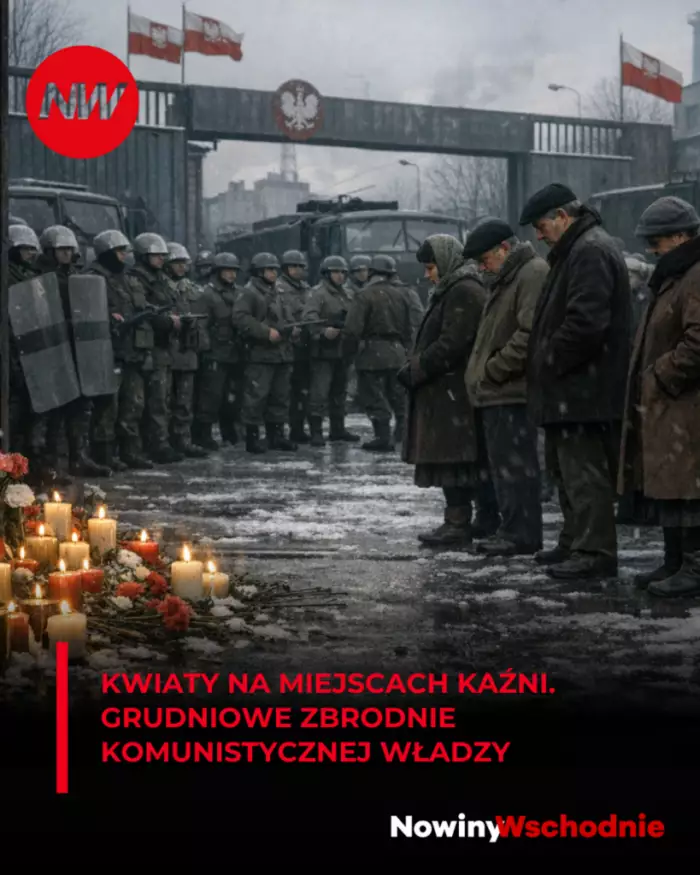
December is full of such sad anniversaries. All of them are associated with the fight against communism and the Russian occupation. Recently I wrote about December 13, 1981, about Martial LawNow I’ll write about two days simultaneously. December 16th and 17th. Eleven years separate them, yet they are almost identical. It’s clear that the Polish communist authorities’ methods of operation were no different when it came to maintaining their grip on power. They didn’t hesitate to murder; they considered it a mere cost, worth bearing, to maintain the Russian occupation of Poland.
December 17, 1970 – the genesis of the protests
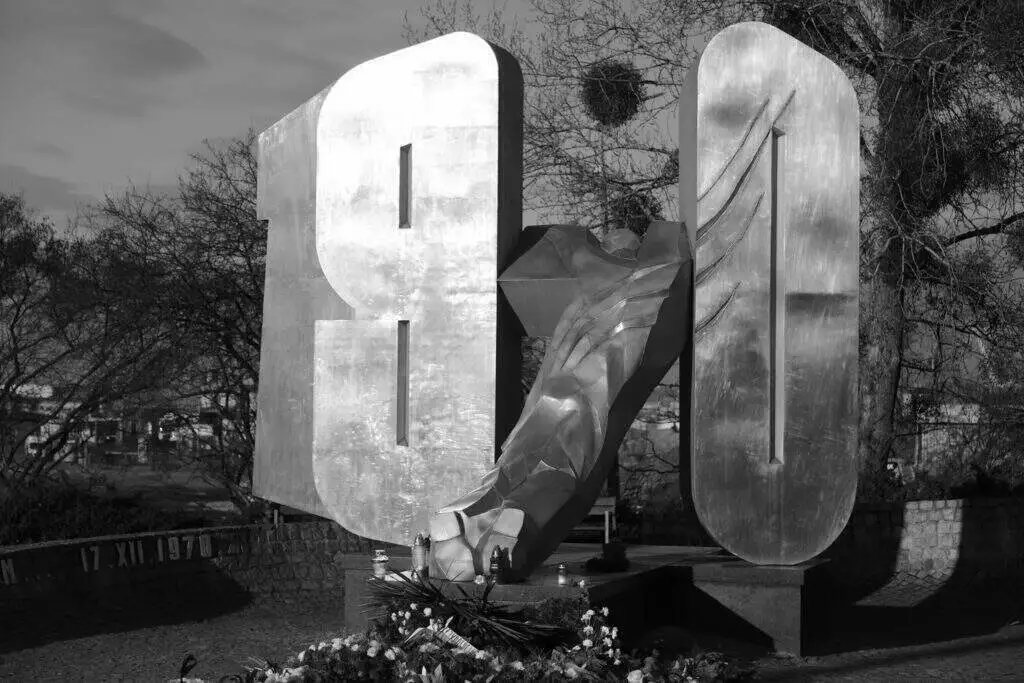
We’ll begin with December 17, 1970. This day is known as “Black Thursday.” A few days earlier, on December 12, the communist authorities announced price increases on food products. This was a huge blow, as the date was chosen in the worst possible way: just before Christmas, a time for Poles to gather around a table rich in food. It’s important to remember that Poland at the time was even poorer than the Soviet Union, due to the profound economic collapse, first by the Germans during World War II, and then by the Russians after their conquest in 1944/45. Then, the forcible introduction of communism caused a profound economic collapse. All of this combined to leave Poland in a perpetual crisis throughout the entire period of Russian occupation. That’s why this price increase was so painful. Poles lived in poverty all year round, only to be able to sit down to a relatively bountiful table twice during Christmas and Easter.
Strikes on the Coast and the First Victims
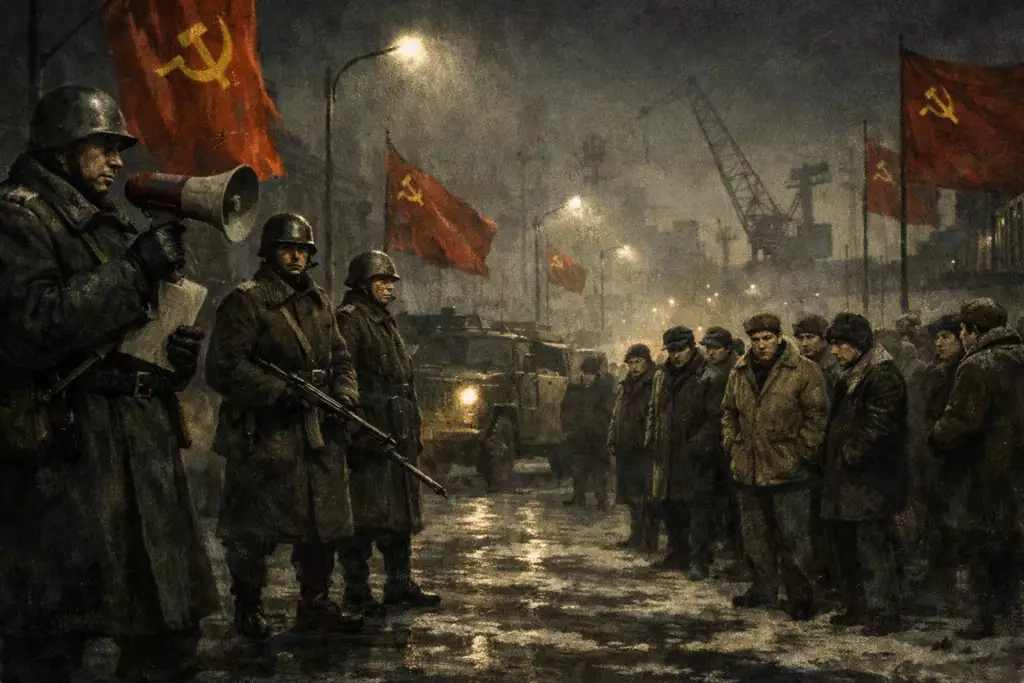
At that time, Saturdays were open. The only day off was Sunday. Price increases were announced on Saturday, December 12th. Protests didn’t begin until Monday, December 14th. Gdańsk, Gdynia, and Szczecin went on strike in cities in northern Poland. Marches and rallies began. On December 15th, communists murdered the first demonstrators. Tanks were brought to the striking cities. On December 16th, more victims fell in Gdańsk, including the famous Zbigniew Godlewski (dubbed “Janek Wiśniewski” in a famous song), whose colleagues carried him on doors during the demonstration. However, December 17th, known as “Black Thursday,” was a sea of bloodshed. Tanks fired machine guns at demonstrators. According to official figures, approximately 40 people were murdered in the striking cities. Over 1,500 were injured.
Hiding victims and falsifying history
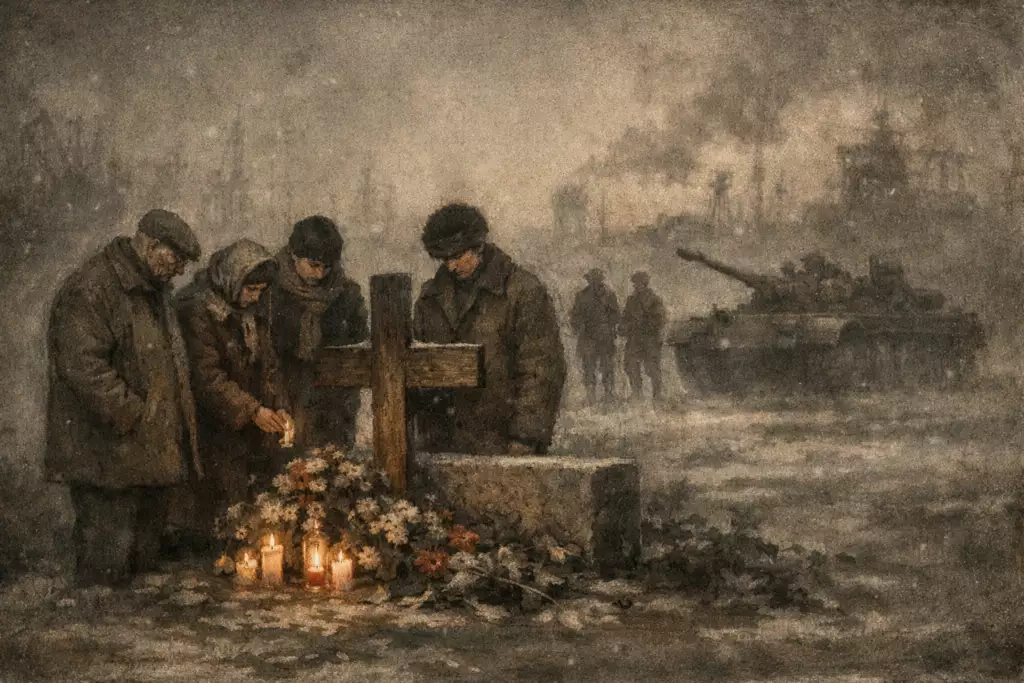
The death toll is unreliable, as such a large number of wounded and only 40 fatalities are statistically impossible. We also know that the funerals of many victims were held in secret. Often, only close family members were present at the graveside – mother, wife, children, sister. Others were not allowed to participate in the funeral ceremony. The communists limited the number of mourners to conceal the number of victims.
“Black Thursday” in culture and memory
These events are recounted in the excellent film “Black Thursday – Janek Wiśniewski Fell.” A promotional video recorded by the very famous Polish artist Kazik is circulating online. Here’s the link:
December 16, 1981 – Wujek Mine
Another sad anniversary commemorated in December is the massacre at the Wujek Mine, which occurred on December 16, 1981. I’ve already written about December 13. After martial law was imposed, factories began strikes demanding an end to it—an end to it. Striking factories were blocked by the army and militia, then the defenses were broken up and the strikers were led away. Some were arrested, and courts usually sentenced strikers to 5-6 years in prison. In Silesia, fighting broke out at the Wujek Mine. Miners defended themselves behind barricades, using metal rods and roller bearings as weapons. Failing to succeed, the militia resorted to machine guns, killing nine miners and wounding 23 others with bullets. They shot them in the back to kill them. Several hundred miners and militiamen were wounded in the fighting, even without the use of firearms. In view of so many casualties and news of further broken strikes, the strike authorities decided to end it.

Martial law – repression and poverty
Martial law in Poland resulted in a huge number of prisoners. Around 10,000 were interned, and hundreds more were sentenced to the aforementioned prison terms. Poland’s economic collapse deepened. The country became one of the poorest in Europe. Even before martial law, rationing of basic food items was introduced. Coupons were available for sugar, meat, cold cuts, coffee, tea, chocolate, candy, and several other items.
Lack of justice and the duty of memory
In none of these cases were the perpetrators of the massacres punished. Today, as Poles, we must remember these victims of the struggle. To know the price of freedom. Because our current freedom did not come free. It was won with the blood and sacrifice of many people. Polish anniversaries symbolizing the fight for freedom include the years 1956, 1968, 1970, 1976, 1980, 1981, and 1989. Forty-five years of Russian occupation, rule by communist collaborators, and society periodically demonstrating opposition to this regime. We cannot forget, and it is good for Ukrainians and Belarusians living with us to also know about these anniversaries.

What do you think about this story?
Join the conversation. Please keep comments relevant to the article.
Write a comment