
“Let’s not allow ourselves to be divided.” Poles, Ukrainians, and Belarusians united against hatred.
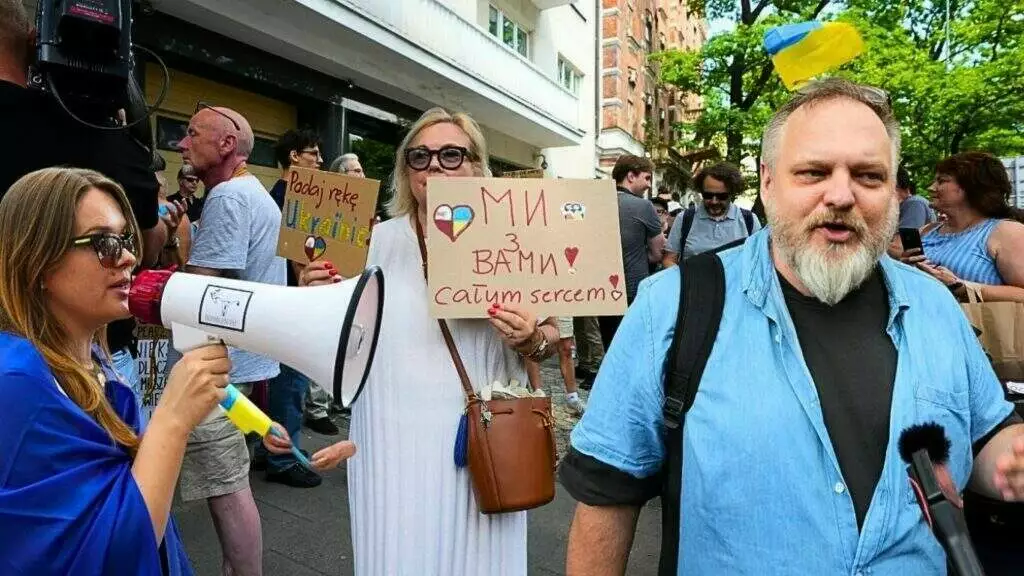
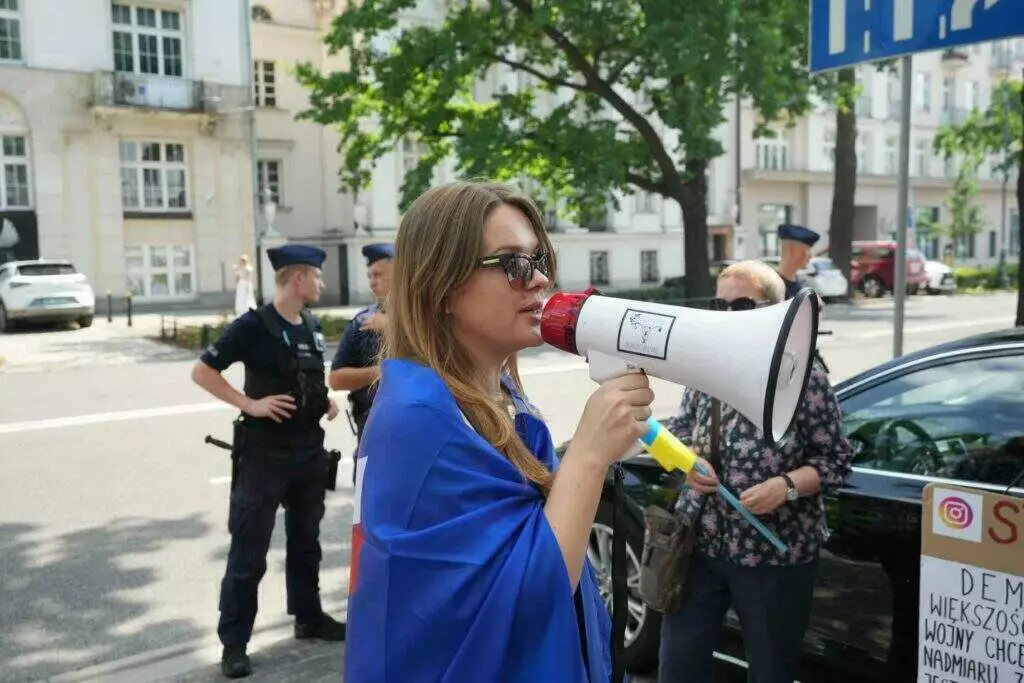
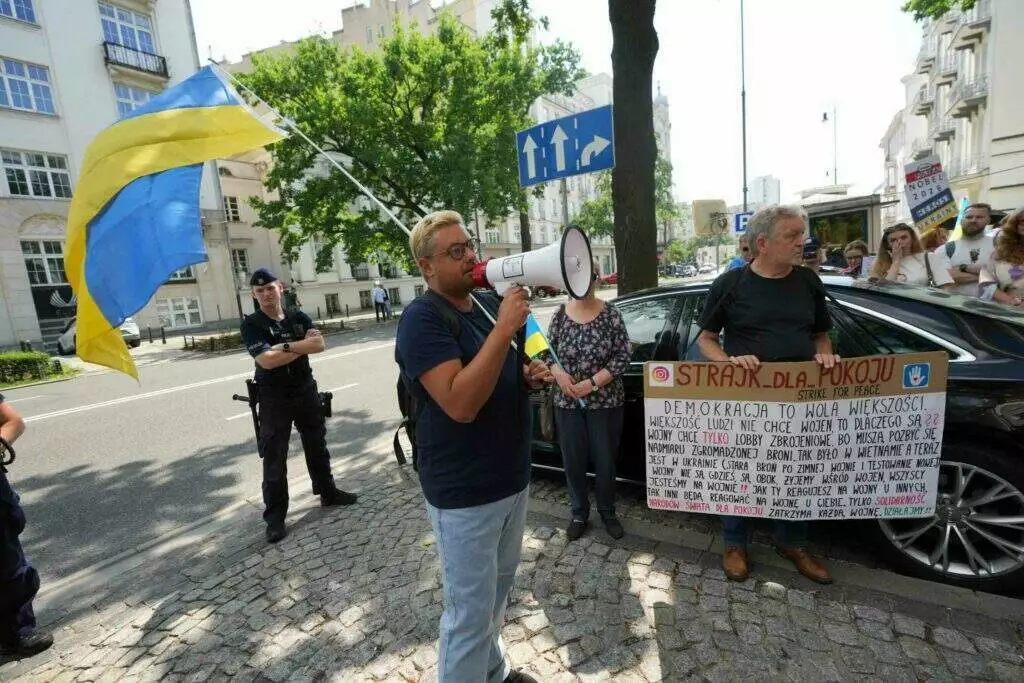
In front of the Ukrainian Embassy in Warsaw and in the Wrocław Market Square there were Good Neighbor Pickets. Their participants – Poles, Ukrainians and Belarusians – wanted to show that despite growing tensions and xenophobic incidents, they do not agree to building hostility between nations.


The following slogans could be read on the banners: “Let’s not be divided”, “Stop hatred”, “Let’s not be indifferent – react to evil” and “We are with you with all our hearts”. During the demonstrations it was repeatedly emphasized that the response to aggression should be solidarity and mutual respect.
Dymitr Hałko: “Fear is not a sign of democracy”
The originator of the event was Dymitr Halko – Belarusian journalist, former war correspondent in Ukraine, and disinformation analyst. He explained that the impetus for organizing the picket was a series of disturbing incidents targeting foreigners living in Poland.
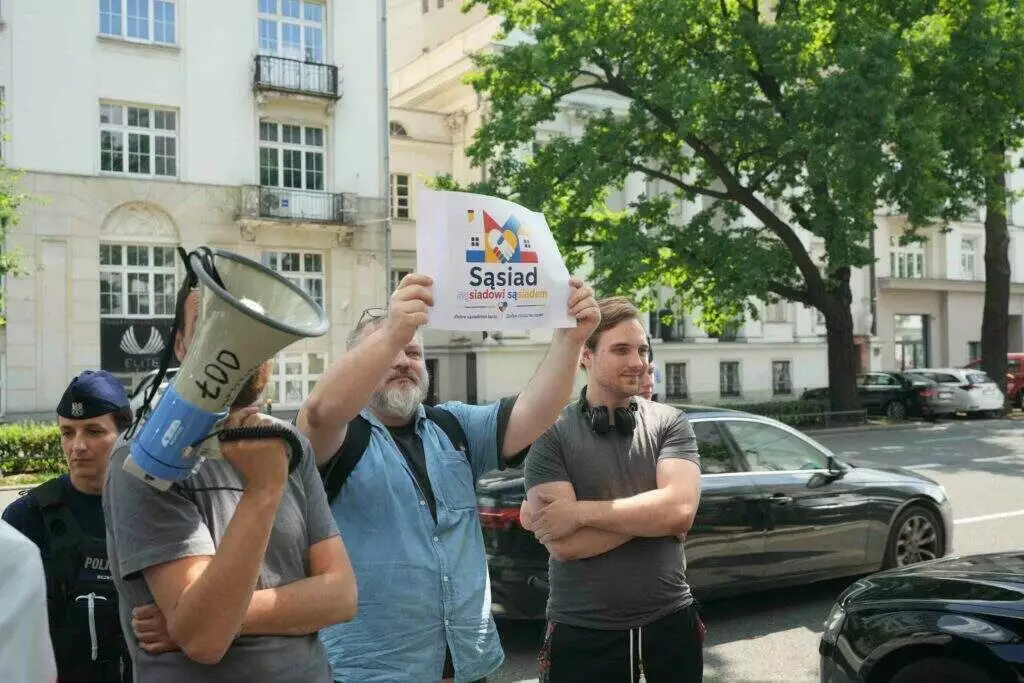
In his speech, he pointed out that more and more citizens of Ukraine and Belarus are beginning to fear speaking in public.
– Fear is a hallmark of authoritarian states. If minorities become afraid to speak out and prefer to remain invisible, democracy begins to fail. Silence means consent, and fear eventually poisons the entire society. That’s why we can’t stay home. – he said.
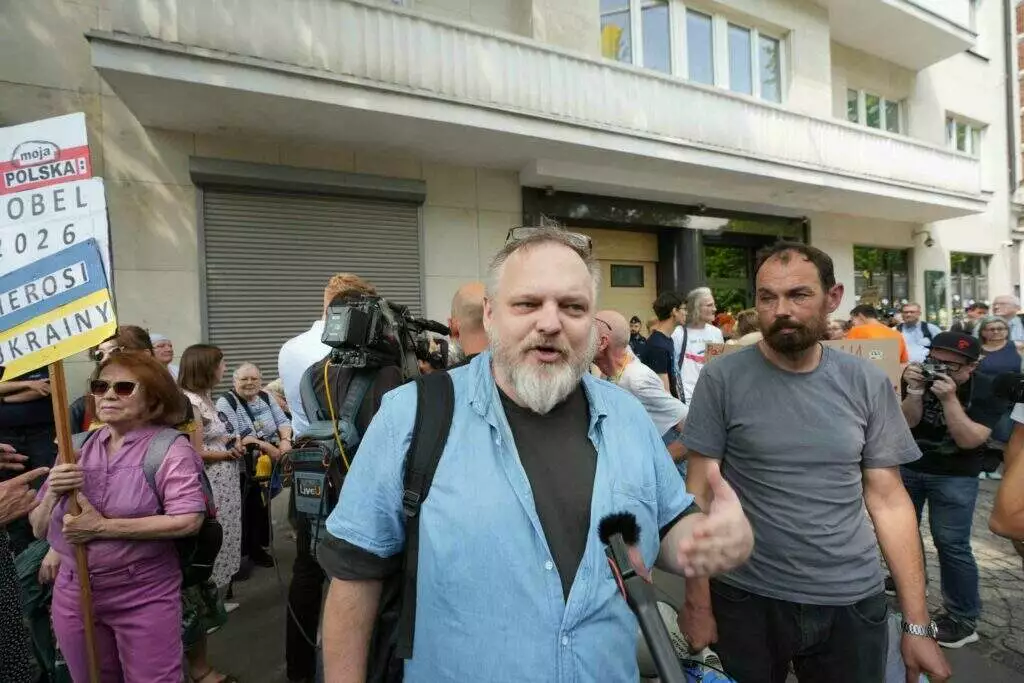
Hałko also emphasized that online hatred does not reflect the mood of society as a whole.
– Bots aren’t taking to the streets. People are. We wanted to show that there are more people who don’t agree with hate. – he said.
“Memory cannot be used to incite people”
One of the most important topics discussed during the speech was historical memory.
The organizer of the demonstration stressed that the tragedy of Volhynia should be remembered, but it cannot become a tool for justifying aggression against contemporary Ukrainians.
– The memory of Volhynia is meant to teach us what hatred can lead to. If it becomes a pretext for attacking people, it ceases to be a memory and begins to serve to divide. – he emphasized.
Jerzy Wójcik: “Someone had to say: enough”
He also addressed the participants of the demonstration Jerzy Wójcik, publisher of the Polish-Ukrainian portal Sestry.eu. He warned against the recently intensifying rhetoric, which – in his opinion – artificially deepens conflicts between Poles and Ukrainians.
– More and more often, messages based on mutual grievances and attempts to divide our nations are appearing online and in political debate. This is a very dangerous trend. – he said.
Wójcik also noted that he doesn’t observe a similar level of hostility toward Poles in the Ukrainian media. He added that there is criticism of some political decisions, but it’s not aimed at Polish society as a whole.
Referring to the turnout during the picket, he emphasized that the importance of the event does not depend on the number of participants.
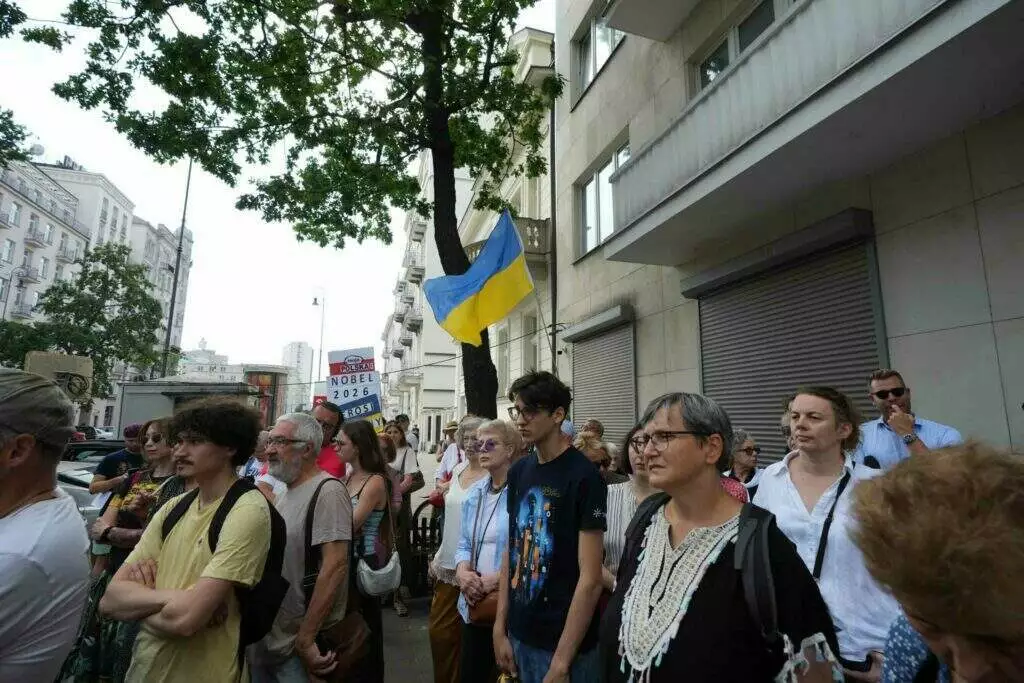
– Every great flame begins with a single spark. Today, a small group of people came, but someone had to take the first step and say, “Stop.” If we allow this spiral of hatred to continue, it could lead to the permanent destruction of relations between Poles and Ukrainians. We cannot allow this to happen. – he noted.
Joint appeal
Although the demonstration attracted several dozen people, its message was clear: opposition to hatred, disinformation, and attempts to divide societies. Organizers emphasized that good relations between Poles, Ukrainians, and Belarusians require dialogue, mutual respect, and the courage to respond when violence or hate speech occurs.
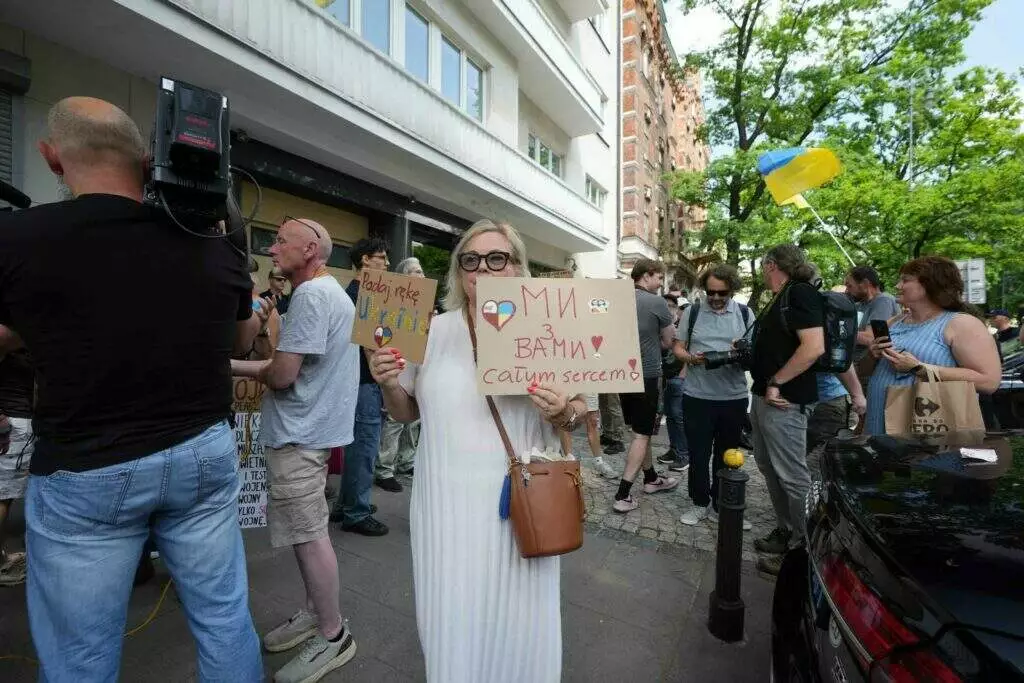
Source: PAP, speeches by Dymitr Hałka and Jerzy Wójcik during the Good Neighborhood Picket.
Journalist and Editor-in-Chief of Nowiny Wschodnie, a news platform followed by more than 140,000 people on social media. A graduate in Journalism and Social Communication, he has been co-creating and developing Nowiny Wschodnie since 2017. He gained professional experience working with local and international media.
He specializes in fact-checking, countering disinformation and propaganda, and information security. His work focuses on Poland, Ukraine, Eastern Europe, and Polish-Ukrainian relations. He is also the founder of a non-profit organization working in the fields of integration and intercultural dialogue.
What do you think about this story?
Join the conversation. Please keep comments relevant to the article.
Write a comment