

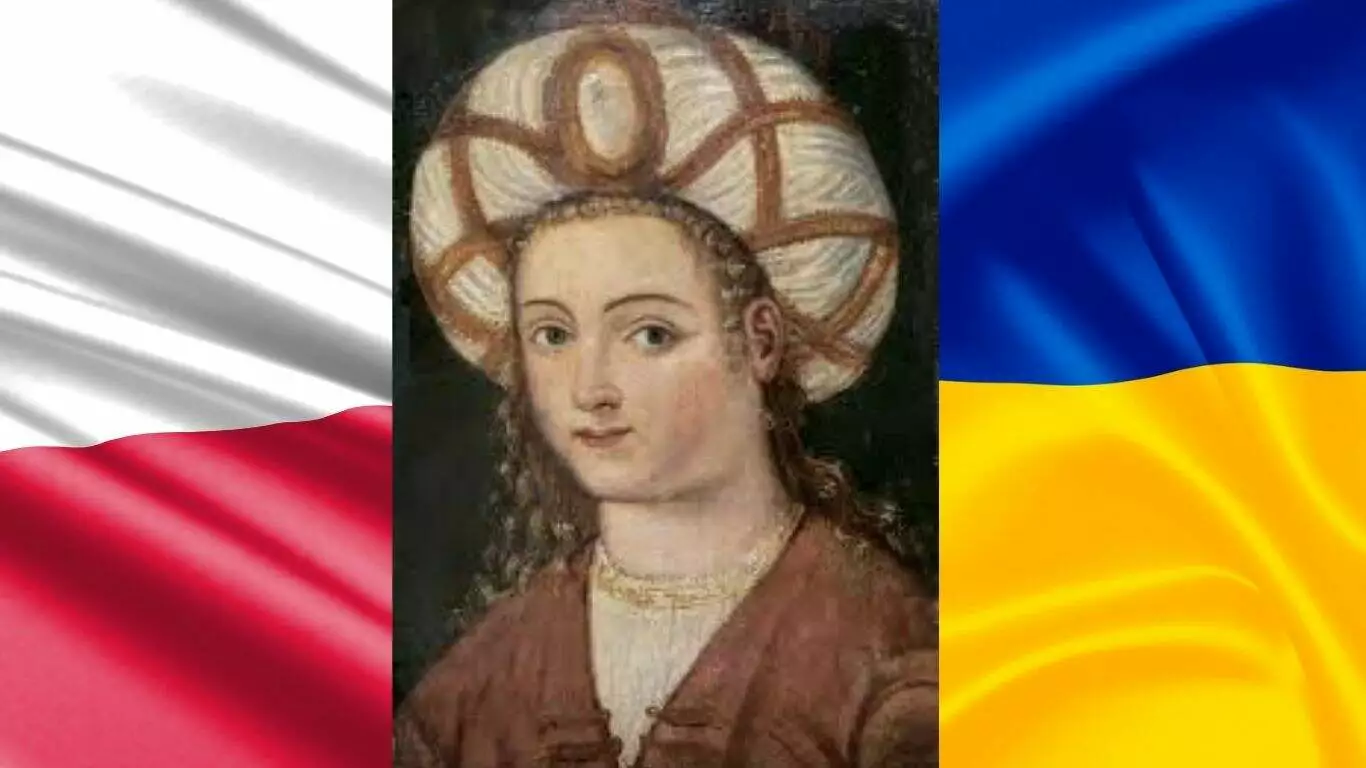
Two paintings from the collection of the Lviv Historical Museum, taken to Poland in the spring of 2022 for protection from warfare, have become the subject of a legal dispute between a Ukrainian state institution and the heirs of a Polish aristocratic family. Both sides have documented arguments, and until any Polish court issues a ruling on the merits of the case, there is simply no answer to the question of who these paintings belong to.


It’s about “Portrait of Roksolana” an unknown painter from the 16th century and “Portrait of a Young Man” Alojzy Reichan from 1850 – as established by “RepublicBoth works come from the collection of the Lviv Historical Museum and are currently on display at the Museum of Central Pomerania in Słupsk, as part of the exhibition “The Borderlands of Europe – from the treasury of the Lviv Historical Museum” (June 10 – October 18, 2026). Their total value is estimated by the newspaper at PLN 150,000.
As reported rp.plOn July 20, 2026, attorney Maciej Obrębski, representing one of the heirs (referred to as BK in documents) of Prince Andrzej Lubomirski, filed a motion with the District Court in Słupsk for an injunction – that is, a prohibition on the museum transferring the paintings to anyone, including their return to Ukraine, until the merits of the case are resolved. The court set the museum a fourteen-day deadline to respond. attorney Obrębski, this constitutes a procedural violation, as, pursuant to Article 737 of the Code of Civil Procedure, applications for security should be considered within no more than seven days. In an interview with the newspaper, the lawyer also emphasizes the purpose of the security institution itself: “The court’s granting of security is intended to surprise the opponent and prevent them from defeating the plaintiff’s claim.” In his opinion, the extended deadline undermines this purpose, as he claims the 2024 precedent described below demonstrates.
The heirs claim that both paintings once belonged personally to Andrzej Lubomirski and were part of the Princes Lubomirski Museum in Lviv. According to their position, these works should remain in Poland – preferably in the currently established Princes Lubomirski Museum at the Ossolineum in Wrocław. According to attorney Obrębski, circle of heirs currently numbers about fifty people, scattered around the world, but cooperating in their efforts to recover their family heritage. The Lviv Historical Museum, which learned about the lawsuit on July 20 and made its position public on July 22, maintains – as reported Ukrainian portals – that both works are part of the state part of the Museum Fund of Ukraine, the museum is their state depository, and they came to Poland only temporarily, for protection against warfare, without the intention of transferring ownership rights.
To understand the source of this dispute, we need to go back two centuries. As historical studies show, Museum of the Lubomirski Princes, this facility was established in Lviv in 1823 under an agreement between Józef Maksymilian Ossoliński and Prince Henryk Lubomirski, who combined his collection with that of the Ossolineum and financed part of the building. After the Soviet authorities took over Lviv, in 1939–1940 The Ossolineum was taken over by the new authorities and reorganized in accordance with Soviet law at the time. The Lubomirski Museum was liquidated as a separate institution: the graphics and drawings were retained at the Ossolineum, and the remaining exhibits were distributed among various museums of the Ukrainian SSR. As a result of this division, part of the former Lubomirski collection was transferred to the Lviv Historical Museum, where it remained until March 2022, when it was evacuated along with other collection items following the start of the full-scale invasion.
Who is the rightful owner: the state or the heirs?
This isn’t the first lawsuit of its kind. In 2024 a similar situation has already taken place around the exhibition “The Genius of Lviv. Lviv as an Art Center and Its Art Collections” at the Royal Castle in Warsaw, where twelve paintings from Lviv worth approximately 1.2 million zlotys were exhibited. The heirs then filed a similar motion for security. According to attorney Obrębski, On February 20, 2024, the museum learned about the request via email from a court employee, the exhibition was closed on February 21, and the paintings were transported to Lviv on February 22.. When the hearing took place on February 27, the court refused to grant security because the subject of the dispute was no longer located in Poland, and the case was never resolved as to ownership.
It is significant that neither of the organizers of either exhibition – neither the Royal Castle in 2024 nor the Museum of Central Pomerania currently – utilized the mechanism that could have prevented similar disputes during the exhibition preparation stage. National Institute of Museums (NIMOZ) on its website, Polish law recognizes the so-called museum immunity – a procedure introduced by the Act of August 5, 2015, and incorporated into Chapter 4a of the 1996 Act on Museums. It protects movable cultural property loaned from abroad for a temporary exhibition in Poland from third-party claims for the duration of the exhibition. To obtain such protection, an institution must submit an application at least six months before the exhibits are imported, attaching a loan agreement, an export permit from the country of origin, and a declaration from the owner that there are no legal encumbrances. Using this procedure could reduce the risk of similar legal disputes during the exhibition.
The case did not arise in a vacuum – it is part of a long-standing, unresolved dispute over the status of the Lviv cultural heritage. As early as 1996, Poland officially raised the issue of the Ossolineum and Lubomirski Museum collections, arguing that they were donated to the “Polish nation,” not to a specific city. At that time, according to the newspaper, approximately 70 percent of the Ossolineum’s pre-war collections and 90 percent of the Lubomirski Museum’s collection remained in Lviv. The parties failed to reach an agreement on the proposed exchange, and the issue formally remained open, although no active negotiations for the return of the collections were underway. Since 2004, both countries have focused on practical cooperation: Poland has invested approximately 8 million złoty in the digitization and preservation of Polish heritage in Lviv, including the renovation of churches and cemeteries.
Are there any precedents in which a Polish court ordered the return of a work of art to private heirs despite the position of a state institution? No direct judgment of this type could be found: in a 2024 case, the court discontinued the proceedings for procedural reasons, without resolving the ownership issue on the merits. As follows from a separate case material devoted to disputes between heirs and the state, there are, however, examples in which the parties reached an agreement without court seizure of works: in 2016, the State Treasury purchased part of the Czartoryski collection, and the heirs received real estate in return as a gift; in 2022, the National Library acquired the Zamoyski collection from the heirs – a transaction that de facto confirmed their right of ownership to the movable property. In Poland, therefore, there are cases where the property rights of heirs have been recognized, but so far, these have taken the form of negotiations and purchase, not a court ruling ordering the release of an exhibit from an active museum exhibition to a private individual.
The further course of the case has two likely scenarios. First, the court in Słupsk, like its predecessor in 2024, will consider the application after the museum has returned the paintings to Lviv, and the case will lose its substance without a resolution of the ownership issue. Second, the court will impose a temporary ban on the paintings’ transfer and proceed to a hearing on the merits – a process that, due to the complexity of the Soviet nationalization legislation from 1939–1946 and the lack of direct precedents, could take years. independent expert from restitution only notes that the final fate of the paintings “remains open and will be decided by the court.”
Currently, both paintings remain on display in Słupsk, and the parties maintain their positions: the museum emphasizes state ownership and the temporary nature of the transfer, while the heirs emphasize the private origins of the collection. The question of who owns “Portrait of Roxelana” and “Portrait of a Young Man” therefore remains open—until the court’s first ruling on the merits of the case, if it ever comes.
Source: Nowiny Wschodnie / RP.PL / nim.gov.pl / hmarochos.kiev.ua

Historian, ethnographer, and social media specialist. She has many years of experience developing YouTube channels, helping experts and businesses build their online presence. She has conducted academic research in ethnopsychology and ethnopedagogy in Galicia and the Northern Black Sea region. Her interests include the history of Ukraine and Europe, Polish-Ukrainian relations, and ethno-national and intercultural issues.
What do you think about this story?
Join the conversation. Please keep comments relevant to the article.
Write a comment