

The spectacular US action, when all commentators were already predicting the country’s downfall and the end of its dominance, proved that all speculation on this subject was premature. The US demonstrated that Russia can interfere in many ways, but when the US wants to, has the tools, the capabilities, and most importantly—the will—it can act. Trump, viewed by Putin as a weakling, sent a very specific warning to Russia. It read: “We have the power, we have the capabilities, and if we have the will, we will use them.” Don’t underestimate the US, because that’s a road to nowhere.
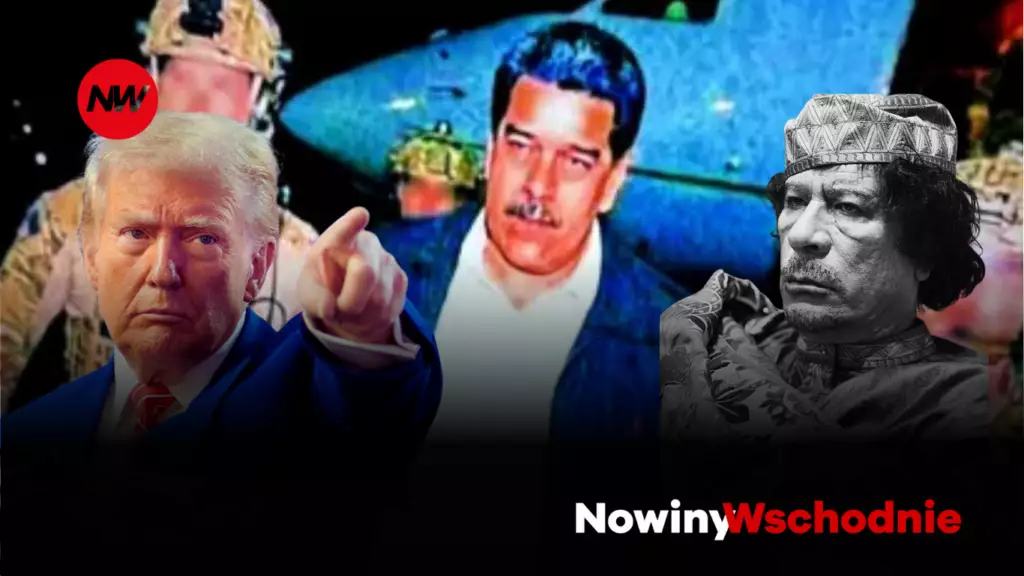


Since the end of the Cold War, the United States has been less active in macroeconomic policy. Due to the strictures imposed by liberal journalists and the academic trend of leaving smaller countries alone, the United States’ involvement as a global policeman has diminished significantly. However, when necessary, it has been able to strike. Suffice it to recall Iraq twice, Afghanistan, and Serbia. When the United States was attacked or expected to be attacked in the future, the bear awoke.
The Cold War period saw significant US activity on the international stage. It was militarily and intelligence-wise involved in many countries. Just think of the famous wars in Korea and Vietnam. Overthrowing dictators or creating conditions for their overthrow was a fairly common occurrence in the CIA’s work. I quickly recalled a few from history. In chronological order:
Guatemala – Jacobo Árbenz (1954)
- Dictator: Jacobo Árbenz
- StatusElected president in free and independent elections, he secured 60% of the vote. He employed authoritarian practices and was impressed by socialist ideals. Attempts at reform were met with resistance, particularly the agrarian reform that led to his downfall. Arbenez sought to rebuild the country without relying on foreign companies, which were perceived as exploiting the people.
- A form of US interference:
- CIA Operation “PBSUCCESS”: The US orchestrated a coup by supporting the rebels, organizing a military operation and a disinformation campaign.
- Reason: Guatemala’s land reform that threatened the interests of an American company United Fruit Company and fears of the spread of communism in the region.
Dominican Republic – Rafael Trujillo (1961)
- Dictator: Rafael Trujillo
- StatusAn authoritarian, brutal dictator, he ruled the Dominican Republic from 1930 until his death in 1961. He resorted to utter ridicule, calling himself “the genius of peace,” “the benefactor and father of our country,” and numerous other titles. He was known for receiving more votes than there were voters in the “elections” he organized. He interfered in the affairs of his neighbors, and in 1960, he carried out a failed assassination attempt on the president of Venezuela. He was killed in an assassination attempt ordered by the American consulate.
- A form of US interference:
- The indirect role of the USA: The U.S. withdrew support for Trujillo and tolerated the plot to overthrow him. While it was not direct interference, conspirators were indirectly supported by the American consulate.
- Reason: Tensions are rising with Trujillo following his actions, such as the assassination of the Venezuelan president and other destabilizing actions in the region.
Bolivia – René Barrientos / Juan José Torres (1960s–1970s)
- Dictators: René Barrientos (1964–1969), Juan José Torres (1970–1971)
- Status: Military leaders who ruled in an atmosphere of instability and authoritarianism. They introduced leftist reforms and established diplomatic relations with the Soviet Union. They succeeded in crushing the communist guerrillas led by Che Guevara. On their orders, Che was killed.
- A form of US interference:
- US support for military coups: The USA had an influence on training of Bolivian troops and supported coups aimed at overthrowing leftist regimes. Killing Che didn’t help. Agrarian reform was in defiance of American companies, and they demanded the overthrow of such rulers.
Reason: Fear of the spread of communism in Latin America.
Chile – Salvador Allende (1973)
- Dictator: Augusto Pinochet (dictator after the coup)
- StatusAllende was a democratically elected president, and Pinochet took power after a coup. Unfortunately, when implementing reforms, he didn’t consider the consequences, such as an economic collapse. This collapse made Pinochet’s task easier.
- A form of US interference:
- Support for the coup (CIA): The US supported coup d’état in 1973, which overthrew the left-wing president Salvador Allende. Although Allende was not a dictator, his overthrow led to the rule of Pinochet, who established a brutal dictatorship.
Reason: Fears of the spread of communism in Latin America and US economic and political interests in Chile.
Granada – Maurice Bishop (1983)
- Dictator: Maurice Bishop
- Status: A Marxist leader who came to power after a coup. He established close ties with Cuba, which sent many of its engineers and scientists to Grenada. This was bound to provoke a reaction from the United States, particularly President Ronald Reagan.
- A form of US interference:
- US Military Invasion (Operation Urgent Fury): In 1983, the US invaded in response to coup d’état in Grenada, which overthrew Bishop, and fears of the expanding influence of the USSR in the region.
- Reason: A military coup, threatening the stability of the region and fears of growing communist influence.
Panama – Manuel Noriega (1989)
- Dictator: Manuel Noriega
- StatusA totally corrupt and cruel dictator, initially an ally of the United States, receiving compensation from the CIA for his cooperation, later an adversary. He pursued policies hostile to the United States through his cooperation with Cuba. He also sold intelligence on the United States to Warsaw Pact countries.
- A form of US interference:
- US Military Invasion (Operation Just Cause): In 1989, the US launched a military invasion to overthrow Noriega, who was accused of drug trafficking, corruption and human rights abuses.
Reason: Increased instability in the region, suspicions of corruption and criminal activity by Noriega, and the desire to restore political stability in Panama.
Libya – Muammar Gaddafi (2011)
- Dictator: Muammar Gaddafi
- Status: A dictator who ruled Libya since 1969, following a military coup. He supported terrorism, which led to increasingly deteriorating relations with the United States and European countries.
- A form of US interference:
- International military intervention (NATO): In 2011, the US participated in a military intervention supporting rebels fighting against Gaddafi after the regime brutally suppressed protests.
Reason: The brutality of the Gaddafi regime against civilians, as well as concerns about regional destabilization and US geopolitical interests.
Iraq – Saddam Hussein (2003)
- Dictator: Saddam Hussein
- StatusIraqi dictator, he ruled from 1979 until his overthrow in 2003. Initially supported by the US as a counterweight to Iran, his cooperation with the US ended when Iraq invaded Kuwait. Murders committed by Saddam Hussein were revealed. Kuwait was recaptured in a multi-nation operation. From then on, Iraq and Hussein were enemies of the West.
- A form of US interference:
- US military invasion: In 2003, the US invaded Iraq, overthrowing the government of Saddam Hussein, who was suspected of possessing weapons of mass destruction and supporting terrorism.
Reason: Concerns about weapons of mass destruction and destabilization of the region, desire to overthrow the authoritarian regime.
Syria – Bashar al-Assad
- Dictator: Bashar al-Assad
- Status: A dictator who ruled Syria since 2000 and was overthrown in a civil war. He was supported for a long time by Russia. Bashar al-Assad owed his long-term hold on power solely to their forces. After the invasion of Ukraine, Russia lost the ability to maintain a strong military contingent capable of enforcing the regime’s continued existence.
- A form of US interference:
- Support for the opposition: The US supported the Syrian opposition by providing weapons and logistical support, and also conducted air operations against ISIS.
- Reason: Brutal suppression of protests, suspicions of the use of chemical weapons, role in the region’s geopolitics. Russian bases in the country.
The latest dictator to be overthrown by the US was Venezuelan President Nicolas Maduro. The 2024 elections were rigged, and according to the opposition, he lost to candidate Nicolas Gonzalez Urrutia. Gonzalez reportedly received around 70% of the vote. Maduro was supported by Russia, which had a significant impact on Trump’s decision. Ending a dictator who still challenges the US was perhaps predictable. Trump is slowly driving Russia out of its traditionally established positions, seeking to capitalize on the bloody war in Ukraine. Syria recently liberated itself from both Assad and the Russian protectorate.
This hasn’t escaped the notice of every dictator. Each of them is now asking themselves “what’s next?” The US has demonstrated its strength. Not a single American soldier was killed during the operation against Maduro, demonstrating the technological and training superiority of the US military over armies supplied and trained by Russia. This isn’t the first such case; there are more. Currently, on the battlefield in Ukraine, American and European weaponry can be pitted against Russian technology and military. Western countries have a huge technological advantage, which is why Ukraine has been able to resist for so long.
Putin and Lukashenko can’t help but think about all this. Both fear any American intervention, which is why they’re furious right now, and Lukashenko, as the smaller and weaker partner, is even more terrified. He, too, could be thrown out of bed at night and driven out of the country, as was done to Maduro. The consequence will likely be even greater military and security spending, and in both cases, this will inevitably end in economic disaster. Neither Russia nor Belarus has the potential to win a new Cold War against the West.
What do you think about this story?
Join the conversation. Please keep comments relevant to the article.
Write a comment