
Since 2014, and in full force since February 24, 2022, Russia’s war against Ukraine has been uninterrupted. Poles born as Ukrainian citizens have also stood up to defend Ukraine’s sovereignty. It’s difficult to assess, but considering the national proportions, it can be assumed that at least several thousand of our compatriots are fighting or have fought in this war. A significant number of them hold the Polish Card, signifying extremely close ties to Poland. Many of them died fighting on the front. Local communities, parishes, and Polish diaspora organizations in Ukraine are committed to preserving their memory. I managed to learn about approximately 50 Polish citizens of Ukraine who have died defending Europe from Russia since 2014. I will add a few biographical notes at the end. Poles are also suffering under Russian captivity. Those who have returned speak of Russian cruelty.


The notes were compiled thanks to the work of Dmytro Antoniuk, who devotedly searched for information about fallen Ukrainian citizens of Polish descent. As he himself said, it wasn’t easy. He had to overcome distrust and the often fresh pain of families. Mothers, wives, children… Poles, who daily encounter Russian information warfare, should understand this distrust well. Just look at the rash of pro-Russian bots surrounding the posts of Braun and Mentzen’s Confederation. “Searched” is probably the wrong word. He’s still searching.
Poles in Ukraine
Historically, Poles in Ukraine have formed strong communities, particularly in the western and central regions of the country—from Galicia to Zhytomyr—often cultivating their language, traditions, and cultural identity while participating in Ukrainian social, economic, and military life. During the war, their presence in the Ukrainian Armed Forces reflects this dual identity: citizens of Ukraine and carriers of Polish cultural memory.
World War II brought not only genocide at the hands of the Germans and Russians, but also significant border changes that resulted in population relocations. Within the newly established borders, the expulsion of Ukrainians from Poland to the Soviet Union began as early as 1944. From 1945, Poles began to be expelled from the territory of the Ukrainian Soviet Republic to the territory of the newly established Poland. This also affected mixed marriages, where determining nationality was impossible – for example, a Polish mother, a Ukrainian father, or vice versa. At that time, mixed marriages were the norm, nothing out of the ordinary. The population exchange was largely completed by 1947, after which there were isolated departures in both directions.
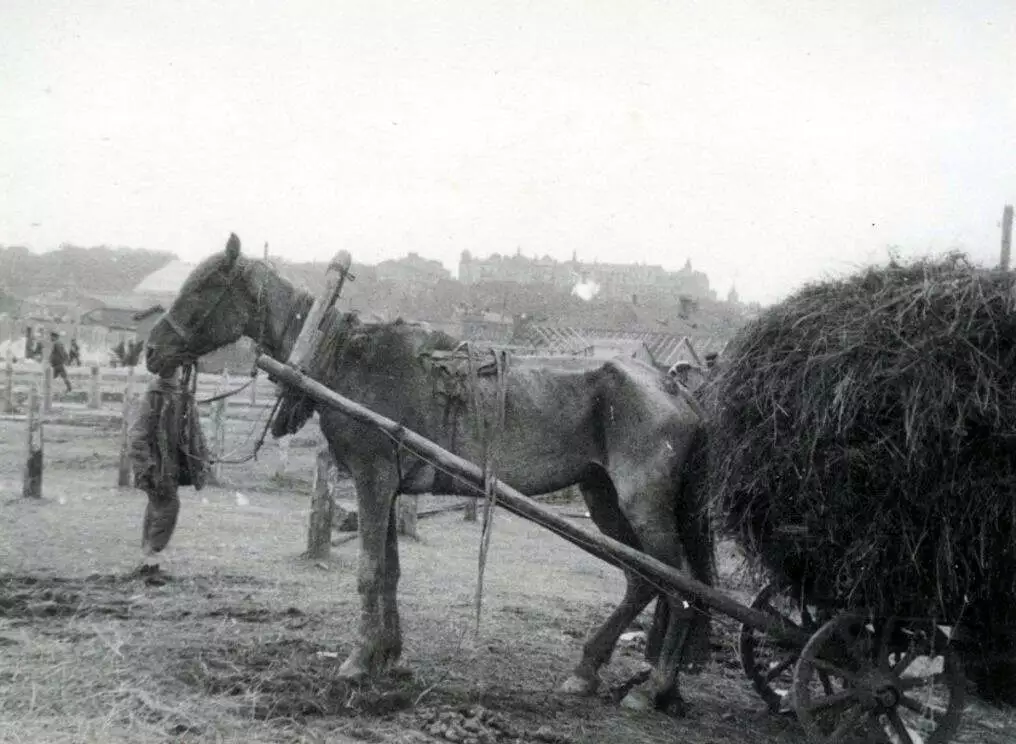
Photo of a horse from the period of the Great Famine in Ukraine. Source: Wikimedia Commons
However, not all Poles left Ukraine. According to estimates, at least 350,000 of our compatriots remained there, either voluntarily or through forced labor. Probably fewer than 100,000 former citizens of the Second Polish Republic, with the remainder living in areas settled in the 16th century by newly arrived Poles. Approximately 170,000 lived in the Zhytomyr and Khmelnytskyi regions, with the rest in other regions of Ukraine. Their numbers would have been much higher if the Russians had not murdered Poles in the 1930s, just before World War II. The Great Famine also affected Polish villages, and the Polish Action of the NKVD found its victims primarily in the Zhytomyr and Khmelnytskyi regions. In these two genocides alone, at least 200,000 of our compatriots in Ukraine were murdered by Russia.
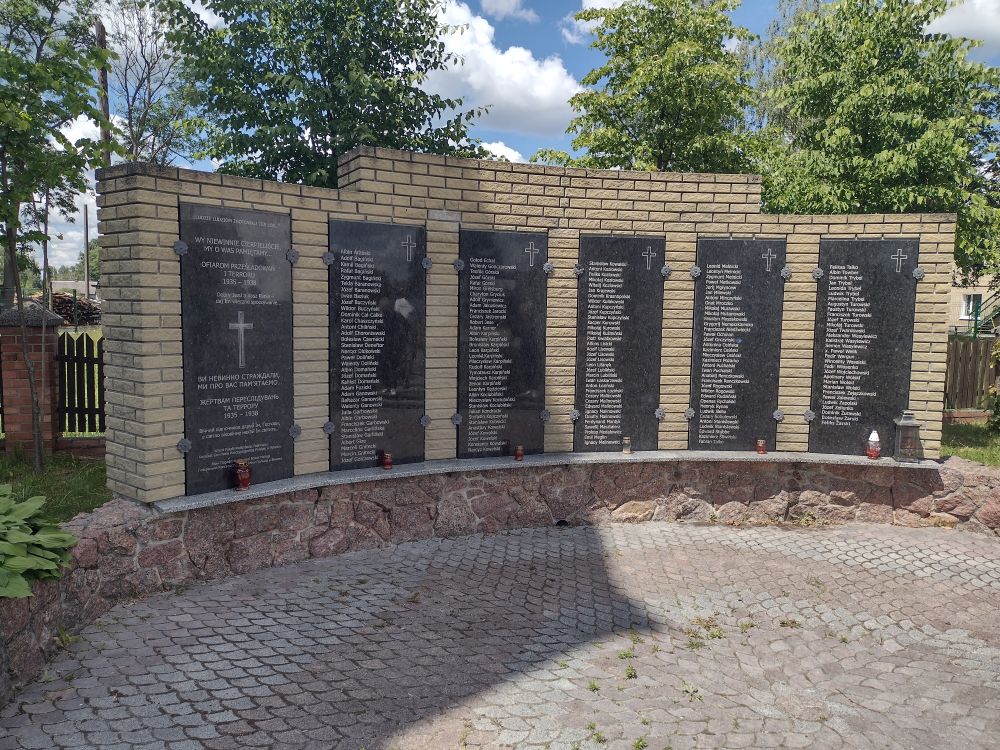
Dovbysh in Ukraine, near Zhytomyr. A plaque commemorates the murdered Poles from this town. Photo by Grzegorz Majewski
Despite the passage of time, they are Poles
Today, fewer than 200,000 Ukrainian citizens claim complete Polishness. The rest were absorbed through assimilation. The reasons are varied. Intermarriage, relocation to non-Polish environments, and a lack of contact with their homeland due to the Russian occupation of both Ukraine and Poland. During the Russian occupation of Poland, documents could not include places of birth such as Lviv. The Soviet Union was used instead. It’s safe to assume that there are no fewer than a million descendants of Poles in Ukraine, who are wholly or half Polish—through their mother or father. Many of them emigrated to Poland after the Russian invasion in 2014, and even more after February 24, 2022.
These conservative estimates also reveal the source of the overwhelming sympathy for Poland in Ukraine. Why are there so many Polish-language schools in Ukraine? Why does a Polish product in Ukraine mean higher quality? This also demonstrates, in a way, that Polish media in Ukraine have a large audience, and our priests are quite busy. Yes, Poles in Ukraine certainly have a significant impact on the positive perception of Poles. Of course, not all Ukrainians share this view. Both here and here, we encounter people influenced by Russian propaganda, emphasizing historical issues rather than contemporary brotherhood. Poles in Ukraine represent a huge asset that the Confederacy wants to squander. This must not be allowed.
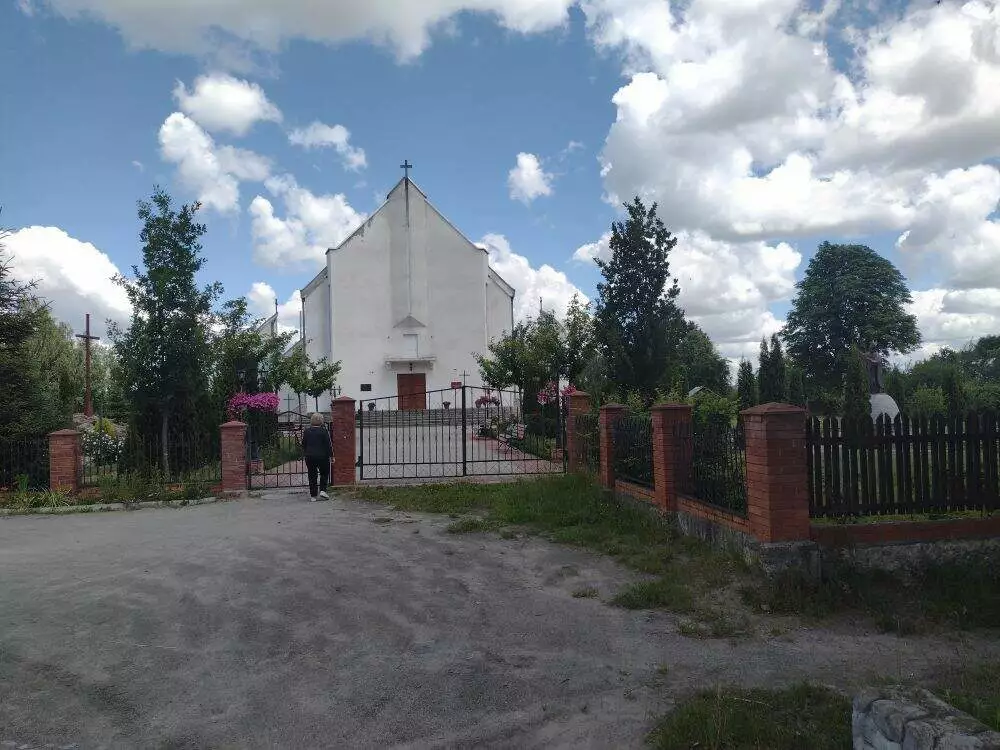
Polish church in Dovbysh near Zhytomyr. Ukraine. Author: Grzegorz Majewski
Poles, as I mentioned earlier, are undergoing assimilation. It’s not widespread, but it is happening. Today, many Ukrainians have Polish surnames, with only a vague idea of their possible ancestors. Open an “ancient” telephone directory and you’ll see many surnames revealing their origins. As communities, we are incredibly closely related. Yes, many Ukrainians have Polish roots, but many Poles also have Ukrainian ones. This is a result of the First Polish Republic, when there was no border between our nations, the Austrian partition, and the Second Polish Republic – we lived in one country back then.
Citizens of Ukraine – Poles in the Ukrainian army
The consequence of the border shift was a change of citizenship for many people. Poles were deeply affected, but the years fly by. Several generations have passed, and Poles have found their place in Ukraine remarkably well. So much so that many now serve in the Ukrainian Armed Forces. Many Polish citizens of Ukraine are currently on the front lines. They even fight in the famous Azov Brigade. These Poles are fully aware of the threat posed to Poland and Ukraine by the rogue Russia, and many of them are volunteers. Or were. Unfortunately, they were…
Many Poles died in this war. Many were volunteers back in 2014, when the Russian invasion began. One thing united them all: loyalty to their friends, loyalty to the country they lived in, and loyalty to Poland, which they thus protected. By their sacrifice, they ensured that their Polish compatriots did not perish in the trenches. They are heroes not only of Ukraine. They are heroes of Poland as well. As funeral processions carried their bodies to local cemeteries, passersby knelt in remembrance.
The biographies chosen are accidental. They were the result of repeated mixing; I have many more. However, presenting them all is not the purpose of this article. It is more of an encouragement to visit the website with the exhibition curated by Dmytro Antoniuk. This exhibition is impressive, presenting profiles of Poles who died in the war with Russia. I strongly encourage you to see the exhibition for yourself – in person or online.
Vyacheslav “The Lawyer” Kaurkin (1989–2022)
Vyacheslav Kaurkin spent most of his adult life living and working in Poland. Upon hearing of Russia’s full-scale invasion of Ukraine, he returned home and volunteered to defend his homeland.
According to the Board of the Zhytomyr Regional Union of Poles in Ukraine, he was “Polish by nationality” and served for a long time at the St. Sophia Procathedral in Zhytomyr as a parish volunteer. After several months of fighting, his family lost contact with him. His fate remained unknown until the liberation of the Kherson Oblast, where his remains were found. Identification took another three months. On November 30, 2022, a solemn funeral service was celebrated at the Zhytomyr Procathedral, presided over by Bishop Alexander Jazłowiecki, and he was subsequently buried in his native Teterevka. He was posthumously awarded the Order “For Courage,” 3rd degree.
Dmytro “Sheva” Shevchuk (1988–2022)
Dmytro Shevchuk (nicknamed “Sheva”) was born in Susly, near Zviahl. He had Polish roots on his mother’s side and a strong Catholic family tradition, which connected him to the local Polish community in the Zhytomyr region. He studied in Zhytomyr and later worked as a car mechanic.
In 2014, he volunteered for the Ukrainian Armed Forces and participated in combat in the Donetsk and Luhansk regions. His courage and intelligence earned him promotion to squad leader. He died on March 3, 2022, during an artillery attack. He was buried in his hometown. He was posthumously awarded the Order of Bohdan Khmelnytsky, 3rd degree.
Jan Tymoszczuk (1988–2023)
Jan Tymoshchuk was from the Zviahla region and graduated from vocational school as an electrician. He completed his compulsory military service in 2006–2007, and after the outbreak of war in 2014, he volunteered for the mechanized brigades, participating in the fighting in Donbas.
After being remobilized in 2022, he died on August 2, 2023, during combat operations. He was buried in his hometown. The local community commemorates him through ceremonies and sports competitions in the region. He was posthumously awarded the Order of Courage, Third Class.
Mikołaj “Laurek” Nowakowski (1998–2023)
Mikołaj Nowakowski, known by his nickname “Laurek,” was born and raised in Susły. After graduating from a construction technical school, he worked as an installation technician. In 2022, he volunteered for service in the Ukrainian infantry as a rifleman.
He died in January 2023 in the east of the country while performing combat duties. He was buried in Susły. The local community commemorates him as a hero. He was posthumously awarded the Order of Courage, Third Class.
Leon Kambarov (Leonid Kambarov) (1975–2022)
Leon Kambarov was born in Turkmenistan, but moved with his family to Susly as a child, where he grew up and became involved in local life, including the music community and the church choir. In 2014, he enlisted in the Ukrainian Armed Forces, where he participated in defensive fighting in the Donetsk Oblast.
He died on July 25, 2022, during artillery fire. He was posthumously awarded the Order of Bohdan Khmelnytsky, 3rd degree, and the Order “For Courage,” 3rd degree.
Viktor “Boxer” Borovkov (2001–2023)
Viktor Borovkov, nicknamed “Boxer,” was born on September 5, 2001, in Susły. As a young man, he was interested in sports and trained in boxing, which gave him his nickname.
In 2022, he volunteered for service in the Ukrainian Army as a rifleman in a mechanized brigade. He was killed on January 7, 2023, during an assault on enemy positions and was buried in his hometown. He was posthumously awarded the Order of Courage, Third Class.
The above-mentioned exhibition is available for viewing here
What do you think about this story?
Join the conversation. Please keep comments relevant to the article.
Write a comment