
Poland is building a population protection system, but adopting regulations alone does not guarantee crisis readiness. Efficient procedures, resources, and the preparedness of local governments are crucial. Ukraine’s experience in ensuring continuity of public services and strengthening the resilience of local communities is a valuable point of reference.


It is a winter evening. Suddenly, the power goes out across the entire city. Apartments quickly grow cold, you can’t pay by card, and your phone has less and less battery. It is not known how long the outage will last. Do you know where to look for help? Will the nearest shelter be open, and is your municipality prepared to provide residents with basic support?
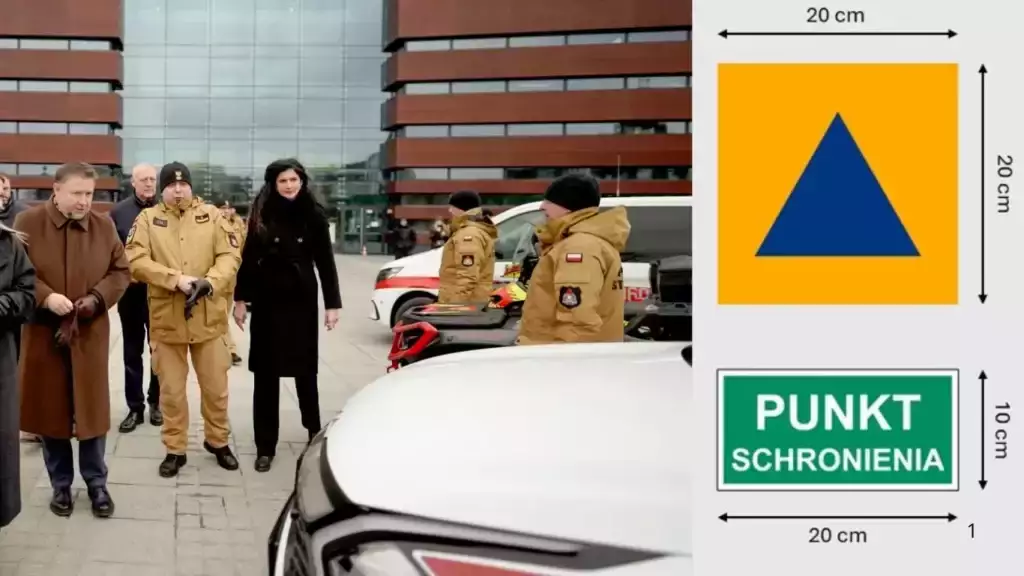
Population protection in Poland. What does the law provide for?
How to prepare local governments for such situations was one of the topics of the conference “Local government in times of war and crisis. How to draw on Ukrainian experience?”, which took place on 24 September 2026 at the Medical University of Warsaw. The Head of the Chancellery of the Prime Minister, Jan Grabiec, emphasized that Poland must be prepared for the most serious threats not in a few years, but “within a few weeks, the coming months”. He also noted that the law on population protection and civil defense requires further adjustments and practical exercises so that its provisions actually work.
The Act on Population Protection and Civil Defense was adopted on 5 December 2024 and entered into force on 1 January 2025. It sets out the rules for organizing the population protection system, the division of tasks between central government and local government administration, as well as the rules for warning about threats, evacuation, and organizing shelter locations. In 2026, the provisions were amended, which shows that the system is still being developed and adapted to emerging challenges.
A large portion of population protection tasks rests with local governments. At the municipal level, it is necessary to plan how to warn residents, where to direct them in the event of a threat, and how to organize assistance for people who cannot ensure their own safety. In practice, this means not only preparing documents, but also checking the availability of shelter locations, preparing evacuation procedures, and conducting exercises.
Expert warns about problems with implementing the provisions
The original version of the act was met with criticism regarding both the legislative process and the difficulties faced by local governments in implementing the new obligations. Dr. hab. Dawid Sześciło from the Faculty of Law and Administration of the University of Warsaw, in an analysis published by the Stefan Batory Foundation, pointed out that the final stage of work on the act was accelerated and public consultations were shortened to only a few days. As he emphasized: “Haste and the lack of broad reflection on the draft resulted in its questionable legislative quality”.
Sześciło also pointed to the difficulties that local governments may face when carrying out the new obligations: “They have received many new tasks, but the regulations governing their implementation raise more questions than answers.” He also drew attention to the problem of so-called competency chaos, which may make it difficult to determine the scope of responsibility of individual bodies and to define which legal instruments they can use.
However, merely adopting regulations and ensuring funding does not guarantee that the system will work in a crisis situation. Its effectiveness will be determined by specific solutions: the ability to maintain power supply in key facilities, rapid warning of residents, and the availability of places where shelter, water, and heating can be obtained. It is precisely at the local level that it will become clear whether the adopted regulations work in practice.
Wrocław is preparing shelter locations for residents
An example of preparations for crisis situations is Wrocław, which is planning to expand protective infrastructure with around 400,000 people in mind. As the Press Office of the City Hall reported on 15 September 2026, the city has already identified 36 locations for temporary shelter, and around 300 existing protective structures are being checked for their technical condition and usability. Modernizations of protective facilities under 14 schools are also planned. In 2025, 15 new alarm sirens were installed, and a tender is currently underway for the installation of another 11. The city has also developed a mass evacuation plan using MPK vehicles, Koleje Dolnośląskie trains, and water transport. In the event of evacuation, support facilities are to be provided by 244 municipal educational institutions, where places have been предусмотрено for more than 15,000 people. According to the city’s declaration, basic resources for the first 72 hours of the crisis have also been prepared.
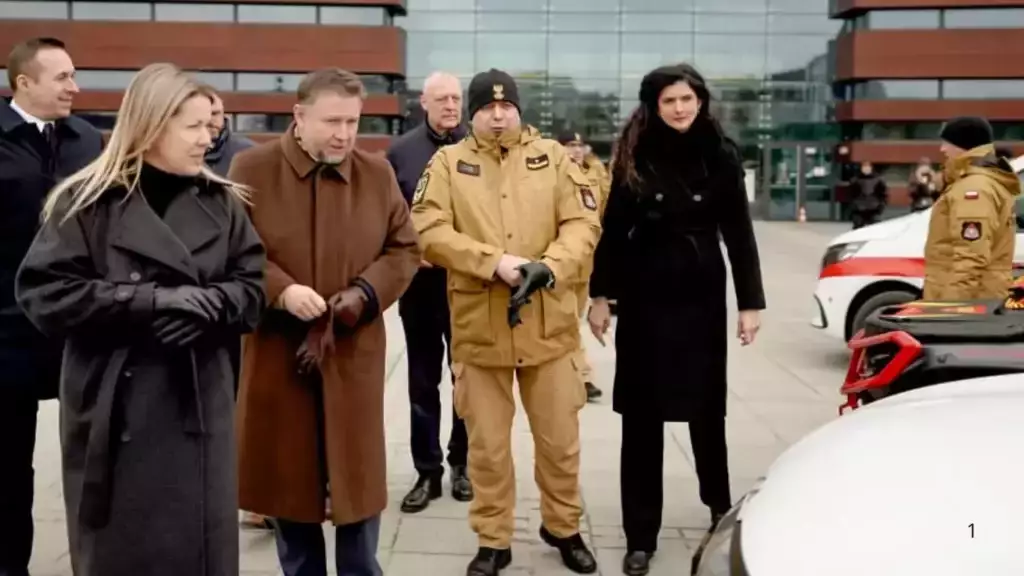
However, merely indicating shelter locations on a map does not guarantee that residents will be able to use them in a situation of threat. In September 2026, the PrawyWroclaw.pl portal described problems with access to some points located in the basements of multi-family residential buildings. Some of them are reached through locked doors and intercoms, and some residents did not even know that their buildings had been designated as temporary shelter locations. The example of Wrocław shows that crisis preparedness requires not only designating shelter locations, but also ensuring access to them and informing residents where they can seek help.
What can Poland learn from Ukraine?
The experiences of Ukrainian local governments show how important it is to be prepared for situations in which there is no electricity, water, or ability for public institutions to function normally for many hours or days. For Polish municipalities, three issues are particularly important: ensuring emergency power supply, organizing local aid points, and cooperation between local government and residents and civil society organizations.
An example of measures to maintain basic services is equipping key facilities with generators. Under the U-LEAD with Europe programme, supported by the European Union and its Member States, since the start of the full-scale invasion crisis assistance has covered 333 Ukrainian municipalities, which have received more than 2,400 generators as well as other equipment necessary to carry out municipal tasks. The next phase of the programme also includes developing competencies of local governments in the areas of energy security, food security and financial management. For Polish municipalities, this means the need to determine which facilities—for example water intakes, medical facilities and shelters—require emergency power supply, how long they can operate without access to the power grid, and whether they have the appropriate equipment.
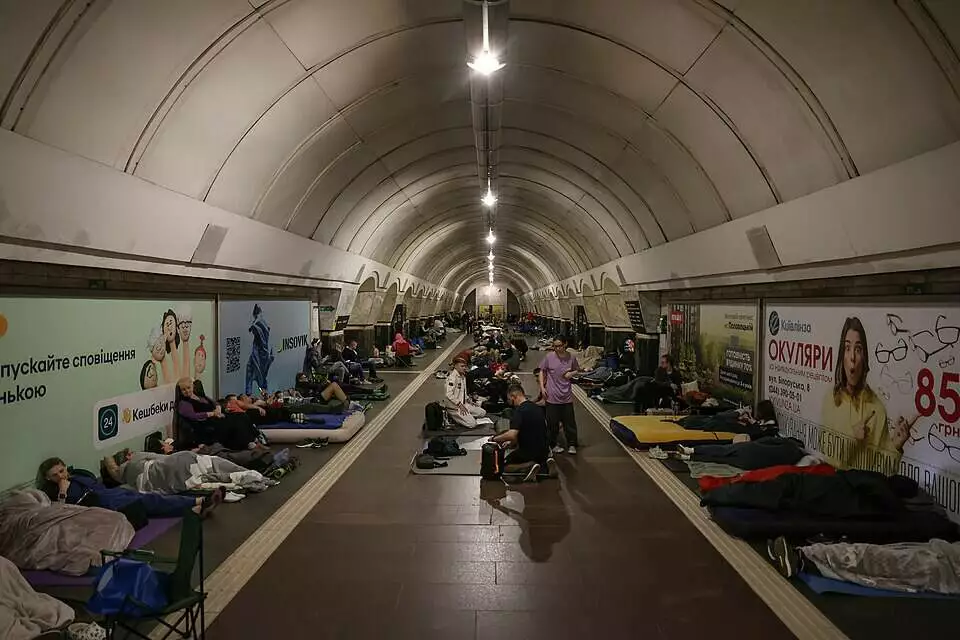
Points of resilience in Ukraine. Assistance during a blackout
Another area is the organization of local support and shelter points. Ukrainian experience related to the operation of resilience points shows how important are places where, during prolonged interruptions in electricity and heating supplies, residents can gain access to warmth, water, electricity, and information. The practical dimension of such help is shown by the story of Kateryna, a mother of two small children living near Boryspil. In the winter of 2026, when there was no electricity in her home, the woman would come with her children to a heating point to warm up and charge electronic devices. For this family, the place was not only a shelter from the cold, but also a place where they could, at least for a while, escape the cold and stay in touch with the world.
The takeaway for Polish local governments is the need to ensure that places of shelter offer not only protection from danger, but also access to heating, water, the ability to charge a phone, and up-to-date information. It is also necessary to check whether they can be used by people with disabilities, seniors, and parents with small children.
Trostianets – how did the Ukrainian city cope with the crisis?
A third important element of crisis preparedness is cooperation between the local government and local institutions, community organizations, and residents. This is shown by the example of Trostianets in Sumy Oblast, which for 31 days (from February 24 to March 25, 2022) remained under Russian occupation. During this time, shops and businesses stopped operating, and residents lacked food and medicines. In schools and kindergartens, bread was baked and then distributed to residents.
After liberation, one of the first tasks was to deliver food to people who had remained in the city, and then to restore water and electricity supplies. It was also necessary to check buildings and roads for mines and to organize humanitarian aid for residents. This experience shows that crisis preparedness should include not only the administration, but also social organizations, local institutions, and residents. The reconstruction of Trostyanets was not limited to repairing buildings. The local government also had to provide residents with accommodation, restore the operation of public facilities, and organize assistance for people returning to the city.
The experience of Trostyanets shows that crisis preparedness should cover not only actions taken at the moment of danger, but also the first days and weeks after it has passed. From the perspective of Polish local governments, it is important to determine in advance which local organizations, companies, and institutions can help with the distribution of water and food, the transport of people requiring care, and the organization of aid points. It is important that each party knows its tasks even before the threat occurs.
How to prepare for a crisis? What should every resident know?
Crisis readiness also depends on individual preparation. Do we know where to look for official threat announcements and where the nearest shelter is located? Do we have a supply of water at home, a flashlight, a charged power bank, essential medications, and some cash? During a power outage, ATMs may stop working, and card and phone payments may be unavailable. It is also worth agreeing in advance with loved ones on a way to stay in contact in case the mobile network fails. These are simple preparations that can make a big difference in the first hours of a crisis.
Poland can benefit from the experiences of Ukraine, which has been operating under conditions of full-scale war for more than four years. They show that the effectiveness of protecting the population is determined not only by regulations and plans, but above all by the ability to apply them in practice: promptly warning residents, ensuring access to basic services, and organizing assistance for those who need it. In a crisis situation, it matters not only whether a municipality has procedures prepared, but also whether residents know where to seek help and whether they can actually make use of it. Are Polish local governments and residents prepared for such a scenario?
Source: Nowiny Wschodnie

PhD candidate at the Doctoral School of the SGH Warsaw School of Economics and a graduate in Law and International Relations. She completed postgraduate studies at the Centre for East European Studies at the University of Warsaw, where she researched the development of patriotic attitudes as a means of building national identity in Ukraine after 2014.
Her academic research focuses on Ukrainian women’s resistance during the Russo-Ukrainian war and their role in strengthening the resilience of the Ukrainian state and society. She is the author of academic publications examining Ukrainian women’s involvement in revolutions and military activities, as well as women’s participation in military service in Ukraine and selected European Union member states.
At Eastern News, she analyses the social and political dimensions of the Russo-Ukrainian war, the role of women in armed conflicts and territorial defence, and issues related to human security. Her research interests also include national minorities, student communities, and the situation of young people in Eastern Europe in the context of historical, social, and political transformations.
What do you think about this story?
Join the conversation. Please keep comments relevant to the article.
Write a comment