

The “Zelensky problem” for Poland isn’t Zelensky himself. In Ukraine, there’s no need to look for a Poland-friendly leader or party. The problem is that Poland isn’t a problem for Zelensky.


The following text is the author’s journalistic commentary.
• Estimated reading time: 8–10 minutes
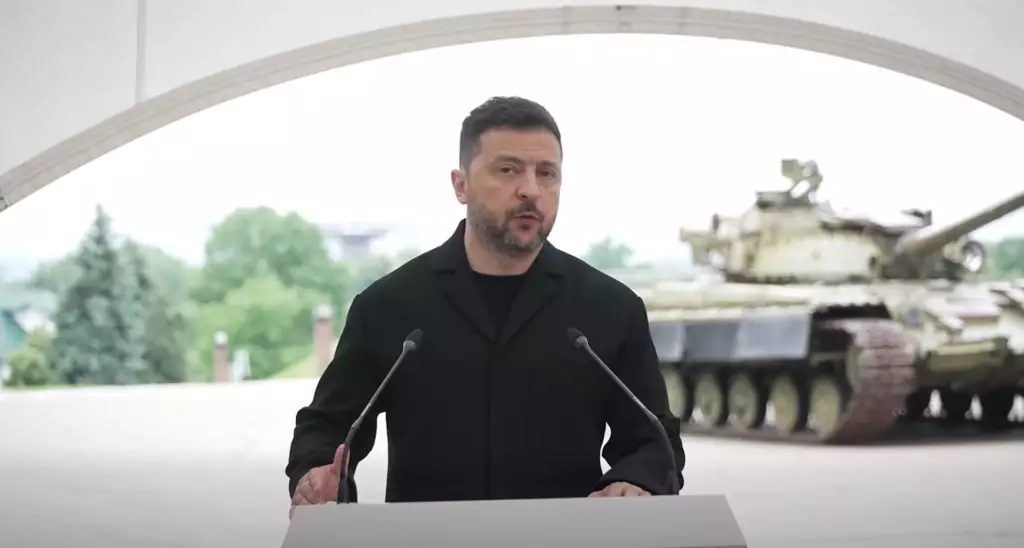
Why do we in Poland misjudge our own importance for Ukraine?
I have noticed that in Poland there is a general, deep conviction that in 2026 Poland will show some unconditional support to Ukraine, the scale of which is so serious that a change in this policy should be considered… and then Kyiv may understand that Poland cannot be underestimated.
In 2026, Poland almost completely dropped out of the game of supporting Ukraine’s war effort, a role it played at the beginning of the war. For various reasons. It focused on its own affairs, and the Ukrainian authorities’ mistakes also increased the political price of this type of support. This game itself has also changed completely since the beginning of the war, something that a large portion of Polish society simply failed to notice. This game is no longer about Kyiv simply receiving some Western equipment through the conventional Yasionka. It’s about financing the expansion of the Ukrainian arms industry and orders for the Ukrainian military from Ukrainian factories. The countries most involved in this effort are those we consider our, let’s say, more reliable allies and partners in NATO. For example, the Scandinavian countries. They spend billions of euros supporting Ukraine in this way. The same applies to Great Britain and Germany. This is the main focus of Ukraine’s military support in the fifth year of the war.
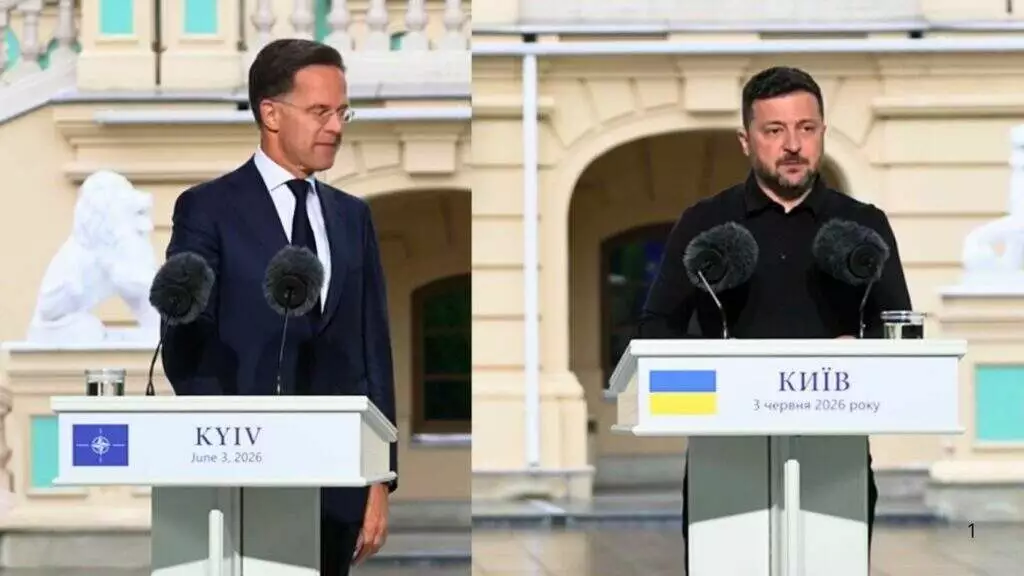
The war has changed. The principles of support for Ukraine have also changed.
When you hear in the media that 90% of Russian losses are caused by drone strikes, it’s not just a curiosity; it demonstrates what is critically important for the front at this moment. At the end of 2023, all Western experts were counting on whether several million artillery shells could be found and delivered to Ukraine, because this would determine whether the defense would crumble or hold. The critical question was whether they would fire 8,000 shells a day or 3,000, and whether the logistics for these deliveries could be maintained. In 2026, a critical question is whether Ukrainians alone will produce 3 million or 6 million small drones. Will there be 500,000 operational-level drones or 100,000? Will there be 100,000 or 10,000 long-range drones?
Artillery, armor, and all types of classic weapons are still important, because war is a system, and there are areas where they simply have their role and niche, and the system won’t function effectively if they don’t fulfill these roles. Nevertheless, all of this is no longer critical to the front.
Of course, there are a few areas where Kyiv remains critically dependent on the West, such as missile defense and Starlink. But these are not areas over which Warsaw has any control. Kyiv is attempting to become independent in all of these areas, but it’s a long process with uncertain results.
Drones, Artificial Intelligence, and the New Battlefield Revolution
In 2026, military support for Ukraine is no longer one-sided. This is because countries that support Ukraine in this way, in return, gain access to know-how. Ukrainians, conducting their defense, trying to shift the balance of power, seeking an asymmetric response to Russian advantage… in the process, they have also changed the way war is conducted. Currently, anyone trying to keep up with these changes is present on one of two training grounds. China, Iran, and North Korea are present on the Russian one. Western countries, eager to keep up with developments, are on the Ukrainian one. Knowing that they are a training ground, the Ukrainians didn’t complain about this; they turned it into their advantage. Therefore, each of these supporting countries is building joint ventures with Ukraine’s fledgling arms industry. They produce, send to the front, test, and modify them. They also have access to Ukrainian data for the development of combat AI systems, which are arguably the most important technology currently transforming the battlefield. It’s not just drones.
Why does the West continue to invest billions in Ukraine?
This applies to the Americans, the Germans, the British, the French, and many other countries. Ukrainians may have tense relations with the Americans; they have cut their free support to practically zero, but cooperation between American and Ukrainian companies is only growing. Palantir and many other American companies, whose importance in the American defense industry is growing, are now deeply involved in this war. And that’s why the Americans won’t give up on Ukraine as a whole, for the reasons I described above. BECAUSE IT IS THEIR OWN INTEREST.
Poland outside the new support architecture
The problem, which is practically unheard of in Poland, is that Poland simply doesn’t exist in the puzzle described above. And that’s why Ukrainians believe they can ignore Poland. Not attack it, as many in Poland believe, but simply ignore it. And I agree that strategically, this is a huge mistake. But right now, they may think Poland has no interest in participating in this whole process. At the beginning of the war, the modernization of the Polish Army commanded respect among the Ukrainian military. Now, the situation has reversed because they believe we’re lagging behind. They may be wrong, but this explains what Zelensky may be hearing from the military advisors he surrounds himself with.
Would cutting off support for Ukraine only affect Kyiv?
Poland could cut off all remaining support for Ukraine, close the Jasionka conflict, and withdraw from joint EU or NATO support for Ukraine. Will this really only affect Ukraine? Poland is not an autarchy; it expects that, if threatened, at least some of its NATO partners will come to its aid. For example, the countries of northern Europe, due to their serious treatment of the Russian threat in recent years, have DRASTICALLY INCREASED THEIR SUPPORT FOR UKRAINE. Not because they are nice or good, but because they believe it is important for their security. Norway alone plans to spend less than $9 billion on supporting Ukraine in 2026. If we cut off our support, it won’t be Ukraine’s problem alone; our own NATO allies will cover this cost and find new logistical routes with Ukraine to deliver this external aid.
For this reason, Kyiv may believe that, in the context of the Yasionka agreement, we will have no choice. A good lever in relations with Kyiv would be if, as in the case of other European countries, Ukrainian air defense were suspended from external supplies, or the production of a significant portion of its long-range missiles and drones were located on our territory, or the entire development plan for the Ukrainian air force were suspended on our behalf, as is the case with Sweden. I assure you, if Sweden were in Poland’s shoes, the Ukrainian president would proceed much more cautiously.
How do you build real influence in international politics?
Unfortunately, in Poland, the politics of gestures, declarations, and symbols are often confused with real influence, power, agency, and real capabilities. To leverage influence over someone, you first need to build it. To build it, you need a coherent, long-term policy; you need to have such a goal. But above all, you need what I’ve been writing about for many, many years—you need to have a good understanding of the other side, to understand their priorities and the policies they actually pursue. To avoid being surprised. If you’ve maintained a passive stance for years, there’s no surprise that, at the same time, everyone around you was moving forward and the situation has already changed. Then all that’s left is surprise, shock, and the chaotic fantasizing about why the other side is behaving this way begins.
How to make Poland heard?
How can we force Ukrainians to listen and hear? The answer is simple and straightforward, but its implementation is not—we must reform and build our own strength so that no discussion of war or peace outside of Poland is physically possible. We must be a provider of security for the region, not a recipient worried about whether 5,000 soldiers will arrive from overseas or sail away. This is absolutely within Poland’s grasp. This will change not only relations with Ukraine, but also with the US and Germany. And the presence of American troops will no longer be necessary.
The “problem with Zelensky” for Poland isn’t Zelensky himself. There’s no need to look for a Poland-friendly leader or party in Ukraine. The problem is that Poland isn’t a problem for Zelensky. If it were, every Ukrainian group or party would become “pro-Polish” in the sense of seeking an understanding with Poland. This is what realpolitik is all about.
Source: Mikolaj Susujew / Nowiny Wschodnie
When using the material, please indicate the source: Nowiny Wschodnie and an active link to the publication.

What do you think about this story?
Join the conversation. Please keep comments relevant to the article.
Write a comment