

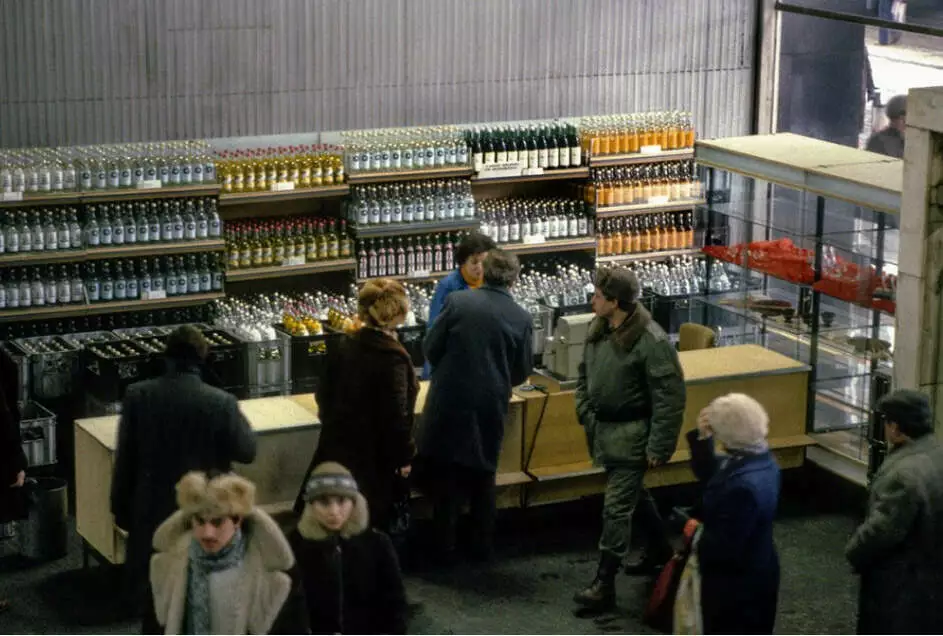
I’m looking at some My younger compatriots, I find it hard to believe how quickly one can become vile and vindictive. Not long ago, and from my perspective of six decades ago, we were very poor. Almost the poorest among the countries occupied by Russia. Perhaps only Romania was poorer. A good salary in Poland was $25; even accounting for inflation, it would be $50 at most. How self-confident these young people are; they look down on anyone less fortunate. They refuse to acknowledge how we saved ourselves from hunger, how we saved ourselves from extreme poverty. This salvation for Poles came not only from fleeing communist Poland, and according to conservative estimates, over 1.5 million Polish citizens left. Attempts were made to earn money and buy essential goods by traveling to trade. And that is what this article will be about.
When Soap and Margarine Were Luxury: The Landscape After Losing the Race


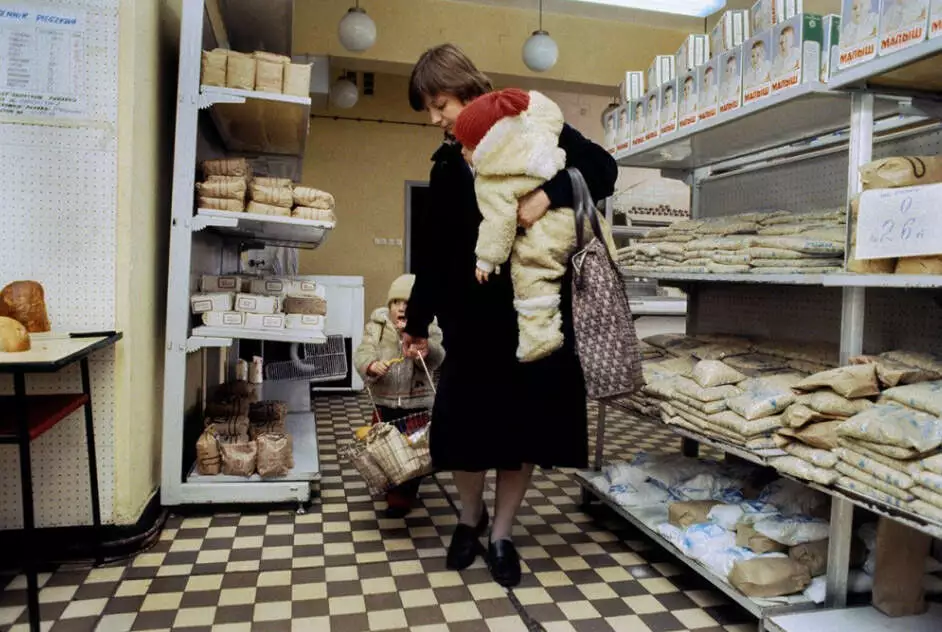
It was clear and visible that Poland in the 1960s had decisively lost the economic race with Western countries. It was the NATO bloc and the emerging community that would be called the European Union in a few decades. Poverty, housing shortages, and a shortage of basic goods like washing machines, televisions, and refrigerators weren’t the worst of it. Worse still, there were shortages of soap, laundry detergent, meat, and dairy products in a larger selection. If anything was available, it was of poor quality, spoiled quickly, and to get it, you sometimes had to wait in line for days. To this day, I’m allergic to queues from that period. I’d rather not buy anything than stand in one. Unfortunately, the country was tight, and only a select few had the right and opportunity to travel abroad. Things changed somewhat in the 1970s. On the wave of “modernity,” the doors to the West were slightly ajar, and the East opened much wider.
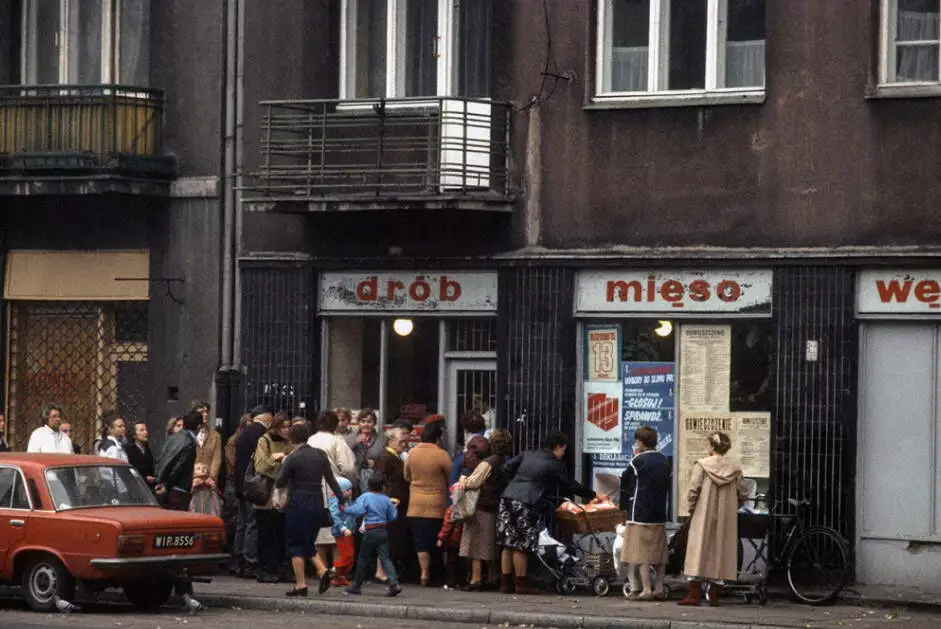
Passport boom, or “tourism” under Moscow’s supervision
As a result, first tens of thousands of our compatriots, and later hundreds of thousands, embarked on journeys aimed at acquiring goods unavailable in the country. The most common destinations for trips westward were West Germany, France, and Great Britain. People traveled to the USA primarily for work, where the distance and the need for air travel prevented the merchant’s large luggage. However, due to the ease of obtaining passports for Eastern Bloc countries, the real “tourism” boom occurred in the countries occupied by Russia.
The trips were undertaken in various ways. These included organized tours through travel agencies, as well as individual trips by car or train. Most often, they went to neighboring countries – East Germany, Czechoslovakia, Hungary, and the Soviet Union. Further trips included Romania and Bulgaria. Yugoslavia was less frequent, although there were also many people traveling there for trade. Among the Soviet Union countries, Ukraine was the most frequently chosen destination, as it was the closest and the trips could be explained by sentiment. What were the buses like for such a trip?
The smell of “Oder” jeans and a shiver at the border in Medyka
“A trip from my workplace to Kyiv and Lviv in 1984. Officially: a visit to the Kiev-Pechersk Lavra and the Motherland monument. Unofficially: everyone had a suitcase stuffed to the brim. I took ten pairs of Polish Odra jeans, twenty bottles of Pani Walewska perfume, and a whole bunch of colorful eye shadows, the cheap, pearly kind.
I remember the shiver at the border in Medyka. A Soviet customs officer, stern, in a cap like a plate, peered into a suitcase. You had to have a ready offering – a pack of Western cigarettes or a glossy magazine. Once you crossed, the trade began. First on the train, then in the hotel. At the Intourist Hotel in Lviv, you didn’t even have to go out into the city. You just had to open your room door a crack. The Ukrainians knew. They’d come in the evenings, whisper in the corridor.
“I got so many rubles for jeans that I could live like a king there for a week. But you couldn’t take rubles back to Poland because they were paper. We bought gold—red, Soviet rings, Zenith cameras, and binoculars. The worst part was the return. Hiding that gold was an art. My wife had a specially sewn girdle under her bra. When the train stopped at the border, my heart would pound so hard I thought the customs officer would hear it through my shirt. But if you managed, for one such trip you could live in Poland for three months without touching your salary.”
What Bandera? What UPA? With vodka and trade, no one talked about history back then.
Goods with a Western flavor were easily sold in the Soviet Union. Interestingly, a specific Polish-Ukrainian language developed in Ukraine, allowing for quick and easy communication regarding needs. Foreigners were prohibited from purchasing many items. Here, Ukrainians came to the rescue. They bought and resold to Poles. After the trade was over, numerous parties were often held to “elevate” the relationship. At that time, Poland also drank heavily, not deviating significantly from Soviet standards. Spending time together over alcohol cemented established friendships, and interestingly, no one discussed history. What Bandera? What UPA. More importantly, a Ukrainian had acquired the coveted gold, which could then be taken back to Poland. Such trips were the trip of a lifetime.
From those days, although I didn’t have the opportunity to go, I have many memories from stories told by friends who went on such trips. Trading and profit were the dominant motives. Sightseeing, if there was time, and only after selling and buying everything planned. In the 1980s, I remember my friends trying to figure out how to establish a branch of the Polish-Soviet Friendship Society. What was the point? Such a society allowed for organizing a trip, provided an excuse to leave, and obtain a passport (passports weren’t kept at home; the Security Service – the secret political police – effectively ruled the situation). Hence, in many places, such societies were formed, and if they expressed love for anything, it wasn’t for the Soviet Union, but for their gold or Rubin televisions. Yes, televisions were also smuggled in. Of course, this was done with bribes. You had to pay a Soviet guard, a customs officer, then a Polish one, not to impose too high a duty. Yes, goods in short supply in Poland at that time were subject to duty (!!!).
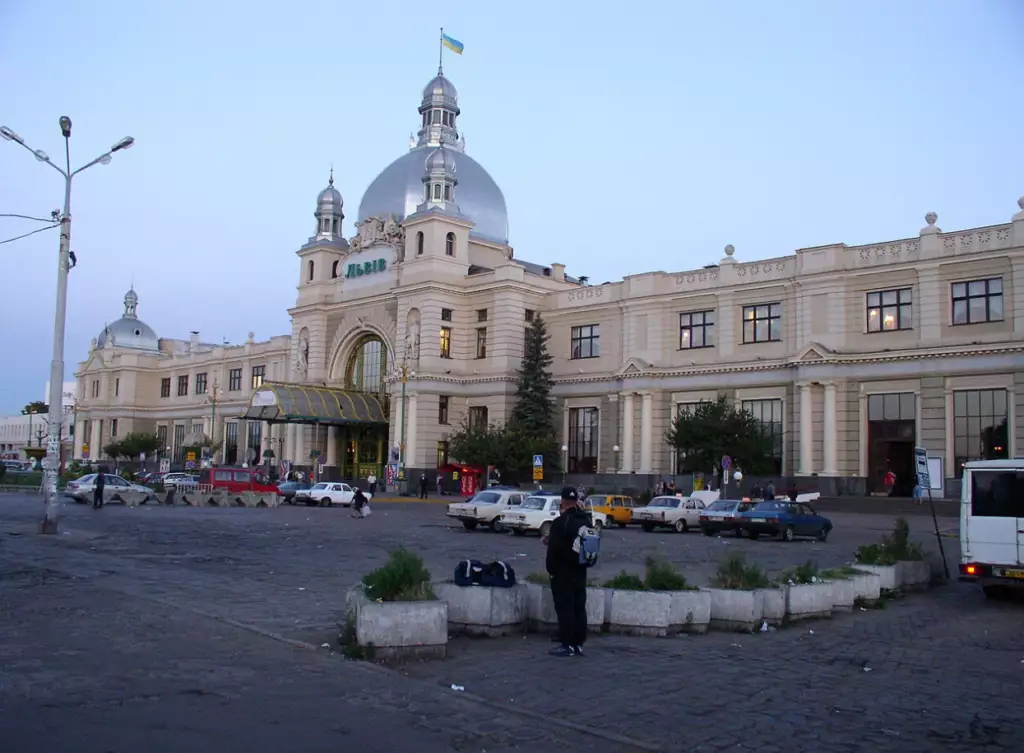
Lviv Train Station. This is where Polish trade began in the 1970s and 1980s. Photo by Alex Zelenko. Source Link
The year 1989 and the era of the “ants”: the great Polish invasion of Lviv
When 1989 passed and Poles suddenly received the aforementioned passports home, it was a veritable invasion of Ukraine. They drove everything with wheels, packing it to the limit. The era of “ant” vehicles had begun. In both directions. Ukrainians traveled to Poland, but Poles also traveled to Ukraine. Most Poles traveled to Lviv, and the memories from that time are very interesting.
“It wasn’t a train, it was a state of mind. The Przemyśl-Lviv route was short, but the journey sometimes took ten hours. (…) When the customs officer came in, everyone suddenly became very religious or very sick, just to avoid having to get up. The stench on the train was indescribable: a mixture of cheap tobacco, spilled alcohol, and sweat.
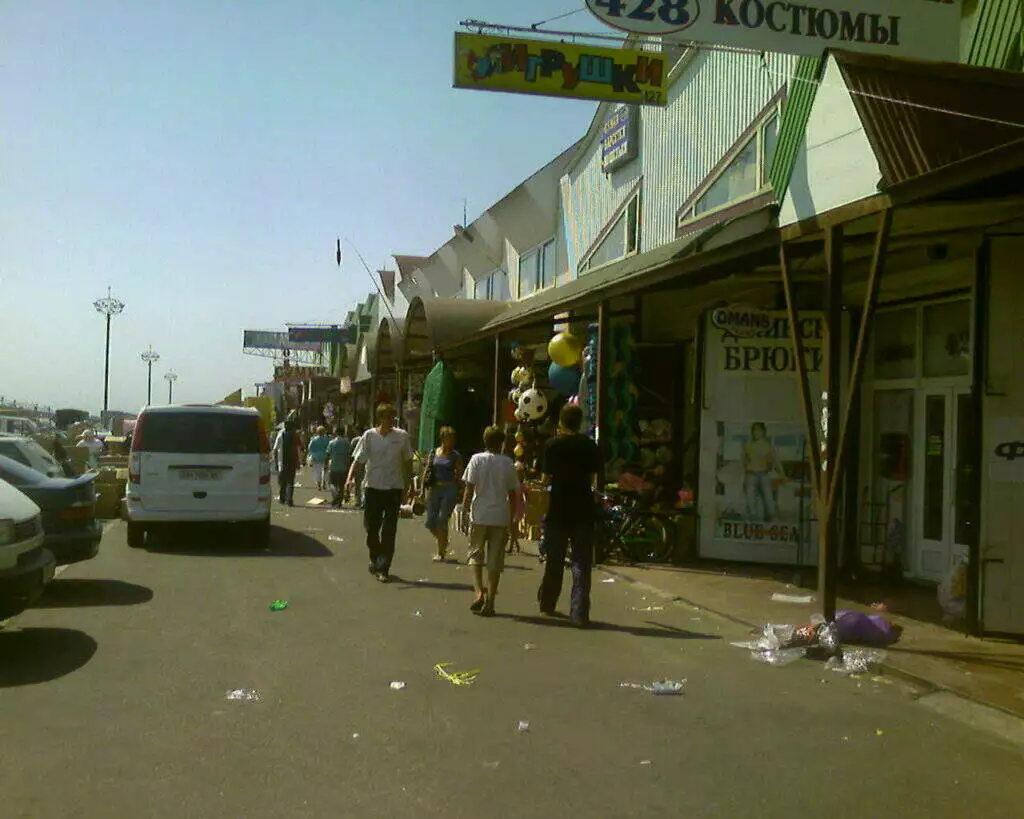
In Lviv, we’d get off at the train station and immediately be attacked. Vendors would approach: “Do you have any? Costumes? Mayonnaise?” Everything was sold on the steps of the station or in Krakow’s Market Square. I remember when Polish mayonnaise and Włocławek ketchup were a hit. Ukrainians would take it by the carton. With the money earned, we’d buy fuel for canisters (it was ridiculously cheap back then) and return to Poland to do the same the next day. It was hard, dirty work, but thanks to it, in the 1990s, people finished their houses and bought their first Western cars.”
Odessa Roulette, the Mud of the 7th Kilometer, and the Fear of Racket
Some traveled to the legendary city of Odessa, known in Russian as Odessa. It was a much longer trip, but also a greater profit. They could sell things at higher prices that were much cheaper in Lviv due to the number of Poles selling them. The trip to Odessa was more difficult, so it was organized by buses, which had to pay off the gangs they encountered, which were present in large numbers in post-Soviet countries in the 1990s. Racketeer – this word aroused fear and hatred in “tourists.” Even more so than for customs officers.
“We drove a rented Ikarus from Rzeszów. Instead of seats, there were boards in the back so more cargo could fit. Odesa was a different world. The Syomy Kilometer (Ринок «Сьомий кілометр) was a sea of mud and containers. When you walked in there at four in the morning, you saw thousands of people with flashlights on their foreheads. We looked like miners searching for gold.
Money? Only dollars. Carried in shahida belts under your clothes. You never went alone, always with two or three men. The worst part was the return journey. In Ukraine in those years, so-called racketeers were rampant. They stopped buses along the route, sometimes disguised as police, sometimes simply in tracksuits with baseball caps. The driver always had an envelope with the road tax ready. If you didn’t pay, they could smash the windows or burn the goods.
From Odessa, we mainly sourced leather jackets and Chinese goods, which arrived there by ship. You bought them for dollars and sold them in Poland at the bazaar in Tuszyn or at the 10th Anniversary Stadium. The markup was huge, but the risk was even greater. I remember a friend who had a whole truckload of shoes stolen near Odessa. He was left on the road in his underwear. That’s how business was.
The famous market square in Odessa. Photo by UNOMANO. Source Link
The scent of a better world spread on camp beds
And how did the Ukrainians react to these “tourists”? With immense kindness. After all, they brought what they needed, what was missing in an economy that was transforming from a centrally planned economy to a socialist one. One thing dominated: the memory of who had suffered what at the hands of Russia. The bidding was fierce, with Poles learning about the Great Famine in Ukraine (Holodomor), and Ukrainians about Katyn. It was a horrifying lesson in mutual history.
One woman recalled shopping with Poles:
“At the turn of the 1980s and 1990s, Poles were a must-see; the whole neighborhood knew it. They’d set up camp beds and sell straight from them. They brought the scent of a better world: Fa soap, Turbo chewing gum, colorful diamond-patterned sweaters. We’d buy Polish mayonnaise from them because our local mayonnaise was unavailable back then. We called them businessmen.”
“They were in a mess, they saw shit” – a bitter punch line for the young generation
This era of resourcefulness, which would have embarrassed trade professionals in Poland and the Soviet Union, lasted over twenty years. As economic relations began to normalize, private trade declined until it became unprofitable. Many Poles and Ukrainians developed friendships from that era. They even visited each other in later years, without the inevitable kilograms of sweaters, jeans, and so on.
After many years, Poland has become a relatively prosperous country, yet young people completely fail to understand the humiliation, hardship, and resourcefulness Poles endured to survive in poverty on $20 a month (the average salary in the Polish People’s Republic). They succeeded, and those of us who experienced it are now retired or just shy of retirement. And we know how much it cost us to regain our freedom, how many tears and tragedies it took to build relative prosperity. When I look at their faces, saturated with hatred, I can’t help but think that they’ve been through a lot, they’ve seen a lot of shit.
Sources: Nowiny Wschodnie / Polish and Ukrainian press from that period, “White Fever” by Jacek Hugo-Bader, film reports, as well as my own memories from conversations with people at that time.
When using the material, please indicate the source: Nowiny Wschodnie and an active link to the publication.



What do you think about this story?
Join the conversation. Please keep comments relevant to the article.
Write a comment