

In the shadow of the Ukrainian tragedy
A Comparison That Hurts: Martial Law and Real War
Introduction, comparing the scale of the contemporary war in Ukraine and war refugees with the situation in the Polish People’s Republic in the 1980s. Outlining the main question about the authenticity of the Polish fight against communism.


The article is a journalistic commentary by the author based on his personal experiences and observations. The data quoted come from publicly available historical studies and the author’s estimates.
• Estimated reading time: 10–12 minutes
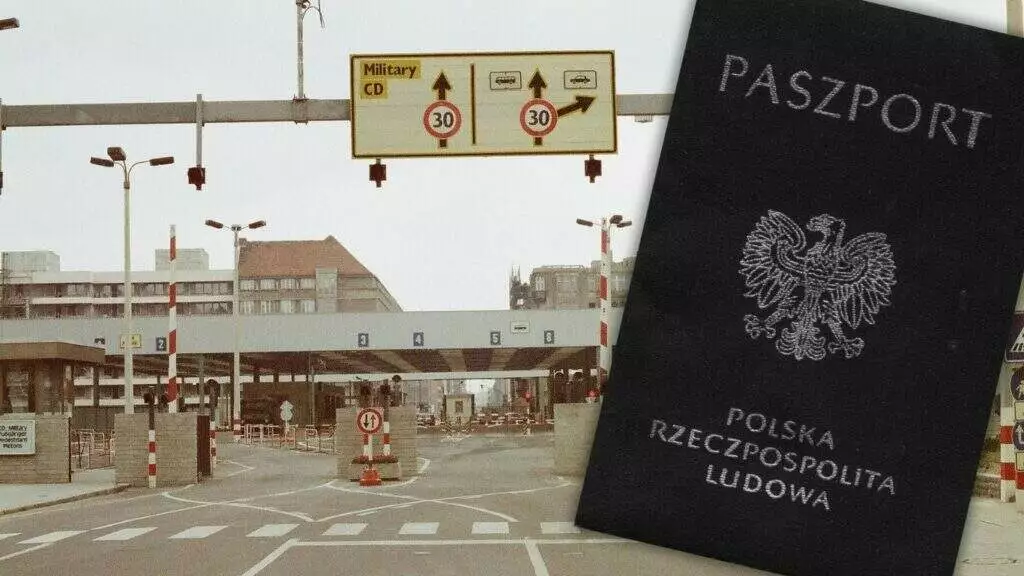
It was so recent. Only a few decades have passed. Looking at what’s happening with refugees from Ukraine, I recalled the one and a half million Poles who fled the Polish People’s Republic to the West. There was no war. There was martial law, several thousand people in prison. And “only” about 100 people were murdered. As my friend calculated, the communists murdered an average of one person a month. If you look at what’s happening in Ukraine, it’s nothing. More civilians die there daily than in Poland in the 1980s over a period of several months. We don’t know how many soldiers have died so far. But there are images of Ukrainian cemeteries full of young people. Men and women, because they also stood up for themselves. Yes, but this was and will be about something else. So what was it like with our heroic fight against communism?
Passport lottery and security service filters
A game of cat and mouse with the Security Service
A description of the realities of issuing passports by the Ministry of Internal Affairs and the Security Service, the privileges of passport officials, and the mass escapes of Poles from organized trips to the West.
Even before December 13, 1981, Poles were fleeing westward. Therefore, issuing passports for travel to capitalist countries was hampered by regulations and administrative barriers. At that time, the passport office was subordinate to the Ministry of Internal Affairs. In practice, it was run by a secret political police force called the Security Service. They decided who could travel west and who couldn’t. The people working in this office were officers with all the same privileges as SB officers – including pensions (after 15 years in the passport office, one acquired pension rights!). The section they worked in was extremely important to the communists. It allowed them to filter out and prevent any potential escape attempts. Escapes were widespread; sometimes only the bus driver returned from a “trip” to the west. People resorted to any means necessary, anything to deceive the SB and obtain the coveted “Booklet” that would allow them to travel.
Visa Armageddon and Transit Torment
Several hundred people under the fence and taking apart cars with screws
Difficulties in obtaining visas at Western embassies, humiliation at the borders (especially with the GDR) and the realities of traveling by train or in your own car
A passport alone is half the battle. Before you could leave for any Western country, you had to obtain a visa. For younger Poles, born in the 1980s and later, this was unimaginable. But that’s how it was. Once you had your passport (and you had to wait several months!), you went to the embassy or consulate and proved your “tourist,” professional, or academic reason for leaving. Meetings with officials from the country you wanted to go to were also unpleasant. Due to the huge number of Polish refugees who later brought their families, they tried to deny applications to people who, at first glance, wanted to flee Poland. I personally witnessed in 1985 a distraught man at the German embassy learning of the denial. We were standing by the fence, a good few hundred of us. When the official came out, he handed us our passports, reading our names aloud and saying whether or not they had a visa. Several hundred people came to the German embassy to get their visas. It was a veritable Armageddon.
But… a visa to the destination country wasn’t everything. If we received a visa to, say, Spain, we had to use it to obtain a transit visa to East Germany, West Germany (FRG), and France. Three embassies or consulates. Several days of processing and waiting. Well, after probably six months had passed and we’d paid for all the visas, we could pack and go. Visas to intermediate countries were mandatory, of course, unless we were traveling by plane. However, this was rare at the time. Traveling was most often by train or private car. Coach was less common. The latter mode of transport was more often used for official trips, organized by state-run travel agencies, such as Orbis or Almatur.
Anyone who thought the “fun” was over was sorely mistaken. We were setting off on our journey, and we still had to cross the border. First, a queue to the Polish-East German border. The watchful eyes of Polish customs officers and the Border Protection Force. We weren’t carrying any prohibited items. And almost everything was forbidden. You had to bribe the Polish and German customs officers. If you were traveling by train, the compartment would fold up. As with a car, you had to be ready. It wasn’t uncommon for the car to be practically disassembled. Then you had to reassemble it and pack it again. Crossing this border often took several, even dozens of hours at worst. Then the East German-French border. This was a real lesson in border crossing. East German customs officers and guards were constantly searching for something. Humiliation was a daily occurrence. Today, unimaginable. From this perspective, subsequent borders seemed nonexistent. They were crossed quickly and pleasantly, sometimes without even stopping the car.
Two paths in the West: support from loved ones versus the reality of the camp
From the luxury of family support to strict procedures in Austria
Differences between refugees with family backgrounds and the majority who end up in transit camps (e.g., in Austria). Problems with overcrowding and surveillance by Western intelligence agencies.
Since so many people were leaving, what next? If someone had family in the West, they could count on their help. After leaving, they registered at the appropriate office, and the process began. The family took over the initial steps. And this was the most beneficial thing from the perspective of a Pole fleeing Poland. They had a place to live, their family supported them, and the host country provided them with a small starting allowance, a monthly allowance, and mandatory language and possibly vocational training. And because of the differences in technology, they were extremely needed, even by car mechanics and construction workers. Let alone engineers and historians. The latter had it the worst. Humanities students were treated as unqualified.
Unfortunately, only a small handful could count on family support. Most had to rely on the host country’s assistance. All popular countries (e.g., Germany, Italy, and Austria) were forced to establish refugee camps, where Poles at one time constituted a vast majority. This number reached as high as 90%. This led to attacks by media outlets fueling the Russian narrative. And this narrative, for obvious reasons, was unfavorable to Poles. Just as Russian propaganda today tries to set Poles against Ukrainians, so back then it tried to set Poles against Germans, Austrians, Swedes, Italians, and others. Russian agents conducted the same operations as today, although now they are improved by adapting to changing conditions. According to Russian agents, Poles took jobs from locals, Poles collected benefits, thus impoverishing their societies, Poles walked around drunk, Poles brawled under the influence, and finally, Poles stole. Sound familiar? A no coincidence with Russian propaganda in Poland.
German and Austrian socialism and double standards
Language courses, trickery and “beer soup”
The specificity of the Austrian and German systems – generous support, forced integration, but also mechanisms used by “petty crooks” to fraudulently obtain benefits.
One of the countries Poles fled to was Austria. That “monstrous, fascist” Austria, the mother of the concentration camps during World War II. This didn’t seem to bother the Poles, nor did the Austrians offer any help. Asylum seekers, as they were called, were admitted to the camps. And indeed, it resembled them somewhat. Those arriving were heavily vetted and surveilled, understandably, since Russia and the Polish People’s Republic sent their agents this way. Poles’ memories speak of photos, fingerprints, months-long waits for asylum applications to be processed, and massive overcrowding. Beds were even placed in the corridors. Little Austria wasn’t ready for an invasion of thousands. Local law, for security reasons, prohibited the use of refugees in labor. Refugees received food and a small allowance.
As I mentioned when families accepted them, the emphasis here was on language and vocational training. If someone expressed a desire to emigrate to other countries, such as the USA, Canada, or Australia, the camps would wait for months for a response from those countries. Throughout this time, Austria provided for our refugees. As a reminder, the refugees were fed and housed at taxpayer expense, and even provided with a small allowance.
The situation was similar in Germany, although the state was much more generous to asylum seekers there. Although transit camps also had to be established, conditions there were quite good. West Germany cared about future workers, trying to immediately integrate them into the economy through a year-long MANDATORY language course – asylum seekers were paid a small fee for attending. This encouraged faster integration. At the same time, jobs or vocational training were offered. My friends were offered various opportunities, from painters and bricklayers to computer science courses (a rarity back then). After completing the courses, they were sent to work, or their allowance was reduced to the level the Germans received. It was reduced. The asylum seeker was in a better financial situation than the unemployed German.
The German system was perfect for small-time crooks who swindled benefits. In 1992, I met Poles who had been there since 1985 and boasted that they hadn’t been tainted by their work. Instead, they possessed exceptional knowledge of where and from which official the easiest places to extract additional assistance were. They even used social security vouchers to buy alcohol in stores, which infuriated German taxpayers. One Pole said there were stores, and he knew exactly which ones, and told the cashier he needed the beer to make beer soup. And he often succeeded.
Italian Theatre and National Shame
The Soviet Union is watching: propaganda and the plague of theft
The exploitation of Poles’ image by Soviet and Italian communist television (window cleaning). The problem of shoplifting, the formation of gangs, and national shame explained at police stations.
From Italy, I remember communist reports airing on Polish and even Russian television, as I know from Russian, Ukrainian, and Belarusian acquaintances. Broadcast on Soviet television, they were intended to ridicule and portray Poles who had fled to the West in a negative light. They were shown in overcrowded camps. Complaints about conditions were secretly recorded, and agents were used to create an atmosphere of fear and hopelessness. Poles were shown cleaning toilets, while those who worked at intersections and gas stations by washing car windows were victimized. This was presented as begging. Recording such reports in Italy was made easier because Italy had a very strong Communist Party. Russian services and those affiliated with them moved relatively freely there.
A separate topic was the shame Poles brought by their participation in thefts, both small and large. It was then that the myth of the Polish thief was born. Upon arriving in the West, Poles were transfixed by the rich and colorful shelves. Everything was within reach, but there was no money for everything. Many Poles succumbed to the temptation of theft, often unaware that they were being watched by a shoplifter – they were caught even on their first attempt. Cases numbered in the thousands.
My brother, who lives in Germany, recalled that he often went to the police as an interpreter. He lived in a small town, and Poles committed quite a lot of theft. He was terribly ashamed. Soon, criminal groups founded by Poles specialized in stealing more valuable items. They stole expensive perfumes, electronics, and even toys. That’s when a special kind of thief appeared. They offered to steal items from a catalog. You could order them, and the thief would bring them to you. They usually agreed to half the catalog price. The thefts most often occurred near the camp. There, alcohol, cosmetics, and small everyday items were stolen. Unfortunately, our compatriots were most often caught stealing alcohol. The police also frequently responded to brawls caused by drunken Poles.
How did these cases end? According to German or other law, depending on the country. However, they all had one thing in common. They didn’t end in deportation, although the hardship on our compatriots was immense. There were exceptions, however. A Pole committing a serious crime (e.g., rape, aggravated robbery, drug trafficking) was brought before a local court. He then served a prison sentence, and upon release, he was deported to Poland. It was considered that the criminal was not entitled to international protection.
There were two other categories subject to deportation. Proving that a person, despite their reputation, had collaborated with Polish services – the secret police, intelligence, or counterintelligence – resulted in immediate deportation to the border. As thousands of Polish refugees arrived, governments realized that, after all, that many Solidarity activists weren’t underground – approximately 1.5 million people had fled. If a Pole couldn’t convincingly describe their underground activities, or lacked evidence in the form of police or security service documents from arrests, searches, or interrogations, they were sometimes deported. These were rare cases, but they did happen.
A bitter reflection at the end
Where have all these fighters gone?
A summary of statistics (20,000 official veterans vs. 1.5 million emigrants). A reflection on the myth of mass underground fighting and an ironic juxtaposition of the West’s former tolerance of Poles with the current harshness of Polish officials towards Ukrainians.
Finally, almost one and a half million Poles fled Poland after martial law was imposed on December 13, 1981. They cited their underground activities and the threat of persecution. I have a reflection: if there were truly that many of us, we wouldn’t have waited until 1989 to overthrow communism; it would have happened no later than 1985, when clear signs of the system’s cracks appeared.
Currently, approximately 20,000 Poles hold the status of a person fighting against communism, awarded by the Office for War Veterans and Victims of Oppression. Even fewer have received the Cross of Freedom and Solidarity, a distinction for this struggle, awarded at the request of the Institute of National Remembrance. These individuals number just under 10,000.
Historians estimate that, excluding individual acts, there were no more than 60,000–80,000 people who met the criteria to be considered anti-communist. And even this, they believe, is a gross exaggeration. This aligns with my observations from that time. The people who didn’t hesitate to act around us were a handful. We were terribly few.
This and the other one and a half million citing their activities and the threat of persecution must be laughable among us – people fighting communism. And in light of how Polish thieves were once treated, the deportation of a Ukrainian for catching a catfish or driving into Morskie Oko by car shows our rulers as participants of political theater (ed.), not serious government officials.
Source: Grzegorz Majewski / Nowiny Wschodnie
When using the material, please indicate the source: Nowiny Wschodnie and an active link to the publication.

What do you think about this story?
Join the conversation. Please keep comments relevant to the article.
Write a comment