
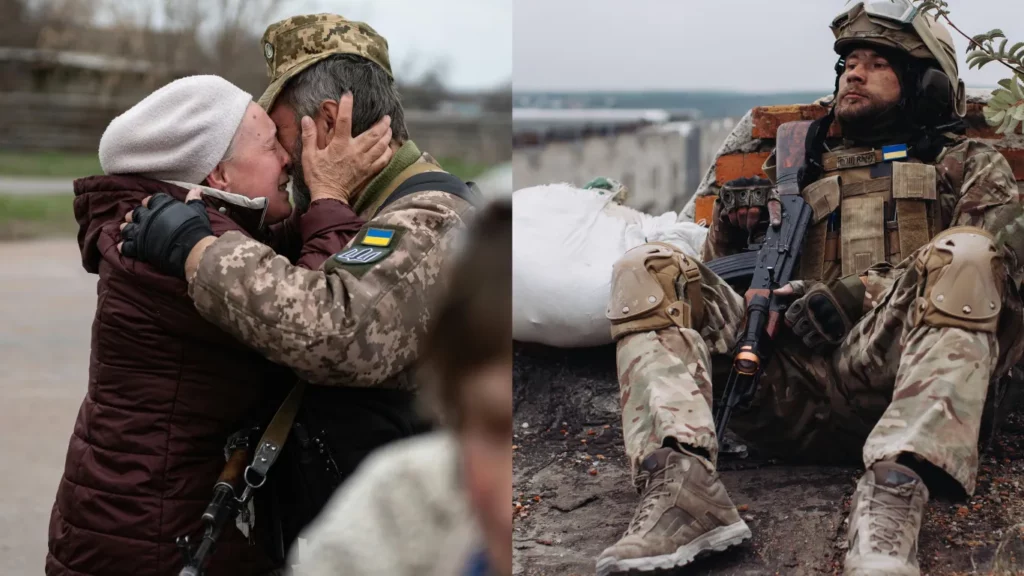
For years, Russia has tried to convince the world that Ukraine is an artificial state and that its inhabitants are part of the brotherly Russian nation. The full-scale aggression was supposed to provide final proof of this narrative. Yet precisely the opposite happened. The war did not create Ukrainian identity. It accelerated a process that had been under way for generations and, at the same time, made millions of people even more keenly aware of who they are and which country they see their future in.


When I first came to Odesa, I did not give much thought to what Ukrainian identity actually meant. To be frank, it did not seem important to me at the time. Odesa was simply Odesa: an extraordinary, multicultural city full of contrasts, where everyday life was conducted mainly in Russian. That was the language I heard in the streets, markets, trams and restaurants. Only over time did I begin to notice that the language people speak does not always tell us everything about who they feel they are as a community.
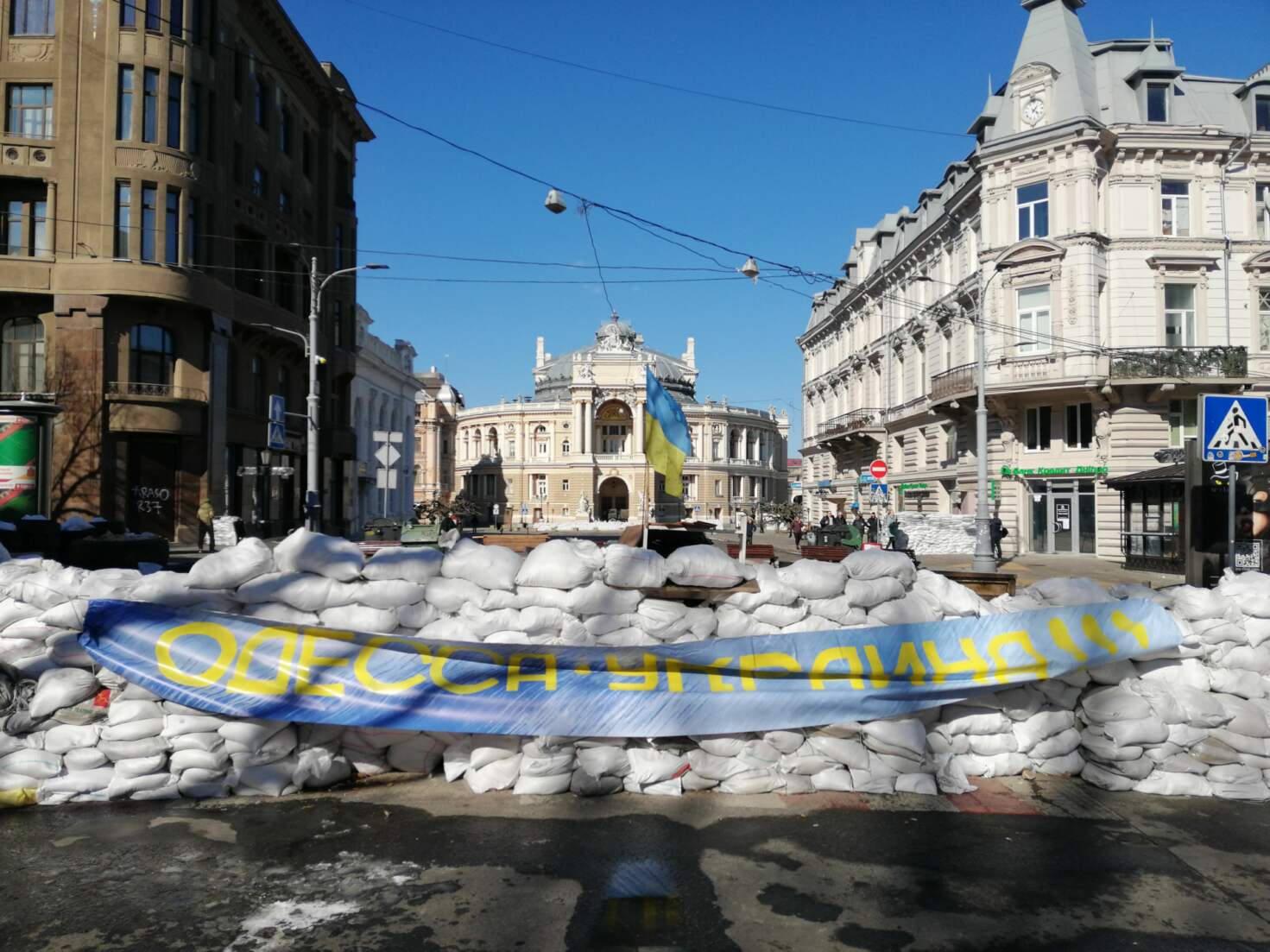
For many people outside Ukraine, especially those unfamiliar with its history and social circumstances, a Russian-speaking Ukrainian may seem like a contradiction. How can someone speak Russian and still consider themselves Ukrainian? How can Odesa, where Russian was the dominant language of everyday communication for decades, be so strongly connected to Ukrainian identity?
Today the answer seems much simpler to me. Nationality and identity are not just about language. They also encompass historical memory, a sense of belonging, shared experiences, culture, tradition and the awareness that the fate of a particular country and its people is also our own fate.
Ukrainian reality has always been complicated—more complicated than Russian propaganda would like to acknowledge. Someone could have a Ukrainian surname, speak Russian with their parents, have a Polish grandmother and a grandfather from Donbas, and grow up in Soviet reality while still feeling Ukrainian. These elements did not have to exclude one another. On the contrary, for decades they formed Ukraine’s distinctive social mosaic.
Russian propaganda failed to understand Ukraine
One of the greatest mistakes in Russian policy towards Ukraine was the assumption that speaking Russian meant attachment to Russia. For years Moscow constructed a narrative in which Ukraine’s Russian-speaking residents were a natural part of the Russian world, while the Ukrainian state itself was an artificial creation with no independent tradition of its own. This story was extremely convenient for the Kremlin because it allowed Russian aggression to be presented as the defence of a supposedly kindred population. The problem was that it had little to do with reality.
A Russian-speaking resident of Kharkiv did not necessarily feel Russian. The same was true in Odesa, Mykolaiv, Zaporizhzhia and Dnipro. People could speak Russian, watch Russian-language programmes and have family ties to different parts of the former Soviet Union while still regarding Ukraine as their homeland. The Kremlin confused language with loyalty. As a result, it created an image of Ukraine that existed mainly in Russian imagination rather than in the minds of its inhabitants.
The Odesa that showed what it means to be Ukrainian
I understood this clearly in the first weeks of Russia’s full-scale invasion. Odesa, which I knew as a free-spirited, multicultural city with its characteristic southern ease, suddenly found itself in the reality of war. People who until recently might have differed in their views on history, politics or language began organising aid together, preparing the city for defence, building barricades and supporting the Ukrainian military. Nobody asked what language they spoke at home. It did not matter whether they had previously used Russian or Ukrainian more often. What mattered was that their city was in danger and their country had been attacked.
Then I saw something very clearly that perhaps I had not been able to see before. Being Ukrainian does not mean being identical. It does not require the same origins, language, family history or way of experiencing one’s culture.
Russia wanted to destroy Ukrainian statehood but in fact helped enormous numbers of Ukrainians understand the significance of their own state even more deeply. It wanted to prove that Ukraine was divided, that its east and south were not connected to Kyiv and that residents of Russian-speaking cities were waiting for Russian troops. Instead, it was precisely there that Russian aggression met resistance from people whom the Kremlin supposedly wanted to liberate.
Today no Ukrainian city needs to prove to whom it belongs. Odesa is Ukrainian. Kharkiv is Ukrainian. So are Mykolaiv, Zaporizhzhia and Dnipro. Not because someone drew a line on a map to suit their plans, but because the people living in those cities regard Ukraine as their country and are ready to defend it.
Language also became a declaration
This does not, of course, mean that the war did not change Ukrainians’ attitudes towards language. It changed them profoundly. For many people, Ukrainian ceased to be merely an official language. It became a symbol of reclaiming their own voice and rejecting Russian cultural domination. More and more people consciously began using it in everyday life, including those who had spoken Russian all their lives.
It was not always an easy decision. Not for everyone. After all, the language a person has spoken since childhood is part of their personal history. It cannot simply be switched off with a single gesture. That makes it all the more significant that so many people decided to make this change.
It is also worth remembering that not all Russian-speaking Ukrainians switched to Ukrainian. That does not mean their attachment to their homeland is any weaker. Judging Ukrainian identity solely through the prism of language would be unfair. It would also reproduce the oversimplification on which Russian propaganda relied for years. This is particularly clear in Odesa, a city that for decades was portrayed as Russian.
That is why it irritates me when I hear the argument in Poland: “But everyone there speaks Russian.” This sentence says far more about the ignorance of the person uttering it than about Ukraine itself. As though language automatically determined nationality. As though a person had no right to say: I speak Russian, but I am Ukrainian.
Poles should understand this
We Poles should understand particularly well that national identity can survive far more than a change of language, borders or political system. For 123 years there was no independent Polish state, but that did not mean the end of Polish identity. Poles lived under the rule of different partitioning powers, yet they preserved their national consciousness, culture, traditions and memory of their own history.
Ukraine’s history is, of course, different and in many respects far more complicated, but a similar mechanism can be seen. For centuries Ukrainian lands were ruled by different states and empires. Ukrainian language and culture were marginalised, and attempts to establish independent statehood were repeatedly suppressed, very often through brutal force. Yet that did not mean the community of people who considered themselves Ukrainian disappeared.
That is why we should not view the present situation as though we were witnessing the birth of a new nation. We are not. Rather, we are observing a moment of exceptionally strong awareness of its own identity within a society that for a long time had to function under pressure from foreign empires and historical narratives imposed upon it.
The war turned the question of who I am into a question about home, family, security and the future. The answer came from personal experience. I am Ukrainian because Ukraine is my home.
Russia can destroy cities, but it cannot decide who their inhabitants are
The war did not create Ukrainian history, literature, culture or memory. It did not create the Cossack tradition, Taras Shevchenko, Lesya Ukrainka, Kyiv, Lviv or Odesa. It did not create Ukrainian aspirations for independence or the Maidan. All of these existed long before 24 February 2022.
Russia can occupy territories, destroy homes and shell museums, railway stations and places of worship. It can try to remove monuments, rename streets, ban a language and rewrite history textbooks. For a time, it may even impose its own administration and symbols on residents of occupied territories. But it cannot use missiles and drones to change a person’s conviction about who they are and which community they belong to.
Perhaps that is precisely what the Kremlin still cannot understand. Ukrainian identity is not something that can be granted or taken away by a decree signed by Putin. It does not depend on Moscow’s permission, the Russian language or the political expectations of successive Russian leaders.
For me, therefore, this war is more than Ukraine’s struggle over borders and territory. It is also Ukrainians’ struggle for the right to tell their own history in their own words. Without Moscow as an interpreter. Without Russian permission. Without having to prove to anyone that Ukraine has the right to exist as Ukraine.
And perhaps that is exactly why Odesa matters so much to me. Why I remember it so often and write about it so frequently. Because this city, which for years was used to construct Russia’s story about Ukraine, today demonstrates better than anywhere how false that story was.
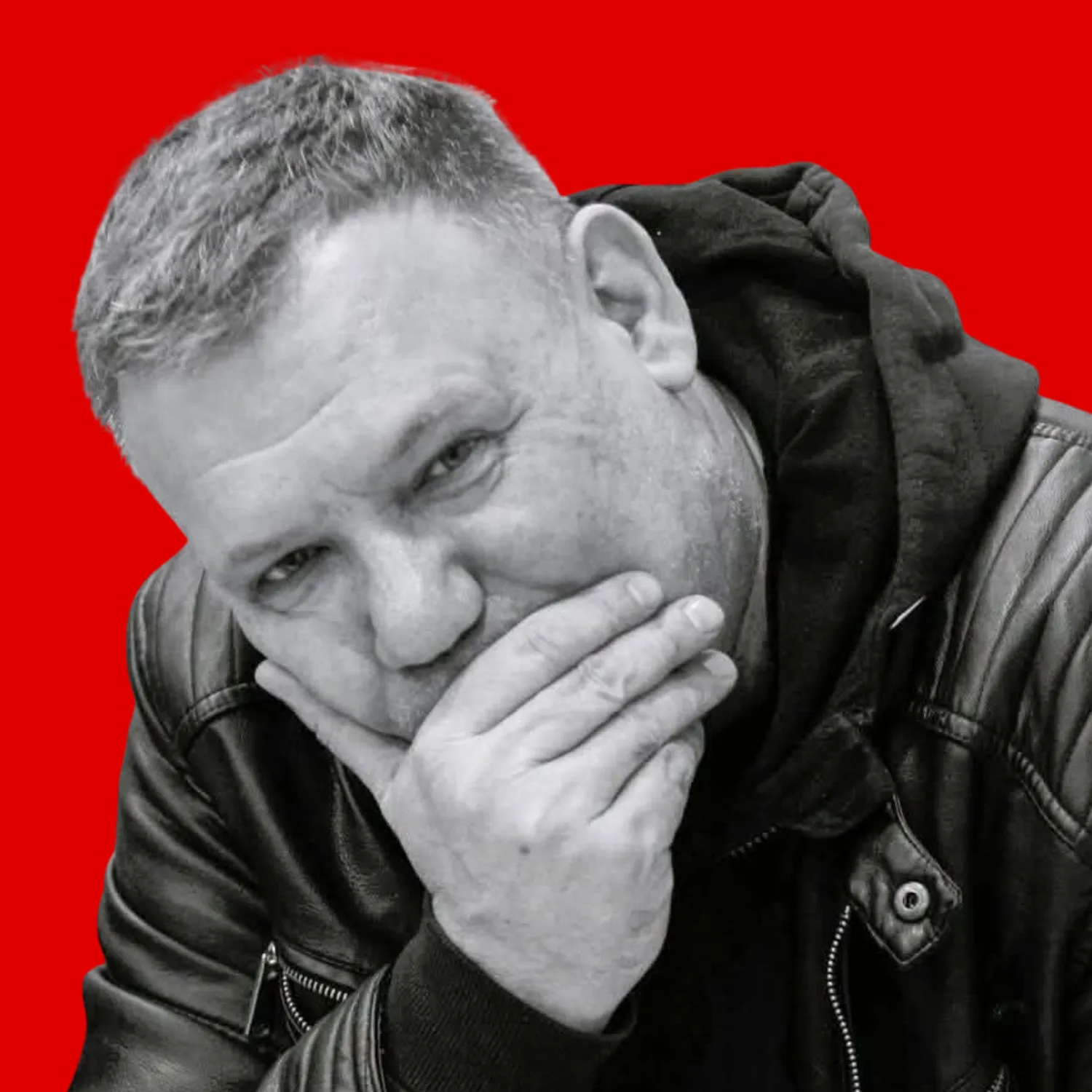
Journalist, columnist, author of books about Ukraine, tour guide, and commentator on developments in Ukraine and Polish-Ukrainian relations.
A certified guide to Odesa, the Odesa catacombs, Ukrainian Bessarabia, and Kyiv. He is the author of numerous publications on Ukraine’s history, culture, and contemporary affairs, some of which have been translated into Ukrainian and published in Ukraine. In 2020, he received the honorary title of Ambassador of Odesa in Poland from the Mayor of Odesa.
On 24 February 2022, the day Russia launched its full-scale invasion of Ukraine, he was in Odesa. He remained there for several months, helping coordinate humanitarian aid and reporting on the war for Polish media outlets. He described his experiences during this period in his book Odessa 4.5.0.
At Nowiny Wschodnie, he publishes articles and commentary on the Russo-Ukrainian war, Russian propaganda and disinformation, Ukrainian history, particularly that of Odesa, as well as Polish-Ukrainian relations and changing public attitudes.
He collaborates with Ukrainian newsrooms and online news outlets and appears in Polish media as a commentator on Ukrainian affairs.
What do you think about this story?
Join the conversation. Please keep comments relevant to the article.
Write a comment