
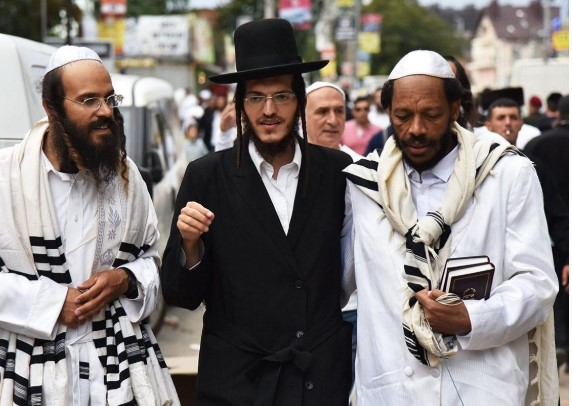
On 11 September 2026, while the border crossing at Shehyni–Medyka was still facing queues of many thousands, about 50 thousand pilgrims arrived in Uman – a record of the last 16 years. For comparison: in 2022, in the first year of the invasion, 23 thousand Hasidim came here anyway; in 2023 — 37 thousand; in 2025 — almost 40 thousand. Every year in September, despite the threat of missile strikes and warnings from the Polish and Ukrainian foreign ministries, tens of thousands of Jews travel not to Jerusalem, but to a provincial town in Cherkasy Oblast. To understand why exactly here, you have to go back 216 years.
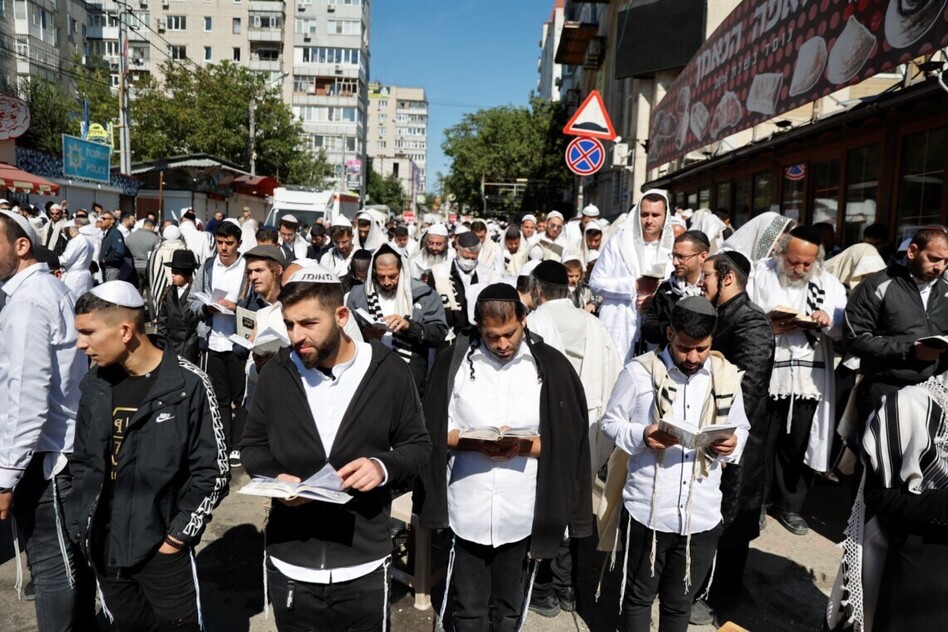


Hasidim are followers of Hasidism—a mystical current in Orthodox Judaism that arose in the 18th century in the territories of today’s Ukraine and Poland. Its founder, Baal Shem Tov, taught that one can serve God not only through scholarship, but above all through sincere joy, prayer, and everyday life. Over time, the movement split into dozens of branches centered around successive spiritual leaders—tzaddikim. One of them, Breslov Hasidism, was founded by Baal Shem Tov’s great-grandson—Rabbi Nachman—and it is his followers who travel to Uman every year.
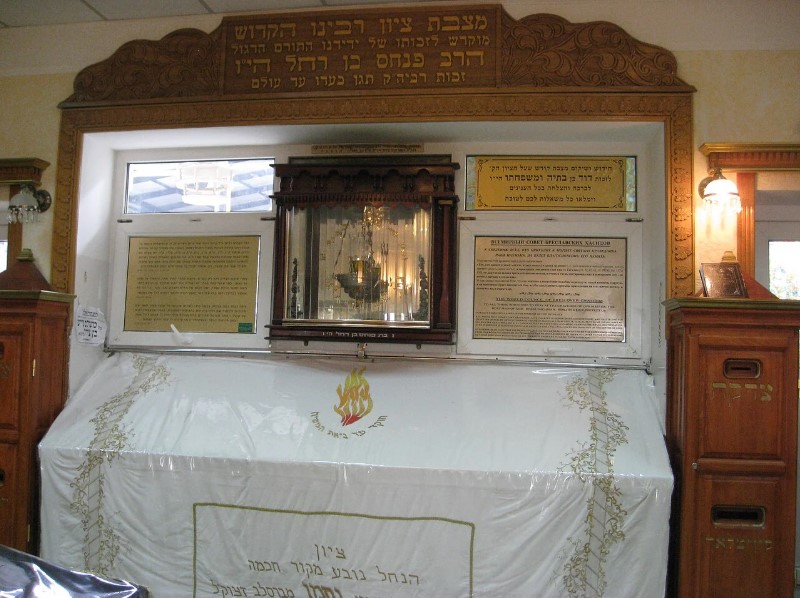
In this photo—the holiest place for all Hasidim. The grave of Rabbi Nachman.Source: Wikipedia / compiled by Nowiny WschodnieIn 1810, as he was dying, Rabbi Nachman deliberately chose Uman as his burial place—a city where a few decades earlier, during the Haidamak uprising (the Koliivshchyna) of 1768, thousands of Jews were killed. According to accounts, he told his students that the souls of the dead were waiting for him. Before his death, he instructed his followers to come every year specifically for Rosh Hashanah—the Jewish New Year—promising them special spiritual protection in return. As early as 1811, his disciple Nathan of Nemyriv organized the first official gathering, which Breslov Hasidim have since called the “Rosh Hashanah kibbutz.”
Why did the Soviet authorities, who for seventy years officially banned pilgrimages, ultimately fail to eradicate this tradition?
The toughest test for the tradition turned out to be not the tsarist regime, but precisely the Soviet ban. During the Holocaust, local residents hid the grave underground to save the sacred site from destruction. The ban was eased only during perestroika: in 1988, 200 Hasidim came to the grave, and a year later—already 800. With the collapse of the USSR, the numbers began to grow year by year: in 2010—23.6 thousand; in 2013–2014—already 30 thousand each year. An attempt by the secular authorities of Ukraine and Israel in the early 1990s to agree on transferring Nachman’s remains to Israel ended in failure—Hasidim firmly refused.
“I think that’s not true. It would be a mistake” — Rabbi Nosson Maimon, a representative of the World Breslov Center, on the possible transfer of the remains, in an interview with Radio Svoboda.
For Breslov Hasidim, it is precisely a specific place—not merely a memory—that carries spiritual power. Unlike other currents of Hasidism, the Breslov branch has no living rebbe-successor—all that remains are parables and the teaching of solitary prayer. A central place in this teaching is held by Tikkun ha-Klali—“General Repair”: a set of ten Psalms of David arranged by Nachman himself which—as he promised—have power for everyone who comes to his grave. Therefore, the pilgrimage is not tied to an abstract anniversary, but specifically to Rosh Hashanah—the days when, according to Jewish belief, a person’s fate for the coming year is decided.
Today, 12 September, while the holiday is still ongoing, according to eyewitness accounts “Uman is turning into a portal to the Middle East”: in the Hasidic district, alongside the Ukrainian police, Israeli officers have also appeared, and renting an apartment for a week costs as much as two thousand dollars. As one pilgrim says, the Hasidim are protected by “higher powers”—during the years of the full-scale war, not a single victim of shelling has been recorded among the pilgrims.
This continuity of tradition during wartime, however, also has another side – it has become a target of disinformation. The Ukrainian Center for Countering Disinformation reported that Kremlin-controlled media are, precisely these days, spreading—among other things using AI-generated images—a narrative about the alleged “privileged position” of Hasidim in Ukraine compared with the local population. The aim of the campaign, according to the Center’s assessment, is to stoke antisemitic sentiment and provoke conflicts between pilgrims and the residents of Uman.
A testament from two hundred and sixteen years ago is still being fulfilled literally, border after border, year after year. The grave has remained in place. Only the number of those who come changes.
Source: Slovo i Dilo / RISU / LB.ua / Suspilne Cherkasy / Radio Svoboda / Ukrainian Radio / Chas.News / Fair.org.ua / Wikipedia / CPD
