
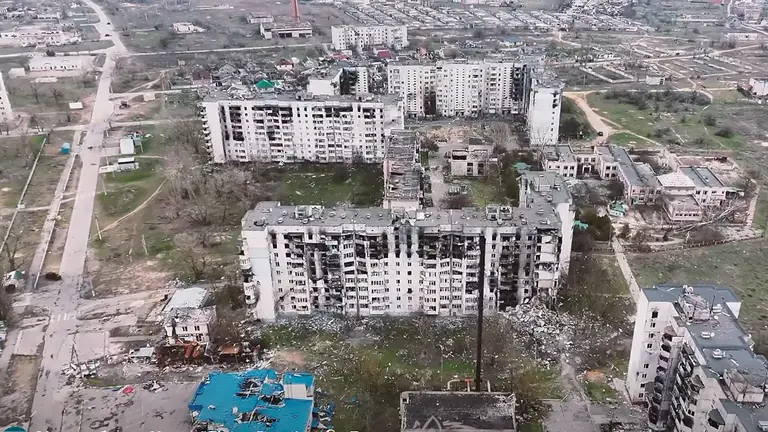
In the city of Oleshky in Kherson Oblast, not a single food delivery has arrived since 26 May 2026. The roads are mined, food convoys blow up on mines and are destroyed under drone attacks, and people who go out for bread or water for animals are killed прямо on the street. Of the 24,000 residents from before the war, 1,700–2,000 remain in the city—mostly elderly people who have neither the means, and often no one, to flee. And while the UN documents dozens of civilians killed just this year, Russia—as Ukraine’s National Resistance Center indicates—at the same time runs propaganda blaming Ukraine itself for this humanitarian catastrophe.
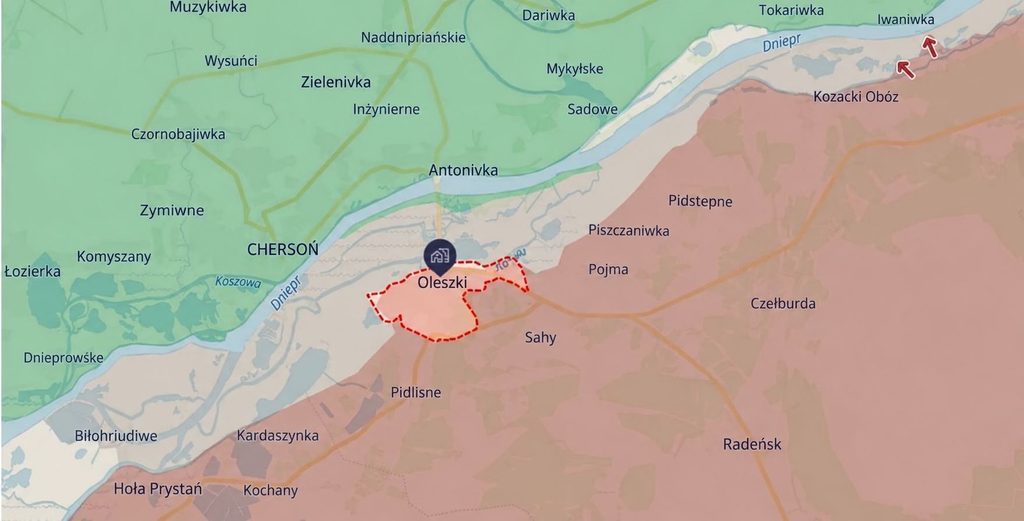


Oleshky lies on the left bank of the Konka River, opposite Kherson – by water it is only 9 kilometers, by car via the bridge over the Dnipro and the Konka – 18 kilometers. So this is not a distant borderland, but a city literally visible from the streets of the regional capital. From here it is about 90 kilometers to the administrative border with occupied Crimea, via the checkpoints Chaplynka or Kalanchak. These several dozen kilometers explain the logic of what is happening in Oleshky: the city has found itself squeezed between the front line on the Dnipro and the deep rear of the occupation.
To the east and south of the city stretch the Oleshky Sands – the largest sandy area in Europe, often called the only true desert on the continent, surrounded by tens of thousands of hectares of pine forest. Beyond these sands, already in the neighboring Chaplynka district, lies the Askania-Nova Biosphere Reserve – the oldest steppe reserve in the world, famous for a preserved fragment of virgin steppe that has never been plowed up, unique on the scale of all Europe. Before the war, this region was a tourist attraction: sands, steppe, salt lakes. Today the same sparsely populated, hard-to-reach landscape works against people – there were few roads to the city anyway, and today all of them are mined and under constant observation by Russian drones.
Oleshky has been occupied since 7 a.m. on February 24, 2022, from the first hour of the full-scale invasion. Today it is already more than four and a half years of uninterrupted occupation, and on September 12, 2026, the city, which this year marked the 942nd anniversary of its founding (the first chronicle mention of Oleshky dates back to 1084), met that date without water, gas, or hospitals. The biggest blow during this time was the destruction of the Kakhovka Hydroelectric Power Plant dam on June 6, 2023: Oleshky’s low-lying location meant that the wave flooded the city up to the fourth floor, and residents together with volunteers spent the following days pulling the bodies of the dead from the water. “In two days we found and buried about 600–700 people,” recalled one of the city’s residents in an interview with Radio Svoboda.
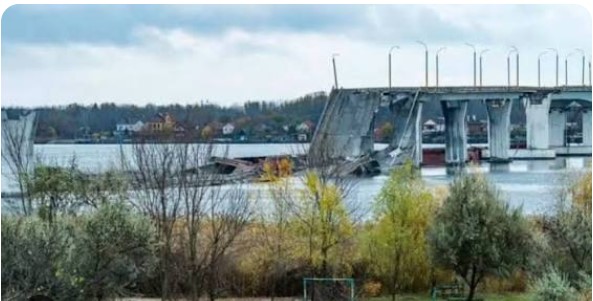
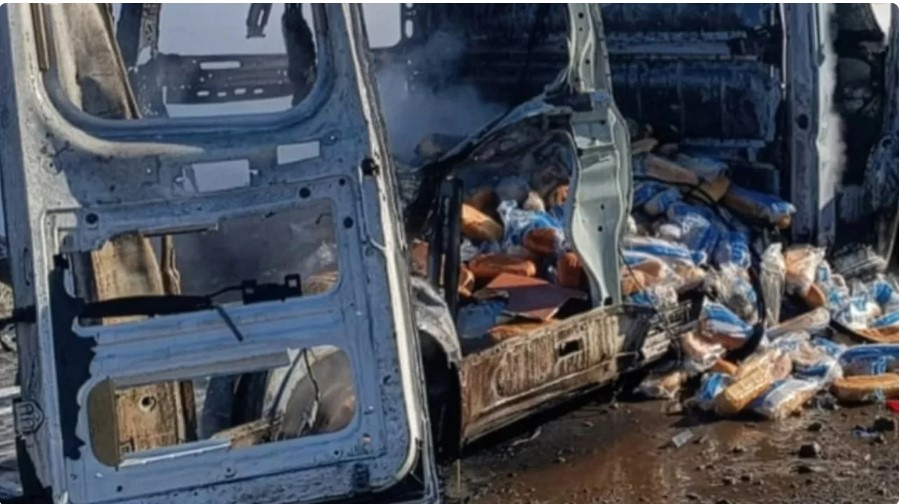
After the flooding, the situation in Oleshky briefly stabilized, but since December 2025, as Tetiana Hasanenko, head of the city’s military-civilian administration, says, it became increasingly rare to deliver food and medicines to the city—first once every few weeks, then even less often. The last delivery arrived on May 26, 2026. Since then, a total logistical blockade has been in place: on September 1 another convoy with food hit a mine at the entrance to the city, and on the way back it was attacked by a drone.
Why hunger in Oleshky is not the result of fighting, but a weapon?
Formally, Oleshky is not in the zone of active hostilities—the front line runs along the Dnipro, and the city is not shelled daily with artillery. That is precisely why hunger here cannot be explained as “collateral damage” of the war: roads are mined deliberately, volunteer aid convoys are selectively destroyed, and the decision to allow humanitarian missions is made solely by the occupation administration. The UN Human Rights Monitoring Mission documented at least 29 civilians killed and 54 wounded in 2026 alone in two localities of Kherson Oblast—mainly as a result of FPV drone attacks on people who were simply trying to buy bread or reach a neighbor.
American journalist Zarina Zabriskie, who has been documenting the situation from Kherson since 2023, called this tactic outright “a safari on people”—a systematic hunt by drone operators for civilians, regardless of why they left their homes. As she says, leading international media outlets she approached consistently refused to publish material on the subject, explaining that “the starvation deaths of thousands of civilians do not generate interest.”
Why is this being done? From the statements of the participants themselves, four motives emerge that do not exclude one another but reinforce each other:
The first is a human shield and bargaining chip. “They simply use people as a human shield. I think no one intends to give them the opportunity to leave,” Hasanenko explains. As long as civilians remain in the city, any Ukrainian operation in this direction is politically and humanitarianly more costly.
The second is a propaganda revenge. At the end of May, the head of the occupation administration of the region, Volodymyr Saldo, denied the existence of a crisis, calling reports about it “hypocrisy” and blaming the difficult conditions on Ukrainian servicemen. As early as 20 June, Russian Foreign Ministry representative Rodion Miroshnik admitted to TASS propagandists that the catastrophe does in fact exist, but still shifted the blame onto Ukraine and the West.
The third is pressure for negotiations. Lubinets said that as early as February he had appealed to international mediators, and in March officially to the Red Cross, which confirmed its readiness to provide technical support. The only missing condition is Russia’s consent to at least a one-day ceasefire. This condition has not been met to this day.
The fourth is punishment for lack of loyalty. Testimonies of survivors include episodes that are hard to explain otherwise: shelling precisely when people are going to church, forced “filtration”, a demand to sign a statement that “Ukrainian armed forces fired on civilians” before the body of a deceased person is handed over to relatives, and a ban on burying bodies without transporting them to a neighboring locality “to prove the crime of the Ukrainian army”.
How absurd this blockade is in practice is shown by the story of Alla Lykhman-Malysh, a resident of the city who keeps a diary from Oleshky on Facebook (her video with a three-liter jar of rusks has gone viral in recent weeks).

September 1 was called “the day of lost hope”: for four weeks people waited every day for a food convoy, and when it finally set off toward the city, drones shot up the vehicles with huge “PEOPLE” signs on the sides, just before they entered. Those who dared to reach the wrecked convoy across a seven-kilometer mined stretch picked up charred potatoes and rain-soaked onions from the ground. She wrote about the absurdity of the situation as follows:
Who created this artificial experiment, perhaps our grandchildren will find out. Because just 4 kilometers from us there is already life with food, but there is no physical possibility of leaving the city.
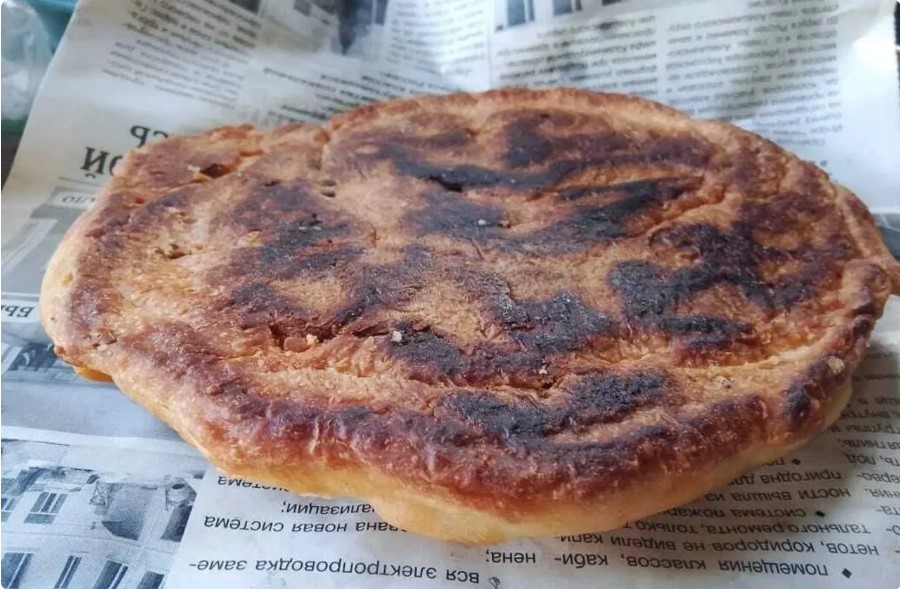
Prices at the local market show the scale of desperation: a kilogram of sugar costs 1,000 rubles, i.e. about 44 zlotys, the same as a tablet of a popular painkiller. But money has also stopped mattering — as Hasanenko says, “regardless of how much money you have, no one will sell anything.” Chickens are being slaughtered because there is nothing to feed them, dogs are “skin and bones,” there are cases where neighbors steal vegetables from one another’s garden beds. A spokeswoman for the volunteer organization Humanity called it plainly a second Great Famine: “People are talking about how to eat bark and plants. This is Holodomor again.”
Behind these numbers are specific stories. Volunteer Kseniia Arkhipova, who since March 2026 has been keeping lists of the affected and passed them on to the Office of the Human Rights Ombudsman, says she receives “several hundred” such reports from relatives. Viktoriia, a resident of Oleshky who managed to get out and give testimony to the “Schid SOS” foundation, talks about her mother’s death by a grocery store:
A strike by three drones. A mother and another man were killed. Two more people are seriously injured… The body lay in the morgue for six days without refrigeration. There is no electricity there.
Another resident, Iryna, describes a winter evacuation attempt, when the volunteers’ car ran over a mine: the man and the elderly woman they were trying to take out had their legs blown off, and the driver died the next day during resuscitation. Those who decide to go on foot cover dozens of kilometers – “two elderly women and a man walked for seven hours to save themselves,” says Iryna. Wołodymyr, who survived a heart attack back in 2022, when the city’s only cardiologist left, was left without any medications at all: what is sold at the local market as medicines, in his view, “it’s unknown whether it’s real or of good quality.” And Hanna has had no news for three years about her husband, who was detained by the occupation “counterintelligence” for trying to get people out of the city.
These testimonies are also confirmed by Ukrainian diplomacy at the highest level. On 13 September 2026, Ukraine’s Foreign Minister Andrii Sybiha publicly appealed to international partners for immediate humanitarian access to Oleshky.
In effect, Russia is keeping the civilian population trapped there, without access to food, medicines, and basic necessities. In the center of Europe, in 2026, people are suffering from a humanitarian crisis caused by Russia – Sybiha emphasized.
Human Rights Ombudsman Dmytro Lubinets already stated in April that the Russians’ actions in Oleshky show signs of a deliberate violation of international humanitarian law, and he called on the International Committee of the Red Cross and the Russian Human Rights Commissioner Tatiana Moskalkova to support the evacuation. The Ukrainian side, according to Hasanenko, has already fulfilled all preparatory conditions for transporting about 6,000 civilians from Oleshky and neighboring villages. The decision, however, depends on the Russian side’s consent, and that has not been received so far.
Alongside negotiations at the state level, another, less official story is unfolding — an attempt to get people out by water. Back in 2023, right after the dam was destroyed, a resident named Yaroslav set up a volunteer group on Telegram, joined by IT specialists keeping lists of evacuees as well as dozens of people handling boats and buses. Then, despite an explicit ban by the occupation authorities, it was possible to evacuate more than 2,000 people from the flooded areas. Today, the discussion is already about a different idea, coordinated at the official level — a “green corridor” via the Konka and Dnipro rivers, which is publicly promoted by the aforementioned Zarina Zabriskie together with the office of the Human Rights Ombudsman. Ukrainian military personnel have confirmed the technical feasibility of such an evacuation by boat, but two issues remain open.
The two biggest questions are — whether the Russians will halt fire attacks for that time and whether it will be possible to clear the rivers and banks of mines. Will there be provocations by the Russians during the ceasefire, if it can be achieved at all? — Zarina Zabriskie, an American journalist.
Stefan Woroncow, a volunteer with the HUMANITY organization, adds that even for those who obtain permission to leave legally via the occupied territories, Crimea, Russia or Belarus, the journey itself can take from two days to a week or longer.
Four and a half years of occupation, a destroyed dam, trees cut down for firewood, mass graves on wasteland – and people who are still there, in a city without electricity, just 9 kilometers from their own regional capital, still writing the same thing to volunteers: how many of their loved ones have died and where. Oleshky has not disappeared from the map. It is simply disappearing from it every day, several people at a time – and for now the world is only watching whether a corridor can be negotiated before the city is finally emptied.
Source: Nowiny Wschodnie / Radio Svoboda / Gordon.ua / Rayon.in.ua Kherson / Toczka Schodu / Schid SOS / UN / Ministry of Foreign Affairs of Ukraine
