

Two flags. One Jewish, the other Polish. Both were hung in the Warsaw Ghetto, just as the fighting was beginning, on April 19, 1943. It was incredibly symbolic, as it was the first time a Polish flag had officially been raised on a building in the German-occupied capital of Poland. This infuriated the Germans. Several died trying to take them down. It was also the first time in the entire territory occupied by the Germans, and initially by the Russians. Both nations destroyed and desecrated Polish national symbols. Poles of Jewish descent joined the fight. They defended their dignity—the dignity of their own and that of occupied Poland. They knew they would die, and they chose death by force. They decided to take with them as many Germans as possible.
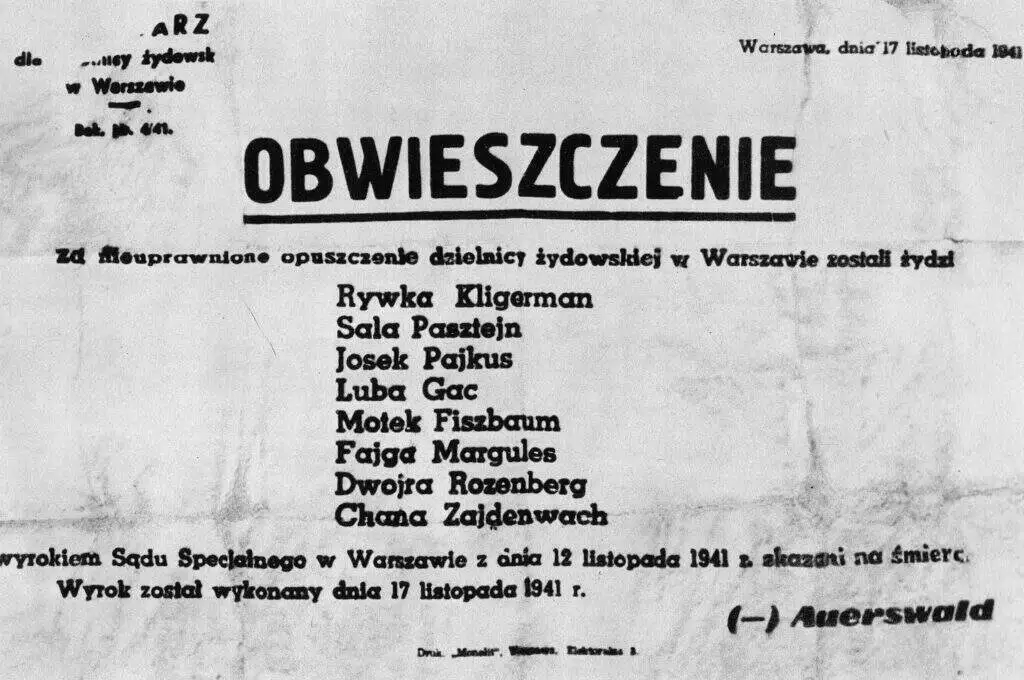


Notice of being killed for being outside the ghetto. Source: Wikipedia Link
January’s “NO.” Germans flee for the first time.
Although we officially recognize the Warsaw Ghetto Uprising as beginning on April 19, 1943, the first shots against the Germans were actually fired on January 18 of that year. Fighting with the invading German pacification units lasted four days, after which the Germans withdrew. They were unprepared for resistance, much less for fighting an armed enemy. It was one thing to shoot at the defenseless, quite another to face someone who could shoot and had the weapons. The Germans lacked proper weapons, and the units tasked with herding Jews to concentration camps consisted of older, less agile men. This wasn’t even the second military echelon, but the third. From the Germans’ perspective, these men were sufficient for murder. But other forces should have been deployed against the insurgents..

They died of starvation in the Warsaw Ghetto. Source: Wikipedia. Link
The uprising – a fiery Passover. Gasoline at the Germans.
After the events of January 1943, there was a lull. There was apparent silence; no one was deported, and there were no roundups. There was anticipation and tension on both sides. This lasted three months, when, thanks to Home Army intelligence, the Jewish underground movement received information about the German concentration for the liquidation of the Ghetto. In the initial phase of the Warsaw Ghetto’s existence, as many as 460,000 people lived there. At the outbreak of the Uprising, this number was 40,000-50,000. The rest were deported to Majdanek and other death camps. There, those who survived the genocidal transport were murdered by the Germans.
On the morning of April 19th, on the Jewish holiday of Passover, German units entered the Ghetto, or rather, attempted to do so. The insurgents greeted them with grenades, gasoline bottles, and a hail of bullets. They were well camouflaged and hidden. The Germans attacked at three points. Two were defended by the Jewish Combat Organization, one by the Jewish Military Union. Unfortunately, due to ideological differences, there was no operational cooperation between the units. They fought and died alone. Despite having learned their lesson in January, the Germans were completely surprised. They were clumsy in combat, and many of them died that day. The insurgents themselves could not believe the ease with which they were killing the Germans.
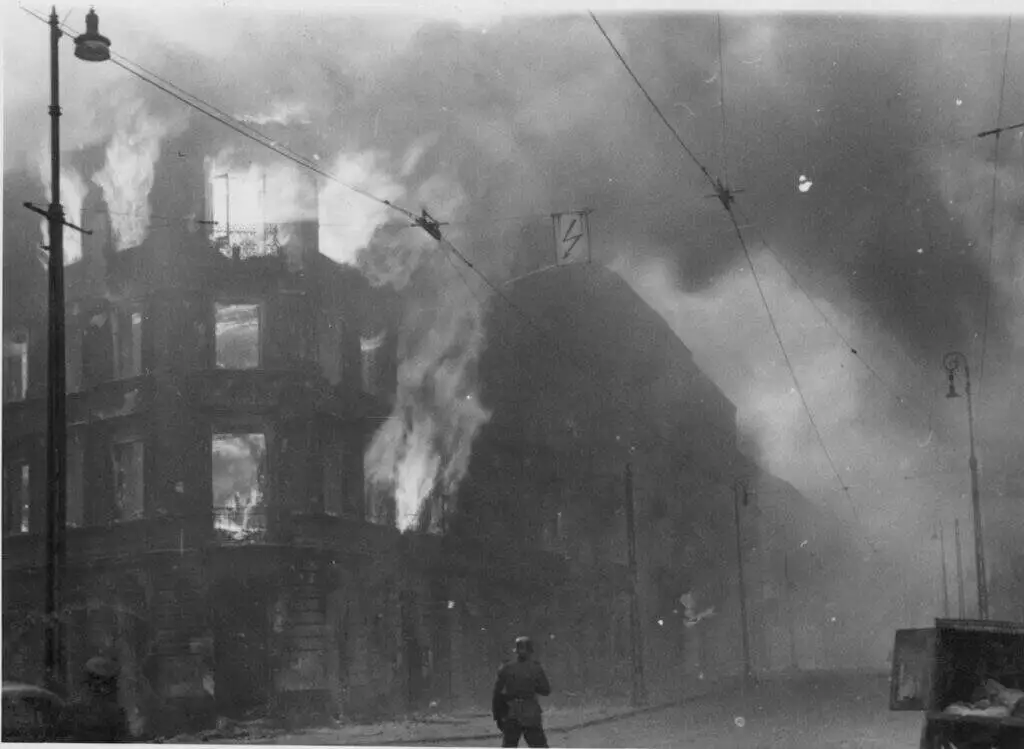
The Ghetto Uprising. Burning tenement houses on Zamenhofa Street. Source: Wikipedia Link
Myths and the true scale of German losses.
There’s no space here to describe individual battles. It’s worth noting, however, that the fighting lasted over a month. Poorly armed and trained Jewish insurgent units put up a heroic resistance to the genocidal attackers from Berlin, Munich, and Cologne. Although most of the insurgents perished, German losses are staggering. Although German commander Jürgen Stroop officially reported a dozen dead and several dozen wounded Germans, in a conversation with Polish officer Kazimierz Moczarski in his prison cell, he admitted to much higher losses. Some historians estimate as many as 1,000 Germans killed. The figure is likely slightly more than 1,000, but they were both dead and seriously wounded.
Shoulder to shoulder. Home Army soldiers together with the ŻZW
During the uprising, the Home Army and the People’s Guard carried out sabotage operations against German outposts. They also assisted in the transfer of weapons and food. These weapons were scarce, as the Home Army’s doctrine anticipated large-scale armed uprisings across the country. Every rifle was saved for this purpose. Nevertheless, they tried to help by donating some weapons from their own warehouses. Another form of assistance was the direct participation of Home Army members in the fighting in the ghetto. They also assisted in the evacuation of fighters and civilians, using Polish clandestine channels.
A separate chapter is devoted to the participation of Polish Home Army soldiers in the fighting within the ghetto itself. A group led by a Home Army officer infiltrated the ghetto near Muranowski Square and supported a unit of the Jewish Military Union—the same unit that had flown two flags: Polish and Jewish. Over half of the Home Army soldiers perished, including the unit commander’s son. This assistance, however, was noticed by Jürgen Stroop himself, who wrote in his reports about the presence of Polish Home Army soldiers supporting the insurgents in Muranowski Square. Of course, he didn’t refer to them as “soldiers,” but rather as “Polish bandits.” When he was imprisoned in Poland, he changed his narrative somewhat.
Soldiers of two uprisings – from the ghetto to the Warsaw Uprising
Those who survived and hid in the ruins of the demolished ghetto after the August 1944 Ghetto Uprising joined the Warsaw Uprising and fought with weapons in hand. Unlike Home Army and People’s Army soldiers, they already had extensive experience in urban combat and German tactics. Therefore, they were valued by their commanders. Several hundred Poles of Jewish descent joined the uprising, primarily after the liberation of the so-called “Gęsiówka” by the Zośka Battalion on August 5th. Almost all the prisoners joined the insurgents where they could, some with weapons in hand, others in support roles.
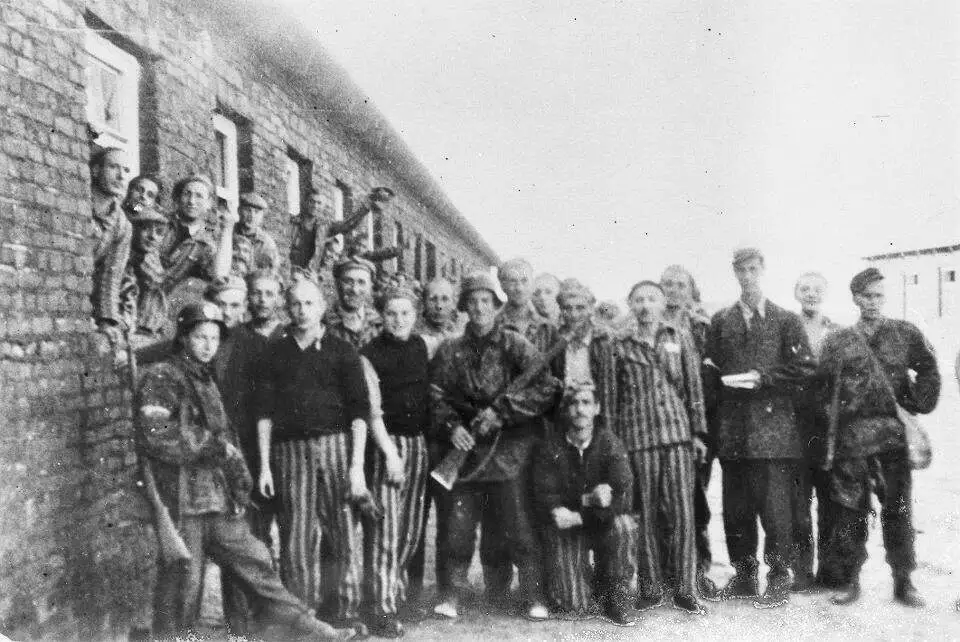
Liberation of the Gęsiówka prisoners. Source: Wikipedia Link
The fight chosen by Polish citizens of Jewish descent showed that there is something more important than ordinary death – the dignity of dying. Because that was the choice of the insurgents. They knew it would be impossible to survive. They knew they were facing tanks practically barehanded. And yet they didn’t flee. They marched. And they burned tanks, armored personnel carriers. They destroyed artillery pieces. They killed SS men. There was much despair and a desire for revenge. These feelings dominated; after all, each of the insurgents had previously lost a wife, husband, child, parents, relatives, and friends. And this exploded, giving them the strength to fight the noble battle between good and evil. They refused to be led to slaughter. They chose to fight.
Honor and glory to the vanquished. Shame and contempt to their murderers.



What do you think about this story?
Join the conversation. Please keep comments relevant to the article.
Write a comment